The dawn of modern wrist-worn Horology was forged in the mud of the Great War and perfected during the roaring decade that followed. Between 1915 and 1935, Rolex transitioned from a fledgling London-based distribution firm, Wilsdorf & Davis, into an unprecedented powerhouse of Swiss technical precision. Central to this transformative era was the evolution of case architecture—moving swiftly from solder-lugged Officer's trench timepieces to the geometric, dust- and water-resistant cushion cases that laid the structural foundation for the iconic Oyster. For the discerning horological scholar and prospective buyer, understanding an early rolex cushion case trench watch requires a deep dive into case hallmarks, metallurgy standards, movement architecture, and British assay office stamps.
What is the Early Rolex Case Hallmark?
Before Rolex became a globally unified brand with internalized manufacturing, Hans Wilsdorf relied on specialized Swiss case makers and movement producers, most notably Aegler S.A. in Bienne. During this era, particularly before the 1920s, the name "Rolex" rarely appeared on the dial. Instead, legal identity and authenticity were verified strictly through hallmarking struck into the internal caseback.
The primary hallmark associated with the earliest Rolex trench and cushion watches is the sponsor mark "W&D", representing Wilsdorf & Davis. Registered at the London Assay Office in 1905, this mark was stamped on imported Swiss watch cases to signify legal responsibility for the metal's purity under British law. As Wilsdorf transitioned the brand identity, "W&D" evolved into "R.W.C.Ltd" (Rolex Watch Company Limited), "ROLEX" stamped inside an oval or rectangle, and eventually "S.A.R." (Société Anonyme Rolex) or "Montres Rolex S.A." by the late 1920s.
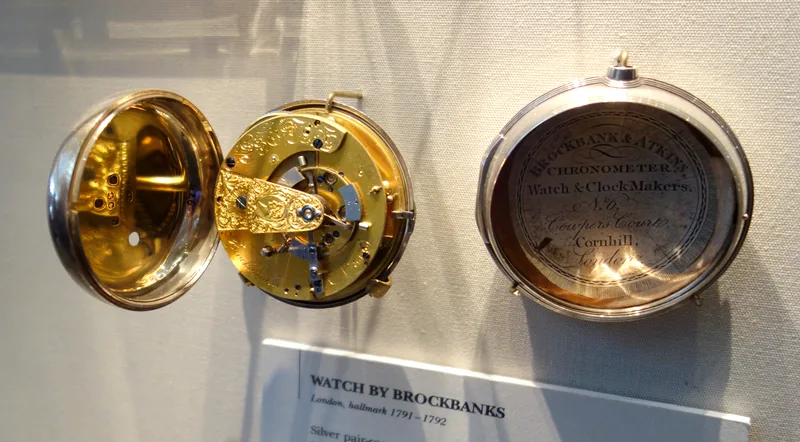
Alongside the sponsor's mark, these timepieces carry official government assay stamps. Under the British Assay Act of 1907, all imported gold and silver watch cases were legally required to be tested and marked with designated import hallmarks before commercial sale. A authentic early Rolex case from this era displays a complex grid of cartouches: the sponsor mark, the purity stamp, the assay office mark, and the annual date letter.
Historical Origins and Assay Office
The history of early Rolex hallmarking is inextricably linked to geopolitical and economic shifts between Great Britain and Switzerland. Originally headquartered at 83 Hatton Garden, London, Wilsdorf & Davis imported high-grade Swiss movements fitted into Swiss or English-built cases. When the First World War broke out in 1914, officers required reliable, hands-free timekeeping to coordinate tactical artillery barrages. This gave rise to the original WW1 trench watches, characterized by porcelain enamel dials, luminous Radium-226 hands, and soldered wire lugs.
To fund the war effort, the British government introduced the McKenna Duties in 1915, imposing an exorbitant 33.3% import duty on luxury goods, including gold and silver watch cases. This fiscal policy forced Wilsdorf to alter his business strategy radically:
- Glasgow Assay Office (Double-Prowed Galley Mark): To mitigate tariffs and expedite distribution, vast quantities of Swiss movements and cases were routed through Scotland. The Glasgow Assay Office used a distinctive double-prowed antique galley (ship) symbol for imported silver and gold. The vast majority of authentic 1915–1925 trench and early cushion watches feature this Glasgow mark.
- London Assay Office (Sign of Capricorn / Oval Import Mark): Cases tested in London received the constellation mark of Capricorn (for silver) or a solar symbol (for gold), replacing the traditional leopard's head used on native British goods.
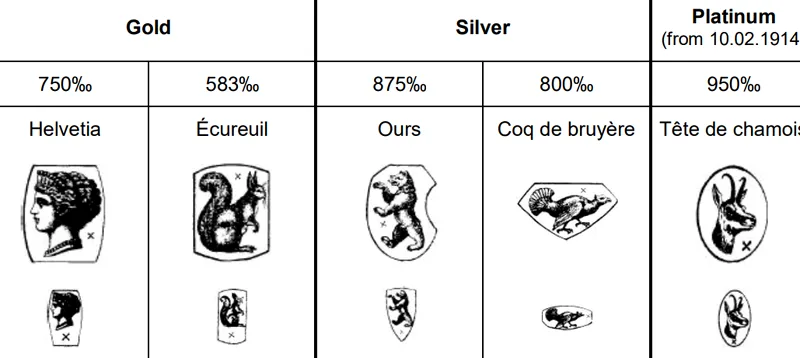
- Relocation to Geneva (1919): Driven by prohibitive British import taxes, Hans Wilsdorf officially relocated Rolex operations to Geneva, Switzerland, establishing Montres Rolex S.A. in 1920. Consequently, cases produced after 1925 increasingly feature Swiss hallmarking (such as the Bear for .925 silver or the Helvetia head for 18k gold) alongside British import marks if destined for the Commonwealth market.
Metal Purity and Standards
Early Rolex trench and cushion cases were executed in a range of precious and semi-precious metals designed to withstand tough conditions while satisfying consumer demand. Understanding these metallic alloys is essential for identifying period-correct cases.
Silver models were predominantly struck in .925 Sterling Silver or .935 Argentan/Swiss Silver. In the British system, imported sterling silver was marked with the numerical purity ".925" alongside the assay office mark. Gold cases were produced in several legal purities, each marked with specific karat standards:
| Feature / Specification | Historical Archival Standard | Collector Verification Note |
|---|---|---|
| Sterling Silver Standard | .925 Purity (Glasgow Galley or London Capricorn) | Common on 1914–1922 trench watches; often paired with onion or cabochon crown. |
| 9ct Gold Standard (.375) | 9ct / .375 stamp with Assay Date Letter | Popular in British market pieces; highly durable alloy used for trench and early cushion models. |
| 15ct Gold Standard (.625) | 15 / .625 purity cartouche | A uniquely British standard phased out in 1932; highly sought after by horological archivists. |
| 18ct Gold Standard (.750) | 18k / .750 standard with Swiss Helvetia / British Assay | Reserved for high-tier dress cushion cases and early screw-down Oyster variants. |
| Movement Caliber Base | Aegler Rebberg 11-Ligne / 13-Ligne Calibers | 15-jewel lever escapement, Breguet hairspring, decorated with Geneva stripes or perlage. |
| Case Construction Types | Hinged 3-piece, Borgel Screw-Case, or 1926 Oyster Cushion | Look for matching serial numbers stamped on both the bezel bezel flange and caseback interior. |
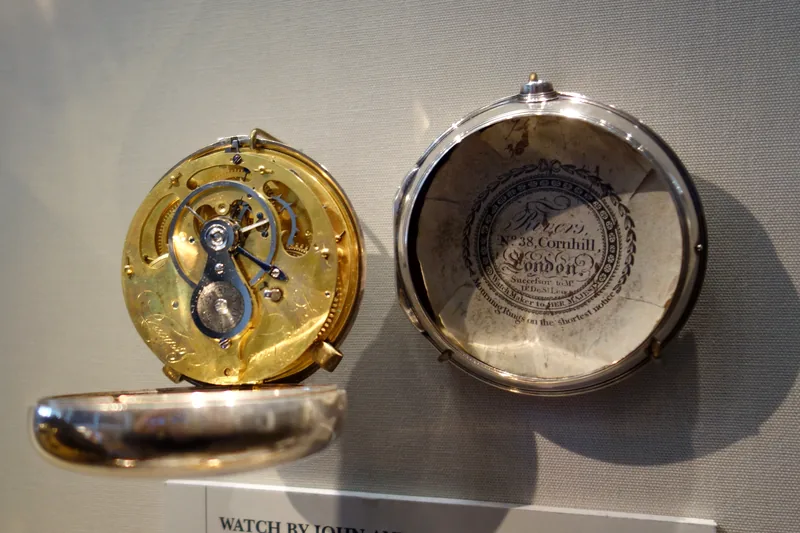
How to Identify on Vintage Watch Cases
Identifying a genuine early rolex cushion case trench watch requires careful inspection of case geometry, stamping typography, and mechanical components. During this 20-year span, case architecture underwent a radical structural metamorphosis:
1. Trench Case Architecture (1915–1920)
True trench watches exhibit round case profiles, ranging from 31mm to 35mm in diameter. Lugs were crafted from thin wire rods (wire lugs) hand-soldered directly to the outer case body. Casebacks were almost universally hinged, utilizing a dual-joint or triple-joint snap hinge. The interior of the caseback should feature deep, crisp hallmarks, the "W&D" or "R.W.C.Ltd" sponsor stamp, and a unique 6-digit or 7-digit serial number.
2. The Cushion Case Revolution (1920–1930)
By the early 1920s, fashion shifted toward Art Deco geometric aesthetics. Rolex pioneered the soft-cornered square profile known as the "cushion case." These watches featured integrated strap lugs or fixed bars extending directly from the soft square chassis. Examine the vintage Rolex wristwatch collection archives to observe how these cushion frames evolved from hinged two-piece shells into advanced moisture-sealed cases.
3. François Borgel and Hermetic Cases
To solve the pervasive issue of dust and water ingress, Hans Wilsdorf utilized threaded single-piece cases designed by legendary Geneva case maker François Borgel. A Borgel-cased Rolex trench or cushion watch features a threaded outer bezel and movement unit that screws directly into a solid outer shell from the front, identifiable by a fine serrated coin-edge pattern on the front bezel and the Borgel trademark (a Geneva-sanctioned hand-with-hammer logo) stamped internally.
4. Aegler Rebberg Movement Signatures
The mechanical heart of these watches is almost exclusively the Aegler "Rebberg" movement (named after the Rebberg district in Bienne). These manual-wind calibers featured a 15-jewel lever escapement, cut bimetallic balance wheel, and hand-applied circular graining. Early examples may not carry "Rolex" on the ratchet wheel or bridges, but the distinctive bridge layout—characterized by a sweeping finger-bridge for the center wheel—is instantly recognizable to a master horologist.
Dating and Authentication Value
Dating an early Rolex timepiece requires cross-referencing three distinct structural markers: the Assay Office Date Letter, the Rolex Case Serial Number, and the Movement Layout.
The most reliable method for dating pre-1930 British-imported Rolexes is deciphering the Assay Office Date Letter. British assay offices rotated a specific font alphabet every year inside a distinct cartouche shield. For example, a Glasgow double-prowed galley accompanied by a gothic letter "m" precisely dates the case manufacture to 1935, whereas an italicized "a" corresponds to 1923.
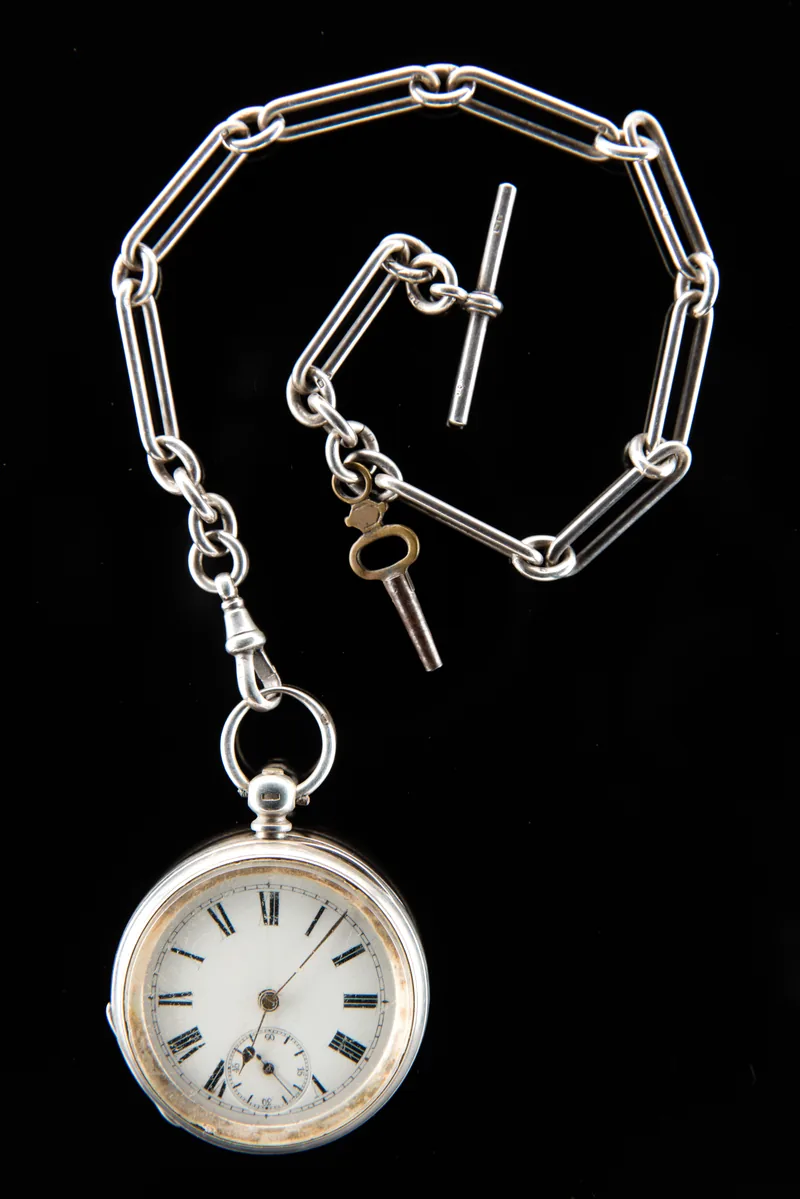
When evaluating market value and authenticity, collectors must beware of non-authentic modifications or modern adaptions. Authentic dials from this period are vitreous fired enamel, featuring hand-painted fine Roman or Arabic numerals. Red or blue "12" hour markers were common during WWI to help officers instantly index time in low light. Beware of painted metal dials masquerading as original enamel, or modern married cases built from restored vintage timepieces and conversions. A genuine piece must retain its original movement, period-correct case metal, matching interior serial stamps, and crisp hallmarks.
Collector Significance
The historical importance of the early Rolex trench and cushion watch cannot be overstated. These instruments represent the exact pivot point where wristwatches transformed from vulnerable female fashion novelties into robust, indispensable survival gear for men. They served as the proving grounds for Hans Wilsdorf's ultimate dream: a completely sealed, accurate, self-sustaining wrist chronometer.
Without the technical lessons learned from structural wire-lug trench cases and early 1920s cushion enclosures, the watershed creation of the 1926 Rolex Oyster case—with its screw-down crown and threaded bezel—would never have materialized. Today, museum-grade early Rolex cushion cases and trench watches are highly prized by serious collectors. They stand as enduring artifacts of horological history, capturing a crucial period of industrial innovation, wartime necessity, and classic design excellence.
Frequently Asked Questions
How do I identify a authentic W&D stamp on an early Rolex?
An authentic W&D stamp features crisp, serif or sans-serif block lettering enclosed within a defined rectangular cartouche inside the interior caseback. It is accompanied by official British import marks, such as the Glasgow galley or London import symbol, along with a metal purity stamp like .925 or 9ct .375.
Why does my early Rolex trench watch have no Rolex brand name on the dial?
Prior to the mid-1920s, retail jewellers routinely insisted on putting their own store names on watch dials or leaving them completely unbranded. Hans Wilsdorf gradually phased out this practice, but authentic WWI-era Rolex watches are primarily branded only on the movement bridges and inside the caseback.
What is the difference between a wire lug trench watch and a cushion case Rolex?
A wire lug trench watch features a round case body with thin wire loops hand-soldered to the outer rim to hold a thin trench strap. A cushion case features a square-shaped chassis with rounded corners, thicker integrated lugs, and structural improvements designed to protect the movement from moisture and shock.