During the brutal aerial campaigns of the First World War (1914–1918), precision timekeeping ceased to be a mere luxury and became an indispensable instrument of warfare. Above the Western Front, pilots of the British Royal Flying Corps (RFC) navigated uncharted airspace, calculated fuel burn rates, and synchronized artillery reconnaissance patrols using specialized horological instruments. Chief among these was the specialized royal flying corps cockpit watch ww1 issue—primarily the iconic Mark IV.A and Mark V aeronautical timepieces. For modern horological archivists and discerning military timepiece collectors, understanding these instruments requires a forensic examination of case metallurgy, British military property marks, and official government assay hallmarks stamped during importation.
What is the Silver Import Hallmark?
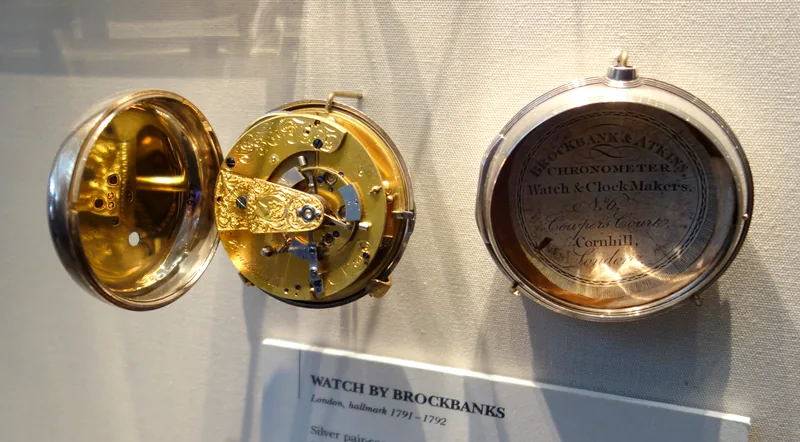
In British horological history, a hallmark is an official mark stamped on precious metal objects by an independent government assay office to guarantee fineness and legal purity. For military timepieces procured during the First World War, the silver import hallmark holds profound legal and archival significance. Following the enactment of the Foreign Watchcases Act of 1907, all foreign-made watch cases constructed from gold or silver imported into the United Kingdom were legally mandated to undergo testing and hallmarking at a British Assay Office prior to commercial distribution or War Office deployment.
Because the British domestic horological industry was rapidly converting its manufacturing capacity toward munitions and heavy artillery fuses, the Ministry of Munitions and the Admiralty turned heavily to elite Swiss movement makers—such as Zenith, Doxa, Electa, and Omega—to supply ébauches and complete pocket-style timepieces. When these watch cases entered British ports, they were submitted to regional assay offices. An official silver import hallmark from this era consists of four distinct hallmarks: the Sponsor’s Mark (representing the importer or agent, such as Dimier Brothers or H. Williamson Ltd.), the Assay Office Town Mark (specifically designated symbols for imported wares), the Standard Mark denoting silver fineness (such as '.925' for sterling silver), and the Date Letter designating the precise year of testing.
These markings distinguish official British government imports from continental military market timepieces or later civilian conversions. While many cockpit watches were cased in base metals, high-grade officers' navigation timepieces and early RFC cockpit instruments cased in solid silver bear these unmistakable hallmarks. Similar regulatory rigor applied to personal officer equipment, as seen in early silver-cased personal timepieces found in our original WW1 trench watches collection.
Historical Origins and Assay Office
When the Royal Flying Corps was established in May 1912, aerial navigation was in its infancy. Aircraft cockpits in early scouts and reconnaissance planes—such as the Royal Aircraft Factory B.E.2c, the Sopwith Camel, and the Bristol F.2 Fighter—were unheated, open to wind and rain, and subjected to violent engine vibration. Initially, pilots relied on personal pocket watches secured to leather thigh straps or suspended inside rudimentary padded dashboard sockets. By late 1914, the British War Department realized that standardized, vibration-resistant, high-legibility timepieces were vital for mission success.
To establish rigorous supply lines, the War Department contracted prominent London horological merchants—notably S. Smith & Son, H. Williamson Ltd., and Rotherham & Sons—to manage procurement and quality control. These contractors imported high-grade Swiss movements and cases, which were submitted directly to British assay offices before final assembly, regulation, and broad-arrow stamping.
The primary Assay Offices responsible for hallmarking RFC imported silver cases during the 1914–1918 period included:
- London (Goldsmiths' Hall): Distinguished on foreign imports by the sign of the Zodiac Leo (♌) or a stylized oval import mark, alongside the '.925' decimal purity stamp.
- Birmingham: Designated by the symbol of Equilateral Triangle for imported precious metals, widely used by major military contractors based in the English Midlands.
- Glasgow: Marked with a stylized Double Tree and Fish import mark, frequently encountered on high-grade Swiss movements cased for northern military suppliers.
Once assayed and hallmarked, the cases were returned to the primary contractor for military inspection. Movements underwent rigorous testing for temperature compensation and multi-positional accuracy before receiving official Royal Flying Corps approval stamps.
Metal Purity and Standards
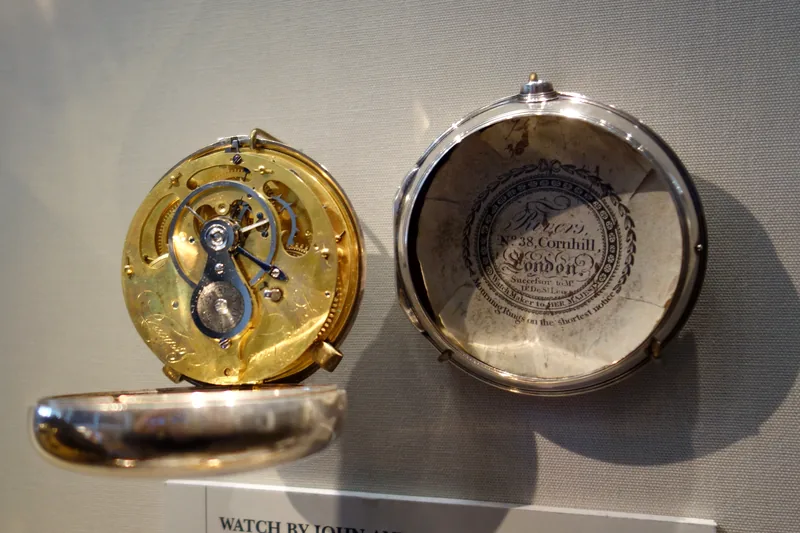
The operational environment of an open cockpit placed severe material demands on watchmakers. While naval chronometers operated in relatively stable shipboard gimbals, a royal flying corps cockpit watch ww1 had to endure thermal shock (dropping from ambient ground temperatures to sub-zero altitudes within minutes), rain, flying engine oil, and intense magnetic interference from aviation magnetos.
Consequently, case metallurgy was strictly categorized based on operational deployment:
1. Sterling Silver (.925 Fineness)
Reserved for high-precision cockpit timepieces, aerial navigation master watches, and senior flight commander instruments. Sterling silver provided exceptional oxidation resistance against atmospheric moisture at high altitudes. Cases were constructed with heavy, screw-down bezels and solid threaded casebacks fitted with lead or oil-tanned leather gaskets to prevent rain and oil ingress.
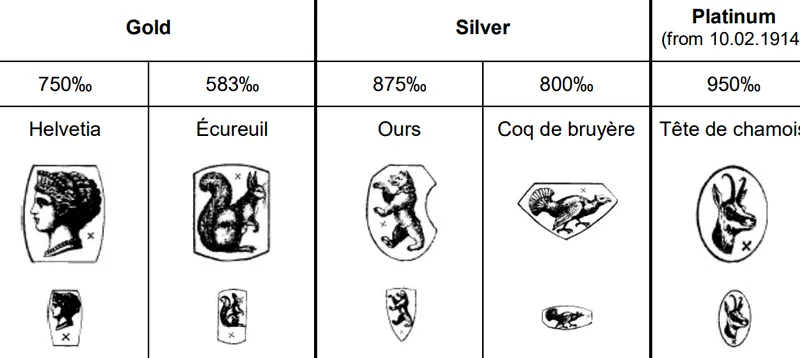
2. Continental Standard Silver (.800 and .935 Fineness)
Prior to complete integration with British Assay standards, certain Swiss-manufactured timepieces reached RFC squadrons via continental supply routes stamped with Swiss grouse or bear hallmarks (.800 or .935 purity). These were frequently utilized in secondary training squadrons at Upavon and Brooklands.
3. Nickel Silver and "Argentan" Alloys
To reduce costs and increase structural rigidity for standard dashboard mounting, many Mark IV.A and Mark V timepieces were cased in "Argentan" or nickel-copper-zinc alloys. These non-precious cases did not require British assay hallmarks but were subject to strict non-magnetic testing to ensure they would not disrupt the aircraft's magnetic compass.
The interplay between Swiss movement craftsmanship and British metallurgical standards mirrored luxury development during the era, an evolution detailed throughout our vintage Rolex wristwatch collection documentation regarding early Aegler and Rebberg military movement imports.
| Feature / Specification | Historical Archival Standard | Collector Verification Note |
|---|---|---|
| Case Metal Metallurgy | Solid .925 Sterling Silver or Argentan Nickel Alloy | Verify hallmark purity stamp (.925) or 'ARGENTAN' inner case stamping; test for magnetism. |
| Assay Office Import Marks | London (Leo ♌), Birmingham (Triangle), or Glasgow (Double Tree) | Must match the exact date letter style corresponding to 1914–1918 production years. |
| Dial Designation | Enamel, matte black or white; 'Mark IV.A' or 'Mark V' | Check for 'Non-Luminous' or 'Luminous' original script below the 12 o'clock position. |
| Military Property Markings | Broad Arrow (↑) over 'A' (Aeronautics) engraved on caseback | Engraving depth must show period hand-pantograph or die-stamp execution without modern laser traits. |
| Movement Specification | 15+ Jewel Lever Escapement; Bimetallic Cut Balance | Look for high-grade Swiss movement signatures (Zenith Cal. 19''', Doxa 8-Day, or Electa). |
How to Identify on Vintage Watch Cases
Authenticating a genuine military-issue royal flying corps cockpit watch ww1 requires a methodical, step-by-step examination of both exterior property stamps and internal case markings. Due to the high value of genuine RFC timepieces, fraudulent re-engravings of civilian pocket watches are increasingly common in the collector marketplace.
Exterior Inspection: Military Engravings
The primary indicator of RFC issue is the military property mark on the reverse of the outer caseback. A authentic WW1 RFC cockpit watch typically features:
- The War Department Broad Arrow (↑): The standard mark of British Ordnance property.
- The 'A' Designation: Stamped directly beneath or alongside the Broad Arrow, signifying 'Aeronautics' (specifically used prior to the creation of the Royal Air Force in April 1918).
- Classification Nomenclature: Markings such as "MARK IV.A" or "MARK V" followed by "NON-LUMINOUS" or "LUMINOUS".
- Serial Numbering: A unique military serial number (e.g., "BK 4210" or "CB 892") stamped into the metal, distinct from the manufacturer's internal movement serial number.
Interior Inspection: Assay and Case Stamps
Opening the hinged or screw-off caseback reveals the horological origin of the timepiece:
- Sponsor's Mark: Look for initials inside a shaped shield, such as "H.W.Ld" (H. Williamson Ltd) or "S.S & S" (S. Smith & Son).
- Import Symbol: Confirm the presence of the British Assay import mark (e.g., the constellation sign Leo for London or the equilateral triangle for Birmingham).
- Date Letter: Examine the stylized lowercase or capital letter inside its designated shield. For London imports during the Great War, these correspond precisely to: 1914 ('t'), 1915 ('u'), 1916 ('v'), 1917 ('w'), and 1918 ('x').
- Swiss Patent & Helvetia Marks: On continental-cased examples, look for the small Swiss bear mark or Swiss cross patent numbers (e.g., Brevet + stamps) inside the inner dust cover (cuvette).
Dating and Authentication Value
Determining the precise date of manufacture and military assignment is crucial when establishing historical and monetary valuation. An authenticated, matching-numbers RFC cockpit timepiece commands a significant premium over unissued civilian surplus or mixed-component watches.
Archivists cross-reference three independent dating variables:
First, compare the Assay Office Date Letter against the Movement Serial Number recorded in manufacturer ledgers (such as Zenith or Omega factory archives). For instance, a Zenith caliber 19''' movement bearing a serial number in the 1,900,000 range corresponds to 1915 production, which must align with a 1915 ('u') or early 1916 ('v') London import hallmark on the case.
Second, examine dial typography and luminescent compound aging. Original RFC dials were produced in high-fired white or black enamel. Luminous versions featured hand-applied Radium-226 paint on the Arabic numerals and spade hands. Over a century, radium burn creates a characteristic dark halo on the enamel dial around the numbers, a key indicator of original, unrestored condition.
Third, verify the mechanical layout. Most RFC Mark V cockpit watches utilized 30-hour or 8-day power reserves with top-mounted winding crowns designed to be wound while secured in brass dashboard instrument bezels. Watches converted to wrist use post-war or salvaged for parts often show modified stem lengths or modern re-dialing, which substantially alters their historical integrity. For examples of properly preserved horological artifacts, explore our curated selection of restored vintage timepieces and conversions.
Collector Significance
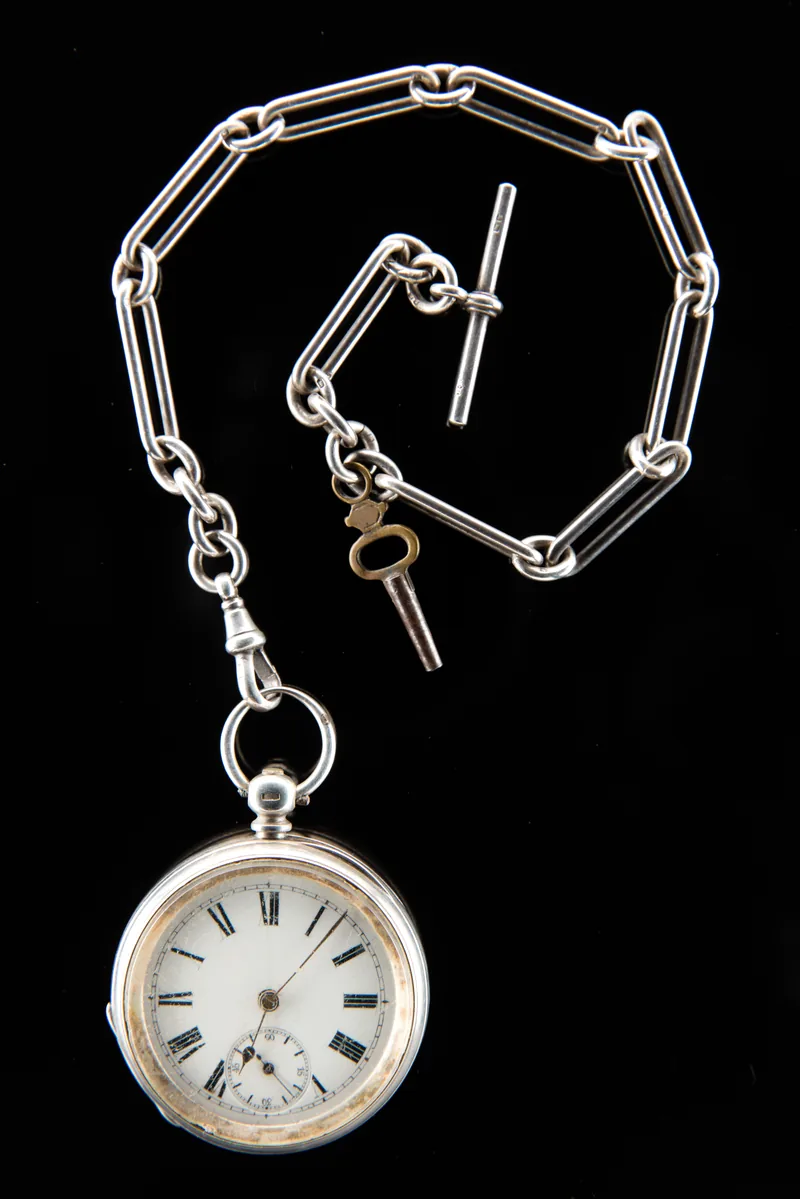
The historical resonance of the Royal Flying Corps cockpit watch extends far beyond its mechanical movement. On April 1, 1918, the Royal Flying Corps merged with the Royal Naval Air Service (RNAS) to form the Royal Air Force (RAF). Consequently, timepieces stamped with the explicit RFC "A" and Broad Arrow designation were produced for a brief window of fewer than six years (1912–1918).
Surviving instruments from famous aerial units—such as No. 56 Squadron or No. 24 Squadron—acted as silent witnesses to pivotal moments in aviation history, from the Battle of the Somme to the dogfights over the Ypres Salient. Many cockpit timepieces did not survive the war; aircraft crashes, open-air exposure, and post-war scrap salvage claimed the vast majority of equipment.
For collectors, a fully documented, hallmarked, and original-dial royal flying corps cockpit watch ww1 represents the pinnacle of early military aviation horology. It embodies a transformational era when horologists adapted traditional pocket watch mechanics into rugged, military-grade flight instruments—setting the design template for all pilot watches that followed in the twentieth century.
Frequently Asked Questions
How do I know if my WW1 cockpit watch was used by the Royal Flying Corps?
An authentic Royal Flying Corps cockpit watch features an outer caseback stamped with the War Department Broad Arrow (↑) positioned directly above or alongside the letter 'A' for Aeronautics. Additionally, the dial will typically state 'Mark IV.A' or 'Mark V' alongside 'Non-Luminous' or 'Luminous' nomenclature.
What is the difference between a Mark IV.A and a Mark V RFC cockpit watch?
The Mark IV.A was introduced early in WW1 (circa 1914–1915) as a modified 30-hour pocket watch instrument, whereas the Mark V was introduced in 1916 with refined cockpit dashboard mounting bezels, enhanced vibration insulation, and improved high-altitude temperature compensation movements.
Why do some silver WW1 military watches have British hallmarks if they were made in Switzerland?
Under the British Foreign Watchcases Act of 1907, all foreign silver watch cases imported into the UK had to be officially tested and stamped by a British Assay Office (such as London or Birmingham). Swiss manufacturers like Zenith and Omega shipped cases to British agents, who submitted them for assaying before War Office military distribution.