In high-end vintage horology, distinguishing an authentic timepiece from a counterfeit, a re-cased movement, or a cobbled-together "Frankenwatch" is a rigorous forensic discipline. Collectors and horological scholars who evaluate mid-century chronographs, early 20th-century trench watches, or rare dress pieces from premier manufactures must look far beyond dial typography and movement execution. Understanding how to authenticate vintage watch cases and movements requires an intimate, expert knowledge of metallurgy, casemaker signatures, and official assay marks. Primary among these analytical forensic tools is the precious metal hallmark—an indelible stamp that serves as a watch's structural birth certificate, metal purity guarantee, and geographic origin proof.
When learning how to authenticate vintage watch components, mastering the iconography, physical characteristics, and historical application methods of hallmarks provides an unassailable line of defense against deception. This technical guide explores the analytical framework required to read, verify, and authenticate vintage watch cases through hallmarking standards, physical inspection protocols, and historical assay documentation.
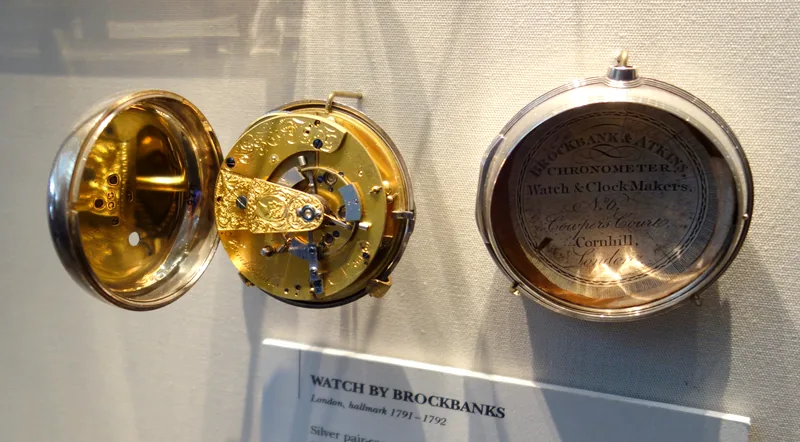
What is the Hallmark?
In horological terminology, a hallmark is an official mark or series of marks stamped onto precious metals—such as gold, silver, platinum, and occasionally palladium—to guarantee their fineness and purity. Unlike a manufacturer’s logo, reference number, or internal serial number, a true hallmark is historically applied by an independent state-sanctioned authority or a legally mandated assay office. Its presence legally certifies that the alloy used in the watch case meets strict national purity standards.
It is vital to differentiate between the four distinct types of markings found on a vintage watch case:
- Sponsor’s or Maker’s Mark: Identifies the specific workshop, casemaker, or manufacture responsible for producing the raw case (e.g., Swiss Poinçons de Maître).
- Assay or Town Mark: Identifies the official state assay office or regional facility where the precious metal was scientifically tested and verified.
- Standard or Fineness Mark: Indicates the exact proportion of precious metal in the alloy, expressed either in karats (e.g., 18K) or millesimal fineness (e.g., 750).
- Date Letter or Duty Mark: A variable alphabetical character or tax stamp used in specific jurisdictions (most notably Great Britain and France) to designate the exact calendar year of testing or tax clearance.
When assessing how to authenticate vintage watch cases, authenticators examine the interaction of these four marks. In genuine vintage timepieces, these hallmarks are struck directly into the metal using high-pressure steel punches, resulting in crisp displacement rims and microscopic structural deformations that are extremely difficult for counterfeiters to replicate accurately.
Historical Origins and Assay Office
The systematic hallmarking of precious metals dates back to the Middle Ages, but its application to portable timekeeping devices matured alongside the Swiss and European watchmaking booms of the 19th and early 20th centuries. Understanding the historical context of various national assay offices is critical when verifying whether a vintage watch case is period-correct for its stated provenance.
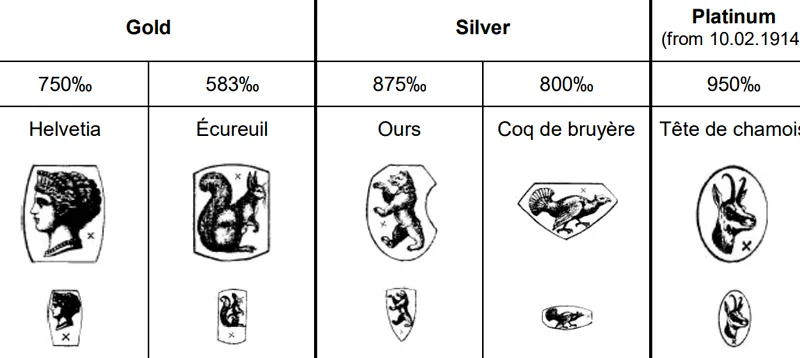
Prior to 1880, Swiss watchmaking was largely decentralized, with regional cantons maintaining varying regulations regarding metal purity. The Swiss Federal Precious Metal Control Act of 1880 established a unified national framework. Under this system, specific pictorial symbols were designated for individual metal purities and stamped by official Swiss assay offices (located in key watchmaking hubs such as Geneva, La Chaux-de-Fonds, Neuchâtel, and Le Locle):
- Helvetia (Head of Helvetia): Used from 1880 until 1995 to denote 18-karat gold (0.750 purity).
- Squirrel: Designated 14-karat gold (0.585 purity) between 1880 and 1995.
- Grouse: Marked 0.800 silver, while the Bear designated 0.925 sterling silver during the same era.
- Ibex Head: Introduced in 1914 to authenticate platinum (0.950 purity).
- St. Bernard Dog Head: Introduced in 1995 to replace all prior animal symbols, unifying all precious metals under a single national mark containing a microscopic regional assay letter near the dog's ear.
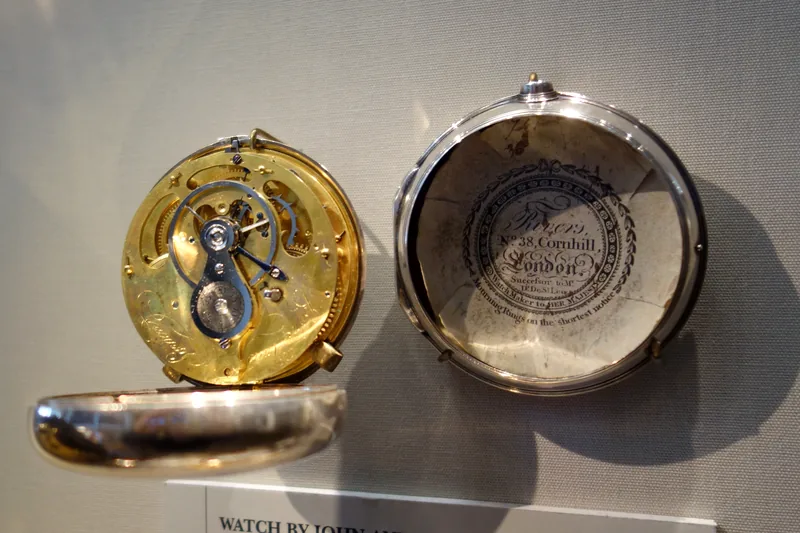
Concurrently, Great Britain enforced a strict assay regime administered by regional offices such as London (Leopard's Head), Birmingham (Anchor), Chester (Dagger and Three Sheaves), and Edinburgh (Castle). British imported watch cases were subjected to rigorous double-hallmarking protocols starting in 1907, requiring foreign-made gold and silver cases imported into the UK to bear specific import marks (such as the Symbol of Mercury or Sol for London imports) alongside numerical fineness designations.
France utilized its own elaborate system, including the Tête d'Aigle (Eagle's Head) for 18k gold produced within France, the Tête de Mercure (Mercury's Head) for exported items, and the Tête de Chien (Dog's Head) for platinum. When learning how to authenticate vintage watch cases across global markets, matching the geographic distribution of these assay symbols with the brand's known historical export routes is a vital cross-referencing technique.
Metal Purity and Standards
A fundamental step in how to authenticate vintage watch cases involves comparing the stamped fineness markings against known factory specifications and regional legislation. Precious metals in horology are rarely used in pure forms due to softness; they are alloyed with copper, silver, nickel, palladium, or zinc to enhance mechanical strength and alter color.
Metal purity is expressed via two major systems: the Karat system (traditional) and Millesimal Fineness (modern numerical standards representing parts per thousand):
- 24 Karat / 999 Fineness: Pure gold. Exceptionally rare in watch cases due to extreme malleability, though occasionally observed in specialized Asian-market pocket watches.
- 18 Karat / 750 Fineness: 75.0% pure gold. The standard for international luxury horology (Patek Philippe, Vacheron Constantin, Rolex, Audemars Piguet).
- 14 Karat / 585 Fineness: 58.5% pure gold. Highly prevalent in mid-century American-market watch cases (e.g., Omega, Hamilton, Longines distributed via US case builders like Wadsworth, Star Watch Case Co., or Keystone).
- 9 Karat / 375 Fineness: 37.5% pure gold. Common in British-market wristwatches due to historical domestic taxation structures.
- Sterling Silver / 925 Fineness & Continental Silver / 800 Fineness: Standard for early wristwatches, trench watches, and 19th-century pocket watch cases.
- Platinum 950 / 900 Fineness: 95% or 90% pure platinum alloyed with iridium or ruthenium. Used for ultra-high-end vintage timepieces.
Discrepancies in metal purity stamps provide immediate red flags during authentication. For example, a vintage Swiss dress watch case from the 1950s marked "18K" without an accompanying millesimal mark ("0.750") or an official Swiss regional assay mark (such as Helvetia) demands rigorous non-destructive X-ray fluorescence (XRF) testing to verify that it is not a gold-filled, plated, or counterfeit brass shell.
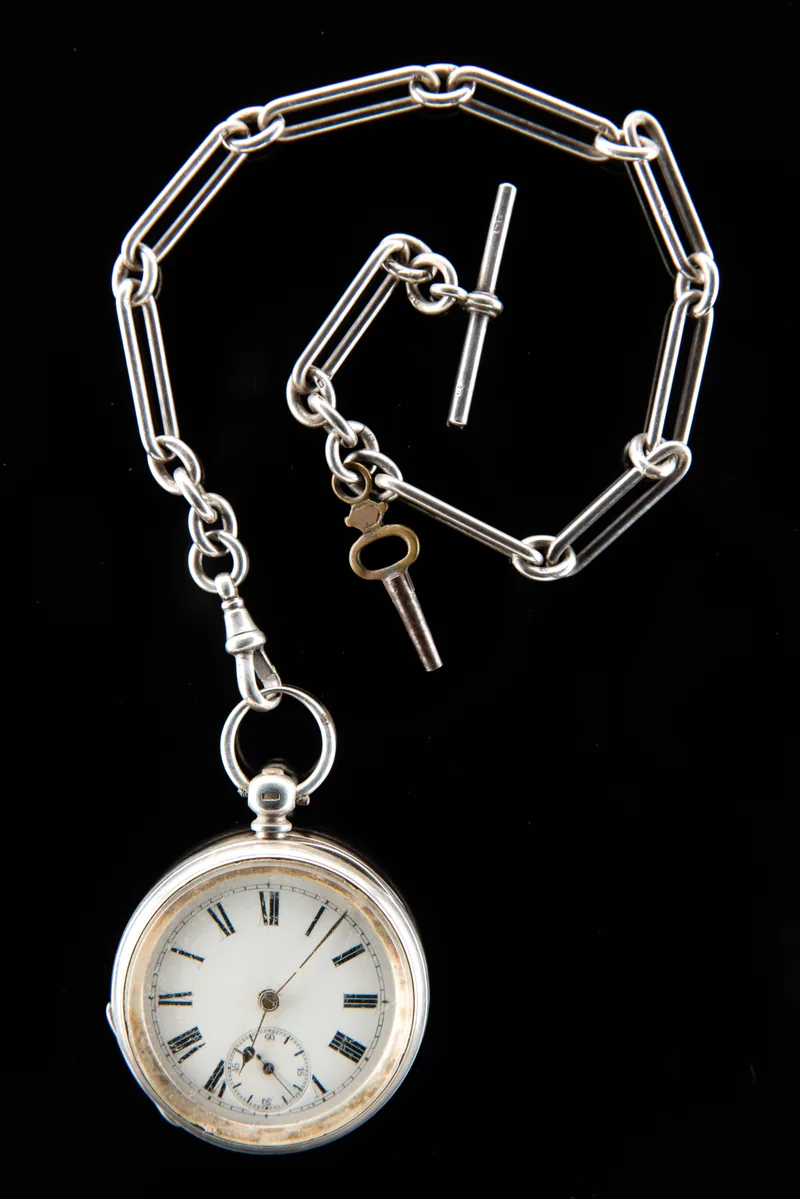
How to Identify on Vintage Watch Cases
Finding and analyzing hallmarks on a vintage watch case requires proper magnification (a minimum of a 10x or 20x achromatic triplet loupe, or a digital microscope) and strong, directional lighting. Hallmarks are intentionally miniaturized—often measuring less than 1 millimeter across—to avoid disrupting the aesthetic lines of the timepiece.
When conducting a physical inspection, authenticators systematically search specific geographic zones on the watch case back and chassis:
- Interior Case Back: The primary location for major assay hallmarks, millesimal purity stamps, casemaker trademarks, and serial/reference numbers. In snap-back or screw-down cases, these marks are stamped prior to final finishing.
- Exterior Lugs: High-end mid-century Swiss manufactures (e.g., Rolex, Patek Philippe) frequently stamped tiny hallmarks on the reverse side of the lugs. Look closely at the underside or outer flanks of the 11 o'clock, 1 o'clock, 5 o'clock, or 7 o'clock lugs.
- Mid-Case & Bezel Profile: On complex multi-piece cases, hallmarks may be struck on the lateral rim of the mid-case or along the inner lip of the bezel to confirm that every visible component is forged from solid precious metal.
- Between the Lugs: On select vintage references, marks are punched directly into the channel between the lugs at the 6 o'clock or 12 o'clock positions, often alongside gold-plating designations or reference numbers.
In Swiss watches, examiners must also look for the Poinçons de Maître (Casemaker's Marks). Introduced in 1934 to trace non-brand case manufacturers, these marks consist of specific geometric shapes enclosing a number:
- Hammer Head (with or without handle): Indicates a casemaker based in the Canton of Geneva (e.g., Key number 115 for C.R. Spillmann, Key number 1 construct for Geneve Enseigne).
- Key Stamp: Designated casemakers located outside Geneva producing gold, platinum, or palladium cases (e.g., Key 132 for Wenger).
- Shield / Arrow / Keyhole Shapes: Used for silver and base-metal casemakers across Neuchâtel and Jura regions.
Dating and Authentication Value
Hallmarks serve as invaluable tools for chronological verification. By cross-referencing hallmark symbols, assay letters, and casemaker trademarks with movement serial numbers, authenticators can establish a precise timeline for a watch's manufacture and detect aftermarket alterations.
Consider a practical scenario when investigating how to authenticate vintage watch assemblies: A collector encounters a vintage chronograph with a movement serial number dating to 1942. However, the internal case back displays the Swiss St. Bernard dog head hallmark (introduced in 1995) rather than the period-correct Helvetia head. This immediate chronological mismatch proves that the watch is a recased movement or a modern replacement/service case, drastically reducing its historical and monetary value.
Furthermore, forensic analysis of the physical mark itself helps spot fakes and cast reproductions:
- Struck Marks vs. Cast Marks: Authentic hallmarks are stamped into cold metal using a hardened steel die punch. This impact creates clean, sharp floor angles, smooth compressed floors inside the impression, and slight metal displacement (a subtle raised ridge) around the perimeter. Counterfeit cases created via investment casting display soft, rounded edges, pitted surface textures inside the mark, and no cold-work displacement lines.
- Laser Engraved Fakes: Modern fake cases often use fiber lasers to etch historical hallmarks. Under 20x magnification, laser-etched marks reveal uniform parallel burn lines, microscopic melt dots, and flat square bottoms rather than the natural V-shaped or U-shaped impact contours of a mechanical strike die.
- Wear Patterns and Patination: On a genuine vintage watch case that has experienced decades of wear and gentle polishing, the high points of the case exterior will show natural rubbing, but protected areas within the struck hallmark impression should retain deep, unpolished oxidation, patination, and sharp internal angles.
Collector Significance
In the modern vintage watch market, original hallmark integrity directly dictates commercial valuation and historical desirability. As collectors have grown increasingly sophisticated, the demand for unpolished, pristine cases with deep, crisp hallmarks has created a significant premium over heavily polished or over-restored examples.
When a vintage gold case undergoes aggressive mechanical polishing, the metal surrounding the microscopic hallmarks on the lugs or outer flanks is eroded. A watch displaying ghosted, partially polished-out hallmarks loses a critical element of its original structural finish and legal authentication footprint. Conversely, deep, undisturbed hallmark punches—complete with sharp casemaker marks and state assay stamps—confirm that a watch case retains its factory proportions, sharp chamfers, and original surface contours.
Ultimately, learning how to authenticate vintage watch cases through hallmarking analysis elevates a collector from a casual enthusiast to a forensic horological inspector. By combining metallurgy, legal history, microscope inspection, and archival research, authenticators can confidently verify the purity, origin, and genuine historical integrity of the world’s finest vintage timepieces.