For horological scholars, institutional archivists, and serious collectors, securing adequate protection for an irreplaceable horological portfolio requires far more than a standard personal property rider. Welcome to the master archivist's definitive vintage watch insurance guide to precious metal hallmarks—the metallurgical, historical, and legal cornerstone of horological appraisal, insurance underwriting, and provenance verification.
When insuring rare antique timepieces, insurance underwriters and valuation experts demand clear, physical proof of authenticity, metallic purity, case fabrication origin, and age. While movement caliber serial numbers provide internal chronometry metrics, it is the punch-stamped hallmark struck into the precious metal case back that establishes legal proof of content, origin, and exact year of manufacture. Understanding how to decode, document, and verify these microscopic stamps is vital for establishing schedule coverage, replacement values, and total loss claims.
What is the Hallmark?
A hallmark is an official, legally mandated impression struck into an item of precious metal—specifically gold, silver, platinum, or palladium—by an independent testing body known as an Assay Office. Unlike a manufacturer’s logo, serial number, or reference stamp, a genuine hallmark represents an official third-party guarantee that the metal alloy meets strict legal standards of purity (fineness). In the domain of vintage horology, hallmarks serve as immutable forensic records stamped directly onto case backs, cuvettes, bezel rings, and lug flanks.
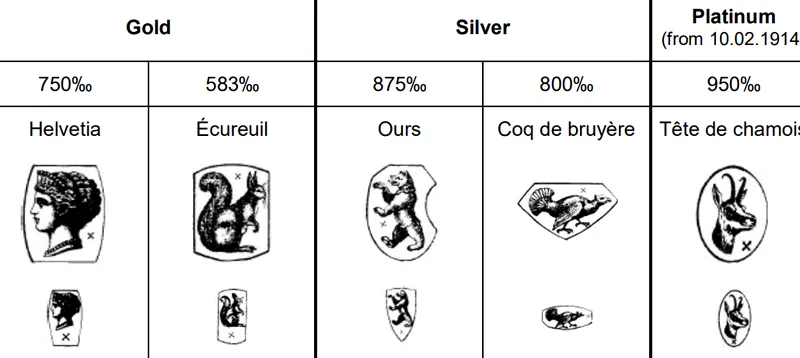
From an archival and underwriting perspective, a complete historical hallmark consists of a sequence of distinct struck punches, typically including the Sponsor’s (or Maker's) Mark, the Standard (Purity) Mark, the Assay Office Mark, and a cyclical Date Letter. In Swiss and Continental European horology, official hallmarks also incorporated regional control marks, such as the head of Helvetia or the Bernardine dog (St. Bernard), alongside individual case maker register numbers enclosed within stylized geometric keys or hammer symbols.
For underwriting purposes within this vintage watch insurance guide, a hallmark is the definitive evidence used to distinguish between solid precious metal cases and lower-tier gold-filled, rolled gold, or electroplated cases. Underwriters do not accept manufacturer claims or visual luster alone; detailed macro-photographic evidence of legitimate assay hallmarks is required to bind high-value scheduled insurance policies.
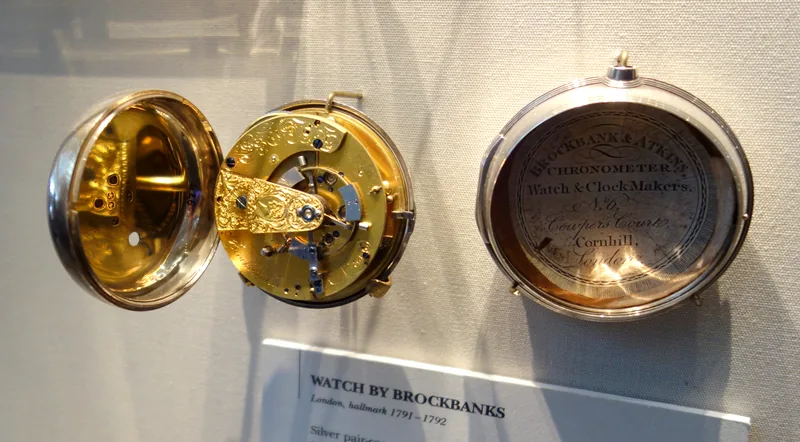
Historical Origins and Assay Office
The systematic assaying and hallmarking of precious metals dates back to medieval Europe, established primarily to prevent unscrupulous metalsmiths from debasing gold and silver coinage and wares. In England, Edward I passed a statute in 1300 requiring all silver to meet the Sterling standard (.925 purity) and establishing the world's first formal assay authority at Goldsmiths' Hall in London—giving rise to the term "hallmark." By 1478, permanent assayers were established, and the date letter system was introduced to hold individual assay masters accountable for their testing accuracy.
In horology, the interaction between case makers and assay offices became critical during the 19th and early 20th centuries. British law required all watch cases—whether domestic or imported—to undergo rigorous destructive cupellation or touchstone testing at authorized assay offices located in London, Birmingham, Chester, Edinburgh, or Glasgow before commercial sale. When foreign watch manufacturers imported Swiss movements and cases into Great Britain, legal enactments such as the Revenue Act of 1883 and the Customs Amendment Act of 1906 mandated distinct "Import Marks" (such as the Sign of Leo for London or the Equal Cross for Glasgow) alongside modified date letters to differentiate foreign-made cases from native British fabrications.
This historical regulatory environment created rich archival trails for early wristwatches. For example, original WW1 trench watches manufactured in Switzerland between 1914 and 1918 frequently display British import assay hallmarks stamped in London or Edinburgh. These marks provide exact year-by-year documentation of when these military timepieces entered the British wartime supply chain, providing bulletproof chronological evidence for insurance valuation and museum archiving.
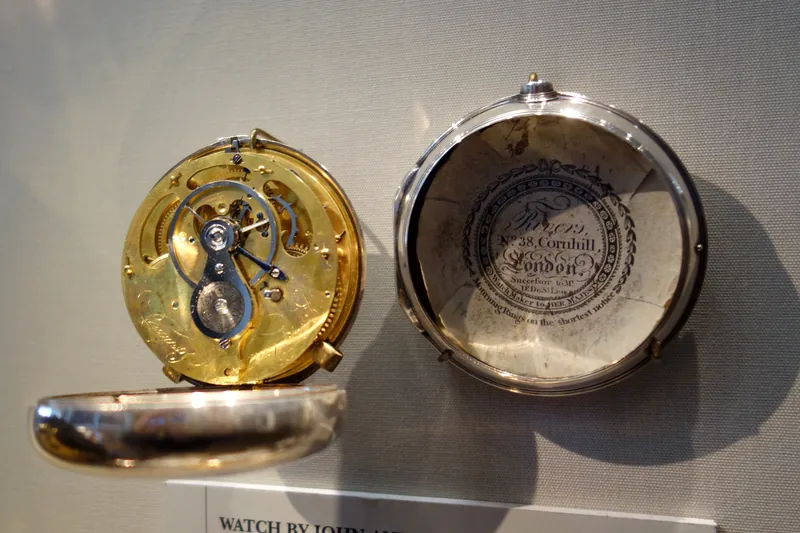
Metal Purity and Standards
Accurate appraisal for vintage watch insurance requires precise technical knowledge of historical alloy standards. Over the centuries, national governments enforced varying minimum legal purities for gold and silver watch cases. An archivist must evaluate both the millesimal fineness (parts per thousand) and traditional karat designations when documenting case composition for insurance schedules.
Historically, Great Britain recognized specific legal gold standards: 22 Karat (.916 fine), 18 Karat (.750 fine), 15 Karat (.625 fine), 12 Karat (.500 fine), and 9 Karat (.375 fine). In 1932, the 15K and 12K standards were officially abolished and replaced by a new 14 Karat (.585 fine) standard, rendering 12K and 15K hallmarks absolute indicators of pre-1932 origin. Swiss watchmaking, governed by federal hallmarking acts of 1880 and 1934, standardized international export purities primarily around 18K (.750), 14K (.585), and 9K (.375) gold, along with .935 and .925 sterling silver.
| Feature / Specification | Historical Archival Standard | Collector Verification Note |
|---|---|---|
| 18K Gold Standard | .750 Millesimal Fineness (Crown + 18 mark in UK; Helvetia Head in Switzerland, 1880–1995) | Primary standard for luxury wristwatches; required for top-tier scheduled insurance appraisals. |
| 15K Gold Standard | .625 Millesimal Fineness (Struck with "15" and ".625") | Abolished in 1932; definitive proof of late Victorian, Edwardian, or early Art Deco production. |
| 12K Gold Standard | .500 Millesimal Fineness (Struck with "12" and ".500") | Abolished in 1932; rare historical standard used predominantly in mid-tier British pocket and pocket-conversion cases. |
| Sterling Silver | .925 Millesimal Fineness (Lion Passant in England; Thistle in Scotland; Wild Boar/Bear in Switzerland) | Universal standard for high-grade silver military and civilian officer wristwatches prior to 1930. |
| Swiss Poinçon de Maître | Numbered symbol (e.g., Key, Hammer without handle, Shield) | Identifies the exact third-party Swiss case maker (e.g., Key 112 for C.R. Spillmann; Hammer 115 for Favre & Perret). |
How to Identify on Vintage Watch Cases
Inspecting hallmarks requires specialized equipment and methodical physical analysis. Case hallmarks are miniature stamps, often measuring under 1 millimeter across, and are routinely subject to wear, over-polishing, or deliberate alteration. An archivist or insurance inspector should utilize a minimum 10x to 20x triplet jeweler's loupe or a high-resolution digital stereomicroscope under oblique fiber-optic illumination.
Begin inspection by examining the primary locations for hallmark placement:
- Inside Case Back: The primary location for complete assay suites, maker marks, case serial numbers, and reference numbers.
- Outer Case Back: Common on early pocket-watch conversions and select military timepieces, though highly susceptible to rubbing against wrists or clothing.
- Flanks of Lugs & Case Side: Frequently utilized in Swiss 18k and Platinum cases (such as early French and Swiss Art Deco designs) where tiny control marks were placed on the exterior for quick customs inspection without opening the case.
- Cuvette (Dust Cover): Found on multi-cap pocket watches and early officer timepieces, often mirroring the primary case back stamps.
When authenticating a vintage Rolex wristwatch collection, for example, inspect the inside case back for British import hallmarks (such as the London import symbol with Wilsdorf & Davis 'W&D' sponsor marks on early models) or Swiss federal hallmarks (the head of Helvetia for 18k gold or the Duck for 14k gold). Furthermore, verify the presence of the Swiss Poinçon de Maître (Collective Responsibility Mark). A key-shaped stamp containing a specific number identifies the exact artisan case-making firm in Geneva or La Chaux-de-Fonds that fabricated the gold housing for Rolex, providing crucial corroboration for high-value policy schedules.
Dating and Authentication Value
The date letter mark is the most historically precise instrument in horological forensics. British assay offices used unique, annually changing alphabetical characters enclosed within distinct shield shapes. By cross-referencing the specific letterform, font style, and outer frame shape with official Assay Office tables, an archivist can pinpoint the exact year a watch case was tested and hallmarked—often providing a narrower manufacturing window than movement serial numbers alone.
From a risk mitigation standpoint, precise dating via hallmarks prevents serious valuation errors in insurance documentation. Market values for vintage timepieces fluctuate dramatically based on micro-era shifts (e.g., pre-war vs. wartime production, transitional case styles, or initial production runs). A mismatch between the hallmark date letter on the case and the production sequence of the movement is a major red flag indicating a "marriage"—a non-original assembly created by fitting a loose movement into an unrelated case. Marriages lose up to 70% of their institutional and market value and may lead to denied insurance claims during total loss processing due to incorrect identification.
Furthermore, forensic examination must verify that hallmarks were impressed via traditional steel die striking rather than modern casting or laser engraving. Authentic historical hallmarks exhibit characteristic metal displacement, smooth edge flow, and micro-stress lines under microscopic analysis. Modern cast counterfeits display rounded, soft edges and pitted interiors, while laser-etched fakes lack physical depth and displacement contours, immediately invalidating an appraisal submitted for insurance underwriting.
Collector Significance
In high-grade vintage horology, pristine hallmarks are synonymous with overall structural integrity and unpolished case condition. Over-zealous refinishing and aggressive lapidary polishing remove microscopic layers of metal, effectively smudging or obliterating delicate assay punches. A vintage timepiece retaining crisp, deep, fully legible hallmarks commands a significant premium in the horological marketplace—and must be insured accordingly to reflect its superior state of preservation.
When underwriting or seeking appraisal for restored vintage timepieces and conversions, archivists must document whether case restoration was performed sympathetically. Proper horological conservation preserves historical hallmarks without aggressive grinding or abrasive wheel exposure. Preserving these marks maintains the historical chain of custody, protects the physical metallurgical evidence of origin, and ensures that the insured asset retains its full replacement appraisal value for generations to come.
Frequently Asked Questions
How do hallmark date letters assist in setting vintage watch insurance values?
Hallmark date letters provide exact, legally verified calendar years for case assaying, eliminating reliance on estimated production ranges. Insurance appraisers use this precise dating to align the timepiece with specific historical market comps and verify that the movement and case are period-correct contemporaries.
Why do insurance underwriters require macro photos of case hallmarks?
Underwriters require macro photography of hallmarks to verify physical proof of precious metal fineness and detect fraudulent cases or altered "marriage" watches. Clear photographs of distinct assay punches substantiate the high agreed-value schedule before a policy is bound.
What is the impact on insurance coverage if hallmarks are worn off from polishing?
Severely worn or polished-off hallmarks significantly diminish a vintage watch's market value, often causing a loss of 20% to 50% in collector valuation. If hallmarks are unreadable, insurers may only insure the piece at base metal value or as an altered asset rather than a museum-grade collectible.