What is the Hallmark?
In the domain of high-end horology, a hallmark is an official mark stamped, struck, or laser-engraved onto a precious metal object to guarantee its purity, fineness, and origin. Unlike a brand logo, serial number, or reference stamp applied by the watch manufacturer, a true hallmark is applied by an independent body or official Assay Office after rigorous chemical testing. For vintage timepieces crafted from gold, platinum, palladium, or sterling silver, hallmarks serve as legal certification of precious metal content and provide an indelible historical audit trail.
To horologists, auction houses, and seasoned collectors, hallmarks represent far more than metallurgical proof. They function as a physical fingerprint that validates the authenticity, geographical origin, case maker, and approximate era of production. When evaluating a high-value piece, verifying these micro-stamps is the absolute first step before arranging transit or insurance coverage. Collectors seeking to understand how to ship vintage watches safely must recognize that accurate identification and documentation of hallmarks dictate the declare value, custom tariffs, and specialized courier protocols required during international transit.
A complete vintage Swiss or British hallmark suite usually consists of four distinct components: the sponsor’s or maker’s mark, the metal fineness mark, the official assay office mark, and, in certain jurisdictions, a date letter. Understanding the distinction between these marks allows collectors to evaluate whether a case is original, unpolished, or potentially recased, directly impacting both market value and packaging precautions required during shipment.
Historical Origins and Assay Office
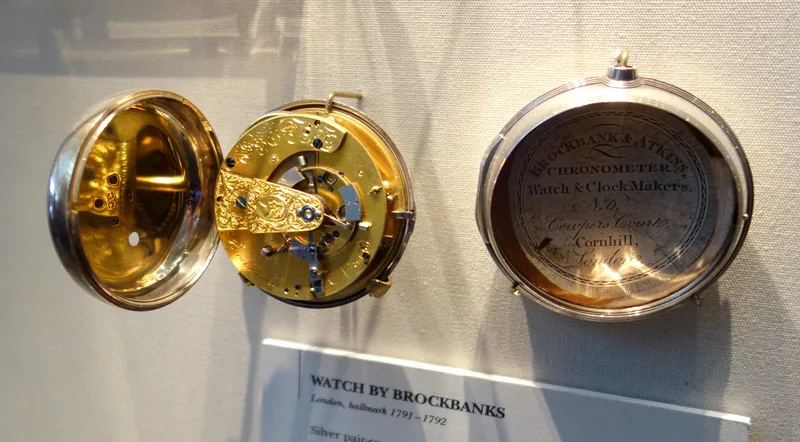
The system of hallmarking represents one of the oldest forms of consumer protection in human history, dating back to 1300 in England under the decree of King Edward I. The Goldsmiths' Company in London was authorized to test gold and silver items, stamping approved pieces with a leopard's head. Over time, major European watchmaking hubs established their own strict assay regulations. In Switzerland, hallmarking evolved through regional and federal legislation to ensure the integrity of the nation's burgeoning watch export industry.
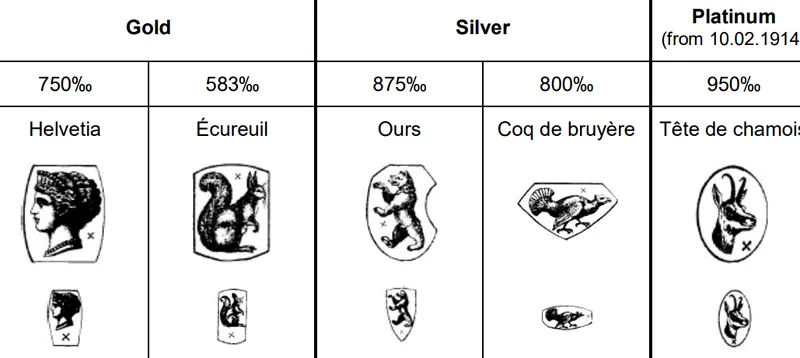
Before 1880, Swiss watchmakers relied on local municipal or cantonal assay offices. Cantons such as Geneva, Neuchâtel, Bern, and Jura maintained distinct symbols. In 1880, Switzerland introduced a unified federal hallmarking act to standardize exports. Under this system, specific iconic symbols were adopted: the head of Helvetia for 18K gold, a grouse for 14K gold, a duck for silver, and an ibex for platinum. In 1995, Switzerland modernized its system, introducing the Saint Bernard dog head as the universal official Swiss hallmark for all precious metals, accompanied by a tiny letter identifying the specific Assay Office (such as 'G' for Geneva, 'C' for La Chaux-de-Fonds, or 'B' for Biel/Bienne).
Knowing which Assay Office processed a vintage watch case yields crucial provenance data. When determining how to ship vintage watches safely across international borders, identifying these historical origin marks is critical for international customs clearance. Many customs agencies require detailed proof of age and material composition to grant exemptions for antique goods or to verify compliance with CITES regulations if the watch features exotic straps alongside precious metal cases.
Metal Purity and Standards
Metal purity standards vary significantly depending on the watch's era, origin, and intended export market. Horological cases are predominantly crafted from gold alloys, platinum, or sterling silver, each possessing unique metallurgical properties and vulnerabilities during transport. Standard fineness marks found on vintage watch cases include 0.950 for platinum, 0.750 for 18-karat gold, 0.585 for 14-karat gold, and 0.375 for 9-karat gold, which was particularly popular in British-market vintage Rolex and Omega timepieces.
High-purity metals, particularly 18K gold and platinum, are remarkably dense yet relatively soft compared to stainless steel. Soft precious metals are highly susceptible to micro-abrasions, surface scratches, lug deformation, and impact stress if packed improperly during transport. When preparing high-purity pieces and reviewing how to ship vintage watches safely, shock absorption and surface protection become paramount. Direct contact between a soft 18K gold caseback and a steel buckle or loose bracelet links can inflict deep gouges during transport vibration.
Furthermore, silver watch cases—frequently seen in early 20th-century trench watches and pocket watch conversions—are prone to rapid oxidation when exposed to moisture and ambient oxygen. Proper shipping protocol for silver and hallmarked precious metal watches mandates placing the fully documented watch in an anti-static, inert, moisture-barrier sleeve with micro-desiccant packs before placing it in shock-absorbing secondary packaging.
How to Identify on Vintage Watch Cases
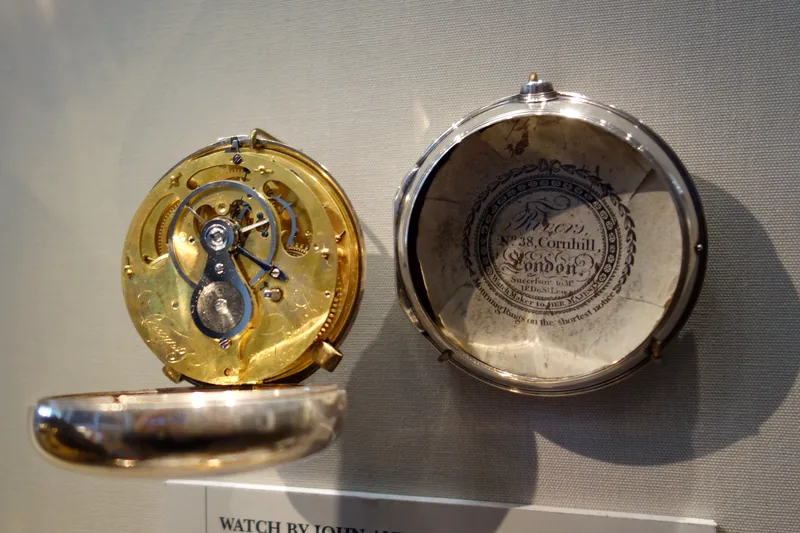
Locating and inspecting hallmarks on a vintage watch requires specialized equipment and a systematic approach. Due to wear, polishing, or intentionally subtle placement, hallmarks are often exceptionally small—frequently measuring less than one millimeter across. Essential tools for identification include a 10x to 20x triplet jeweler's loupe, a stereo microscope, or a high-definition digital macro camera with proper side-lighting capabilities.
Hallmarks are historically struck in predictable locations on a watch case:
1. Inside the Caseback: This is the most common location for primary assay marks, metal purity stamps, case maker symbols, and serial numbers. The inside of the caseback preserves marks from external wear and environmental exposure.
2. Outer Lug Backs: On high-end Swiss vintage watches (such as Patek Philippe, Audemars Piguet, and Vacheron Constantin from the mid-20th century), official Swiss assay hallmarks were struck on the reverse side of the lugs. These miniature stamps are colloquially known as "punches."
3. Case Flanks and Bezel Edges: French-cased watches and early pocket watches often feature tiny hallmarks struck on the outer rim of the case band, the bezel edge, or the winding crown tube.
Prior to packing, macro-photography of these hallmarks should be executed as part of pre-shipment condition reporting. When assessing how to ship vintage watches safely, detailed optical documentation provides indisputable proof of the watch's exact physical state before entering the logistics chain. This safeguards the shipper against fraudulent damage claims and establishes proof of value for high-value shipping insurance providers.
Dating and Authentication Value
Hallmarks are among the most robust tools for dating vintage watches and exposing counterfeits or married pieces (frankenwatches). In British horology, the combination of the Town Mark, the Maker's Mark, the Standard Mark, and the Date Letter allows horologists to pinpoint the exact year a watch case was hallmarked to within a twelve-month window. For Swiss timepieces, keymarks known as Poinçons de Maître (Collective Responsibility Marks) reveal the specific master casemaker who fabricated the case for the brand.
Famous Swiss case maker marks include:
- Key (for Geneva case makers): e.g., Key #1 for C.R. Spillmann, maker of iconic chronograph cases.
- Hammer with Handle (for cantons outside Geneva): e.g., Hammer #115 for Favre & Perret, who manufactured early Nautilus cases for Patek Philippe.
- Hammer Head Without Handle: Used for precious metal cases made in La Chaux-de-Fonds.
Authenticating these marks is vital before establishing courier insurance policies. Under-insuring a rare hallmarked case due to lack of authentication can result in devastating financial loss during transit. Conversely, over-insuring without certified proof of hallmark authenticity can lead to rejected insurance claims. Integrating verified hallmark data into insurance manifests is a fundamental requirement when mastering how to ship vintage watches safely.
Collector Significance
In today’s vintage watch market, original condition is the single greatest driver of value. Over-polishing a watch case erases sharp bevels, thins lugs, and—most critically—blurs or completely removes outer hallmarks. A vintage piece featuring crisp, deep, unmolested hallmarks on the exterior lugs or case band will command a massive price premium over an identical reference with worn or polished-out marks. The presence of crisp hallmarks proves that the watch has retained its original factory geometry and metal mass.
Because these hallmarked artifacts represent substantial financial investments, executing secure transit protocol is paramount. Knowing how to ship vintage watches safely requires a multi-layered logistical approach designed to shield the mechanical movement and fragile hallmarked case from physical, environmental, and transit-related hazards.
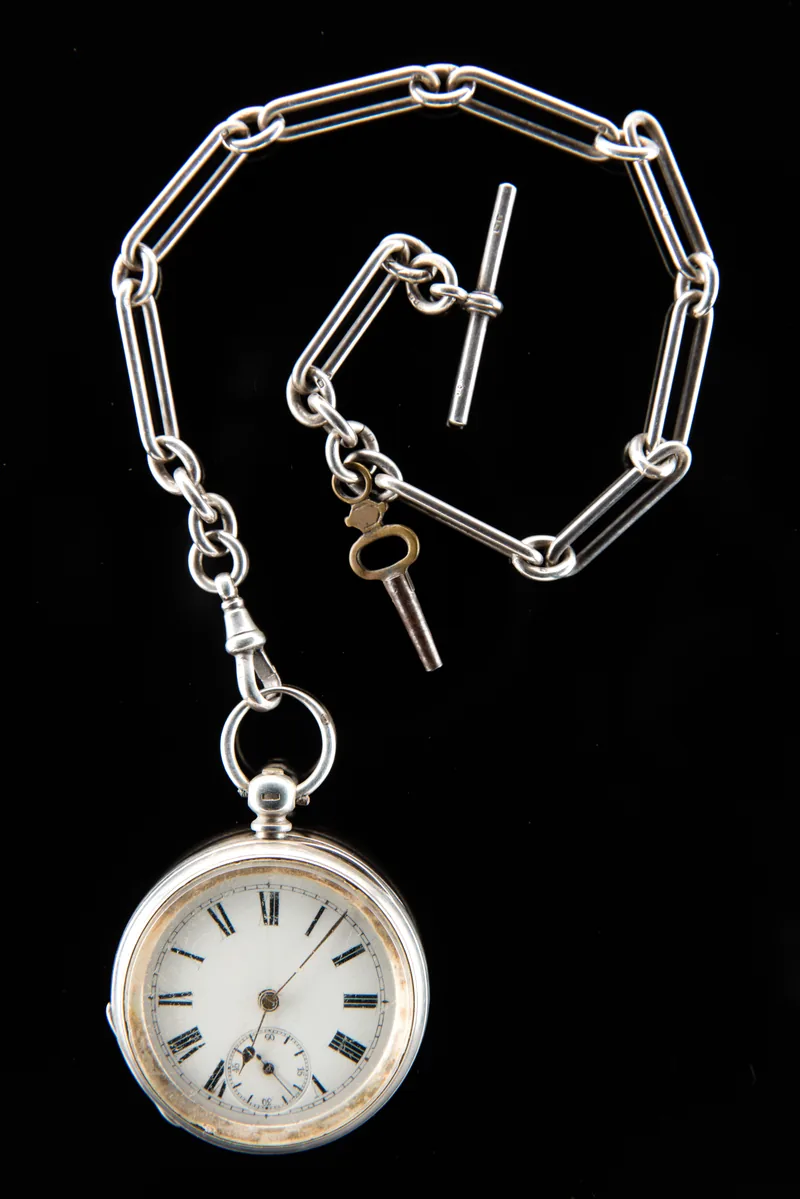
To safely ship a hallmarked vintage timepiece, adhere to the following professional horological packing guidelines:
1. Movement Preparation: Ensure the mechanical movement is completely run down. Shipping a running watch subjects the operating escapement, balance wheel, and train wheels to continuous shock, drastically increasing wear or risking a broken balance staff pivot.
2. Case Isolation: Wrap the watch head in non-abrasive, micro-fiber tissue paper before securing it in a rigid watch travel pod. Never allow metal bracelets to fold against the caseback without high-density foam padding between them; doing so will obliterate external hallmarks during vibration.
3. Double-Boxing System: Place the secured travel pod inside a rigid inner box. Surround the inner box with at least two to three inches of shock-absorbing expanded foam or heavy-gauge bubble wrap inside a heavy-duty outer corrugated shipping container. The inner box must float inside the outer box without touching any outer walls.
4. Discrete Logistics and Insurance: Never use external shipping labels that include words like "Watch," "Jewelry," "Patek," or "Rolex." Utilize discreet corporate titles. Ship exclusively via specialized high-value logistics providers or armored transport couriers (such as Malca-Amit, Ferrari Express, or Parcel Pro) that provide full door-to-door indemnity coverage for rare horological assets.
By pairing meticulous hallmark authentication with professional shock-isolated packaging, collectors and dealers guarantee that invaluable horological history survives both expert appraisal and global transit unscathed.