1. Historical Background of AS 0s Movements
To understand the process required to convert AS 0s pocket watch into wristwatch configurations, one must first appreciate the rich horological heritage of Adolph Schild S.A. (AS). Founded in 1896 in Grenchen, Switzerland, A. Schild rapidly grew to become one of the premier ébauche (unfinished movement) manufacturers in the world. During the late 19th and early 20th centuries, AS supplied robust, high-precision raw movements to hundreds of watch brands, ranging from utilitarian assembly houses to prestigious Swiss maisons.
The "0s" designation refers to the American Lancashire movement sizing system, where 0-size corresponds to a mainplate diameter of approximately 1 and 5/30 inches, or roughly 29.62 millimeters to 30.00 millimeters. During the golden age of pocket watches, 0-size movements occupied a unique position. They were noticeably smaller than standard men’s pocket watches (such as 18s or 16s movements measuring over 43mm) and were originally intended for ladies' pendant watches, gentleman’s dress pocket watches, or lapel timepieces. However, as warfare transformed at the turn of the century, these compact calibers found an unexpected second life on the battlefield.
During the Second Boer War and escalating into the First World War, soldiers began soldering wire loops onto small pocket watch cases to wear them on the wrist for rapid tactical synchronization. The AS 0-size movement was uniquely suited for this era because its dimensions naturally matched the emerging ergonomic requirements of wrist wear. These early adaptors created what collector circles now recognize as authentic WW1 trench watches. Today, restoring or re-casing these late Victorian and Edwardian era AS movements allows master watchmakers to preserve a pivotal epoch of micro-engineering history while creating modern, wearable art.
2. Technical Specifications and Movement Architecture
The technical construction of an AS 0s movement reflects classical Swiss hand-wound movement design of the early 1900s. Typically operating at an oscillation frequency of 18,000 vibrations per hour (2.5 Hz), these movements feature a classic Swiss lever escapement, cut bimetallic compensation balance wheels (or later solid glucydur balances), and traditional flat or Breguet overcoil hairsprings. The jeweling across AS 0s calibers varies significantly depending on the original contract specification, ranging from standard 7-jewel utilitarian configurations to high-grade 15, 17, or even 19-jewel variants featuring screwed gold chatons and endstones on the escape wheel and balance pivots.
Architecturally, AS 0s movements generally utilize a three-quarter plate or finger-bridge layout. The mainplate is crafted from nickel-plated brass or traditional gilded brass, decorated with damaskeening, Côtes de Genève, or fine frosted finishing. The train gear geometry uses brass or gold-plated train wheels driving a steel escape wheel. The winding mechanism—known as the keyless works—is a critical area of study when planning a conversion. Unlike later standardized movement families, early AS 0s movements were produced in both stem-set (pendant-set) and pin-set (nail-thru) configurations, as well as negative and positive winding system variations.
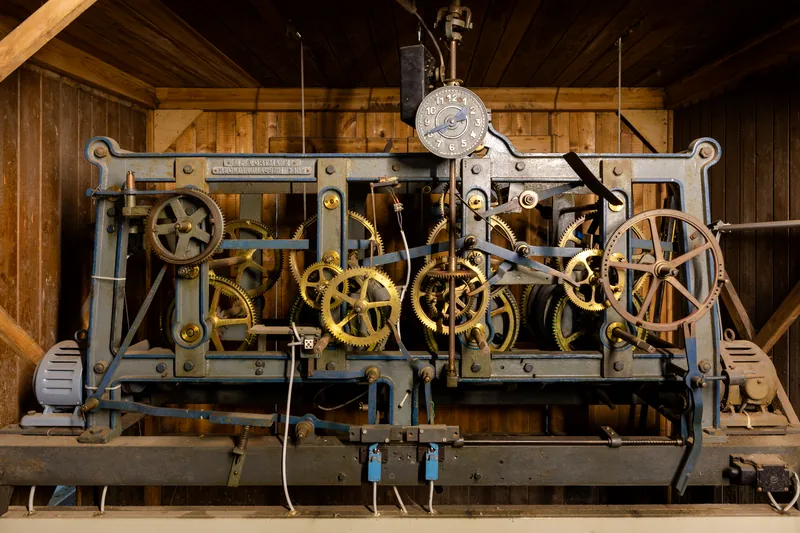
Understanding the dimensional parameters is crucial for any horologist considering this work. The overall movement height usually ranges between 4.0mm and 4.8mm, with a fourth wheel pivot extending through the dial side to drive a sub-seconds hand at the standard 6 o'clock position (relative to an open-face dial layout). The barrel house accommodates a mainspring capable of delivering approximately 32 to 38 hours of power reserve. The precision of the machining on these century-old A. Schild movement blanks remains remarkably tight, provided the movement has been properly preserved and shielded from moisture oxidation.
3. Challenges of Converting AS 0s to Wristwatch
A common inquiry among vintage watch enthusiasts is: can you convert as 0s pocket watch into a modern wrist timepiece safely? The short answer is yes, but the technical execution presents distinct mechanical hurdles that set it apart from larger pocket watch conversions. Converting a 45mm 16s Hamilton or Waltham movement is comparatively straightforward due to large component tolerances and abundant aftermarket cases. In contrast, working with a 30mm AS 0-size movement demands the meticulous skill set of a movement restorer and prototype machinist.
The primary challenge stems from the keyless works and setting mechanism. Many antique AS 0s movements rely on a negative setting system (where the setting sleeve in the pocket watch case neck holds the stem in the winding position until pulled out into the setting position). Modern wristwatch cases, however, are built exclusively for positive setting movements, where the detent mechanism (setting lever, yoke, and setting lever spring) resides entirely within the movement itself. Translating a negative-set AS 0s caliber into a modern positive-set enclosure requires custom fabrication of a setting lever assembly or delicate modification of the winding arbor.
Furthermore, pivot wear and arbor endshake present significant issues. Because these movements were designed to sit vertically in a vest pocket or pendant, running them horizontally on a wrist exposes worn jewel holes and balance staff pivots to dynamic multi-axis gravitational forces. Watchmakers must often re-pivot the balance staff, bushed worn mainplate pivot holes with fresh bronze bushings, or jewel unjeweled train pivots. Without a complete mechanical overhaul, balance amplitude will drop drastically when transitioned to a active wristwatch environment.
4. Lug Welding and Case Selection
When executing a conversion, selecting or building the correct case is paramount. The horologist generally faces two paths: adapting an original pocket watch case or sourcing a modern custom-machined standard. If the original nickel, silver, or gold-filled pocket watch case is intact, one method involves soldering custom wire lugs directly onto the perimeter of the case middle. This process demands expert thermal management. The movement, crystal, gaskets, and bezels must be fully stripped. Using a micro-torch or laser welder, silver or gold wire lugs (typically 16mm to 18mm inner width) are fused at 12 o'clock and 6 o'clock.
Alternatively, the most secure and modern approach is fabricating or adapting an **as 0s pocket watch to wrist conversion case**. These cases are CNC-machined from 316L stainless steel, titanium, or marine-grade bronze, specifically engineered with an interior diameter to host a 29.6mm to 30.2mm mainplate. Because off-the-shelf cases rarely fit early 20th-century AS 0s movement tolerances perfectly, a bespoke movement holder ring (casing ring) must be turned on a watchmaker’s lathe.
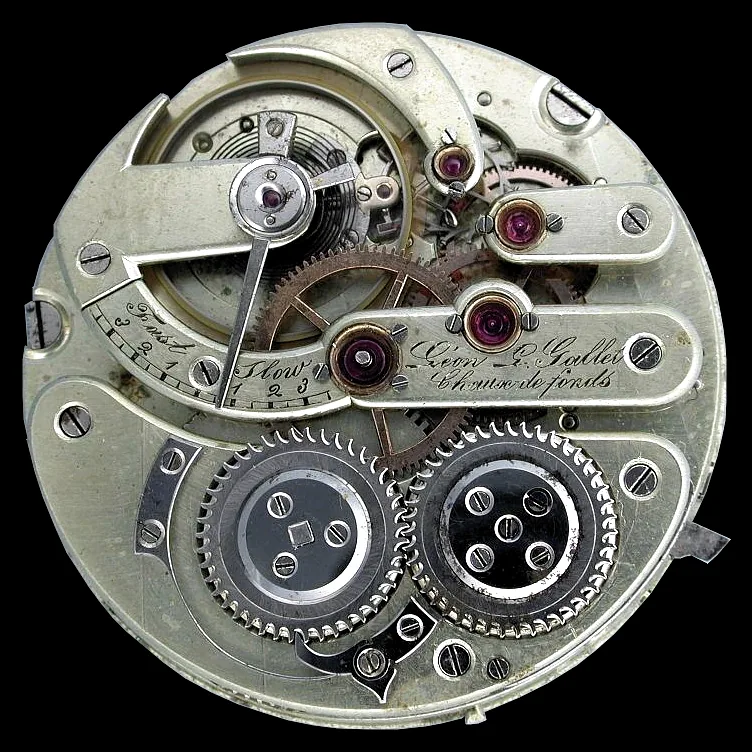
The casing ring plays a vital structural role. Machined from brass or stainless steel, it secures the AS 0s mainplate within the larger outer case while dampening lateral shocks. It must feature precise cutouts to clear the movement balance wheel, click assembly, and winding stem tube. Secure casing screws or retaining tabs are then installed to hold the assembly motionless. This ensures that wrist movement does not translate into kinetic force on the delicate winding stem or balance staff pivots.
5. Crown and Stem Solutions
Navigating the winding stem and crown integration is arguably the most technically demanding phase when you convert as 0s pocket watch into wristwatch configurations. Original pocket watch stems were thick, long, and often featured square-profile winding arbors mated to case-bound sleeves. In contrast, modern wristwatches utilize threaded winding stems mated to threaded crowns with integrated rubber O-ring seals for dust and moisture defense.
To bridge this technological gap, the watchmaker must determine the thread tap size of the original AS 0s stem (often non-standard obsolete Swiss taps, roughly equivalent to modern Tap 10 or Tap 9). If the original stem is damaged or unsuited for a wrist crown, a replacement stem must be custom turned on a watchmaker's lathe from hardened carbon steel (W1 or O1 drill rod), annealed, turned to proper dimensions, squared on a milling attachment or filing block, threaded, and finally hardened and tempered to a straw-blue color.
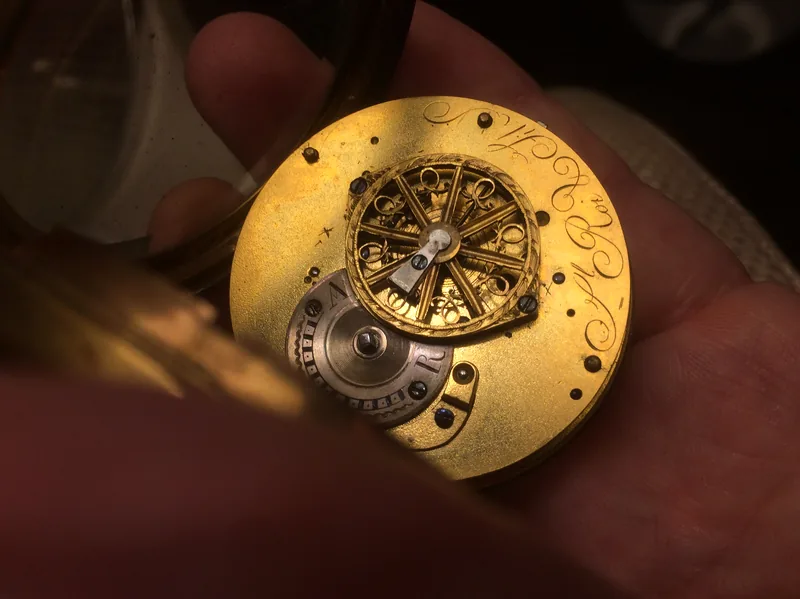
Once stem geometry is secured, selecting the crown requires balancing historical aesthetics with mechanical functionality. Vintage-style onion, pumpkin, or trench-style cabochon crowns maintain the early 1900s aesthetic while accommodating double internal rubber seals. The length of the stem must be calculated down to hundredths of a millimeter: too long, and the crown sits proud of the case tube, exposing the stem to bending forces; too short, and the keyless works will fail to click firmly into the setting or winding detents.
6. Dial and Hand Considerations
The visual identity of an AS 0s conversion hinges heavily on dial preservation and hand alignment. Original AS 0s dials are predominantly cold enamel (vitreous enamel fired over copper plates), metal silvered, or painted paper-dial variants. Vitreous enamel dials are virtually impervious to UV fading but are extremely prone to hairline fracturing and edge chipping during disassembly. Great care must be taken when lifting the dial; special hand-removing levers and dial protectors are mandatory.
Dial feet orientation presents another structural geometry problem. Pocket watches are laid out as either "open-face" (Lépine caliber, where the winding stem is at 12 o'clock and seconds sub-dial is at 6 o'clock) or "savonnette" (hunter caliber, where the winding stem is at 3 o'clock and seconds sub-dial is at 6 o'clock). If an open-face AS 0s movement is placed into a standard wristwatch case where the stem exits at 3 o'clock, the dial graphics will be rotated 90 degrees clockwise—placing 12 o'clock where 3 o'clock should be!
To correct this, watchmakers must either source a hunter-layout AS 0s movement, custom-print a re-oriented dial, or carefully reposition the copper dial feet. Relocating dial feet on an enamel dial requires removing the original soldered copper pins using a precision milling head, cleaning the copper substrate, and applying new dial feet using silver solder or high-strength anaerobic epoxy compounds to avoid heat-cracking the enamel faceplate. Hands must then be adjusted; vintage pocket watch hand sockets often differ in diameter from modern standards, requiring hand hole re-bushing or custom hole-closing using a staking set.
7. Why 0s is less common for conversion
While large 16s and 18s pocket watches are routinely modified by hobbyists and custom workshops, genuine AS 0s conversions remain significantly rarer in the horological market. The main reason is sheer scale. At ~30mm in movement diameter, the AS 0s requires an outer case diameter of roughly 36mm to 38mm. While this produces a beautifully proportioned, historically accurate mid-size wristwatch for modern wear, the ultra-fine tolerances make working on an AS 0s far more unforgiving than working on larger pocket calibers.
Many restorers seeking modern antique pocket watch conversions opt for larger pocket movements because off-the-shelf conversion cases are widely mass-produced overseas for 44mm to 48mm builds. Finding a pre-fabricated **as 0s pocket watch to wrist conversion case** is exceptionally difficult; almost every successful build requires bespoke machining, custom casing rings, or modification of vintage trench watch donor cases. The lack of drop-in parts deters casual builders, reserving AS 0s conversions for skilled artisans equipped with micro-lathes and specialized staking tools.
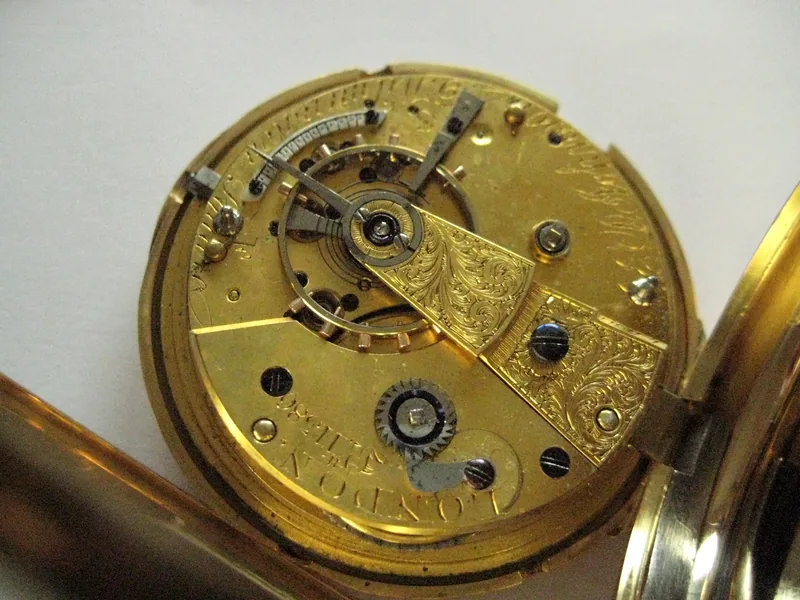
Additionally, spare mechanical parts for 100-year-old A. Schild 0-size calibers are no longer available in supply house catalogs. If a balance staff pivot breaks or a winding pinion loses a tooth during conversion, the part cannot simply be ordered online; it must be custom-turned on a lathe or sourced from a compatible "donor" AS movement. This high barrier to entry reduces the total number of conversions completed, making a well-executed AS 0s project a highly sought-after, rare collectible among vintage watch connoisseurs.
8. Final Thoughts on AS 0s Conversions
Successfully undertaking a project to convert AS 0s pocket watch into wristwatch form is the ultimate homage to early 20th-century Swiss horological ingenuity. These movements represent a fascinating technological bridge—crafted in an era when hand-finished pocket watches reigned supreme, yet sized perfectly to usher in the modern age of wrist-worn timekeeping. When properly serviced, re-cased, and regulated, an AS 0s movement delivers outstanding reliability and timeless vintage charisma.
For collectors and watchmakers alike, the process requires equal parts historic reverence and mechanical ingenuity. From re-engineering keyless works to custom turning stem adapters and hand-fitting enamel dials, every step demands patience and precision. The final result is not merely a converted timekeeper, but a tangible piece of wearable history—rescuing a historic A. Schild caliber from an obscure pocket watch drawer and giving it a dynamic new life on the wrist for generations to come.