1. Historical Background of AS 10s Movements
The history of A. Schild S.A. (commonly known as AS) is fundamentally intertwined with the golden age of Swiss industrial horology. Founded in 1896 by Adolph Schild in Grenchen, Switzerland, A. Schild quickly established itself as one of the premier manufacturers of high-grade ébauches (raw, unadjusted movement blanks). By the early 20th century, AS produced millions of robust, highly accurate movement blanks supplied to dozens of prestigious Swiss watch houses and international private-label brandings. Among their vast portfolio, the "10s" (10-size) pocket watch calibers manufactured between the late 1900s and early 1930s held a special position in horological transition.
The 10-size movement standard, measuring approximately 38mm to 39mm in plate diameter (roughly equivalent to 15.75 to 16.5 Lignes in traditional Swiss sizing), was designed during an era when pocket watches were gradually slimming down from the massive 18s and 16s railway standards of the late 19th century. As men's tailoring shifted and utility demanded sleeker timepieces, the AS 10s movement filled the demand for a compact, durable, and highly reliable engine. These movements were built with exceptional metallurgic standards, featuring heavy nickel-plated or gilded brass plates, cut bimetallic balance wheels, and finely finished steel gear trains.
During World War I and the immediate post-war era, many of these mid-sized AS pocket movements found their way into early transitional wristwatches and officer's pieces. However, millions remained in traditional pocket watch encasements. Today, as collectors and master watchmakers look to preserve vintage Swiss horology, the decision to convert as 10s pocket watch into wristwatch configurations offers a direct bridge between early 20th-century bench precision and contemporary wrist wearability.
2. Technical Specifications and Movement Architecture
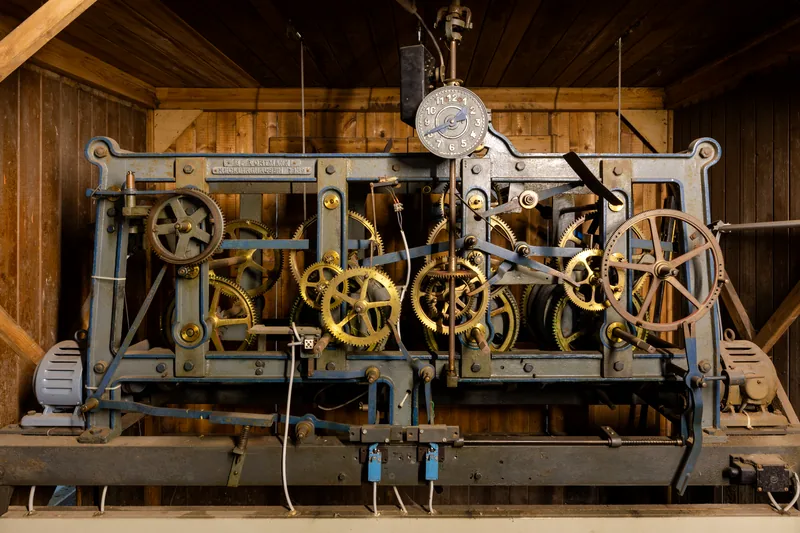
Understanding the architectural blueprint of an AS 10s caliber is paramount before making a single cut or lathe turn. Structurally, most AS 10s movements feature a traditional finger-bridge or three-quarter plate configuration. The baseplates are exceptionally rigid, constructed from dense brass that has been hot-stamped and electroplated in nickel or gold. The escapement design utilizes a classic Swiss straight-line lever, operating at a standard frequency of 18,000 vibrations per hour (2.5 Hz). This slow, deliberate beat produces the sweeping central balance motion and distinctive acoustic tick that modern mass-produced calibers simply cannot replicate.
From a technical standpoint, higher-grade AS 10s variants feature between 15 and 17 jewels, with rubies set in friction-fit settings or polished brass chatons. The balance assembly typically includes a cut bimetallic compensation balance with solid gold or brass timing screws, paired with a blue-steel Breguet overcoil hairspring. This combination provides excellent compensation for thermal expansion and isometric variations. The mainspring barrel is driven by a high-torque mainspring housed in a safety-barrel arbor, designed to release steady power to the center wheel, third wheel, fourth wheel, and escape pinion over a power reserve of approximately 30 to 38 hours.
Crucially, AS 10s movements were produced in both Lépine (open-face) and Savonnette (hunter-case) layouts. In a Lépine configuration, the winding stem, center canon, and sub-seconds dial reside along a single vertical axis (12 o'clock stem with 6 o'clock sub-seconds). In a Savonnette configuration, the stem is at a 90-degree angle to the sub-seconds pivot (3 o'clock stem with 6 o'clock sub-seconds). This structural geometry heavily dictates how the movement aligns when mounted into a modern wristwatch case.
3. Challenges of Converting AS 10s to Wristwatch
When clients ask, can you convert as 10s pocket watch mechanics into a modern wrist-worn timekeeper, the answer is an emphatic yes—provided you understand the intrinsic mechanical trade-offs. The primary technical hurdle involves shock resistance. Vintage AS 10s movements were designed prior to the widespread implementation of shock-absorbing balance jewels like Incabloc or KIF (which emerged in the mid-1930s). The balance staff pivots on an AS 10s are microscopically thin, often measuring just 0.07mm to 0.09mm in diameter, riding in fixed jewel cap settings. Subjecting an unconverted pocket movement to the daily impacts of wrist movement—such as clapping, typing, or accidental drops—can instantly snap an un-protected balance pivot.
Another major challenge lies in the orientation of the dial layout. If you elect to convert a Lépine (open-face) AS 10s caliber, placing the winding crown at the standard modern 3 o'clock position on the wrist will rotate the dial 90 degrees clockwise, placing the original 12 o'clock mark at 3 o'clock and the sub-seconds register at 9 o'clock. To keep the 12 o'clock index at top, the crown must reside at 12 o'clock (bullhead style). Conversely, a Savonnette movement naturally positions the winding crown at 3 o'clock while maintaining the small seconds sub-dial neatly at 6 o'clock, making hunter movements highly sought-after for standard wrist conversions.
Finally, mainspring torque and gear train wear present distinct modern issues. Pocket watch movements were built with thick mainsprings that generate significantly higher torque than delicate modern wrist movements. Installing a fresh, modern mainspring made of white-alloy nivaflex material requires careful torque calculation to prevent "knocking" or "rebounding" (where the impulse pin hits the back of the pallet fork horn due to excessive power). A watchmaker must meticulously re-calculate pallet stone engagement and wheel end-shake before finalizing the conversion.
4. Lug Welding and Case Selection
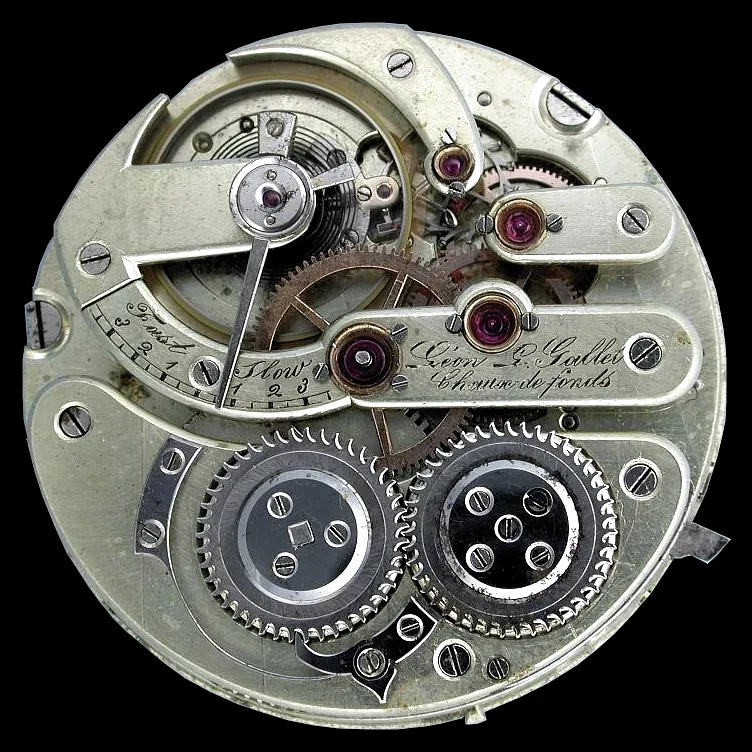
Selecting or constructing an appropriate enclosure is the structural cornerstone of any successful conversion project. Obtaining a purpose-built as 10s pocket watch to wrist conversion case requires precise measurement of the caliber's outer plate diameter, casing ledge height, stem height, and total movement depth. Modern conversion cases are typically machined from 316L stainless steel, featuring front and rear sapphire or mineral crystals. These cases utilize an internal brass or aluminum casing ring turned on a watchmaker’s lathe to securely clamp the AS 10s caliber without placing structural stress on the movement bridges.
For collectors seeking historical authenticity, an alternative method involves taking the original pocket watch case—whether made of solid silver, nickel, or gold-fill—and hand-soldering custom wire lugs directly to the case body. This technique mirrors the early 1910s adaptation methods seen in authentic WW1 trench watches. To accomplish this, the watchmaker strips the case of all movement components, crystals, and gaskets. Using a micro-torch or specialized TIG welding rig, silver-solder (with a melting point around 650°C) is applied to attach hand-bent sterling silver or nickel wire lugs to the 12 o'clock and 6 o'clock positions of the outer rim.
Thermal control during lug welding is critical. Excessive heat can warp the case snap-rims or hinge joints, preventing the bezel or case back from snapping tight. After welding, the case must be quenched, pickling-treated to remove oxidation scale, hand-filed, and mirror-polished. Modern custom cases offer superior water and dust seals, whereas modified antique cases offer unmatched patina and historic charm, though they remain strictly non-waterproof.
5. Crown and Stem Solutions
Engineering a reliable winding and setting system is often where novice custom builders encounter significant roadblocks. Antique AS 10s pocket movements utilize either a pendant-set (sleeve-set) mechanism or a push-pin/lever-set configuration. In a classic pendant-set pocket watch, the setting sleeve resides inside the pocket watch case neck, not on the movement itself. When placing the movement into a custom modern case, this external sleeve system is missing, meaning the stem will not automatically latch into a "set" or "wind" position without modification.
To resolve this, the watchmaker must convert the mechanism to a modern push-pull setting system or turn a custom winding stem on a precision lathe. The stem thread tap size on vintage AS 10s movements is typically metric (often Tap 8 or Tap 9, approximately 0.9mm to 1.0mm in thread diameter), which must match the female threading of the selected wristwatch crown. If an original stem is too short for the new wristwatch case dimensions, a precision micro-extension stem must be joined using thread-locking compound, or a new stem must be fabricated from annealed W1 tool steel, turned, threaded, hardened in oil, and tempered to a spring-blue state.
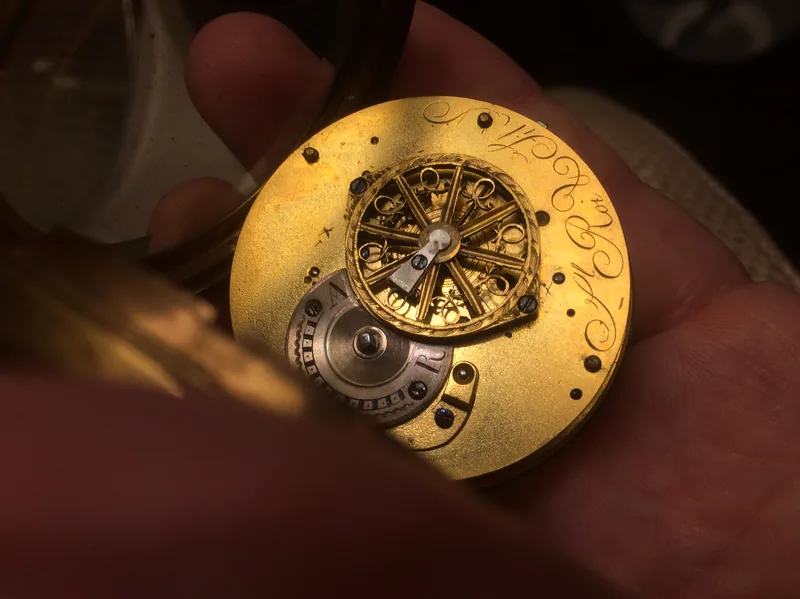
Crown selection must strike a balance between horological period correctness and practical ergonomics. A large onion crown or oversized pumpkin crown provides the necessary leverage to wind the heavy mainspring of a 10s pocket caliber. Furthermore, modern conversion cases incorporate internal nitrile rubber O-rings inside the crown stem tube to offer basic moisture and dust barrier defense, protecting the uncased AS movement from ambient environmental degradation.
6. Dial and Hand Considerations
The visual identity of an AS 10s conversion relies heavily on dial retention and hand fitting. Original AS 10s pocket watches frequently featured vitreous enamel dials fired on copper baseplates. These double-sunk or single-sunk enamel dials are timeless and immune to UV fading, but they are extremely brittle. Removing dial feet or attempting to modify an enamel dial can induce spider-web cracking across the surface. If the original dial feet do not align with the securing set-screws on the modern conversion case ring, watchmakers must avoid drilling the enamel. Instead, low-profile copper dial-feet copper solder pads or non-destructive dial adhesive dots are utilized.
Hand fitting presents its own mechanical precision requirements. The canon pinion height and hour wheel pipe height on an AS 10s pocket caliber were originally designed to clear flat pocket watch crystals with ample internal clearance. Modern wrist conversion cases—especially those with flat or subtle double-domed sapphire crystals—require close vertical tolerances. The watchmaker must ensure that the hour hand, minute hand, and sweep/sub-second hand maintain absolute parallelism with zero friction against each other or the inner crystal surface.
Because vintage hand hole diameters rarely match modern off-the-shelf hands, original hands should be preserved whenever possible. If refinishing original blued-steel hands, the watchmaker strips old oxidation, polishes the steel with diamantine paste on a boxwood peg, and thermally re-blues the hands on a brass-filings tray over a flame to achieve a uniform cornflower blue shade. If hole adjustments are needed, hand pipes are carefully broached wider using five-sided steel broaches or closed using a staking set and hollow punches.
7. Why 10s is more common for conversion
Among the vast spectrum of American and Swiss pocket watch sizes—ranging from tiny 0s ladies pendants up to massive 18s railroad watches—the 10-size standard stands out as the absolute sweet spot for conversions. An 18s movement features a plate diameter of 44.86mm; when housed in a protective wristwatch case, the resulting watch measures a massive 48mm to 52mm across, making it virtually unwearable on an average human wrist. Conversely, small 0s or 3s movements lack the visual presence and robust mechanical architecture that collectors crave in a converted piece.
The 10s caliber movement diameter (~38.3mm) allows watchmakers to craft a finished wrist timepiece measuring roughly 41mm to 43mm in case diameter. This falls squarely within modern wrist preferences for sports and heritage watches, comparable to modern pilot watches or large dress timepieces. Furthermore, the broad surface area of the 10s bridges offers ample real estate for viewing the balance wheel, winding wheels, and click spring through a sapphire exhibition caseback.
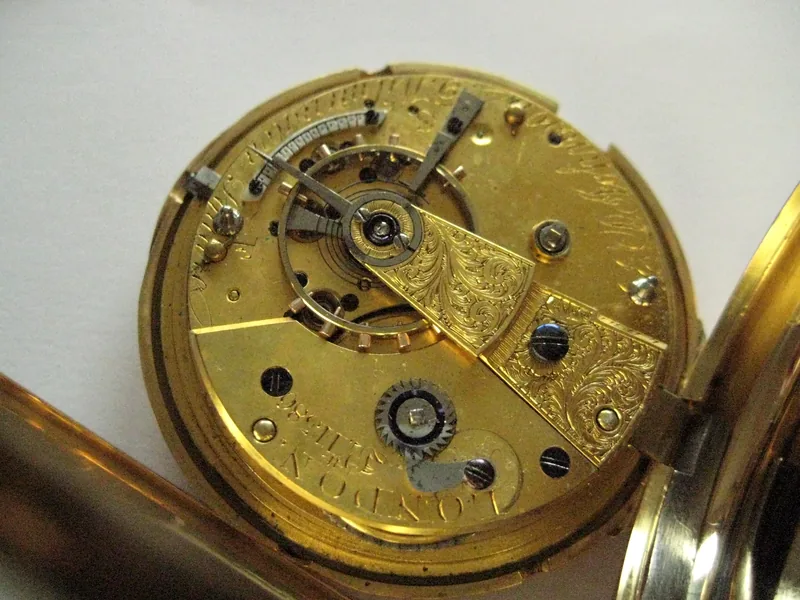
Additionally, AS 10s movements are abundant in the horological secondary market. During mid-century economic swings, thousands of original solid gold and sterling silver pocket watch cases were melted down for bullion scrap, leaving behind high-grade, fully functional "orphan" AS movements. Converting these orphaned calibers into wristwatches provides an ethical and practical path for preserving mechanical history. Readers interested in exploring broader projects across vintage platforms can read more about antique pocket watch conversions and how early Swiss horology laid the groundwork for modern independent watchmaking.
8. Final Thoughts on AS 10s Conversions
Learning how to convert as 10s pocket watch into wristwatch specifications requires a harmonious blending of traditional watchmaking techniques, metal fabrication, and practical restoration principles. It is a technical process that demands respect for the original movement while adapting its mechanical architecture to withstand the dynamic forces of modern wrist wear. From lathe-turning custom stem adapters to selecting proper shock-mitigating case seals, every step requires patience and precision.
When completed properly, a converted AS 10s watch is not merely a novelty; it is a wearable piece of living mechanical history. The slow 18,000 vph rhythm, the deep blue of thermally treated steel screws, and the sweeping movement of a hand-loomed balance spring offer an intimate connection to early 20th-century Swiss craft. For those contemplating the creation of a custom conversion, working with an experienced watchmaker who understands vintage movement tolerances ensures that this classic AS caliber will continue ticking reliably for another century on the wrist.