Historical Background of AS 12s Movements
The early decades of the twentieth century represented a period of radical transformation in horology. As industrial precision advanced, watchmakers transitioned from bulky pocket timepieces toward compact, wearable wristwatches. Central to this era was the emergence of the 12-size movement (commonly abbreviated as 12s), a standard measure in American and Swiss movement sizing. Among the premier suppliers of ebauches during this era was A. Schild (AS), alongside prominent American manufacturers who adopted the 12-size platform for modern, streamlined dress pocket watches.
During the First World War, soldiers began soldering wire loops onto smaller pocket watch cases to strap them to their wrists for immediate battlefield utility. These early adaptations directly inspired the formal creation of the modern wristwatch. To explore this fascinating military transition in depth, collectors often examine authentic WW1 trench watches, which bridged the gap between pocket timepieces and purpose-built wristwatches. The AS 12s platform quickly became a favorite among watchmakers due to its reliability, clean bridge layouts, and ideal physical dimensions.
As the demand for pocket watches waned throughout the mid-twentieth century, millions of high-grade 12-size movements—featuring exquisite damaskeening, screwed gold chatons, and hand-finished steel components—were left sitting idle in drawers or harvested for their solid gold and silver cases. Today, master watchmakers and custom horologists frequently choose to convert AS 12s pocket watch into wristwatch configurations, granting these historical mechanical marvels a new life on the wrist.
Technical Specifications and Movement Architecture
Understanding the internal engineering of an AS 12s movement is crucial before attempting any re-casing or mechanical conversion. In the traditional Lancashire gauge system, a 12-size movement measures approximately 1.55 inches, or 39.37 millimeters, across the pillar plate. This dimensional footprint is significantly smaller than the massive 16s (43.18 mm) or 18s (44.86 mm) railroad-grade calibers, making it uniquely suited for modern wearable wrist sizes without resulting in an unwieldy timepiece.
Mechanically, these calibers generally run at a classical frequency of 18,000 vibrations per hour (2.5 Hz), utilizing a traditional Swiss lever escapement. Higher-grade variants incorporate cut bimetallic balance wheels with gold timing screws, paired with Breguet overcoil balance springs to optimize isochronism across varying temperatures and positions. Bridge structures vary from full three-quarter plate arrangements to elegant multi-bridge layouts that beautifully highlight the train wheels, winding wheels, and click spring mechanisms.
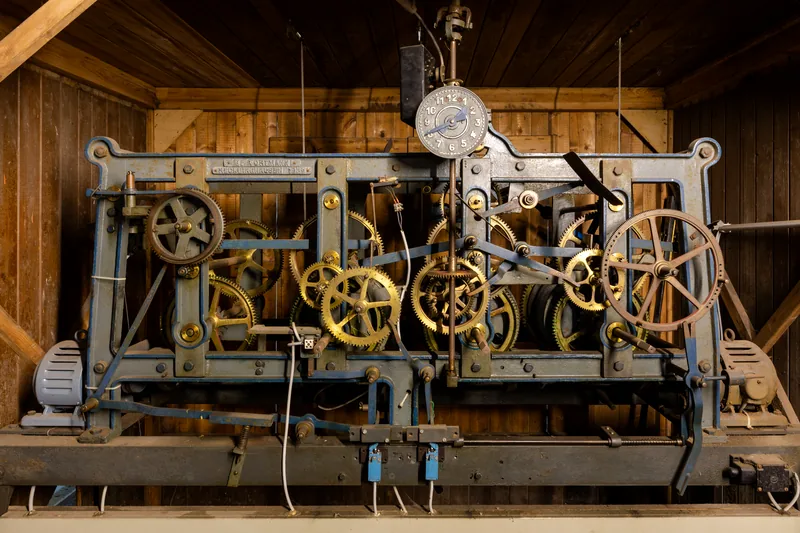
Jeweling in these movements ranges from basic 7-jewel configurations to fully adjusted 17, 19, or 21-jewel masterworks. Upper-tier executions feature endstones on the balance wheel, pallet fork, and escape wheel to minimize friction. The keyless works architecture typically employs a negative-set or positive-set stem system, depending on whether the caliber was designed primarily for American-style pendant setting or traditional European hand-setting mechanisms.
Challenges of Converting AS 12s to Wristwatch
Clients often approach the bench asking, "can you convert as 12s pocket watch movements into modern wristwatches?" While the answer is technically yes, doing so requires navigating significant engineering and structural challenges. The primary obstacle is shock resistance. Antique pocket watch movements were engineered to rest relatively motionless inside a vest pocket, protected from severe impacts. Consequently, balance staff pivots on an AS 12s movement are exceptionally thin—often measuring under 0.10 mm in diameter—and lack modern Incabloc or KIF spring-loaded shock absorption systems. A minor drop or sharp impact on the wrist can easily shear a pivot.
Another major technical hurdle involves movement orientation and dial presentation. Standard open-face pocket watch movements position the winding stem at 12 o'clock with the sub-seconds register located at 6 o'clock. If you rotate the movement inside a wristwatch case to position the crown at 3 o'clock, the running seconds sub-dial moves to the 9 o'clock position. Conversely, hunting-case (hunter) movements naturally place the crown at 3 o'clock and seconds at 6 o'clock, making them structural favorites for conversion projects.
Finally, environmental sealing presents an ongoing concern. Antique pocket watch movements were never designed to resist moisture, atmospheric humidity, or modern dust exposure. Achieving adequate water and dust resistance requires precise custom casing, high-grade O-ring gaskets around the crown stem and caseback, and careful internal tolerances to prevent movement shifting within the case shroud.
Lug Welding and Case Selection
When selecting a housing for an AS 12s conversion, watchmakers generally choose between two distinct pathways: modifying an original vintage case or employing a modern, high-precision custom case. Browsing through specialized collections of antique pocket watch conversions reveals both traditional wire-lug adaptations and modern CNC-machined enclosures designed specifically for historic movements.
For those seeking an authentic period-correct aesthetic, silver-soldering or micro-TIG welding solid silver or brass wire lugs directly to an original nickel, silver, or gold-filled pocket watch case preserves historical integrity. This process requires completely gutting the case, stripping all movement components, and applying precise heat to attach 18mm to 22mm wire loops. The case must then be carefully polished, ultrasonic-cleaned, and checked for axis symmetry so the watch sits flat against the wrist.
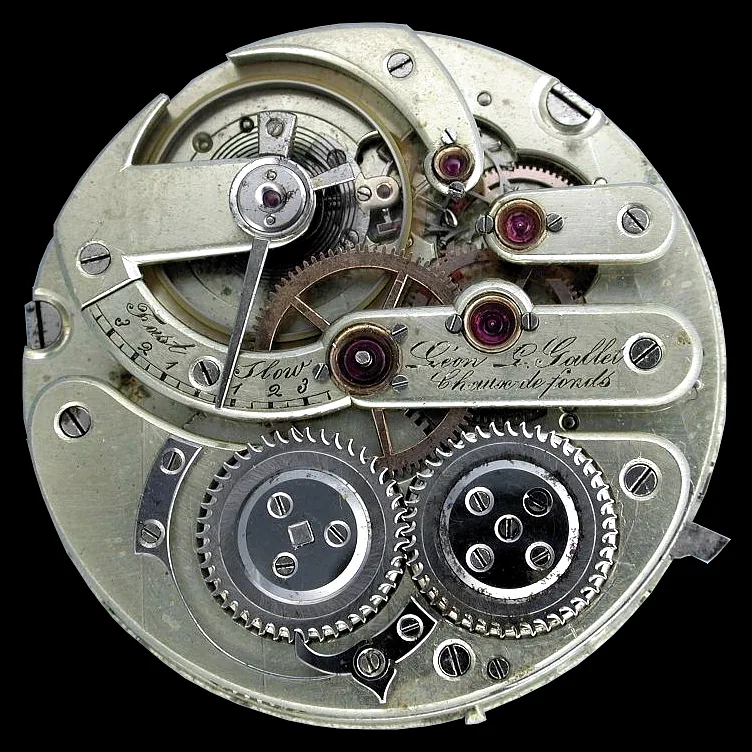
Alternatively, the most robust option for daily wear is sourcing a modern 316L stainless steel as 12s pocket watch to wrist conversion case. These cases are engineered on CNC lathes to exact internal tolerances, featuring double-domed scratch-resistant sapphire crystals on top and display casebacks fitted with mineral or sapphire glass on the rear. Internal casing rings—often turned from solid brass on a lathe—are custom-fitted to hold the 39.37 mm movement securely without putting stress on the dial edge or winding stem assembly.
Crown and Stem Solutions
Solving the crown and stem geometry is one of the most demanding tasks in any conversion project. Pocket watches frequently utilized sleeve-set (negative setting) systems built directly into the pendant of the pocket watch case rather than fully self-contained keyless works inside the movement plate. When removing an AS 12s movement from its original case, the native stem and pendant sleeve are detached, leaving the watchmaker with an bare square setting arbor.
To overcome this, a custom winding stem must be machined or selected from specialized stem blanks. This process often involves turning carbon steel stock on a watchmaker's lathe (such as a Levin or Lorch lathe) to fabricate a multi-section stem. The stem must feature a square section that precisely mates with the movement's sliding pinion, alongside a threaded section (typically Tap 9 or Tap 10 thread pitch) to accept modern oversized crowns.
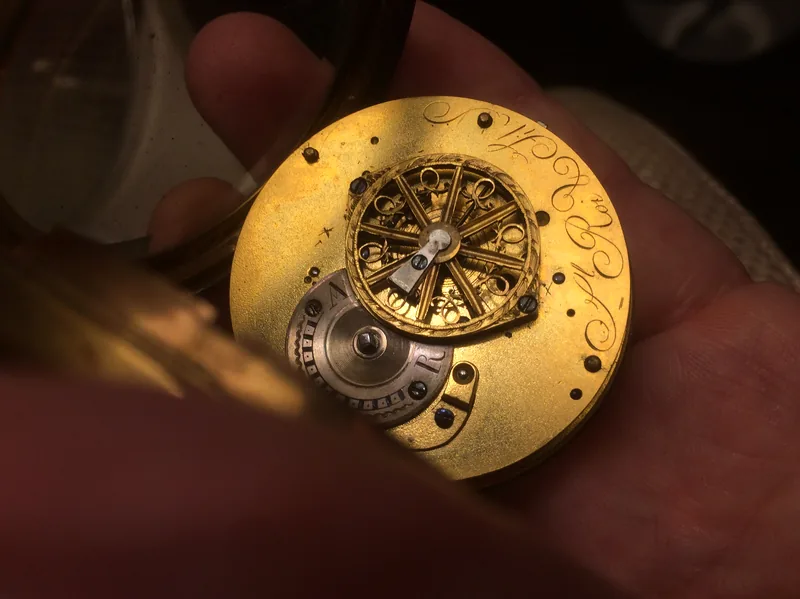
Because wristwatches require protection against moisture and debris, the crown selection goes beyond mere aesthetics. Oversized onion or pumpkin crowns with internal rubber O-rings are preferred. The crown neck must slide smoothly over a extended case tube equipped with exterior or interior gaskets. This creates a tight seal while permitting the smooth rotational torque needed to wind the heavy mainspring of a 12-size pocket movement without binding.
Dial and Hand Considerations
The dial and hands serve as the visual centerpieces of a converted timepiece, yet they present unique structural fragility. Original AS 12s dials are frequently constructed of vitreous enamel baked over a thin copper baseplate. Vitreous enamel is essentially glass; attempting to drill, cut, or alter dial feet on an original enamel dial will instantly cause catastrophic stress cracking across the dial face.
If the original dial feet do not align with the securing set-screws on the modern conversion case ring or movement pillar plate, watchmakers must employ low-temperature soldering techniques or specialized dial feet pads. Never attempt to solder dial feet using high-heat torches on an enamel dial. Instead, copper dial feet can be affixed using specialized conductive epoxy or precision silver-bearing solder applied with localized electrical soldering equipment to prevent heat shock to the porcelain surface.
Hand fitting presents its own set of friction tolerances. The center wheel tube, cannon pinion, hour wheel, and fourth wheel pivot post dimensions on an AS 12s movement are vastly larger than modern wristwatch standards. Original blued-steel spade, cathedral, or Breguet hands should be preserved whenever possible. If replacement hands are required, the hand sleeves must be custom-staked, closed, or reamed on a staking set to ensure exact interference fits over the wheel posts without touching the inner surface of the crystal.
Why 12s is More Common for Conversion
Within the horological community, the decision to convert AS 12s pocket watch into wristwatch builds relies on an ideal proportion calculation. Pocket watch movements come in various standard sizes, from tiny 0s (approx. 29.62 mm) up to massive 18s (approx. 44.86 mm). While an 18s or 16s movement yields a finished wristwatch case measuring 48mm to 52mm in diameter—which proves impractically large for comfortable daily wear—the 12s movement hits the dimensional "sweet spot."
With a movement diameter of 39.37 mm, an AS 12s movement can be encased within a sleek 42mm to 44mm wristwatch housing. This matches modern luxury watch dimensions popular in high-end horology today. The substantial case diameter provides ample visual real estate to showcase historic hand-finishing, open-work dials, or intricate skeletonization without appearing disproportionate on the human wrist.
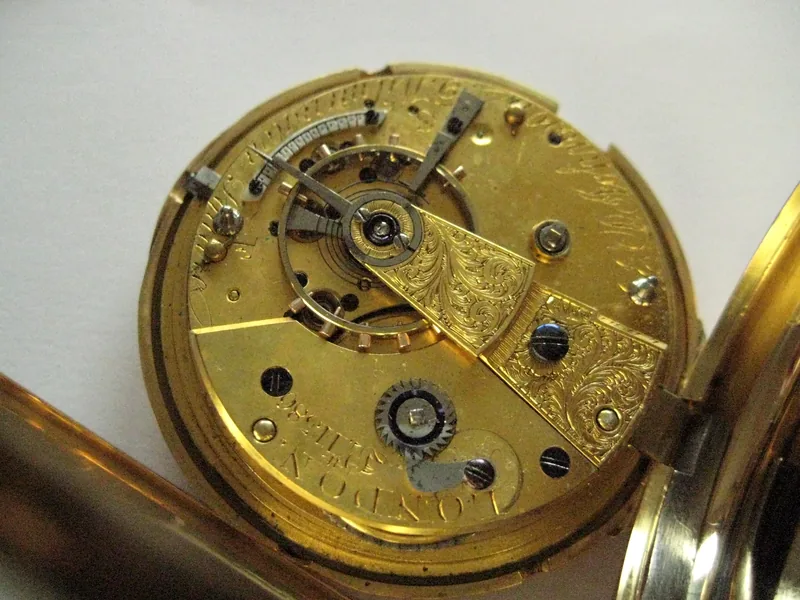
Furthermore, 12s movements from the early-to-mid 20th century are widely available in exceptionally clean mechanical condition. During this golden era of watchmaking, manufacturers produced millions of these high-grade calibers. Consequently, finding replacement balance staffs, mainsprings, and gear train components is far easier for 12-size movements than for obscure, ultra-small lady's ring watch or lapel movements. This availability makes the 12s movement the premier technical candidate for modern custom conversions.
Final Thoughts on AS 12s Conversions
Converting a classic AS 12s pocket watch into a functional, wearable wristwatch is a rewarding union of historic preservation and fine mechanical craftsmanship. It bridges past and present, taking movement engineering that was once hidden inside a vest pocket and elevating it into a visible piece of wearable art. When executed properly by a skilled horologist, a 12s conversion respects the historical provenance of the caliber while giving it decades of renewed utility.
However, successful conversion demands strict adherence to traditional watchmaking techniques. From turning custom stems on a precision lathe and calculating balance staff clearances, to mounting fragile enamel dials and selecting a high-grade as 12s pocket watch to wrist conversion case, every step requires extreme patience and horological expertise. Shortcuts inevitably result in damaged balance pivots, cracked dials, or compromised keyless works.
Ultimately, these converted timepieces carry a story that mass-produced modern wristwatches simply cannot replicate. Wearing an AS 12s conversion means carrying a century of mechanical innovation, intricate hand-finishing, and horological heritage right on your wrist—a true testament to the timeless durability of fine mechanical watchmaking.