Historical Background of AS 14s Movements
The history of Swiss horology at the turn of the twentieth century is defined by rapid industrialization, standardization, and the master engineering of raw movement blanks, known as ébauches. At the center of this revolution was A. Schild SA (AS), founded by Adolph Schild in 1896 in Grenchen, Switzerland. By the early decades of the 1900s, A. Schild had established itself as one of the most prolific and technically respected movement manufacturers in the world, supplying durable, high-grade mechanical movements to hundreds of Swiss brands. Among their most celebrated designs was the 14-ligne (often abbreviated as 14s or 14''') pocket watch caliber family. These movements were crafted during a crucial transitional era when mechanical timekeeping was evolving from pocket-bound waistcoats to wrist-worn instruments.
During the early 1900s and throughout the First World War, the 14-ligne pocket watch movement occupied a unique position in horological architecture. Measuring approximately 31.58mm in diameter, the 14s movement was traditionally designed for small open-face pocket watches, pendant watches, and high-grade dress watches. However, as military officers began requesting timepieces that could be read instantly in battle, watchmakers recognized that the 14-ligne dimensions were ideal for adaptation. It was during this period that the 14s movement laid the groundwork for authentic WW1 trench watches, bridging the gap between traditional nineteenth-century pocket watch construction and the emerging modern wristwatch.
Today, vintage watchmakers and restoration specialists frequently turn to the A. Schild 14s platform when attempting modern horological adaptations. The historical integrity, high material quality, and repairable layout of these movements make them exceptional subjects for custom projects. When horologists undertake a project to convert as 14s pocket watch into wristwatch configurations, they are not merely performing a mechanical modification; they are continuing a century-old tradition of military and civilian adaptation that redefined how humans interact with wearable timepieces.
Technical Specifications and Movement Architecture
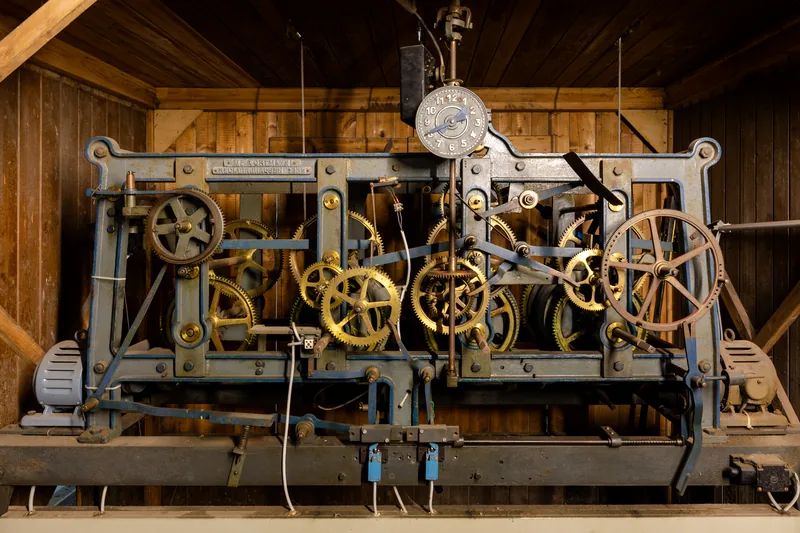
To successfully execute a conversion, a watchmaker must first understand the precise micro-mechanical architecture of the AS 14s movement family. Measured using the traditional French line system, a 14-ligne movement translates to a plate diameter of 31.58mm, with complete movement heights typically ranging between 4.2mm and 4.8mm depending on the specific bridge layout and complication setup. The baseline architecture features a classical Swiss lever escapement, operating at a traditional frequency of 18,000 vibrations per hour (2.5 Hz). This slow beat rate gives the movement its distinctive, acoustic tick while maintaining minimal kinetic wear on the gear train pivots over decades of operation.
The gear train of an AS 14s is constructed with high-copper-content brass or nickel-plated mainplates and bridges, often decorated with Geneva stripes (Côtes de Genève) or circular graining (perlage) on superior grades. The power delivery stems from a robust mainspring contained within a stationary barrel, delivering approximately 36 to 38 hours of power reserve. Lower-grade variants relied on 7 or 15 jewels, while higher-grade military and luxury executions boasted 17 or more functional rubies, often set in chatons or press-fit olive jewels. The balance assembly typically incorporates a cut bimetallic compensation balance wheel paired with a blue steel Breguet overcoil hairspring, though flat hairspring variants are common in basic executions. These hairsprings provide excellent concentric expansion, minimizing positional errors when properly poised.
Another crucial element of the AS 14s architecture is its stem-wind and stem-set or pin-set mechanism. Unlike modern mechanical movements that rely on a sliding pinion held entirely by a modular keyless works cover plate, older AS 14s calibers utilize specialized setting levers, detent springs, and winding pinions suited for pocket watch cases. Understanding the height of the winding stem axis relative to the center line of the mainplate—known as the stem height—is critical when attempting to seat the mechanism inside a modern wristwatch housing.
Challenges of Converting AS 14s to Wristwatch
When clients or collectors approach a workshops asking, "can you convert as 14s pocket watch into a modern wearable piece?" the answer is always a qualified yes—provided the watchmaker is prepared to overcome significant engineering hurdles. The primary challenge stems from the fundamental differences in case geometry, shock resistance, and sub-second layout between pocket watches and wristwatches. Pocket movements were never designed to withstand the violent multi-axis impacts, accelerations, and directional changes experienced by modern wristwear.
The single greatest mechanical vulnerability in an un-modified AS 14s is the absence of modern balance shock protection. Calibers produced prior to the mid-1930s lack Incabloc, Kif, or Novodiac shock-absorbing jewels. The delicate balance pivots—often measuring just 0.08mm to 0.11mm in diameter—rest directly in rigid synthetic ruby jewels. A minor drop or sharp knock to a wrist-mounted conversion can easily shear the balance staff pivot, requiring a watchmaker to turn a replacement balance staff from raw steel stock on a watchmaker's lathe. Furthermore, these movements lack anti-magnetic shielding, making the balance spring susceptible to residual magnetic fields from modern electronic devices.
The second major structural challenge lies in the dial and sub-seconds orientation. Pocket watches generally fall into two dial layouts: Lépine (open-face, where the winding stem is at 12 o'clock and the running sub-seconds hand is at 6 o'clock) and Savonnette (hunter case, where the stem is at 3 o'clock and sub-seconds are at 6 o'clock). If you re-case a Lépine-style AS 14s movement into a wristwatch case with the winding crown positioned at 3 o'clock, the running seconds sub-dial will automatically rotate to the 9 o'clock position. While this asymmetrical layout is historically charming, achieving a standard 6 o'clock seconds register requires either custom dial manufacturing, specialized intermediate gearing, or sourcing a rarer Savonnette ébauche.
Lug Welding and Case Selection
Housing an antique movement safely requires a meticulous approach to case mechanics. To ensure the physical security of the movement, the watchmaker must locate or fabricate an accurate as 14s pocket watch to wrist conversion case. Modern conversion cases are typically CNC-machined from 316L stainless steel, designed specifically to accommodate the 31.58mm movement diameter alongside a custom-turned brass or steel movement retention ring. These rings act as a bridge between the vintage movement boundary and the interior walls of the modern wrist case, absorbing mechanical tolerance variations and providing secure mounting points for casing clamps.
For horologists seeking an authentic, period-correct aesthetic, converting an original sterling silver, nickel, or gold-filled pocket watch case via lug welding remains a popular, albeit delicate, alternative. This process involves silver-soldering or micro-TIG welding solid steel or brass wire lugs directly onto the perimeter of the original pocket watch middle case. The step-by-step procedure requires extreme precision:
- Strip the Case: Completely dismantle the pocket watch middle, removing the movement, bezel, crystals, pushers, and hinges to prevent heat damage.
- Surface Preparation: Micro-blast or file the target entry points at 12 o'clock and 6 o'clock to expose clean, unoxidized parent metal suitable for bonding.
- Jig Alignment: Secure the wire lugs (typically 18mm to 20mm outer spacing) using a high-precision watchmaker's soldering jig to ensure absolute parallelism and correct angle relative to the wrist wrist plane.
- Low-Heat Brazing / TIG Welding: Apply silver solder flux and introduce heat using a micro-torch, or execute precise micro-TIG spot welds using argon gas shielding. Heat control is paramount to prevent warping the delicate hinge seats or bezel threads.
- Finishing & Polishing: Clean off flux residue in an acid pickle bath, hand-file the joint radii smooth, and finish with graduated abrasive paper before final buffing.
Whether utilizing a newly machined conversion case or welded vintage wire lugs, double-gasket seals must be integrated around the caseback and crown tube. Antique pocket watch cases offer zero water resistance; thus, an ideal modern conversion case incorporates silicone O-rings and custom synthetic sapphire or high-domed acrylic crystals to shield the movement from modern ambient moisture and atmospheric humidity.
Crown and Stem Solutions
One of the most complex mechanical tasks when attempting to convert as 14s pocket watch into wristwatch form is resolving stem geometry and winding clearance. Original pocket watch winding stems were engineered to interface with pocket watch pendant sleeves, which exerted constant spring tension on the square section of the stem to hold it in the setting or winding mode. When transferring an AS 14s movement into a wristwatch case, this external pocket watch sleeve is eliminated, requiring the keyless works to function independently or via a custom adapted stem assembly.
Because the original stems are rarely long enough to span the distance from the movement edge, through a modern case wall, and into a wristwatch crown, the watchmaker must craft a custom stem or fit a hardened stem extender. Fabrication on a precision lathe is often necessary. The stem must feature an exact square profile to slide effortlessly through the winding pinion, a polished journal for smooth rotation within the mainplate bridge, and precise thread sizing—typically standard Tap 10 (0.90mm) or Tap 9 (0.80mm)—to accommodate a modern wrist-watch crown.
Crown selection is equally critical. The crown must match the aesthetic personality of the watch—such as an onion, pumpkin, or oversized trench-style crown—while maintaining a functional internal dynamic O-ring seal over the case tube. The inner stem length must be calculated down to hundredths of a millimeter. If the stem is trimmed too short, the movement will fail to engage the hand-setting clutch; if cut too long, excessive axial pressure will be applied directly to the setting lever when the crown is pushed flush against the case tube, leading to internal binding or bent keyless components.
Dial and Hand Considerations
The dial and hand architecture of an AS 14s movement demands delicate handling during conversion. Most authentic early twentieth-century AS 14s pocket watches feature fired vitreous enamel dials laid over a copper substrate. While enamel is immune to fading and chemical degradation, it is extraordinarily brittle. Age-related hairline cracks, subtle fractures around dial foot attachment points, or chips around the center hole can easily catastrophic shatter if subjected to improper mechanical pressure during disassembly or re-mounting.
When working with original enamel dials, mounting the movement in a new case often requires altering the original dial foot locations. Watchmakers avoid using traditional high-heat soldering, as the thermal shock will instantly crack the glass enamel face. Instead, modern horologists employ specialized capacitive-discharge dial foot spot welders, or precise chemical bonding agents (such as structural epoxy) applied to copper mounting tabs. If an original dial is ruined or missing, a replacement dial can be custom-machined from brass, printed, and hand-finished. Collectors interested in broad historical transformations can explore various antique pocket watch conversions to appreciate how original dials are preserved across different movement lineages.
Hand fitting presents its own unique set of dimensional requirements. Antique pocket watch hands feature specific post hole diameters that rarely match modern off-the-shelf wristwatch hand sets. The dimensional tolerances for a typical AS 14s post assembly are detailed in the reference table below:
| Component Component | Average Arbor/Pipe Diameter (mm) | Customization Requirement |
|---|---|---|
| Hour Wheel Pipe | 1.45mm – 1.55mm | Ream or stake hand hub for friction fit |
| Cannon Pinion (Minute) | 0.85mm – 0.95mm | Broach center hole to exact clearance |
| Sub-Seconds Pivot | 0.18mm – 0.22mm | Precision closing/broaching of tiny second bit hand |
To preserve historical aesthetics, watchmakers typically re-use the original hands—such as blued-steel Spade, Cathedral, or Poire Squelette styles. These hands are carefully un-staked, hand-polished, and thermally re-blued at 290°C (554°F) over a bed of brass filings to restore their deep, iridescent blue oxidation layer, ensuring high contrast against the dial face.
Why 14s is More Common for Conversion
In the world of custom watchmaking, movement sizing dictates the ultimate success and wearability of a conversion project. While larger American pocket watch movements—such as the massive 16-size (43mm diameter) or 18-size (45mm diameter) calibers from Hamilton, Elgin, or Waltham—are frequently converted, they result in enormous wristwatch cases measuring 48mm to 52mm across. These oversized dimensions are often uncomfortable, top-heavy, and unsuited for daily wrist wear.
By contrast, the AS 14s platform sits in the horological "sweet spot." Featuring an ébauche diameter of 31.58mm, a fully cased AS 14s wristwatch achieves a finished external diameter of 38mm to 40mm, with a total thickness under 11mm. This proportion aligns perfectly with modern wristwear standards, offering commandingly classic wrist presence without compromising ergonomic comfort under a shirt cuff.
Furthermore, the A. Schild 14s family was produced in substantial volumes across dozens of minor variations. This abundance means that spare parts—such as balance staffs, winding pinions, click springs, and escape wheels—remain far easier to source from vintage material houses compared to bespoke or low-volume Swiss calibers. The combination of ideal spatial dimensions and mechanical component availability cements the 14s platform as the premier candidate for custom pocket-to-wrist transformations.
Final Thoughts on AS 14s Conversions
Successfully executing a project to convert as 14s pocket watch into wristwatch specifications represents a triumph of practical horology. It requires a master-level fusion of old-world watchmaking crafts—such as lathe turning, micro-brazing, and hand-bluing—with modern techniques like CNC case fitting and sapphire crystal integration. When completed with precision and care, a converted AS 14s transforms a dormant historical relic into a fully functional, wearable mechanical instrument.
Owners of these converted timepieces must, however, respect the inherent limitations of century-old mechanics. Without modern shock protection systems, these watches require mindful wearing habits. They should be shielded from modern aquatic environments, high-impact athletic activities, and strong magnetic fields. Regular servicing every 3 to 5 years—using high-grade modern synthetic lubricants like Moebius 9010 for high-speed pivots and HP-1300 for heavy gear train arbors—will ensure the gear train runs smooth and free of premature wear.
Ultimately, a custom AS 14s wristwatch conversion honors the rich legacy of A. Schild and the early twentieth-century watchmakers who daringly moved timekeeping from the pocket to the wrist. By preserving the mechanical heart of a vintage pocket watch and giving it a secondary life on the wrist, horologists preserve a tangible link to the golden age of Swiss micro-engineering.