1. Historical Background of AS 16s Movements
The 16-size (16s) watch caliber represents one of the most significant chapters in Western horological history. During the late 19th and early 20th centuries, American standard sizing dominated pocket watch manufacturing, setting strict dimensional baselines for movements, cases, and dials. Among the notable makers producing calibers to these exact standards was A. Schild (AS), a powerhouse Swiss ebauche manufacturer based in Grenchen. AS produced high-grade, highly reliable raw movements designed to compete directly with American giants like Waltham, Elgin, and Hamilton, while conforming to the ubiquitous 16s form factor.
The transition of carrying a timekeeper from the vest pocket to the wrist was accelerated dramatically by military necessity. During the late 19th century and through the First World War, soldiers began soldering improvised wire wire lugs directly onto traditional silver and nickel pocket cases. These early adaptations paved the way for authentic WW1 trench watches, which proved that immediate, hands-free wrist readability was superior in strategic operations. However, while early military conversions focused on smaller 0-size or 3/0-size trench movements, the industrial and civilian world eventually recognized the superior precision and durability offered by larger platforms like the 16s.
Today, vintage AS 16s movements are prized by watchmakers and restoration specialists for their exceptional mechanical integrity. These calibers were engineered during an era when longevity was paramount—featuring massive mainspring barrels, thick nickel plates, and exquisitely finished escapements. As interest in custom watchmaking grows, modern artisans frequently seek out these historical movements to breathe new life into them, translating early 20th-century horological artistry into striking, contemporary wrist-worn timepieces.
2. Technical Specifications and Movement Architecture
To successfully execute a conversion, a watchmaker must first understand the strict physical dimensions and mechanical architecture of the AS 16s platform. In the standard American sizing system, a 16-size movement features a pillar plate diameter measuring approximately 1.7 inches, or 43.18 millimeters. The actual total diameter, including the outer mounting lip of the mainplate, typically measures between 44.0mm and 45.0mm depending on the exact ebauche generation and casing groove specifications. This generous footprint provides ample space for robust gear trains and heavy-duty balance assemblies.
Mechanically, high-grade AS 16s movements showcase classic Swiss-American architecture. They feature a going barrel design, standard straight-line Swiss lever escapements, and high jewel counts ranging from 15 to 23 jewels. Many of these movements incorporate screwed gold jewel chatons, cut bimetallic temperature-compensated balance wheels, and blued steel Breguet overcoil hairsprings. The slow beat frequency—typically operating at 18,000 vibrations per hour (2.5 Hz)—produces the iconic, steady tick characteristic of antique pocket timekeepers while maintaining excellent power reserve efficiency.
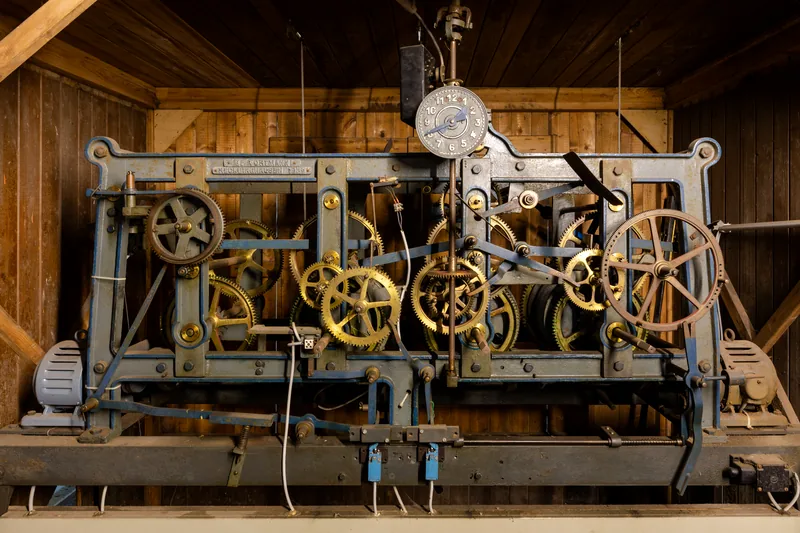
Another crucial element of the architecture is the setting mechanism layout. Modern wristwatches utilize a pull-out stem setting system (pendent-set with a integrated clutch wheel inside the movement). However, vintage 16s calibers may feature either a pendant-set architecture using an external case sleeve mechanism, or a lever-set architecture where a small setting lever must be pulled out near the edge of the dial to engage the setting wheels. Identifying which mechanism your specific AS 16s caliber utilizes determines the entire approach to setting stem fabrication and case geometry adaptation.
3. Challenges of Converting AS 16s to Wristwatch
When clients ask horologists, "can you convert as 16s pocket watch into a daily-wear wristwatch?", the technical answer is an emphatic yes—provided you account for fundamental design limitations inherent to antique timepieces. The foremost challenge is shock protection. Vintage AS 16s movements were manufactured decades before the invention of shock-absorbing balance bearing systems like Incabloc or Parechoc. The delicate steel pivots on the balance staff, measuring mere hundredths of a millimeter in diameter, rest directly against hard jewel cap stones. Drop the watch onto a hard surface, and these balance pivots can easily shear off.
Environmental sealing poses a second major technical hurdle. Antique pocket watches were never intended to resist water pressure or ambient humidity on the human wrist. Wristwatches are constantly exposed to perspiration, rain, atmospheric dust, and sudden temperature fluctuations. Preserving the movement requires housing it in a modern enclosure engineered with nitrile or silicone O-rings around the case back, crystal, and winding crown, while ensuring the movement remains firmly fixed without distorting the delicate mainplate geometry.
Finally, the sheer physical mass and torque of a 16s movement require special consideration. The mainspring of a 16-size caliber delivers substantially more torque to the wheel train than a modern ETA 2824 or Unitas 6497. This high torque demands precise jewel clearances, proper lubrication with modern synthetic oils (such as Moebius 9010 for high-speed pivots and HP-1300 for heavy train pivots), and dynamic balance adjustments to minimize positional errors when the watch rotates continuously on a moving arm.
4. Lug Welding and Case Selection
Selecting or fabricating an appropriate modern enclosure is the foundation of any high-level conversion project. When sourcing an as 16s pocket watch to wrist conversion case, watchmakers generally choose between two primary paths: building a fully custom CNC-machined 316L stainless steel case, or modifying a vintage pocket watch case through specialized micro-welding or lug soldering techniques.
Custom CNC conversion cases made specifically for 16s movements are widely regarded as the superior option for durability and weather resistance. These cases feature precision-machined internal ledges, threaded display case backs fitted with sapphire crystals, and modern spring-bar lug geometry. Because modern cases isolate the movement inside an inner movement retaining ring (often crafted from brass or stainless steel), the vintage AS 16s mainplate is protected from mechanical stress, and modern rubber gaskets can be employed to guarantee dust and splash protection.
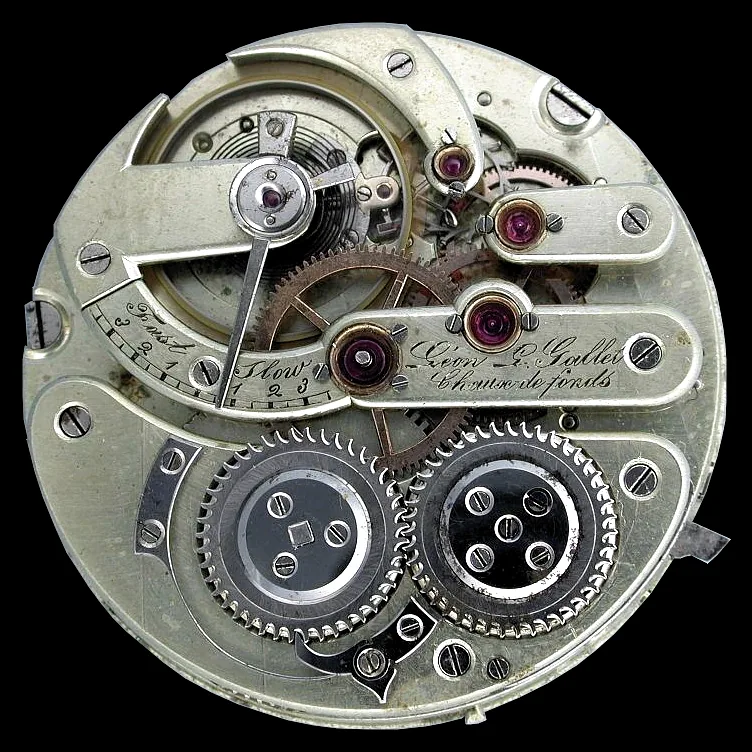
If you choose to alter an original silver, gold-filled, or nickel pocket watch case, the process requires master-level metalworking. Traditional methods involve silver-soldering or TIG-welding solid stainless steel or sterling silver wire lugs directly onto the case perimeter. Extreme care must be taken to remove the movement, crystal, and springs beforehand to avoid thermal damage. The weld area must then be meticulously ground, filed, smoothed, and hand-polished to blend the lug transitions seamlessly into the historical case silhouette.
5. Crown and Stem Solutions
Engineers and watchmakers face a unique mechanical obstacle when fitting a vintage pocket watch movement into a modern wrist case: stem interface alignment. In traditional pocket watches, particularly those utilizing negative setting systems, the winding stem is split or held inside the case neck by an internal spring sleeve. Modern wristwatch cases, by contrast, rely on a solid, one-piece stem held directly inside the movement by a setting lever screw or detent pin.
To address this, the watchmaker must often machine a custom stem on a micro-lathe. The internal stem profile—including the square pivot that engages the winding pinion and the winding groove that catches the setting lever—must match the vintage AS 16s mechanical specs perfectly. Meanwhile, the external threaded section must be cut to modern thread sizes (typically Tap 9 or Tap 10 / 0.9mm or 1.0mm) to accept a heavy-duty, modern wrist crown equipped with internal rubber water-seals.
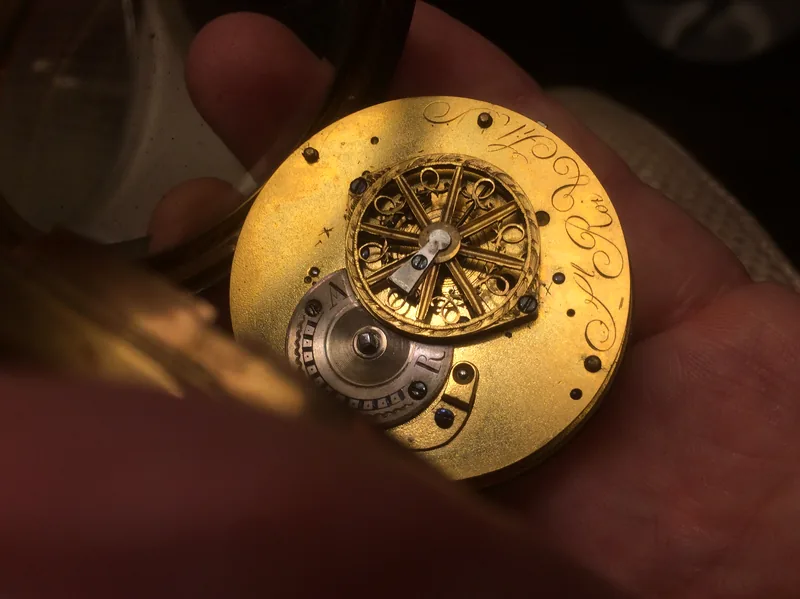
If the AS 16s caliber is lever-set, additional case customization is required. Lever-set movements require a setting pull-tab at the periphery of the dial (usually located around the 1 o'clock or 4 o'clock position). The conversion case must feature a dedicated, sealed slide-slot or removable lever-port that allows the user to pull the setting lever outward to set the time, then push it back before screwing down or seating the bezel. Without this specialized geometry, the watch cannot be set accurately without fully disassembling the bezel.
6. Dial and Hand Considerations
Dial positioning and hand alignment dictate the aesthetic success and functionality of the completed conversion. Standard open-face AS 16s movements feature their balance wheel and gear train configured so that the winding stem sits at 12 o'clock and the small running seconds sub-dial sits directly opposite at 6 o'clock. When converted into a wristwatch case, the winding stem shifts to the 3 o'clock position. Consequently, on an open-face dial, the small sub-seconds register shifts to the 9 o'clock position on the wrist.
Hunter-case AS 16s movements present a different layout: the winding stem is at 3 o'clock and the sub-seconds register is at 6 o'clock in their original pocket watch orientation. Fitting a hunter movement into a wristwatch case keeps the running seconds hand conveniently at 6 o'clock, making hunter movements highly coveted for conversion work. If an open-face movement is used and a 6 o'clock sub-seconds layout is preferred, the watchmaker must source or craft a custom dial with repositioned dial feet and custom-printed sub-seconds track geometry.
Attaching dials and hands requires delicate execution. Antique enamel dials are notoriously fragile; heating or bending the dial feet during installation can cause severe spiderweb cracking across the vitreous enamel surface. Watchmakers often utilize capacitive-discharge dial foot soldering machines or custom movement-clamping rings to secure dial feet safely. Original pocket watch hands—usually blued steel Spade, Cathedral, or Poire styles—must be meticulously refitted, broaching the central hole mounting pipe down to fractions of a millimeter to fit the hour wheel, cannon pinion, and fourth wheel pivot of the AS 16s arbor assembly.
7. Why 16s is more common for conversion
Among the vast array of antique American and Swiss pocket watch standards, the decision to convert as 16s pocket watch into wristwatch models remains far more popular than converting smaller 12-size or larger 18-size calibers. The primary reason is modern wrist ergonomics. An 18-size movement measures approximately 44.86mm in raw diameter; when encased in a protective metal housing with structural walls, the resulting wristwatch measures 50mm to 55mm wide—uncomfortably large for the vast majority of wearers.
Conversely, smaller sizes like 12s or 10s yield finished wristwatches in the modern 38mm to 40mm range, but these smaller antique movements often lack the extreme physical durability, large hairspring dynamics, and bold mechanical presence of larger pocket watch architecture. The 16s size strikes the ideal middle ground: its ~43.18mm movement diameter allows for a modern, oversized pilot-style or military-style case measuring 44mm to 46mm. This aligns perfectly with modern horological tastes for bold, visible mechanical engineering on the wrist.
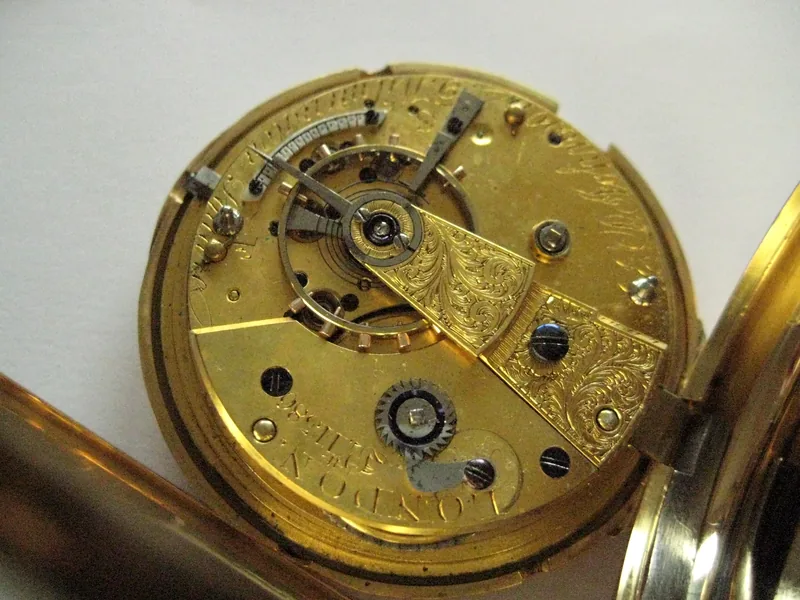
Furthermore, the 16s form factor benefits from an abundant ecosystem of historical spare parts and modern aftermarket support. Because 16-size was the universal standard for American railroad timekeeping and military issue during the early-to-mid 20th century, thousands of high-grade movements were produced. This means component availability—such as replacement balance staffs, mainsprings, jewel settings, and winding pinions—is vastly superior for 16s calibers compared to obscure smaller sizes or short-lived experimental sizes.
8. Final Thoughts on AS 16s Conversions
Converting an AS 16s pocket watch movement into a wearable wristwatch is a rewarding marriage of classical horological preservation and modern wearable engineering. It allows a mechanical masterpiece—crafted over a century ago by skilled Swiss artisans—to emerge from dark storage drawers and return to daily active duty on a collector's wrist. The visual appeal of watching a large, slow-beating, blued-steel balance wheel oscillation through a transparent sapphire case back is an experience no modern, mass-produced quartz or modern automatic movement can replicate.
However, owning and maintaining a converted AS 16s requires respect for its mechanical limitations. Wearers must remember that these timepieces lack modern Incabloc shock isolation and high water-resistance ratings. They are fine mechanical instruments best suited for conscious wear, away from high-impact sports or water exposure. When given proper care, regular cleaning, and periodic lubrication with modern synthetic oils every four to five years, a converted AS 16s wristwatch will keep exceptional time and serve as a commanding, historical conversation piece for generations to come.