Historical Background of AS 18s Movements
The history of A. Schild S.A. (AS) is inextricably linked to the golden era of Swiss ébauche manufacturing. Founded in 1896 by Adolph Schild-Hugi in Grenchen, Switzerland, the company rapidly grew to become one of the largest and most technologically advanced movement blank producers in horological history. Before merging into Ebauches SA in 1926 and eventually forming the foundation of modern ETA, A. Schild was renowned for engineering exceptionally durable, high-precision pocket watch movements that supplied hundreds of independent watchmakers across Europe and North America.
Among these historic movements, the large-format calibers produced around the turn of the 20th century—frequently categorized under American 18-size (18s) dimensional standards or their Swiss 18 to 19-ligne equivalents—represent the peak of mechanical utility before the widespread miniaturization of wrist-worn timepieces. During the early decade of the 1900s and throughout World War I, these large movements were prized for their serviceability, steady rate stability, and robust mainspring barrels. Many of these movements laid the groundwork for early military adaptions, bridging the gap toward authentic WW1 trench watches.
Today, horologists and custom builders frequently evaluate whether to convert as 18s pocket watch into wristwatch configurations. Doing so rescues these historical mechanical marvels from drawer oblivion, elevating dormant bench movements into dramatic, wearable art pieces. Understanding the lineage of the AS 18s ébauche is essential before touching a screwdriver to the movement plates, as these calibers were hand-finished and fitted during an era when modern interchangeable tolerances were still evolving.
Technical Specifications and Movement Architecture
Analyzing the architectural layout of an AS 18s pocket watch movement reveals a masterclass in classic Swiss watchmaking design. Measuring approximately 40.61 mm (for an 18-ligne Swiss base) to 44.86 mm (for a true American 18s equivalent) in plate diameter, these movements offer substantial physical real estate. Most AS 18s movements feature a traditional finger-bridge or three-quarter plate construction made from nickeled or gilded brass, secured by fire-blued or polished steel screws. The escapement is a classic Swiss straight-line lever, featuring a compensation balance wheel paired with a blue steel Breguet overcoil or flat balance spring.
The movement architecture relies on a robust center wheel drive and a traditional train setup: center wheel, third wheel, fourth wheel (driving the sub-seconds arbor), and escape wheel. Jewels typically range from 7 to 15 or 17 rubies, housed in brass or gold chatons. The keyless works mechanism in an AS 18s utilizes a sliding pinion and winding pinion system controlled by a setting lever and yoke, rather than the sleeve-type setting common to many domestic American 18s movements. Stem-wind and stem-set configurations predominate, though early pin-set variants exist.
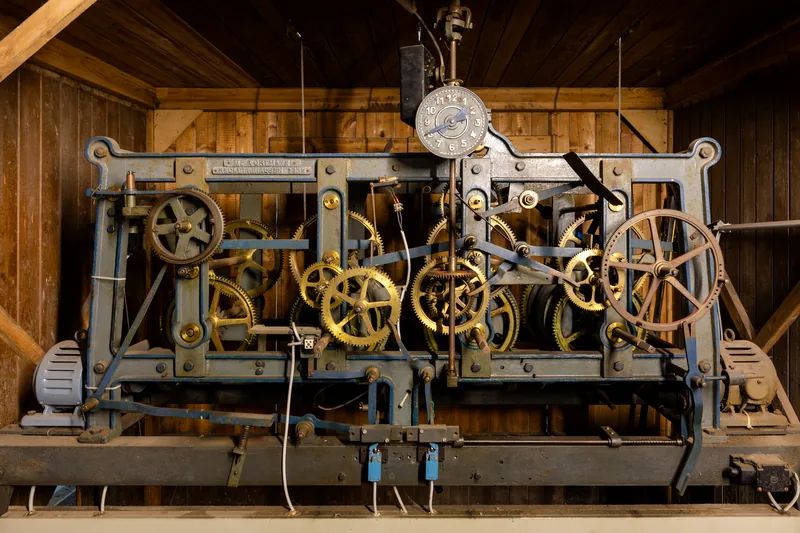
From a mechanical perspective, the rate stability of the AS 18s is remarkable. Due to the high moment of inertia provided by the large balance wheel running at a traditional frequency of 18,000 vibrations per hour (2.5 Hz), these calibers retain excellent timekeeping when properly cleaned, oiled, and poised. However, the sheer physical mass of the balance wheel and mainspring barrel introduces unique mechanical torque characteristics that must be carefully managed when housing the movement inside a modern wrist conversion enclosure.
Challenges of Converting AS 18s to Wristwatch
When clients ask a master watchmaker, "can you convert as 18s pocket watch into a modern wristwatch?", the short answer is yes—but the long answer involves overcoming formidable technical obstacles. The most immediate challenge is spatial orientation and stem positioning. Original pocket watches were produced in two main layouts: Lépine (open-face) movements, where the winding stem is positioned at 12 o'clock in line with the sub-seconds dial at 6 o'clock; and Hunter movements, where the stem is located at 3 o'clock relative to the dial. Converting a Lépine AS 18s movement to a 3 o'clock wrist crown rotates the movement 90 degrees, moving the sub-seconds dial from its traditional 6 o'clock position to 9 o'clock.
Another profound technical challenge involves shock absorption. Vintage AS 18s movements were engineered during an era before the invention of modern shock protection systems such as Incabloc or Novodiac. The balance staff pivots measure only fractions of a millimeter in diameter and are supported by fixed jewel cap settings. Wearing a heavy 18s movement on the wrist exposes these delicate steel pivots to severe lateral and vertical impact forces during everyday arm movements. Without absolute care in mounting and optional movement dampening rings, a sharp bump can easily snap a balance staff pivot.
Furthermore, managing dust and water ingress requires meticulous re-engineering. Pocket watch cases were never designed for total water resistance; they relied on tight-fitting snap or screw bezels and unsealed stem passages. Adapting an AS 18s movement to a wrist-worn environment demands modern sealing gaskets around the stem tube, caseback, and crystal. Navigating these requirements is a primary topic in modern discussions surrounding antique pocket watch conversions.
Lug Welding and Case Selection
Achieving a successful transformation requires sourcing or custom-machining a dedicated as 18s pocket watch to wrist conversion case. Modern stainless steel conversion cases manufactured specifically for vintage 18s movements are rare due to the proprietary dimensions of various ébauche mainplates. Consequently, watchmakers typically choose between two primary paths: custom CNC machining a modern stainless steel case with internal spacer rings, or modifying an authentic silver, nickel, or gold-filled vintage pocket watch case by attaching welded wrist lugs.
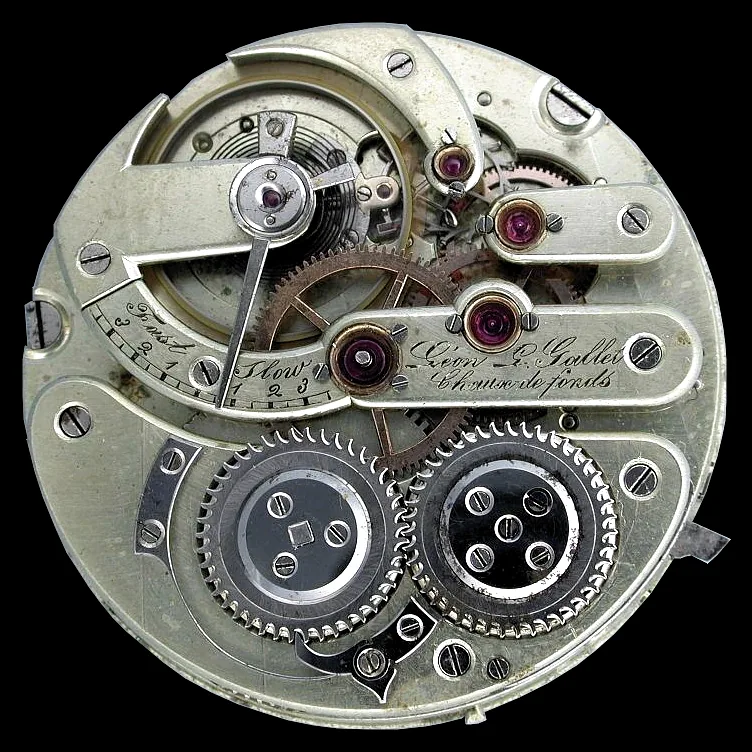
When modifying an original pocket watch case, silver or brass wire lugs (often styled as classic trench watch wire lugs or articulated drop lugs) must be silver-soldered or micro-TIG welded directly to the case body. This process requires stripping all internal components, removing crystals, and thoroughly cleaning the case band. Thermal management is critical: localized heat from soldering can warp thin pocket watch case bands or distort snap-bezel tolerances. Using specialized micro-welding rigs or laser welders allows the craftsman to fuse high-tensile stainless steel or sterling silver lugs to the original frame without heat-damaging delicate hallmarks or engine-turned engravings.
If selecting a modern conversion case, the internal movement opening must be precise to within hundredths of a millimeter. Custom brass or aluminum movement spacer rings are turned on a watchmaker's lathe to bridge any gap between the AS 18s mainplate edge and the inner wall of the steel case. The case structure must also accommodate the overall thickness of the movement, which often exceeds 6.5 mm to 8 mm including the dial and hand clearances.
Crown and Stem Solutions
Engineering the stem and crown mechanism represents one of the most mechanically demanding phases when you convert as 18s pocket watch into wristwatch form. The original pocket watch stem was designed to couple with the pocket watch case neck sleeve or crown button. In a custom wrist case, the stem height—the exact vertical distance from the movement rest seat to the center axis of the winding stem hole—must align perfectly with the stem tube entry of the case body.
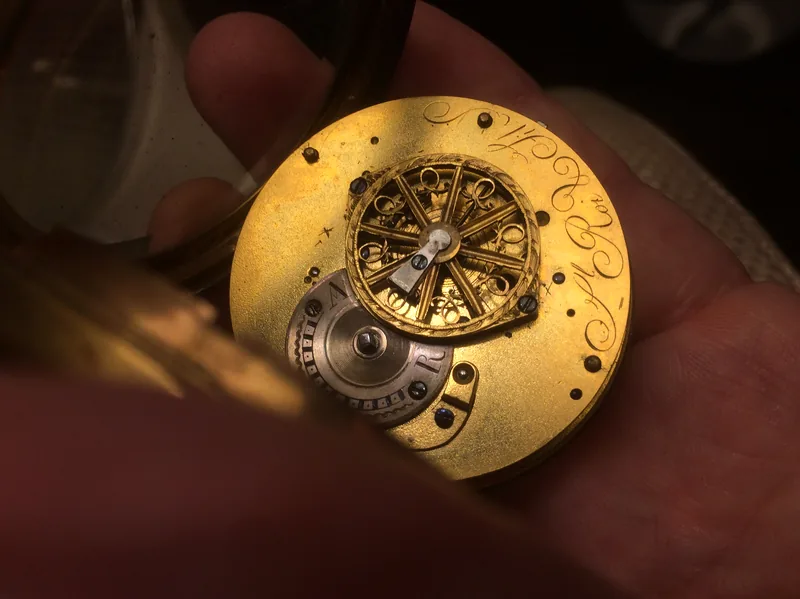
Because original AS 18s stems rarely possess the correct length or thread pitch (such as modern Tap 10 or Tap 9) required to screw onto modern wrist watch crowns, watchmakers must perform custom lathe work. This involves either turning a new winding stem from annealed W-1 drill rod on a precision lathe, followed by heat-treating and tempering, or utilizing a high-precision stem extender. Stem extenders must be secured with thread-locking compound (such as Loctite 270) and turned down to ensure zero radial runout inside the case stem tube.
The selected crown must balance aesthetic authenticity with practical utility. Oversized onion or pumpkin style crowns are historically appropriate for pocket watch conversions and provide sufficient leverage to wind the heavy 18s mainspring. Crucially, the crown must incorporate an internal rubber O-ring gasket that slides smoothly over the external case tube, preventing dust, humidity, and atmospheric moisture from reaching the unsealed keyless works and steel mainspring barrel.
Dial and Hand Considerations
Preserving or replacing the dial and hands on an AS 18s conversion presents a delicate balance between historical integrity and physical clearance. Original AS 18s pocket watches were almost universally equipped with double-sunk or single-sunk vitreous enamel dials fired on copper baseplates. Enamel dials are extraordinarily fragile; attempting to re-position dial feet by soldering heat will instantly shatter or crack the glass enamel surface. Instead, if the original dial foot locations do not match the target movement rotation or new conversion case alignment, watchmakers must use specialized copper dial foot tape or cold-cure epoxy mounting pads.
Hand clearance is another area where tolerances are razor-thin. Pocket watch crystals featured deep domed profiles that allowed ample vertical clearance for high-mounted hour, minute, and sub-seconds hands. Modern conversion cases often utilize flatter sapphire or mineral crystals to keep overall case height manageable. The hour wheel tube, cannon pinion height, and center wheel arbor must be checked under a stereo microscope to ensure the hands do not drag against one another or touch the inner crystal surface.
| Component | Original Pocket Watch Spec | Wrist Conversion Requirement | Technical Challenge |
|---|---|---|---|
| Dial Material | Vitreous Enamel on Copper | Preserved original or custom metal dial | Fragility; non-adjustable dial foot position |
| Stem Tap Size | Custom historic metric thread | Standardized Tap 9 / Tap 10 stem extenders | Precise axial alignment and stem length cutoff |
| Crystal Type | High-dome Acrylic or Glass | Low-profile Sapphire / Heavy-duty Acrylic | Hand friction against inner crystal surface |
| Mainplate Diameter | ~40.6mm (18''') to ~44.8mm (18s) | Requires 45mm - 48mm outer case diameter | Extreme wrist dimensions and lug overhang |
When hand resizing or replacing is necessary, matching the exact hole tapers of the historic AS 18s balance train is vital. The hour wheel arbor and cannon pinion dimensions on early 20th century A. Schild calibers do not conform to standard modern ETA or Unitas hand sizes. Watchmakers must use hand-staking tools and broaches to enlarge or close hand hubs to achieve a friction fit that withstands daily shock loads without slipping out of phase.
Why 18s is less common for conversion
While pocket watch conversions have enjoyed a surge in popularity among horological enthusiasts, the 18-size platform remains noticeably less common than smaller formats such as 16s, 12s, or 10.5 to 13-ligne movements. The primary reason is pure ergonomic dimension. An 18s movement has a plate diameter of roughly 41 to 45 mm. When housed within a structural steel conversion case that includes wall thickness, bezel gaskets, and lug attachments, the final completed wristwatch measures between 48 mm and 52 mm in outer diameter—excluding the crown.
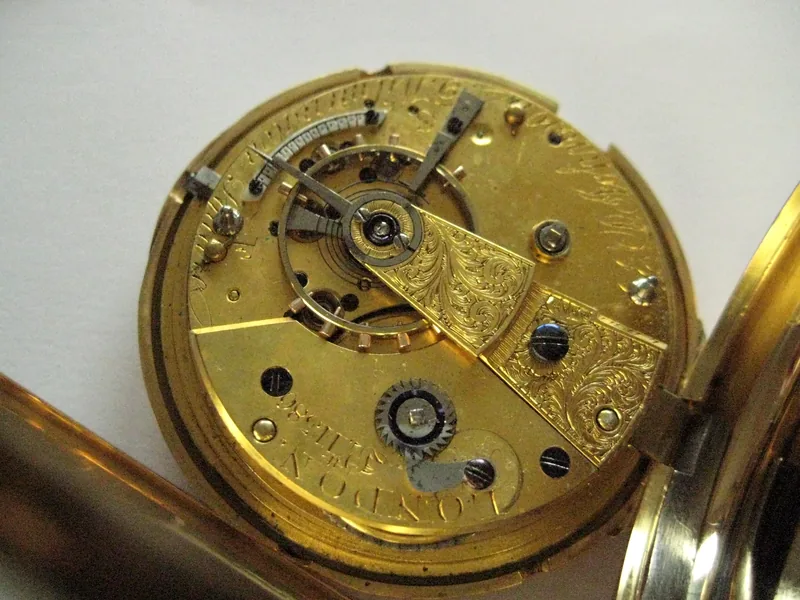
A wristwatch of these proportions produces significant lug overhang on average wrist sizes (which typically suit 38 mm to 42 mm cases comfortably). This scale makes the watch prone to catching on shirt cuffs, door frames, and everyday objects. The increased leverage exerted by an oversized case also amplifies impact forces on the spring bars and lug joints. For comparison, collectors interested in early vintage wrist pieces often look toward smaller historical platforms or early luxury wristwatches such as vintage Rolex wristwatches, which were engineered specifically for wrist wear proportions from inception.
Furthermore, sourcing a high-grade as 18s pocket watch to wrist conversion case is challenging due to low market demand compared to 16s (which matches popular Unitas 6497/6498 case dimensions). Consequently, converting an AS 18s requires extensive bespoke machining, lathe turning, and custom fabrication, making it a passion project for skilled bench watchmakers rather than a simple drop-in modification.
Final Thoughts on AS 18s Conversions
Converting a historic A. Schild 18s pocket watch into a modern wristwatch is one of the most challenging yet rewarding projects in mechanical horology. It requires the builder to act simultaneously as a micro-machinist, case fabricator, and traditional watch repairer. When executed correctly, the project breathes dynamic new life into an historic ébauche that might otherwise spend decades tucked away in a velvet box.
Before undertaking an AS 18s conversion project, always ensure that the movement in question is not an extraordinarily rare or museum-grade historical artifact whose destruction would diminish horological history. Common, unadorned workhorse AS 18s movements are ideal candidates. By approaching the project with precise tolerances, custom stem machining, shock-conscious case cushioning, and respect for original enamel work, you can create a monumental wrist-worn timepiece that showcases early 20th-century Swiss engineering on the modern wrist.