1. Historical Background of AS 6s Movements
Adolph Schild SA (A. Schild / AS), founded in Grenchen, Switzerland, in 1896, stands as one of the most prolific and historically significant movement manufacturers in the annals of horology. During the late 19th and early 20th centuries, AS supplied raw ébauches and fully finished calibers to hundreds of Swiss and international watch brands. Among their vast portfolio, the "6s" (6-size) pocket watch movements occupied a unique position in the market. Measuring approximately 34.29 mm in diameter (based on the standard American size scaling where 0s is 1.1 inches and each size adds 1/30th of an inch, equivalent to roughly 15 to 15.5 lignes in Swiss measurements), the 6s size was traditionally designed for intermediate pocket watches, pendant watches, and high-grade travel timepieces.
During the transition period surrounding World War I, the horological world experienced a seismic shift. Military personnel and officers found retrieving a pocket watch from a waistcoat unfeasible while operating heavy artillery or flying aircraft. This necessity gave rise to early field adaptations, where watchmakers soldered wire loops directly onto small pocket watch cases. Because of their intermediate sizing, AS 6s movements were often selected during this era. They bridged the gap between fragile, small pendant watches and heavy 16s or 18s men’s pocket watches. Looking back at authentic WW1 trench watches, one frequently finds AS movements powering these early field instruments.
Understanding this historical context is essential for any restorer or custom builder attempting to convert as 6s pocket watch into wristwatch configurations today. These movements represent an era when bridge layouts were meticulously hand-finished, train wheels were made of high-grade brass, and balance assemblies featured temperature-compensating cut bimetallic rims with steel hairsprings. When you hold an AS 6s caliber on the bench, you are holding an ébauche engineered during the golden age of mechanical precision, constructed with materials and design principles meant to last for centuries if properly maintained.
2. Technical Specifications and Movement Architecture
To successfully perform an AS 6s conversion, a watchmaker must first understand the structural architecture of the movement. Typically, an AS 6s movement operates at a traditional beat rate of 18,000 vibrations per hour (vph) or 2.5 Hz. The movement layout generally follows a classic finger-bridge or three-quarter plate architecture, depending on the specific caliber generation (e.g., AS 320 or earlier ebauche variants). The mainspring barrel is housed beneath a dedicated barrel bridge, driving a center wheel, third wheel, fourth wheel (which carries the sub-second pivot at 6 o'clock or 9 o'clock depending on orientation), and an escape wheel acting upon a Swiss lever escapement.
Jeweling in AS 6s calibers ranges from basic 7-jewel configurations in utilitarian models up to 15, 17, or even 19 jewels in high-grade executions. Higher jewel counts feature ruby endstones for the balance staff and escape wheel, set within polished brass or gold chatons. The balance wheel is usually a expansion balance with timing screws, controlled by a Breguet overcoil or flat Nivarox hairspring. The winding and setting mechanism is predominantly a classic crown-set stem mechanism with a sliding pinion and winding pinion, though some earlier examples utilize a pin-set (nail-tail) or sleeve-set architecture embedded within the original pocket watch case neck.
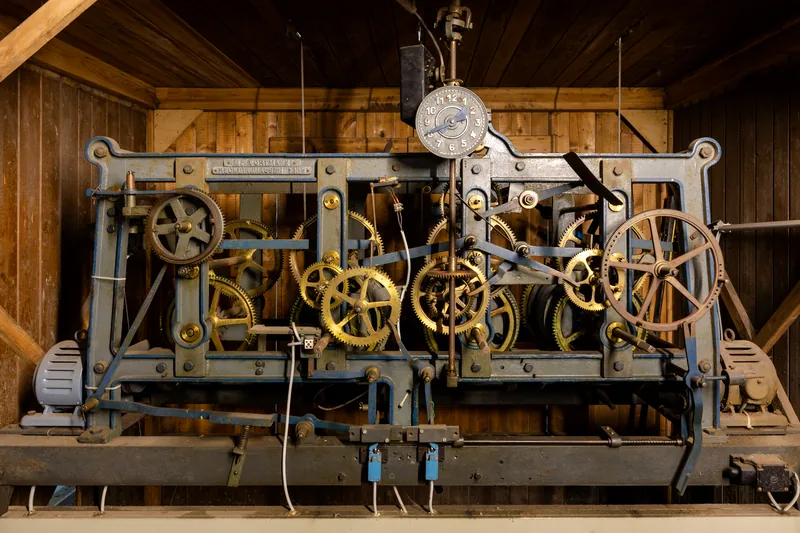
From a mechanical perspective, the tolerances on an AS 6s caliber are tight, yet generous enough to permit hand-fitting and custom fabrication. Below is a summary of the technical specifications common to this caliber family:
- Movement Diameter: ~34.29 mm (15 to 15.5 Lignes)
- Movement Height: ~4.5 mm to 5.2 mm (varying by bridge style and winding assembly)
- Escapement Type: Inline Swiss lever escapement
- Beat Frequency: 18,000 VPH (2.5 Hz)
- Power Reserve: Approximately 36 to 40 hours
- Stem/Setting Type: Crown-set or sleeve-set with split stem option
- Sub-Second Placement: 90 degrees or 180 degrees relative to the stem axis
3. Challenges of Converting AS 6s to Wristwatch
Many collectors ask: can you convert as 6s pocket watch into a daily wearable wristwatch without damaging its mechanical integrity? While the short answer is yes, the project presents significant engineering challenges. The primary obstacle is the lack of modern shock protection. AS 6s movements were manufactured decades before the invention of Incabloc or KIF shock-absorbing systems. The delicate pivots of the balance staff—often measuring less than 0.08 mm in diameter—are unyielding and prone to snapping if the wristwatch suffers a direct impact or drops onto a hard surface. Installing a custom-milled modern movement ring with elastomeric dampers is one strategy used by master watchmakers to cushion the movement inside the modern case.
Another technical hurdle involves movement orientation and dial layout. Pocket watches come in two fundamental configurations: Savonnette (hunter-style) and Lépine (open-face). In a Lépine movement, the winding stem is positioned at 12 o'clock, and the sub-second register sits at 6 o'clock. If you encase a Lépine AS 6s movement into a standard wristwatch case where the crown is positioned at 3 o'clock, the sub-second subdial shifts to the 9 o'clock position, and the 12 o'clock dial marker shifts to 3 o'clock unless a custom-printed conversion dial is used. In a Savonnette layout, the winding stem is at 3 o'clock, which naturally aligns with a standard wristwatch orientation, placing the sub-second register at 6 o'clock.
Furthermore, timing and isochronism must be recalibrated. Pocket watches were traditionally regulated for two or three vertical positions (stem up, stem left, stem right) and two horizontal positions (dial up, dial down). Wristwatches experience constant, multi-axial rotation and erratic movement. Achieving a consistent rate across multiple positions requires meticulous poise checking on the balance wheel, careful hairspring centering between the index pins, and correct endshake adjustment across all train wheel arbors.
4. Lug Welding and Case Selection
When selecting or fabricating an as 6s pocket watch to wrist conversion case, you have two primary methodologies: modifying an original vintage pocket watch case by soldering wire lugs, or machining/purchasing a modern, purpose-built stainless steel conversion case. Modifying an original silver or gold-filled pocket watch case maintains historical aesthetics but requires advanced metallurgy and jeweler techniques. Silver soldering sterling silver wire lugs (typically 1.8mm to 2.2mm solid wire) onto a vintage nickel or silver case demands localized heat application using an oxy-propane micro-torch while heatsinking the case body to prevent warping the bezel threads or melting existing solder joints.
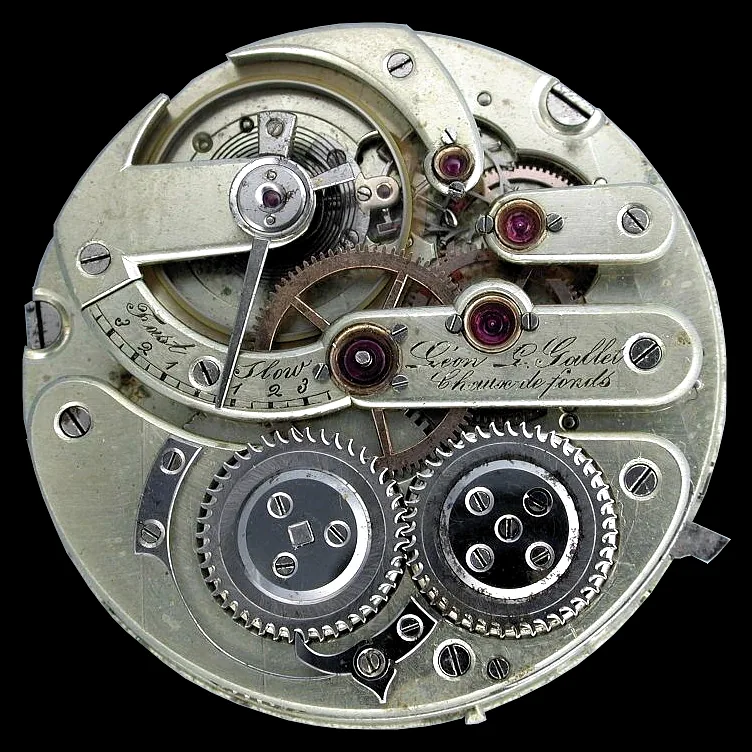
Modern stainless steel conversion cases, machined via CNC specifically for 6s movements, offer vastly superior water resistance, dust sealing, and structural durability. When selecting a modern case, internal dimensions must be verified down to the hundredth of a millimeter. Because AS 6s movements lack a uniform outer step across all production runs, a custom brass or aluminum movement spacer ring (casing ring) must be turned on a watchmaker’s lathe. This ring serves three crucial functions: centering the movement within the case cavity, aligning the stem height precisely with the case tube bore, and providing axial clamping force when the case back is screwed down.
If you prefer an authentic vintage aesthetic, modern builders often fabricate "trench style" cases. These utilize hinged display backs or press-fit bezels with custom-welded loop lugs, securing the watch to a classic Bund strap or fixed wire-lug NATO strap. Whichever path is chosen, case security and moisture protection must be prioritized; vintage pocket watch movements lack the plating and seal technology of modern timepieces and will quickly oxidize if exposed to high humidity.
5. Crown and Stem Solutions
Resolving the winding stem and crown geometry is often the most intricate mechanical phase when you convert as 6s pocket watch into wristwatch configurations. Vintage AS 6s stems were designed to operate in conjunction with case sleeves—a spring-loaded mechanism embedded inside the neck of the original pocket watch case. When removing the movement from its original housing, you frequently lose the outer sleeve mechanism that retains the stem in the setting position. To solve this, the watchmaker must determine whether the movement utilizes a positive (pull-out) setting mechanism or a negative (push-in/sleeve-set) mechanism.
For negative-set movements, a specialized conversion stem or modified setting spring must be adapted. Watchmakers often turn a custom stem on a lathe using carbon steel (such as O1 or gauge plate), cutting the correct square section to engage the sliding pinion, turning the pivot tip to fit the mainplate balance-side recess, and threading the outer end to a standard watch thread pitch (typically Tap 10 or Tap 9). The stem length must be calculated so that when the crown sits flush against the case tube gasket, the winding pinion is fully meshed with the castle wheel in the winding position without exerting excess lateral pressure on the setting lever.
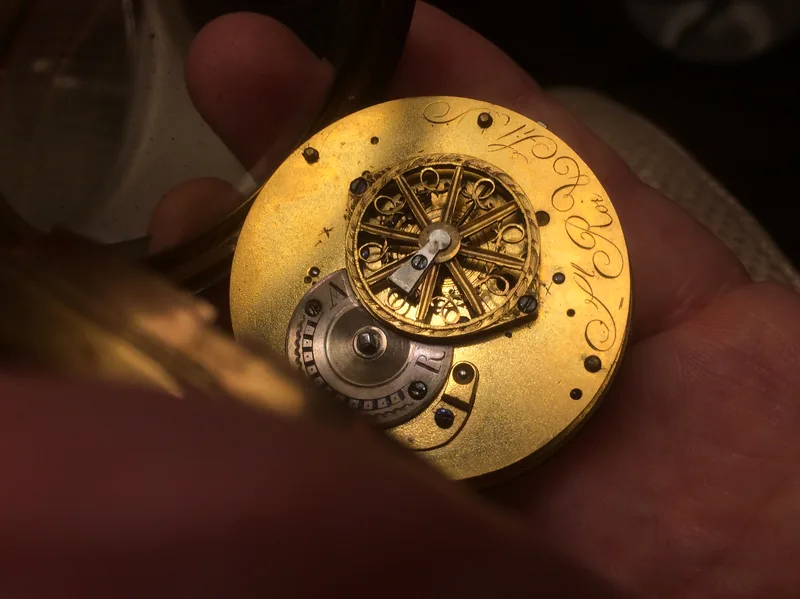
Crown selection is equally critical for both ergonomic and aesthetic harmony. Large "onion" or "pumpkin" style crowns are historical favorites for trench watch conversions, providing easy grip while evoking early 20th-century field watches. However, the crown must incorporate an internal O-ring seal that mates smoothly over the case tube. Below is a comparison table of common stem and crown configurations encountered during 6s conversions:
| Setting Type | Mechanism Location | Required Conversion Parts | Difficulty Level |
|---|---|---|---|
| Positive Set | Built into Movement Bridges | Standard threaded stem cut to length | Moderate |
| Negative (Sleeve) Set | Built into Original Case Neck | Custom stem + internal detent spring adapter | High |
| Pin-Set / Nail-Tail | Side button near dial rim | Custom case button hole alignment | Very High |
6. Dial and Hand Considerations
The dial of an AS 6s movement is almost always made of grand feu enamel on a copper plate or printed metal. Grand feu enamel dials are prized for their resistance to fading, but they are exceptionally brittle. Removing, re-footing, or modifying an enamel dial carries a severe risk of causing spiderweb cracks or complete flaking. If the original dial feet are intact, the movement mounting ring must be carefully milled with clearance holes to accept these feet without requiring them to be bent or cut. If dial feet are broken, soldering new feet using traditional soft solder is impossible on enamel without destroying the glazed surface. Instead, watchmakers employ specialized dial-foot soldering machines that use localized capacitor-discharge welding, or utilize mechanical dial clamps integrated into the movement ring.
Hand fitting presents its own set of technical considerations. The dimensional standards for vintage AS 6s hand posts (hour wheel tube, cannon pinion pivot, and fourth wheel sub-second pivot) do not match modern off-the-shelf wristwatch hands. The center hole diameters must be precisely measured using a micrometer or wire gauge:
If original spade, cathedral, or Poire Royale hands are retained, they must be stripped of degraded radium or old paint, polished, re-blued using traditional thermal bluing pans, and relumed with modern non-radioactive luminous compounds (such as Super-LumiNova mixed to an antique faux-patina shade). If custom hands are required, modern hands must be broached out using micro-cutting broaches to fit the larger arbor dimensions of the vintage AS center wheels.
For additional perspective on how vintage dials and hands were adapted across different Swiss manufactures during this period, explore our technical guides on antique pocket watch conversions.
7. Why 6s is More Common for Conversion
Within the custom watchmaking and restoration community, the 6-size standard is widely regarded as the "Goldilocks zone" for pocket-to-wrist conversions. To understand why, one must look at the physical dimensions of other common pocket watch movement sizes, such as 18s (approx. 44.86 mm) and 16s (approx. 43.18 mm). An 18s movement, once fitted with a modern casing ring and protective steel case, results in a massive finished watch measuring between 48mm and 52mm in diameter—uncomfortably large for the vast majority of wrists. Conversely, smaller pendant watch sizes like 0s or 3/0s, while compact, feature extremely fragile components and tiny balance assemblies that are exceptionally difficult to regulate for daily wear.
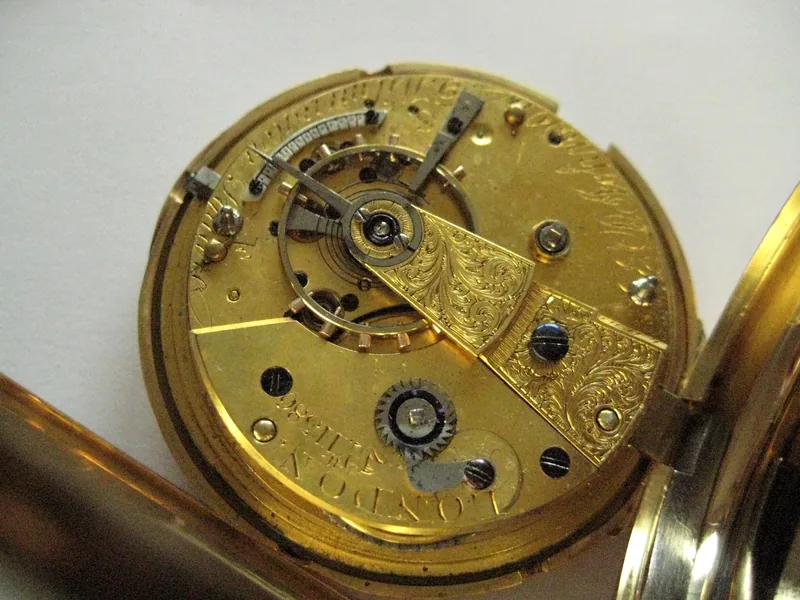
An AS 6s movement, with its bare diameter of ~34.3 mm, installs cleanly into a cased wristwatch profile of 38 mm to 40 mm. This size range mirrors classical modern sport and dress watch proportions, offering exceptional wrist presence while maintaining comfortable ergonomics. The movement fills the case back display crystal edge-to-edge, showcasing the vintage bridges, moving train wheels, and ticking balance wheel without requiring oversized, unsightly casing rings.
Furthermore, AS 6s movements were produced in vast quantities throughout Switzerland, meaning spare parts—such as balance staffs, mainsprings, click springs, and winding pinions—remain readily available through vintage material houses and donor movements. This structural balance of optimal casing proportions, mechanical robustness, and component availability makes the AS 6s caliber the premier candidate for custom conversion projects.
8. Final Thoughts on AS 6s Conversions
Converting an AS 6s pocket watch into a functional, reliable wristwatch is one of the most rewarding endeavors in high-level horology. It bridges two distinct eras: the artisanal, slow-paced craftsmanship of early 20th-century Swiss movement manufacture, and the functional wearability required by contemporary mechanical watch enthusiasts. When executed correctly, a converted AS 6s timepiece becomes a living piece of history on the wrist—a high-grade mechanical engine that has survived over a century of technological evolution.
However, success requires an unyielding respect for traditional watchmaking practices. From calculating stem tolerances and turning custom movement rings on the lathe, to re-poising delicate balance wheels and preserving original enamel dials, every step demands patience, precision, and the right tools. Whether you are an experienced watchmaker performing a bespoke build for a client or an avid collector seeking a unique piece of wearable history, the AS 6s platform offers an unmatched foundation for horological art.