1. Historical Background of Elgin 0s Movements
The Elgin National Watch Company, operating out of Elgin, Illinois, stood as one of the titans of American industrial horology from 1864 through the mid-20th century. While Elgin produced millions of pocket watches in large sizes such as the robust 18-size and standard 16-size models designed for railroad conductors and gentlemen, the 0-size (0s) movement represented a distinct masterclass in miniaturization. Introduced during the late Victorian era and refined through the Edwardian period (roughly 1880 to 1920), the Elgin 0s was primarily engineered for ladies' pendant watches, lapel timepieces, and high-grade chatelaines. These movements possessed all the mechanical complexity, finishing, and precision of their larger brethren, but condensed into a plate diameter of approximately 30 millimeters.
During this era, pocket watches were symbols of status and engineering triumph. The 0s movements, despite their smaller scale, were offered in a spectrum of grades ranging from workhorse 7-jewel options to breathtaking 15, 17, and even 19-jewel variants featuring screwed gold chatons, damaskeened nickel plates, and gold timing screws on compensation balances. As the turn of the century approached and the world moved toward the First World War, the necessity for hands-free timekeeping among military officers transformed these small pocket movements. Watchmakers began soldering wire lugs directly onto 0-size pendant cases, creating early "trench watches." This marked the historic genesis of converting small pocket watch calibers into wrist-worn instruments.
Understanding this rich history is vital for any modern watchmaker or restoration enthusiast attempting to convert an Elgin 0s pocket watch into a wristwatch today. You are not merely modifying a piece of metal; you are interacting with a preserved artifact of American manufacturing heritage. The 0s movement occupies a special place in horological history because it bridges the gap between traditional pocket horology and the modern wrist-worn aesthetic, making it an extraordinarily captivating subject for custom conversion projects.
2. Technical Specifications and Movement Architecture
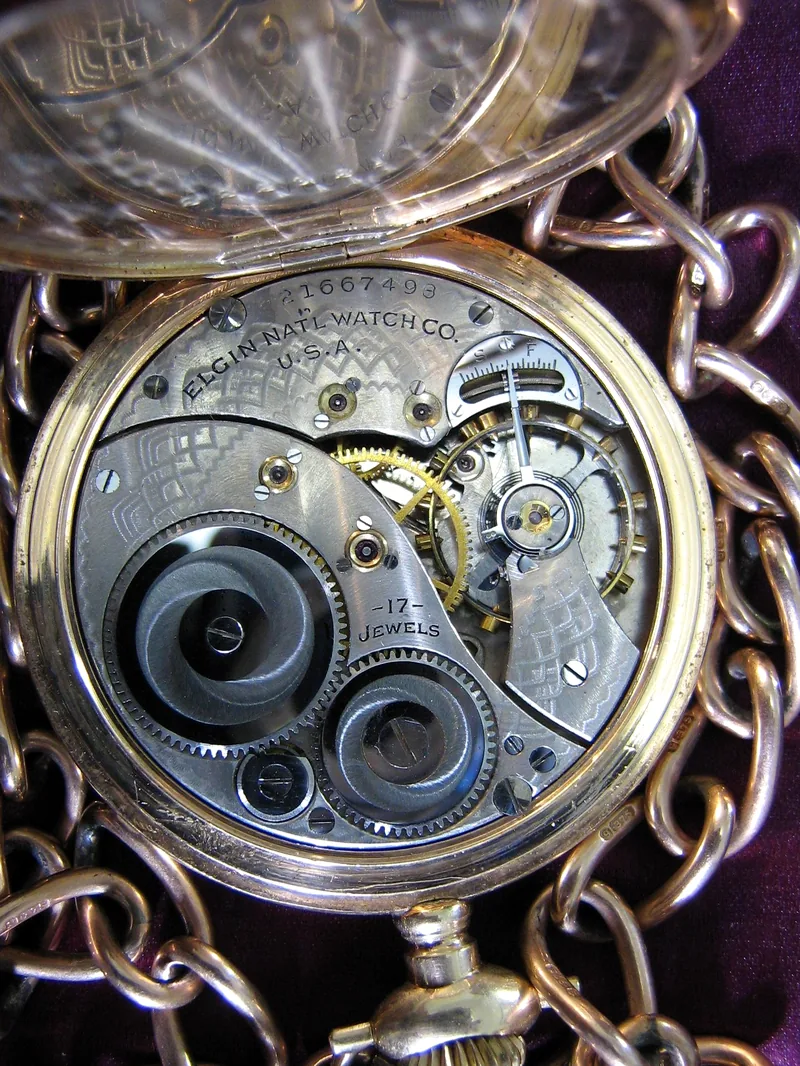
To successfully execute an Elgin 0s conversion, a deep technical comprehension of the caliber's physical architecture is mandatory. In the traditional American Lancashire gauge system, size 0 corresponds to a pillar plate diameter of 1 and 5/30 inches, or approximately 29.62 mm to 30.00 mm. This compact foot-print makes the 0s movement uniquely positioned for modern wrist proportions, yielding an finished watch diameter of 36mm to 38mm when properly cased—a sweet spot for modern dress and field watches alike.
Mechanically, Elgin 0s movements were built across several distinct "Grades" over several decades (such as Grades 219, 320, 354, and 462). The plate layout typically features a three-quarter plate or broken-bridge architecture. Most movements operate at an beat rate of 18,000 vibrations per hour (vph) or 2.5 Hz, yielding that classic, deliberate sweep of the second hand. The escapement design relies on a traditional Swiss or American lever escapement, paired with a cut bimetallic balance wheel fitted with a Breguet overcoil hairspring in higher-grade models, or a flat hairspring in entry-level variations.
One of the key technical nuances of Elgin movements lies in their winding and setting architecture. The vast majority of Elgin 0s movements utilize a "negative set" mechanism (pendant set via a detent sleeve built into the case neck), rather than a "positive set" mechanism where the setting works are held internally on the movement mainplate. In a negative set setup, the movement defaults to the time-setting position when pulled, relying on a spring-loaded sleeve inside the case tube to push the stem down into the winding position. Mastering this interaction between the stem, setting sleeve, and movement mechanism is crucial when planning your conversion.
3. Challenges of Converting Elgin 0s to Wristwatch
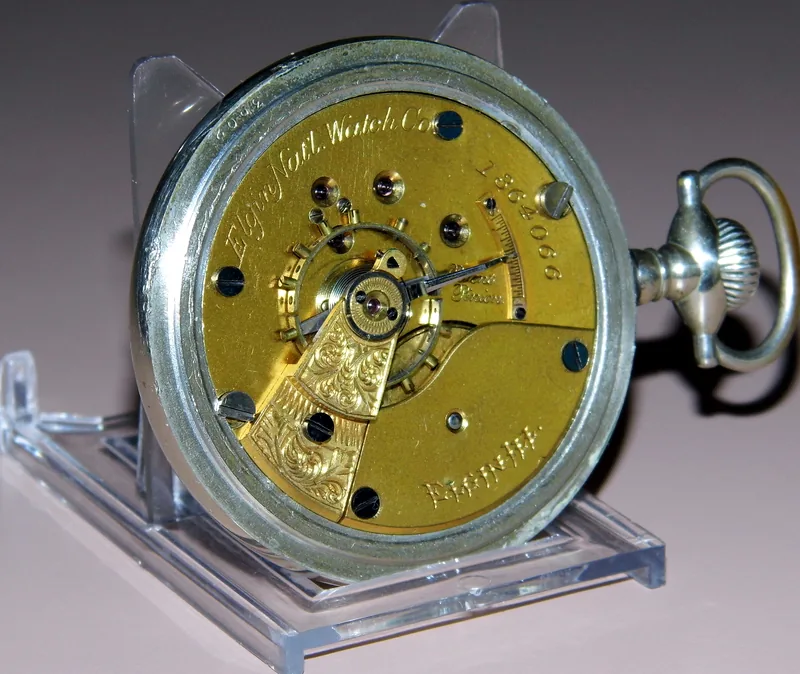
Many horological enthusiasts ask: can you convert elgin 0s pocket watch movements into functional wristwatches? The short answer is yes, but the path is fraught with significant mechanical hurdles that require professional bench skills. The primary challenge stems from shock resistance—or the complete lack thereof. Pocket watch movements were designed to reside cushioned in a vest pocket or hanging from a pendant chain. The balance staff pivots on an Elgin 0s movement are exceptionally thin, often measuring under 0.09 mm in diameter. Without modern shock protection systems like Incabloc or Parechoc, a minor drop or hard wrist impact can instantly snap a balance pivot.
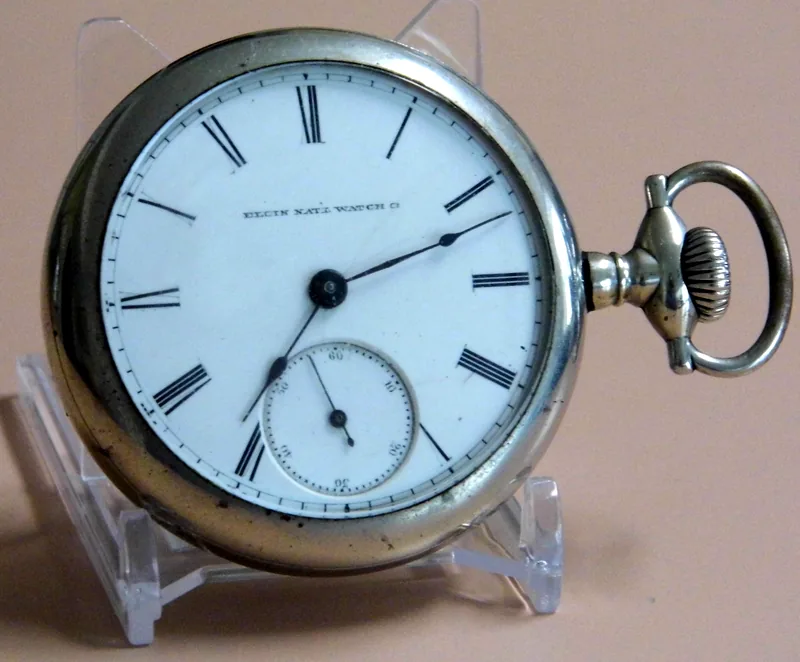
Another major challenge involves orientation and dial layout. Elgin produced 0s movements in two configurations: open-face (Lépine) and hunting case (Savonnette). An open-face movement has the winding stem at 12 o'clock and the sub-seconds dial directly opposite at 6 o'clock. A hunting case movement features the winding stem at 3 o'clock with the sub-seconds track at 6 o'clock. If you convert an open-face Elgin 0s pocket watch into a wristwatch, placing the stem at 3 o'clock will shift your sub-seconds subdial to the 9 o'clock position. While this gives a pleasing vintage chronograph-style asymmetry, it requires custom dial reorientation or working around existing dial geometry.
Finally, dust and moisture sealing present severe operational risks. Vintage pocket watch cases were never designed for exposure to modern daily life, skin oils, high humidity, or splash hazards. Achieving reliable environmental sealing requires carefully engineering the case interface, utilizing custom rubber gaskets, threaded casebacks, and sealed crown tubes. Converting these movements requires a commitment to transforming an unsealed 19th-century mechanism into an environment capable of surviving on a human wrist.
4. Lug Welding and Case Selection
When selecting an elgin 0s pocket watch to wrist conversion case, the watchmaker has two distinct technical pathways: modifying an original vintage pocket watch case through lug attachment, or housing the movement in a modern, custom-machined wrist case designed specifically for 0-size American movements.
If you choose to modify a vintage pocket watch case—often made of coin silver, sterling silver, or gold-filled brass—you must employ precision silver soldering or micro-TIG laser welding to attach lugs. Wire lugs (often formed from 1.5mm to 2.0mm sterling silver or stainless wire) are micro-fitted to the upper and lower edges of the case shell. Before applying heat, the entire movement, crystal, and bezel assembly must be stripped. The case material must be carefully evaluated; gold-filled cases can easily burn through or blister under direct solder flame, revealing the base brass beneath. Laser welding is the preferred modern method as it concentrates heat exclusively at the joint, preserving original plating and delicate engraving.
The alternative, and often superior operational route, is sourcing a custom-milled 316L stainless steel conversion case. These cases are CNC-machined with internal dimensions tailored to receive the 30.0mm 0s pillar plate. Because movement dimensions can vary slightly across different production runs and grades, a custom movement holding ring (or casing ring) fabricated from brass or delrin is usually required. This ring stabilizes the movement, absorbs micro-shocks, and ensures the winding stem aligns perfectly with the center of the case crown tube. Screws thread directly into the casing ring or mainplate tabs to clamp the movement securely against the internal dial seat, preventing internal movement during wrist rotation.
5. Crown and Stem Solutions
Resolving the crown and stem dynamics is arguably the most technically demanding aspect when you convert an Elgin 0s pocket watch into a wristwatch. As mentioned, most Elgin 0s movements feature a negative-setting mechanism. The winding stem supplied with an original pocket watch case is usually a two-piece or split stem, working in tandem with a square-bore detent sleeve located in the case neck. In a custom wrist case, this original sleeve assembly is usually missing, requiring the watchmaker to adapt the mechanism.
To solve this, the watchmaker must determine whether to operate the watch as a negative-set or convert the movement setting works to function under positive pressure. To maintain negative setting in a modern wrist case, you must press-fit a properly sized Elgin sleeve into the modern case tube. The sleeve grips the square shank of the stem, holding it down in the winding gear. Pulling the crown outward compresses the internal sleeve spring, allowing the movement's internal setting clutch to snap outward into the hand-setting position.
| Setting System | Mechanical Operation | Case Requirement | Conversion Complexity |
|---|---|---|---|
| Negative Set (Original) | Default to setting; sleeve pushes stem into winding. | Requires detent sleeve in case tube. | High (requires exact sleeve calibration). |
| Positive Set (Modified) | Default to winding; pulling stem engages setting. | Requires custom internal yoke modification. | Very High (requires movement modification). |
Stem sizing and thread matching present another hurdle. Original vintage Elgin stems utilize obsolete American thread taps (such as Tap 10 or custom fractional sizes), whereas modern watch crowns use metric threading (typically Tap 0.9mm or Tap 1.0mm). Watchmakers must turn a custom stem on a micro-lathe or use a precision stem adapter/extender that joins the original square-shank Elgin lower stem with a modern metric upper stem. The crown itself should incorporate an internal O-ring gasket that slides smoothly over the exterior of the case tube, providing protection against moisture and dust ingress.
6. Dial and Hand Considerations
The aesthetic center of any wristwatch conversion is its dial and hand configuration. Original Elgin 0s movements often came equipped with double-sunk or single-sunk vitreous enamel (porcelain) dials. These enamel dials are extraordinarily beautiful, impervious to UV fading, and feature hand-painted Roman or Arabic numerals. However, they are exceedingly fragile. Microscopic hairline cracks can expand or shatter completely under mechanical stress during disassembly or casing.
When reorienting an open-face movement for a wristwatch layout with the crown at 3 o'clock, the dial must be rotated 90 degrees. This shifts the original dial feet out of alignment with the mainplate receiving holes. To rectify this, the watchmaker must carefully clip the original copper dial feet, file the underside flush without cracking the enamel, and install new dial feet in the correct orientation using specialized dial-foot soldering tools or high-strength anaerobic adhesives. Alternatively, custom metal dials can be precision-etched and fitted to preserve the movement's aesthetic while insulating the original enamel piece from damage.
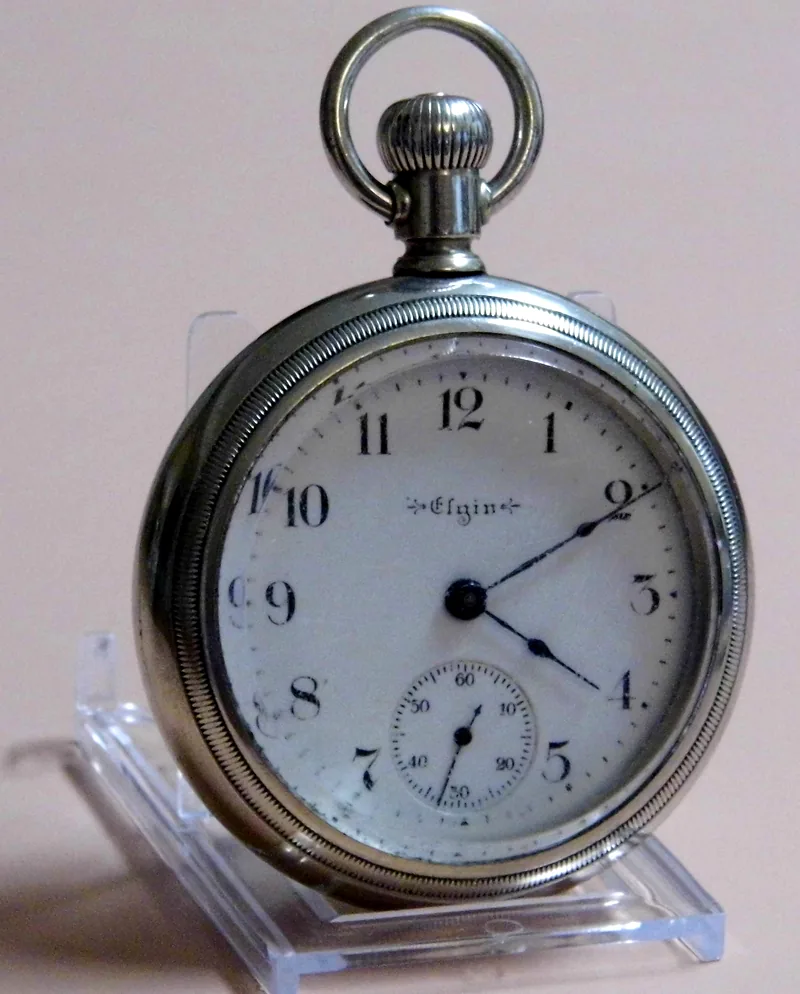
Hand fitting on an Elgin 0s requires delicate clearance calculations. The height of the hour wheel, cannon pinion, and fourth wheel second arbor dictates your vertical hand stack clearance. Pocket watch cases often had tall glass crystals with ample dome height, whereas modern wrist conversion cases employ flatter sapphire or mineral crystals. Hands must be carefully trued and leveled using hand-press tools to ensure they clear one another and do not rub against the underside of the crystal. Modern watchmakers often re-blue original spade or blued-steel leaf hands using heat treatment to restore their deep iridescent sapphire hue.
7. Why 0s is less common for conversion
If you scan the modern custom watch market, you will notice an abundance of converted 16-size and 12-size pocket watches, but 0-size conversions remain exceptionally rare. The fundamental reason is scale and mechanical fragility. While 16s movements feature robust gears and balance staffs that are relatively forgiving, the tiny components of a 0-size movement require meticulous, micro-level dexterity identical to servicing high-end modern manufacture calibers.
The small size of the 0s platform also creates parts availability issues. Finding replacement balance staffs, mainsprings, or winding sleeves for a 120-year-old Elgin 0s is significantly harder than sourcing components for ubiquitous 16s pocket watches. If a pivot snaps during a conversion project, the watchmaker must either turn a new staff from raw steel rod on a watchmaker's lathe or hunt down rare New Old Stock (NOS) material from specialized material houses.
Furthermore, setting up the sleeve-setting mechanism in a compact space deters many novice restorers. Fitting a negative-setting system into a small wristwatch case shell demands exact tolerances; a fraction of a millimeter error in stem length or sleeve depth will result in a watch that either refuses to wind or slips out of setting mode. Because of these demanding technical hurdles, converting an Elgin 0s pocket watch into a wristwatch is generally reserved for experienced horologists who appreciate the challenge of mastering miniature late-19th-century American mechanics.
8. Final Thoughts on Elgin 0s Conversions
To successfully convert elgin 0s pocket watch into wristwatch status is to bridge the gap between historic American industrial art and wearable modern mechanics. While the engineering path is filled with technical challenges—ranging from sleeve detent calibration and shock vulnerability to dial-foot repositioning—the final result is an utterly unique timepiece with an authentic historical heart.
At an average cased diameter of 36mm to 38mm, an Elgin 0s conversion offers a proportioned wrist presence that modern oversized pocket-watch conversions simply cannot match. It fits under a shirt cuff with elegant poise, showcasing intricately damaskeened nickel plates, blued screws, and ruby jewel jewels through an exhibition caseback. It is a conversation piece that honors the brilliant artisans of the Elgin National Watch Company who crafted these mechanical wonders over a century ago.
For watchmakers and collectors embarking on this journey, patience, precision, and respect for the original artifact are paramount. Work with high-quality custom conversion cases, preserve original components whenever possible, and ensure the movement receives a complete overhaul—including a fresh mainspring and proper synthetic lubrication—before taking its place on the wrist. Executed correctly, an Elgin 0s wrist conversion is not just a modified watch; it is a living piece of horological history brought back to active life.