1. Historical Background of Elgin 12s Movements
The Elgin National Watch Company, operating out of Elgin, Illinois, stands as one of the titanic pillars of American industrial horology. From its founding in 1864 until its eventual cessation of domestic manufacturing in the late 1960s, Elgin produced over 60 million mechanical timepieces. Among its vast repertoire, the 12-size (12s) movement occupies a unique historical epoch. Introduced prominently in the early 20th century and reaching peak popularity throughout the 1910s, 1920s, and 1930s, the 12s movement was designed during a monumental shift in men’s fashion and utilitarian expectations. The era of massive, heavy pocket watches—such as the robust 18s and 16s railroad grades—was yielding to sleeker, more refined "gentleman’s dress watches." The 12s caliber was the ultimate answer to this modern desire for slim, elegant, and highly accurate pocket timekeepers that could slide effortlessly into a tailored vest pocket without distorting the garment’s drape.
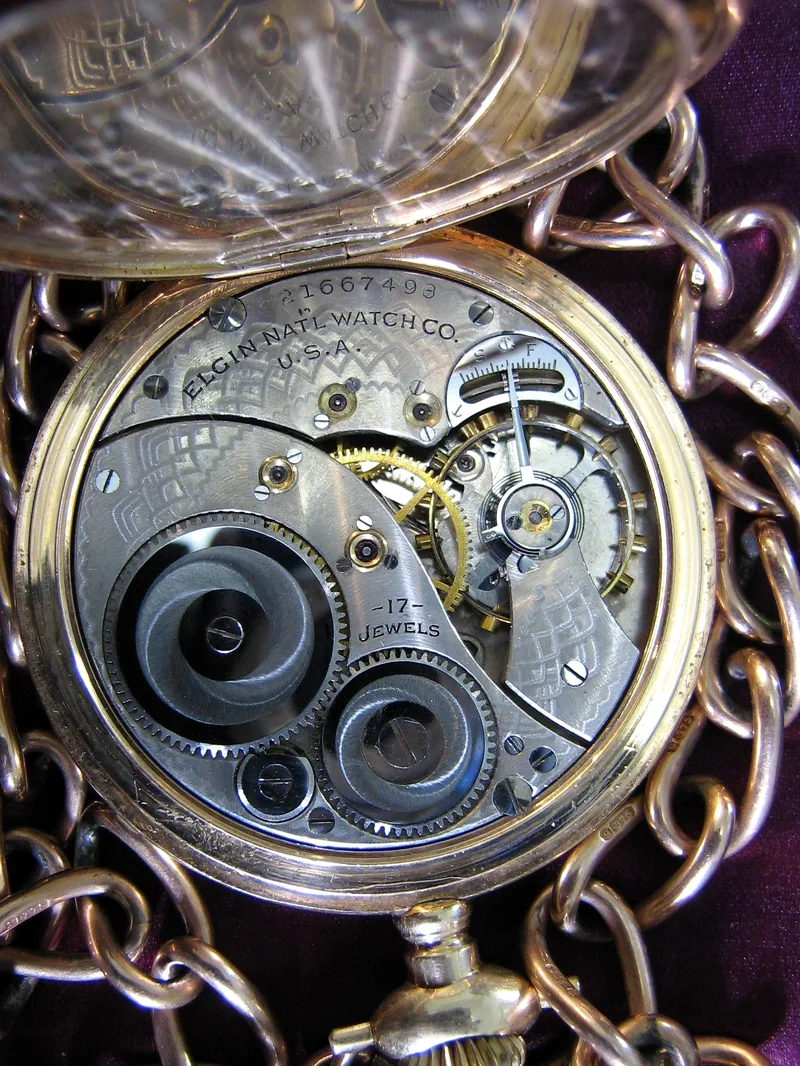
During the height of the Art Deco movement, Elgin crafted numerous iconic 12s movement grades, including the legendary Grade 303, 315, 345, 387, 417, and the high-jeweled Grade 453. These calibers showcased extraordinary industrial finishing. Watchmakers decorated nickel and gilt plates with intricate damaskeening—a technique of engine-turning radiant geometric patterns onto the metal surfaces—alongside raised gold screw-set jewel chatons, micro-metric regulator assemblies, and exquisite balance wheels. As wristwatches gained traction after World War I, pocket watches began their slow decline into vintage obsolescence. Thousands of high-grade Elgin 12s movements sat dormant in jewelers' safes or were stripped of their original solid gold and gold-filled cases during historical precious metal scrap drives. Today, horologists and modern custom watchmakers recognize that these orphaned 12s movements represent some of the finest American micro-engineering ever produced, sparking a massive resurgence in artisan restomod projects.
To convert an Elgin 12s pocket watch into a wristwatch is to bridge two distinct centuries of horological history. Rather than allowing these mechanical marvels to collect dust in drawers or sit as loose movement assemblies on collector trays, master watchmakers rebuild, re-case, and re-engineer them for daily wrist wear. The process requires a deep understanding of vintage American watch architecture, precision machining, and custom component fabrication. When executed correctly, a converted Elgin 12s becomes a stunning piece of wearable history, merging hand-finished 100-year-old American movements with contemporary case ergonomics and modern crystal durability.
2. Technical Specifications and Movement Architecture
To understand the mechanics of converting these historical timepieces, one must first analyze the technical dimensions defined by the American movement sizing standard. Unlike European watchmakers who measured movements in French lignes ('''), American manufacturers used a standardized inch-based scale developed during the 19th century. Under the Lancashire gauge system adopted by Elgin, a size 0 movement had a base diameter of 1 and 5/30 inches (1.166 inches or 29.63 mm). Each increase in size added 1/30 of an inch. Consequently, a 12s Elgin movement features a bare movement plate diameter of precisely 1.550 inches, which converts to approximately 39.37 millimeters. This dimension is crucial for any horologist considering a conversion, as it dictates the minimum internal clearance required for a custom wristwatch enclosure.
Architecturally, Elgin 12s movements were produced in two primary configurations: open-face (Lépine) and hunting-style (Savonnette). Open-face movements were designed with the winding stem at the 12 o'clock position and the small sub-seconds register positioned directly opposite at 6 o'clock. Hunting-style movements, intended for pocket watch cases with a protective spring-loaded front cover, placed the winding stem at 3 o'clock and the sub-seconds register at 6 o'clock relative to that crown orientation. The internal train wheel layout features a traditional manual-wind train: a mainspring barrel driving a center wheel, third wheel, fourth wheel (which carries the second hand pivot), and an escape wheel. Most high-grade 12s movements operate at a classic beat rate of 18,000 vibrations per hour (vph) or 2.5 Hz, delivering a smooth, deliberate 5-ticks-per-second sweep of the seconds hand.
The escapement assembly in an Elgin 12s movement typically features a cut expansion balance wheel made of bimetallic steel and brass, designed to compensate for temperature variations, paired with a blued steel Breguet overcoil balance spring. Higher-grade models incorporate 17 to 21 ruby jewels, adjusted to heat, cold, isochronism, and 3 to 5 positions. The winding mechanism on American movements of this era frequently uses a negative setting system (pendant set) or a positive setting system (lever or friction set). Understanding these technical specifications is essential before initiating any conversion, as the movement diameter, train height, stem style, and balance architecture directly dictate every phase of the re-casing procedure.
3. Challenges of Converting Elgin 12s to Wristwatch
A common question posed by vintage watch enthusiasts is: can you convert an Elgin 12s pocket watch into a daily-wear wristwatch without compromising its operational integrity? While the short answer is yes, the practical implementation presents significant engineering hurdles that require expert watchmaking solutions. The primary technical challenge stems from shock resistance. Vintage pocket watches were engineered to reside safely in a vest pocket, subject only to minimal linear movement. They lack modern shock-absorption systems such as Incabloc or Novodiac spring retention assemblies. The balance staff pivots on an Elgin 12s measure mere fractions of a millimeter (typically 0.07mm to 0.09mm in diameter) and are tempered glass-hard. Without shock mitigation, a sudden bump against a doorframe or an accidental drop onto a hard surface can instantly snap a balance pivot, rendering the movement dead until a new balance staff is turned on a watchmaker's lathe.
The second major hurdle involves environmental sealing and moisture control. Original pocket watch cases relied on basic threaded or snap-on bezels and open pendant tubes without rubber O-rings or synthetic gaskets. When you convert an Elgin 12s pocket watch into a wristwatch, you introduce the movement to wrist humidity, skin oils, dust, and rain. The internal movement components—particularly the high-carbon steel mainspring, balance spring, and balance staff—are highly susceptible to rust and corrosion. A modern conversion must utilize an enclosure capable of providing air-tight and water-resistant protection, incorporating stem-tube seals and compressed gasket systems that were entirely foreign to early 20th-century watch manufacturing.
Finally, spatial geometry and dial orientation present severe mechanical puzzles. When a standard open-face 12s movement (stem at 12 o'clock, sub-seconds at 6 o'clock) is rotated inside a wristwatch case so that the crown rests at the traditional 3 o'clock position, the sub-seconds register shifts to the 9 o'clock position. If the builder wishes to maintain a traditional 6 o'clock sub-seconds layout with a 3 o'clock crown, they must source a hunter-grade movement plate or engineer a secondary transfer wheel system—a complex horological modification. Alternatively, if the original open-face dial orientation is retained with the stem at 12 o'clock, the wristwatch must be designed as a "bullhead" style, which requires unique strap attachment geometry. Solving these challenges requires a careful balance between historical respect and modern mechanical adaptions.
4. Lug Welding and Case Selection
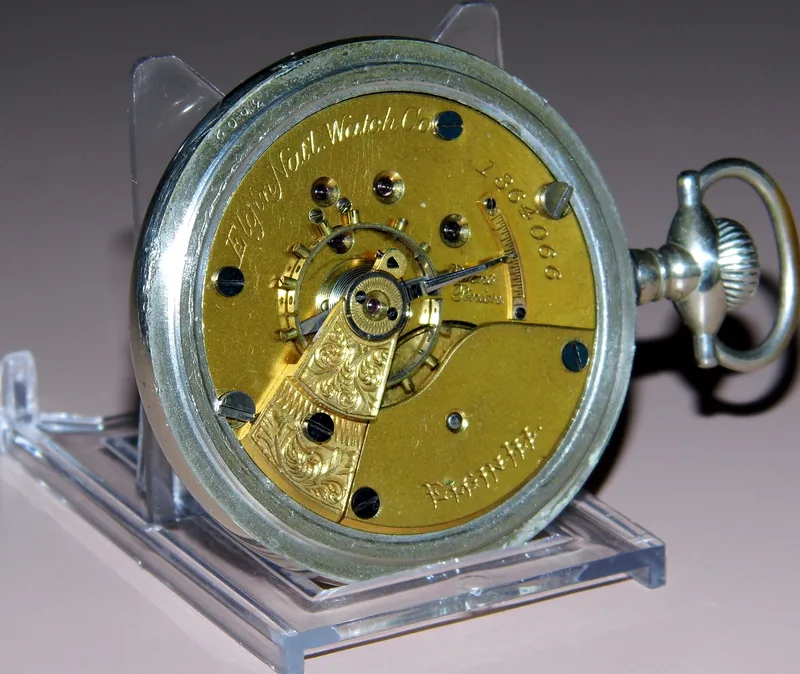
When selecting an enclosure, watchmakers generally choose between two distinct routes: adapting an original pocket watch case via silver soldering/welding custom lugs, or installing the movement into a purpose-built modern wristwatch conversion case. The traditional approach involves taking the original gold-filled, silver, or nickel-alloy pocket watch case, stripping the movement, and welding custom-fashioned wire or solid lugs directly onto the perimeter of the case at 12 and 6 o'clock (or 3 and 9 o'clock). While this retains the historic case metal and original caseback engravings, it presents massive structural risks. Heat from brazing or laser welding can discolor gold plating, warp vintage case threads, or soften annealed metal. Furthermore, these vintage cases lack modern water resistance and display casebacks.
Due to these limitations, modern custom builders vastly prefer a dedicated elgin 12s pocket watch to wrist conversion case manufactured specifically for this caliber. These modern cases are typically precision CNC-machined from 316L marine-grade stainless steel or solid titanium. Because the bare Elgin 12s movement diameter is 39.37mm, a high-quality conversion case usually features an exterior diameter of 42mm to 44mm, with a total thickness ranging from 11mm to 13mm depending on hand-pipe height. This creates a bold, modern wrist presence while keeping proportions comfortable. The internal geometry of a high-end conversion case includes a custom stepped movement chamber and an internal aluminum or brass movement ring designed to clamp the 12s movement securely without requiring destructive modifications to the original plates.
Modern conversion cases also integrate display casebacks equipped with scratch-resistant sapphire crystals. This feature is vital for 12s conversions: the main attraction of a vintage Elgin movement is its stunning damaskeened nickel bridges and ruby jewels, which were historically hidden inside a closed pocket watch case. Viewing the balance wheel beating at 18,000 vph through a sapphire back elevates the timepiece into an artistic showcase. Lug dimensions on these cases are typically designed for 20mm or 22mm watch straps, featuring ergonomic downward curving angles that pull the watch head down flush against the wrist, offsetting the physical mass of the 39.37mm engine inside.
5. Crown and Stem Solutions
The winding and setting infrastructure of an Elgin 12s movement represents one of the most technical phases of the conversion process. Many Elgin pocket watch movements from this era utilized a negative setting system (pendant set). In a negative set mechanism, the detent, setting spring, and sleeve reside inside the neck (pendant) of the pocket watch case rather than inside the watch movement itself. The movement stem is essentially a square-ended shaft that sits loosely in the winding arbor. When the pocket watch crown is pulled, the mechanism inside the case neck shifts the stem position, forcing the movement into the hand-setting mode. When removing the movement from its original case, the setting mechanism is lost unless it is replicated or adapted for the new wristwatch housing.
To overcome this issue when working with a negative-set Elgin 12s, the watchmaker must either install a specialized conversion stem or utilize a modern casing ring fitted with a built-in spring sleeve. Positive-set 12s movements (where the winding and setting clutch mechanism is located entirely on the dial side of the movement plates) are much easier to adapt. However, even with positive-set movements, matching the stem threads to a modern wristwatch crown requires precision micromechanics. Pocket watch stems typically use obsolete American thread taps (such as Tap 10, Tap 9, or custom proprietary threads), whereas modern wristwatch crowns use standard metric taps (usually Tap 10 / 0.9mm or Tap 6 / 1.2mm).
Watchmakers resolve thread mismatch by using custom-machined stem extenders or turning a brand-new custom stem on a lathe. A steel blank is turned down, threaded on one end to accept the modern oversized onion or diamond-style wristwatch crown, and squared on the opposite end to fit the vintage Elgin winding pinion and clutch wheel perfectly. The length of the stem must be calculated down to hundredths of a millimeter: if the stem is too long, the crown will sit away from the case tube, exposing the stem to moisture and lateral bending force; if it is too short, the clutch mechanism will fail to fully engage the setting wheels, resulting in gear slipping or lockups when setting the time.
6. Dial and Hand Considerations
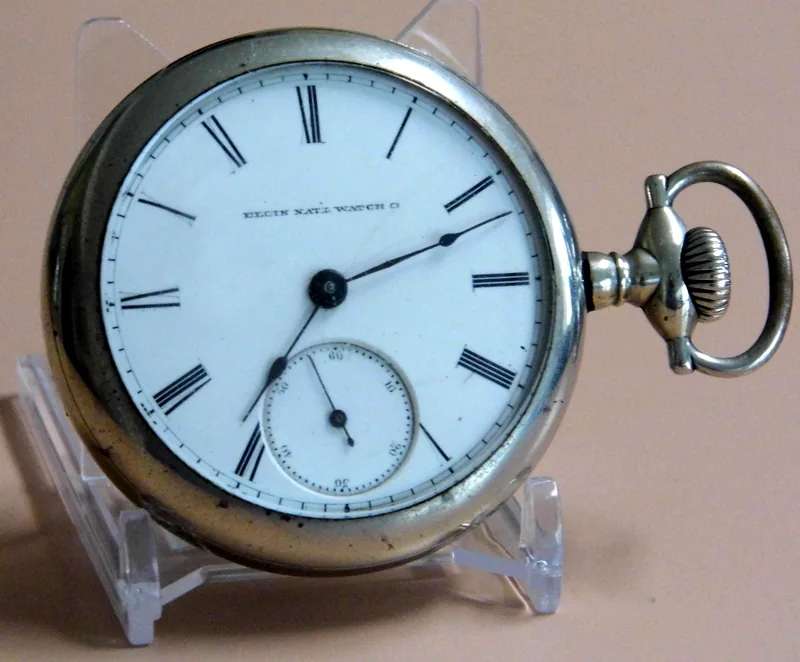
The aesthetic soul of any Elgin 12s conversion lies in its dial and hands. Elgin produced an astonishing variety of dials for their 12s movements, ranging from classic single-sunk and double-sunk vitreous enamel (fired glass) dials to silvered and gold-plated metal Art Deco dials with stylized typography. Vitreous enamel dials are virtually immune to fading or UV degradation, but they are extremely brittle. When converting an Elgin 12s, removing the dial requires immense care. Elgin dial feet are secured to the lower plate by copper posts held in place by side-locking dial screws or eccentric cams. A slip of a screwdriver can chip the fragile enamel around the dial edge or cause spider cracks across the face.
If the watchmaker chooses to rotate an open-face movement 90 degrees to position the crown at 3 o'clock, the original dial numbers will be misaligned by 90 degrees. To correct this while keeping the original dial aesthetic, some builders commission custom-printed replacement dials or delicately re-position the copper dial feet by soldering them in new locations using low-temperature silver solder or specialized dial-foot pliers. Alternatively, many modern artisans design custom sandwich dials or skeletonized brass dials that reveal the motion work and keyless works beneath, providing a contemporary aesthetic while retaining the original mechanical heart.
Hand fitting presents another micro-mechanical challenge. Pocket watch hand hole sizes (the internal diameter of the hour and minute hand mounting pipes) are significantly larger than standard modern wristwatch hands. For example, an Elgin 12s hour hand pipe typically measures approximately 1.80mm to 2.10mm, while minute hand pipes measure around 1.10mm to 1.20mm. If the original hands are damaged or missing, modern stock hands cannot be installed directly. The watchmaker must either re-bushel (shrink) the mounting pipes of modern hands using a staking set, or hand-fabricate custom blued-steel hands. If original peacock-blue or spade pocket watch hands are used, they must be carefully polished, heat-blued over a brass-chip tray, and cleared for height so that the long minute hand does not strike the inner curve of the modern wristwatch sapphire crystal.
7. Why 12s is more common for conversion
In the world of pocket watch conversions, various movement sizes exist—ranging from massive 18s railroad watches down to tiny 0s or 6s women's pendant watches. However, horologists and custom collectors universally agree that the 12s scale represents the absolute "Goldilocks size" for wrist conversions. To understand why, one must look at the finished physical dimensions on the wrist. An 18s movement has a movement plate diameter of 44.86mm; when placed into a protective wrist conversion case with necessary wall thicknesses and crystal gaskets, the final watch measures 48mm to 52mm in outer diameter. Except for a tiny minority of enthusiasts, a 52mm watch is impractically heavy, uncomfortable, and prone to catching on clothing during routine movement.
Conversely, smaller American movement sizes like the 6s (approx. 34.7mm) or 0s (approx. 29.6mm) present structural and service difficulties. These smaller movements were often produced in lower jewel counts, feature delicate train components that are easily damaged, and suffer from an extreme scarcity of replacement balance staffs and mainsprings. Furthermore, their smaller movement surface areas do not display the grand, sweeping damaskeened bridge patterns that make American vintage watchmaking so visually captivating.
The Elgin 12s hits the ideal mechanical sweet spot. With its native 39.37mm movement diameter, it can be cased inside a modern stainless steel body measuring 42mm to 43mm—the exact modern standard size for modern luxury sport and pilot watches. It provides substantial wrist presence without feeling cumbersome. Furthermore, because Elgin produced millions of 12s movements over four decades, donor movements, spare parts, balance staffs, mainsprings, and train wheels remain abundant in the horological supply chain. This makes a 12s conversion not only visually striking and comfortably wearable, but fully serviceable for generations to come.
8. Final Thoughts on Elgin 12s Conversions
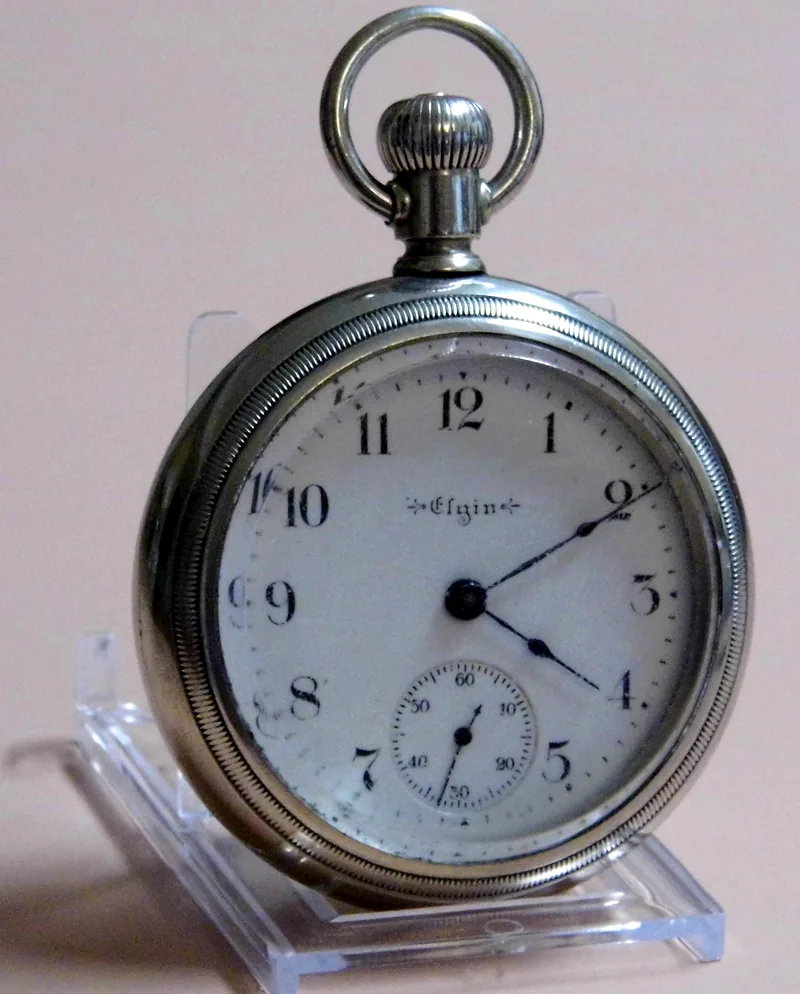
The technical process required to `convert elgin 12s pocket watch into wristwatch` hardware is a challenging yet deeply rewarding branch of modern horology. It honors the industrial heritage of American watchmaking while solving modern physical demands. However, any master watchmaker undertaking this work must approach the project with strong horological ethics. Museum-grade, historically pristine, fully cased Elgin pocket watches in solid gold or rare original cases should be preserved intact for posterity. The true art of the conversion movement lies in rescuing "orphaned" calibers—movements whose precious metal cases were melted down during historical gold booms, or timepieces whose original cases were crushed beyond repair.
When you transform a loose, century-old Elgin 12s movement into a high-performance wristwatch, you are taking a mechanical artifact built during the dawn of modern industrialization and giving it a second life. Protected inside a modern 316L stainless steel case with sapphire crystals, synthetic O-ring seals, and a bespoke leather strap, the high-beat lever escapement continues to tick just as accurately as it did when an Illinois craftsman adjusted it over a hundred years ago. It transforms an obsolete pocket instrument into an intimate, daily companion—a living testament to human ingenuity, precision micro-engineering, and timeless mechanical elegance.