Historical Background of Elgin 14L Movements
The Elgin National Watch Company, operating out of Elgin, Illinois, stands as one of the most prolific titans of American horological history. From the late 19th century through the mid-20th century, Elgin manufactured tens of millions of mechanical movements, pioneering mechanized, high-precision assembly lines that rivaled traditional Swiss hand-craftsmanship. Among their vast catalog, the 14-size movement platform—frequently designated as 14S or referred to by modern marriage watchmakers as the 14L movement—occupies a unique place in transitional horology. Developed during an era when pocket watches were the primary instrument for personal timekeeping, these movements were engineered with robust architectures, oversized balance wheels, and exquisite finishing that made them world-renowned for durability.
As timekeeping evolved toward the early decades of the 20th century, military necessity and changing civilian fashions triggered a dramatic shift from the waistcoat pocket to the wrist. During World War I, officers began soldering crude wire lugs onto small pocket watch cases, creating early field instruments similar to authentic WW1 trench watches. The Elgin 14-size caliber was frequently caught in this paradigm shift. It offered a middle ground between the massive, heavy 18-size railroad grade pocket watches and the tiny, fragile wristlet movements of the era. Manufactured in grade variants ranging from standard 7-jewel workhorses to high-grade 17 and 21-jewel adjusted movements, the Elgin 14L platform represents peak industrial American watchmaking.
Today, thousands of original gold-filled and solid gold Elgin pocket watch cases have been melted down during historical precious metal rushes, leaving pristine, high-grade 14L movements orphaned without housing. For modern bench watchmakers and master artisans, deciding to convert elgin 14L pocket watch into wristwatch configurations is not merely a custom modding exercise; it is an act of horological conservation. By re-casing these high-grade American movements into tailored wrist cases, watchmakers breathe new life into century-old mechanical artwork that would otherwise sit forgotten in material trays.
Technical Specifications and Movement Architecture
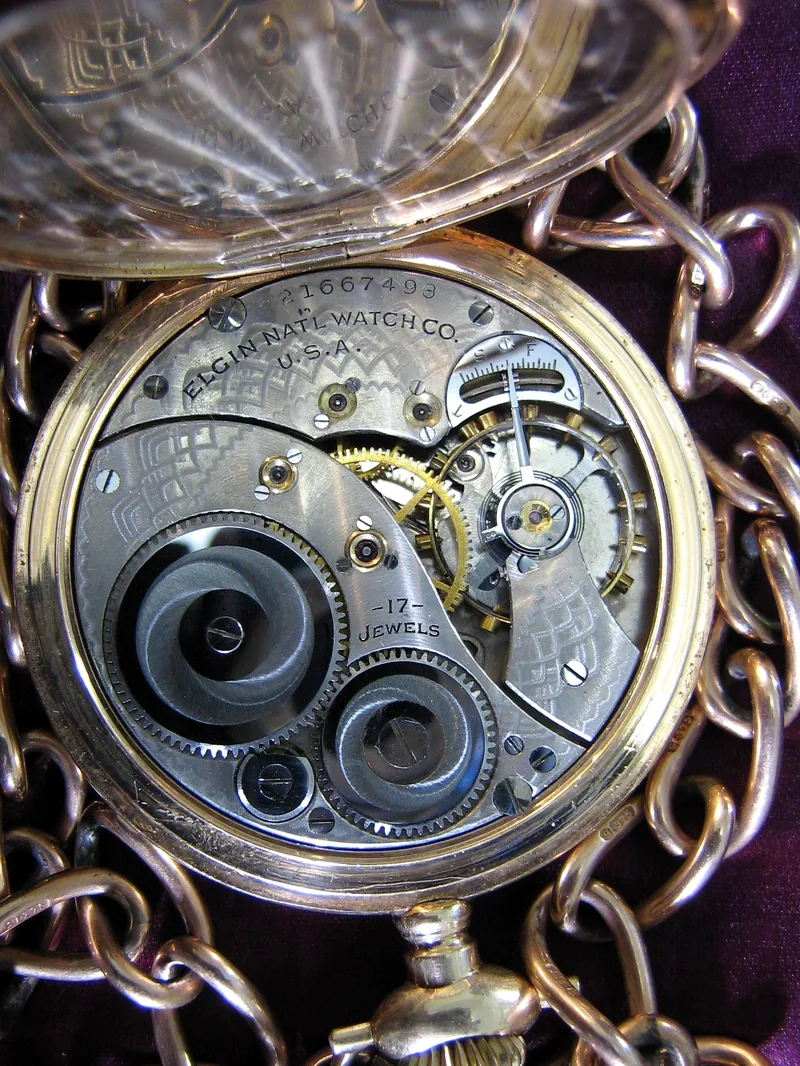
To successfully execute an elgin 14L pocket watch to wrist conversion, a watchmaker must first understand the unique spatial and mechanical architecture of the caliber. In traditional American sizing, a 14-size movement measures approximately 1.63 inches or roughly 41.4mm to 41.9mm in plate diameter, depending on the specific pillar plate rim dimensions and grade generation. The movement architecture typically features a three-quarter plate or semi-finger bridge layout, constructed from nickel or nickel-silver (German silver) decorated with intricate Damaskeening—a method of surface patterning that gives American movements their signature optical brilliance under light.
Mechanically, the Elgin 14L features a lever escapement driven by a compensated bimetallic balance wheel, often fitted with gold or brass timing screws and a Breguet overcoil hairspring. These components operate at a traditional slow-beat frequency of 18,000 vibrations per hour (2.5 Hz). The power delivery is controlled by a cut mainspring barrel operating through a traditional going train. However, the most critical technical specification that impacts conversion work is the keyless works mechanism. Unlike contemporary Swiss wristwatch movements that utilize a positive setting mechanism built entirely into the main plate, many 14-size Elgin calibers rely on a negative setting system.
In an Elgin negative setting system, the setting sleeve and detent spring reside inside the original pocket watch case neck, rather than within the watch movement itself. The movement's internal setting mechanism defaults to the hand-setting position unless pushed inward into the winding position by a spring-loaded sleeve inside the case stem. Understanding this distinction is vital when attempting to convert elgin 14L pocket watch movements, as modern aftermarket wristwatch cases are designed exclusively for positive-setting keyless works. Modifying or adapting this interface requires precise lathe operations or specialized conversion parts.
Challenges of Converting Elgin 14L to Wristwatch
Converting a century-old pocket movement to a daily-wear wrist instrument presents formidable engineering hurdles. The primary challenge lies in movement protection. Elgin 14L movements were built to spend their lives cushioned inside a thick pocket watch case, suspended inside a vest pocket. Consequently, they lack modern shock-absorption systems such as Incabloc or KIF on the balance staff pivots. The long, thin balance staff pivots of a 14L Elgin are extremely vulnerable to shear forces caused by accidental wrist impacts, drops, or sudden vibrations. Watchmakers must ensure the movement ring and casing clamps offer dampening while advising clients on the limitations of wearing a non-shock-protected vintage movement.
The second technical hurdle involves dial orientation relative to the movement's train layout. Elgin produced 14-size movements in two main configurations: Open-Face (Lépine style) and Hunter-Case (Savonnette style). Open-Face movements have the winding stem located at 12 o'clock and the sub-seconds register positioned directly opposite at 6 o'clock. When re-casing an Open-Face movement into a standard wristwatch case where the crown is positioned at 3 o'clock, the sub-seconds dial shifts awkwardly to the 9 o'clock position. Hunter-case movements, conversely, feature the winding stem at 3 o'clock and the sub-seconds at 6 o'clock, making them much more natural candidates for modern wristwatch ergonomic alignment.
Finally, environmental sealing poses a significant threat. Original Elgin pocket watch cases relied on threaded bezels or snap backs that were never intended to resist water pressure or humidity. Modern wristwatches are exposed to perspiration, rain, and ambient moisture. When placing a vintage movement into a modern case, the artisan must ensure custom movement spacer rings seal seamlessly against high-grade Viton O-rings while providing correct axial clearance for the movement's high-standing center wheel and cannon pinion assembly.
Lug Welding and Case Selection
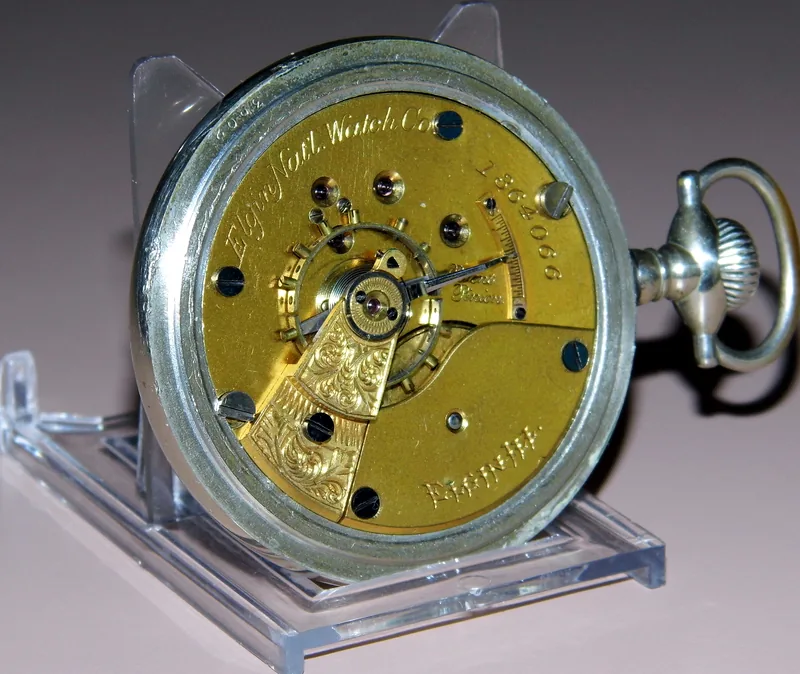
Determining the best case size for elgin 14L conversion projects is a balance between movement dimensions, wrist ergonomics, and visual proportion. Because the Elgin 14L movement plate diameter measures roughly 41.5mm, the housing case must have an internal movement chamber opening of at least 42.0mm. This naturally dictates an external case diameter ranging between 43mm and 46mm, depending on wall thickness and bezel geometry. For most wrist sizes, a modern 44mm stainless steel pilot-style or officer-style display case represents the ideal sweet spot for an Elgin 14L build.
When selecting a case, watchmakers generally choose between two primary paths: modern CNC-machined conversion cases or custom wire-lug welded retrofits on period-correct brass or silver cases. Modern CNC conversion cases feature mineral or sapphire display backs that showcase Elgin's hand-damaskeened plates. These cases usually feature screw-down display backs, custom-machined movement spacer rings made of anodized aluminum or solid brass, and standard spring bar lugs. These components allow the builder to adapt modern leather straps easily while securing the large American movement firmly inside the housing.
For artisans seeking an authentic historical aesthetic, custom lug welding offers a traditional alternative. In this method, an original period brass or sterling silver pocket watch shell is stripped, cleaned, and fitted with hand-bent wire lugs using silver hard-solder or micro-TIG/laser welding techniques. Care must be taken during heating to prevent warping the thin case walls or annealing the bezel threads. Wire lugs styled after early WWI field watches give the completed 14L timepiece an incredible, historically resonant presence that bridges the gap between pocket and wrist technology.
Crown and Stem Solutions
Navigating the crown and stem assembly is arguably the most mathematically demanding phase when you convert elgin 14L pocket watch into wristwatch hardware. Because Elgin pocket watch stems were engineered for American casing standards, their thread pitch and stem diameters differ from modern Swiss stem thread standards (such as Tap 10 or Tap 9). Furthermore, as noted previously, resolving the negative-setting mechanism requires a bespoke technical solution so the watch can be wound and set predictably using a modern wristwatch crown.
To convert an Elgin negative-setting movement to operate in a modern positive-setting wristwatch case, watchmakers typically employ one of two strategies:
- Sleeve Conversion: Machining a tiny brass or stainless steel detent sleeve that mounts inside the neck of the modern conversion case. This sleeve holds a custom-turned winding stem in place, recreating the tension dynamics of the original pocket watch case stem.
- Keyless Works Modification: Modifying the movement's internal setting lever and rocker mechanism using custom-fabricated springs to transform the movement into a permanent positive-setting assembly that accepts a standard split or solid stem.
Once the stem action is secured, selecting the crown requires aesthetic and tactile consideration. Given the robust mainspring fitted inside an Elgin 14L barrel, hand-winding requires adequate torque. Small modern crowns make winding difficult and put unnecessary lateral stress on the winding arbor. An oversized "Onion" or "Diamond" style crown—reminiscent of early aviation watches—complements the scale of a 44mm conversion case while providing optimal grip for daily winding operations.
Dial and Hand Considerations
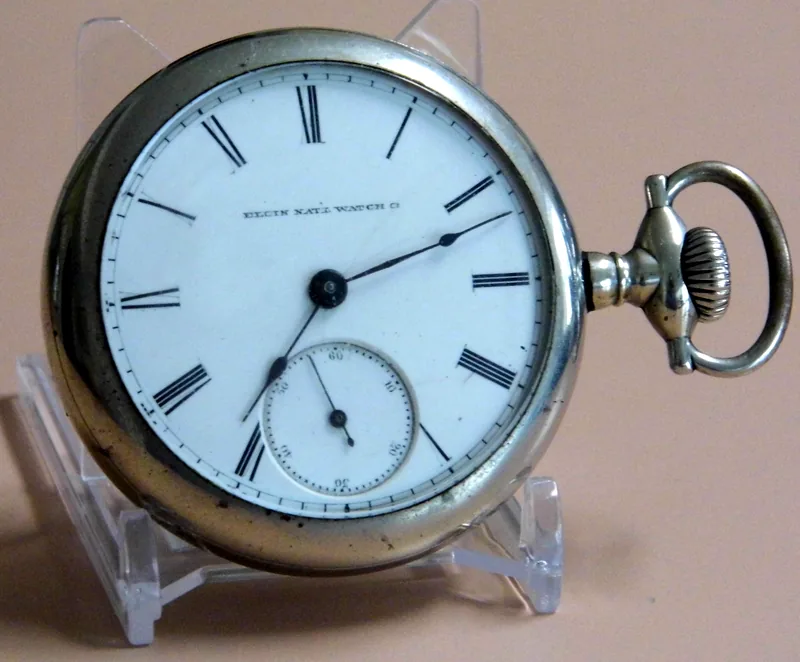
The visual identity of any antique pocket watch conversions project centers on the preservation or restoration of the original dial and hands. Elgin 14L movements were paired with two primary dial styles during their production run: double-sunk vitreous enamel dials and metal Art Deco painted dials. Vitreous enamel dials are virtually immune to fading or UV degradation, but they are exceptionally brittle. Removing dial screws that hold copper dial feet inside the main plate must be executed with extreme delicacy; any stress applied to the enamel edge will cause catastrophic spider cracks across the dial face.
If an enamel dial is damaged beyond repair, or if the original dial layout features an undesirable sub-seconds position for wrist wear, custom metal dials can be turned on a watchmaker's lathe. When fitting custom or modified dials to an Elgin 14L, the dial feet must be soldered or pinned in precise alignment with the pillar plate holes. Furthermore, hand clearances must be recalculated carefully. Pocket watch cases offered generous vertical clearance beneath their domed glass crystals, whereas modern conversion cases with flat or shallow domed sapphire crystals require tighter tolerances between the hour hand, minute hand, and crystal underside.
Hand fitting presents its own set of lathe-work requirements. The friction-fit dimensions for an Elgin 14-size cannon pinion, hour wheel pipe, and fourth wheel pivot tip are unique to American production standards. Original heat-blued steel spade or cathedral hands should be preserved whenever possible. If replacement hands are used, their mounting sockets must be broached or closed on a staking set to match Elgin's precise arbor diameters. Restoring aged blued steel hands via heat oxidation returns the deep cornflower blue luster that contrasts brilliantly against white enamel dials.
Why 14L is More Common for Conversion
Within the custom marriage watch community, the Elgin 14L platform has emerged as one of the most practical standard movements for conversion. To understand why, one must look at the physical limitations of alternative American pocket watch sizes, specifically 18-size, 16-size, and 12-size movements:
- 18-Size (44.86mm movement): Case sizes require a massive 48mm to 52mm external diameter, rendering the finished wristwatch unwearably large for all but the thickest wrists.
- 16-Size (43.18mm movement): Highly popular, but results in a completed case diameter of 45mm–48mm, which still sits on the absolute upper limit of modern wrist comfort.
- 12-Size (39.37mm movement): Excellent size, but components are delicate, and surviving movement stocks are less plentiful than 14-size or 16-size variants.
The Elgin 14L strikes a balance. Measuring roughly 41.5mm, it fits neatly into standard 43mm–44mm conversion cases, resulting in a finished watch that mirrors the proportions of modern sports timepieces or vintage pilot watches. It possesses enough wrist presence to showcase the internal mechanics while remaining comfortable for daily wear. Contrast this with European movements like those found in vintage Rolex wristwatches or early Swiss trench calibers, which are significantly smaller but often lack the dramatic plate decoration and industrial history of American pocket watch calibers.
Additionally, because Elgin produced 14-size movements in massive quantities across several decades, replacement donor components—such as balance staffs, mainsprings, escape wheels, and winding arbors—remain readily available through vintage material houses. This availability simplifies ongoing servicing, guaranteeing that a converted 14L wristwatch can be maintained by competent bench watchmakers for decades to come.
Final Thoughts on Elgin 14L Conversions
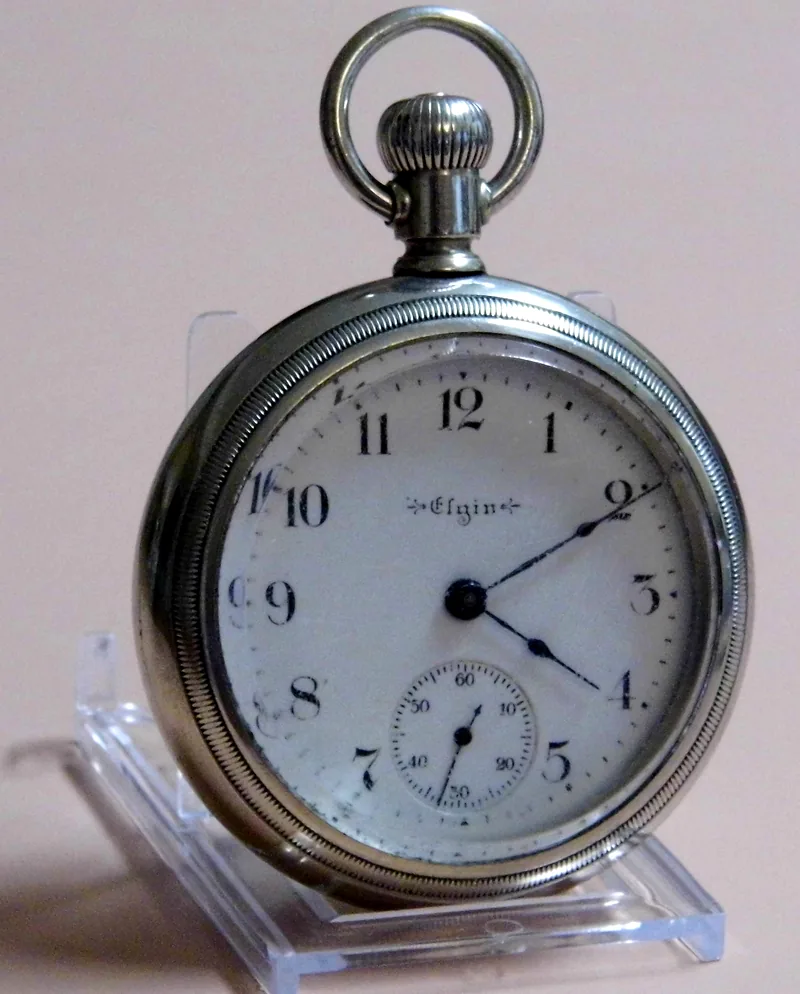
Executing an elgin 14L pocket watch to wrist conversion is a masterclass in hybrid horology. It requires the artisan to bridge the gap between 19th-century American industrial mass-precision manufacturing and modern wrist-wear ergonomics. By overcoming challenges related to negative setting systems, movement cushioning, casing tolerances, and hand fitting, the watchmaker transforms a historic pocket movement into a functional, wearable piece of art.
For collectors and horological enthusiasts, owning a converted Elgin 14L offers an experience that no mass-produced modern wristwatch can replicate. Watching a slow-beat 18,000 VPH balance wheel tick inside a custom display case—surrounded by over a century of hand-finished American damaskeening—serves as a constant link to a golden age of engineering. So long as orphaned movements are rescued with technical respect and ethical preservation practices, these conversions ensure Elgin's horological legacy continues to beat on the wrist for generations to come.