Historical Background of Elgin B.W. Raymond Movements
The Elgin National Watch Company, established in 1864 in Elgin, Illinois, stood at the pinnacle of American industrial horology for over a century. Among its vast repertoire of movements, none carries the prestige or historic weight of the grade named after the company's first president, Benjamin Wright Raymond. Introduced in the late 19th century and refined through successive iterations well into the mid-20th century, the B.W. Raymond was conceived specifically to meet and exceed the rigorous timekeeping requirements demanded by the expanding American railroad networks. These movements were not merely timetellers; they were life-saving navigational instruments designed to prevent catastrophe on single-track railways.
To qualify for official railroad service under the standards popularized by Webb C. Ball, a watch had to meet demanding specifications: it had to be open-faced, 16 or 18 size, adjusted to at least five positions as well as temperature and isochronism, accurate within 30 seconds per week, and equipped with a lever-setting mechanism to prevent accidental hands-setting. The B.W. Raymond series quickly became the flagship standard for Elgin’s railroad production. Early models featured 15 to 17 jewels set in screwed gold chatons, but by the modern era of the 1920s through the 1950s, the B.W. Raymond evolved into legendary configurations featuring 21 and 23 jewels, high-grade nickel alloy plates, complex micro-metric regulators, and exquisite damaskeening.
Today, as pocket watch utility has waned, horological artisans and enthusiasts frequently seek to convert elgin bw raymond 16s pocket movements into wristwatches. Transforming these pocket chronometers into wrist-worn timepieces allows collectors to wear a functioning piece of American industrial ingenuity on the wrist. However, because these movements were engineered for pocket cases during an era of distinct manufacturing standards, bringing a 16-size B.W. Raymond onto the wrist requires deep mechanical understanding, meticulous component fabrication, and an unyielding respect for vintage horological architecture.
Technical Specifications and Movement Architecture
Understanding the internal engineering of the 16-size B.W. Raymond is essential before undertaking an elgin bw raymond conversion. The American "16-size" designation corresponds to a movement plate diameter of 1.7 inches, or precisely 43.18 millimeters. Across famous iterations—such as the Grade 387, Grade 478, and the revered Grade 571—Elgin incorporated features that represented the apex of mechanical efficiency for manual-wind timepieces.
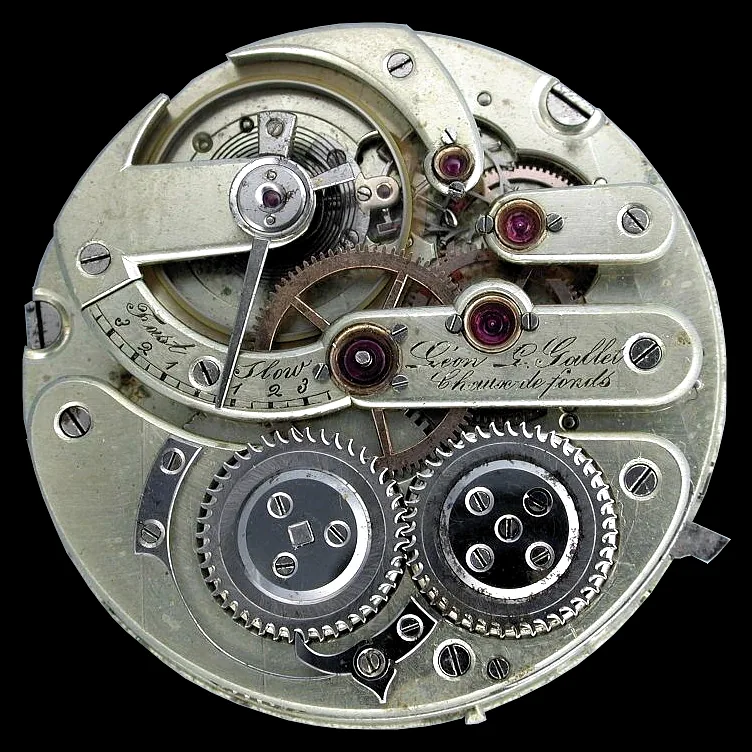
Central to these movements is the high-jewel train layout. A typical b.w. raymond 21 jewel conversion utilizes a movement built with ruby and sapphire jewels capping every critical friction point from the mainspring barrel arbor through to the balance staff pivots. The escapement relies on a double roller assembly paired with a hardened steel escape wheel and sapphire pallet stones. To handle variations in temperature, Elgin implemented bi-metallic compensation balance wheels or later, mono-metallic Elinvar-type balance springs featuring a Breguet overcoil. This architectural precision ensures exceptional timekeeping stability across different wrist positions, even decades after original production.
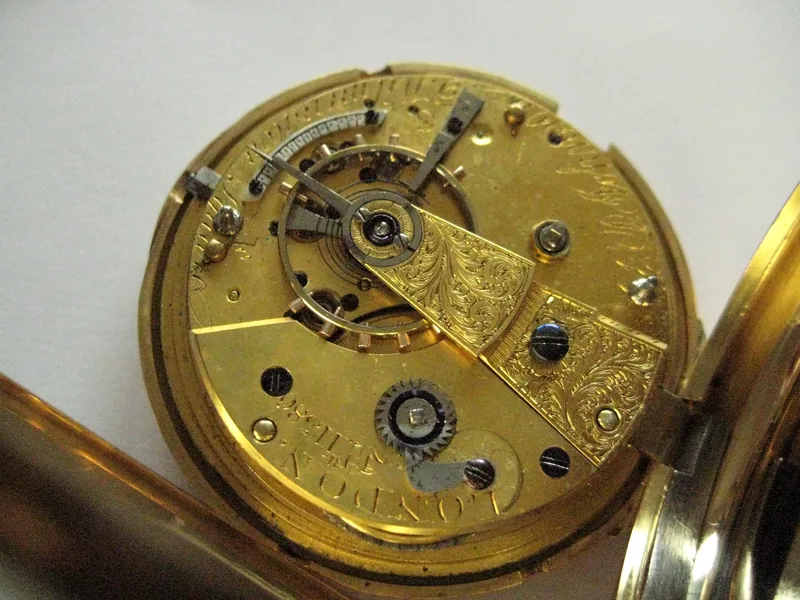
Power delivery is handled by heavy-duty mainspring barrels, often equipped with a motor barrel or safety barrel design to safeguard the gear train in the event of a mainspring breakage. The gear train bridges are adorned with intricate finishings, ranging from sunburst damaskeening to parallel stripes. Regulation is handled by advanced fine-adjusters, such as the Reed or Star micro-metric regulator, allowing a watchmaker to make minute adjustments to the active hairspring length with extreme precision. These architectural highlights make the 16s B.W. Raymond a stunning movement to view through a modern transparent exhibition caseback.
Challenges of Converting Pocket Watches to Wristwatches
While the prospect of wearing a classic railroad movement is appealing, master watchmakers encounter numerous technical hurdles when executing an elgin railroad conversion wristwatch project. The primary challenge lies in the fundamental mechanical differences between pocket watch construction and modern wristwatch architecture. Pocket watches were intended to sit upright in a vest pocket, subject to minimal sudden shocks, whereas wristwatches are subjected to constant multidirectional kinetic force, vibrations, and impact risks.
Unlike modern wristwatches built with Incabloc or KIF spring-loaded shock absorbers, vintage 16s movements feature rigid jewel settings. The fine balance staff pivots, measuring mere fractions of a millimeter in diameter, can easily snap if subjected to an accidental knock. Early attempts at adapting vintage pocket movements were reminiscent of how watchmakers fashioned authentic WW1 trench watches by soldering rudimentary wire loops to existing pocket watch cases. However, modern horology demands a far higher standard of protection, casing security, and alignment.
Another major obstacle is the setting mechanism. True railroad-grade movements are lever-set, not stem-set. To adjust the time, one must pull out a small setting lever hidden beneath the bezel ring before turning the crown. In a traditional pocket watch case, the bezel unscrews to reveal this lever. Adapting a lever-set movement to a custom wrist case requires either engineering a accessible port or cutout in the new case frame to actuate the lever, or re-engineering the keyless works to accept a modern push/pull stem system—a complex modification that requires bespoke machining and risks compromising the movement's original integrity.
Lug Welding and Case Selection
Case fitting and lug geometry are central to turning a large pocket watch movement into an ergonomically wearable wristwatch. Because a 16s movement measures over 43mm on its own, adding a modern case can easily result in a overall watch diameter of 47mm to 50mm. Careful case selection is vital to ensure the final piece does not feel overwhelmingly bulky or unbalanced on the wrist.
Watchmakers typically approach case selection through two distinct methodologies: retrofitting an original vintage pocket watch case or using a modern, precision-machined 316L stainless steel conversion case. Retaining the original case requires silver-soldering or micro-TIG welding custom lugs directly onto the vintage gold-filled, sterling silver, or nickel pocket watch shell. Precision heat control is vital during welding; excessive thermal expansion can distort the movement seat, warp the bezel threads, or discolor the metal finish. Modern lug profiles are often sculpted with a steep downward curve to help the large watch head conform comfortably to the wrist's anatomy.
Alternatively, utilizing a purpose-built modern conversion case engineered specifically for 16-size American movements eliminates the risks associated with welding vintage metals. These custom cases utilize an inner movement adapter ring, machined from brass or stainless steel, which cradles the 43.18mm movement plates. The ring isolates the movement, acts as a spacer, and secures the movement via modern movement clamps and case screws. High-end conversion cases often feature double-domed scratch-resistant sapphire crystals with anti-reflective coatings on the front, paired with a sapphire exhibition caseback to display the fully restored B.W. Raymond plates.
Crown and Stem Solutions
The winding and setting infrastructure presents one of the most intricate engineering puzzles when you decide to convert elgin bw raymond 16s movements. Traditional American pocket watches utilize a negative-setting mechanism, where the stem detent/sleeve resides inside the pendant of the pocket watch case rather than within the movement itself. Modern wristwatch movements, by contrast, use positive setting, where the setting mechanism, clutch, and detent are contained entirely within the movement plates.
When adapting a B.W. Raymond movement to a modern case, the watchmaker must address the interface between the case stem tube and the movement winding square. The mainspring of a 16s railroad watch is substantially thicker and stiffer than that of a standard wristwatch, requiring significant mechanical torque to wind fully. If the replacement stem is incorrectly turned or improperly hardened, the winding forces will place excessive lateral stress on the winding arbor and winding pinion, leading to rapid wear or binding.
To overcome this, watchmakers machine custom two-piece stems or fabricate threaded stem adapters using high-tensile stainless steel or hardened carbon steel. The stem must fit precisely into the winding square while allowing the external crown to operate smoothly against internal rubber O-ring gaskets for moisture resistance. The crown itself must be sized proportionally—often an oversized onion or diamond style—to provide adequate mechanical leverage for winding the heavy-duty B.W. Raymond mainspring without placing undue strain on the user's fingers or the movement's keyless works.
Dial and Hand Considerations
The visual identity of a b.w. raymond 21 jewel conversion hinges on the condition and mounting of its dial and hands. Railroad movements were fitted with vitreous enamel dials—commonly referred to as porcelain dials—featuring high-contrast black Arabic numerals, bold minute tracks, and often a dedicated outer 60-minute track known as a Montgomery dial. These dials were fired on copper plates and are susceptible to spiderweb hairline cracking if subjected to flexing, uneven pressure, or thermal shock during re-casing.
Preserving an original enamel dial requires extreme caution. Modern conversion cases must provide exact internal clearance so that the crystal bezel does not apply downward force on the glass enamel surface. The dial feet—small copper posts soldered to the back of the dial—must align perfectly with the reception holes and side lock-screws on the Elgin main plate. If a original dial's feet are broken or missing, soldering new feet requires low-temperature silver solder and specialized heat-sink jigs to prevent blistering the enamel on the front surface.
Hand clearance is another technical consideration. Elgin railroad watches used hand pipes sized to unique American dimensional standards, which are vastly different from standard modern Swiss hole sizes (e.g., modern ETA sizes). The original blued-steel hands—such as spade, spade-and-poker, or cathedral styles—should be preserved, polished, and thermally re-blued whenever possible. Because modern conversion cases often feature lower profile crystal clearances than original high-domed pocket watch bezels, the hour, minute, and sub-second hands must be precisely colleted and bent to clear each other and the underside of the sapphire crystal without rubbing.
Why 16s is More Common for Conversion
In the realm of antique pocket watch conversions, the 16-size movement occupies a ideal balance between mechanical presence and physical wearability. Historically, American pocket watches were manufactured in several standard sizes, with 18-size (44.86mm plate diameter) and 16-size (43.18mm plate diameter) being the dominant formats for heavy industrial and railroad work, alongside smaller 12-size and 10-size dress watches.
While 18-size movements possess significant historic charm, their sheer physical footprint makes them exceedingly difficult to translate into a comfortable wrist-worn design. An 18s movement cased into a modern wristwatch housing typically yields a case diameter exceeding 48mm to 50mm, with a lug-to-lug distance often pushing 58mm. This scale is simply unwearable for average wrist sizes. Conversely, 12s and 10s dress movements—while smaller—were rarely manufactured to full railroad-grade specifications, often lacking the 21-jewel counts, adjusted positions, lever-set safety features, and robust architecture that collectors seek.
The 16s format strikes the perfect compromise. When cased in a modern, slim-bezel housing, a 16s elgin railroad conversion wristwatch results in a overall diameter of approximately 44mm to 45mm. This fits comfortably within the aesthetic dimensions of modern oversized pilot, field, and military wristwatches. Furthermore, due to the immense popularity of 16-size pocket watches during the early-to-mid 20th century, there is a relatively healthy ecosystem of donor movements, spare components, replacement balance staffs, and specialized tooling available to horologists executing these conversions.
Final Thoughts on Elgin B.W. Raymond Conversions
Performing an elgin bw raymond conversion is a masterclass in blending traditional 19th-century craft with contemporary manufacturing techniques. A successfully executed conversion breathes fresh life into a high-grade mechanical artifact that might otherwise remain forgotten in a drawer or display cabinet. By taking a 21-jewel or 23-jewel B.W. Raymond movement out of its pocket enclosure and adapting it for wrist wear, watchmakers create a bridge between historical American industrial heritage and practical modern life.
However, horologists and collectors must approach the decision to convert elgin bw raymond 16s timepieces with reverence and caution. Priority should always be given to non-destructive, fully reversible conversion methods. Machining modern custom adapter rings, utilizing modern cases, and avoiding destructive modifications to original movement plates or pristine dials ensures that the movement's historical integrity remains intact for future generations of watchmakers.
When completed with artistic discipline and technical precision, a conversion wristwatch powered by an Elgin B.W. Raymond movement is far more than a functional watch. It is a ticking homage to an era when American micro-engineering led the world, delivering chronometric accuracy that kept the rail lines safe and powered an industrial nation forward. Worn on the wrist, it serves as a tactile, visual reminder of horological history in motion.