1. Historical Background of Felsa 0s Movements
Felsa SA, founded in 1918 in Lengnau, Switzerland, stands as one of the most respected ébauche manufacturers of the modern horological era. During the early twentieth century, Swiss movement makers were operating at a pivotal crossroads in watchmaking history. The industry was undergoing a rapid shift from traditional pocket watches designed for waistcoat pockets to personal wristlets worn on the arm. Within this landscape, Felsa established a reputation for manufacturing highly reliable, meticulously finished raw movements (ébauches) that were supplied to numerous third-party brands across Europe and the Americas.
Among their early production portfolio was the 0s size movement. Based on the traditional Lancashire gauge system used extensively across Anglo-American horology, a "0s" (zero size) movement measures approximately 1-5/32 inches, or roughly 29.33mm to 30.00mm in movement diameter. In Swiss trade measurement, this equates to roughly 13 to 13.5 lignes (13'''). This specific sizing occupied an interesting historical niche: it was compact enough to fit elegant ladies' pendant watches and gentlemen's slim dress pocket watches, yet substantial enough to maintain structural rigidity, high mechanical accuracy, and robust power delivery.
During the 1910s and 1920s, as soldiers and civilians alike demanded hands-free timekeeping, many of these small pocket movements were adapted into wrist-worn instruments. This transitional era laid the groundwork for modern custom modifications, akin to early historic military adaptations seen in authentic WW1 trench watches. Understanding the historical context of the Felsa 0s reveals why these movements represent a fascinating bridge between vintage pocket horology and functional wristwatch design.
2. Technical Specifications and Movement Architecture
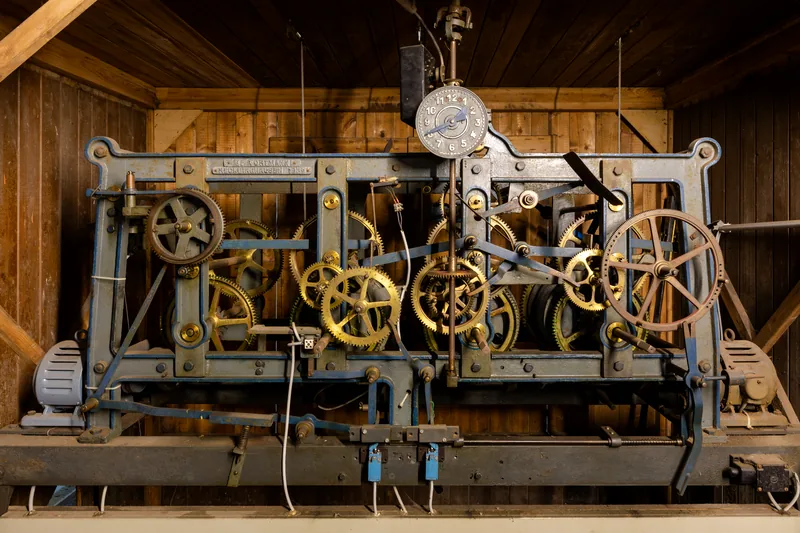
Analyzing the architecture of a Felsa 0s caliber reveals a classic Swiss layout that combines durability with elegant traditional watchmaking principles. The movement typically features a traditional finger-bridge or split-three-quarter plate configuration forged from nickel-plated brass or gilded maillechort (German silver). The train wheel layout follows standard Swiss practice: a large mainspring barrel driving a center wheel, third wheel, fourth wheel (operating at 60 seconds per rotation to drive sub-seconds), and an escape wheel. Most Felsa 0s variants operate at a standard beat frequency of 18,000 vibrations per hour (vph) or 2.5 Hz, delivering a smooth, classic ticking rate that is gentle on balance pivots.
The escapement is a Swiss straight-line lever design, utilizing synthetic ruby pallet jewels and a cut bimetallic compensation balance wheel or a monometallic steel balance. Depending on the grade and trim, balance springs are either flat steel hairsprings or Breguet overcoil springs designed to minimize positional errors. Jewel counts typically range from 7 to 15 jewels in standard production models, with higher-grade variants featuring 17 jewels housed in polished brass chatons, complete with endstones (cap jewels) on the upper and lower balance staff settings to optimize oil retention and reduce frictional drag.
From a dimensional perspective, the Felsa 0s caliber features a mainplate diameter of 29.33mm–30.00mm, with an overall movement height ranging between 4.2mm and 4.8mm depending on the specific keyless works layout. The stem mechanisms on Felsa 0s movements can vary between positive-setting (pull-out stem activation self-contained within the movement) and sleeve-setting (negative setting, where a split sleeve in the case pendant holds the stem position). Understanding these exact architectural specs is critical before attempting to adapt the caliber into a modern wristwatch housing.
3. Challenges of Converting Felsa 0s to Wristwatch
Watchmakers and collectors frequently ask: can you convert felsa 0s pocket watch movements into functional modern wristwatches? The short answer is yes, but it presents a series of formidable mechanical, structural, and geometry challenges that require bench watchmaking expertise to solve. Unlike larger 16s or 18s pocket watch movements, which offer generous working tolerances, the 0s size operates within tight spatial limits where small errors in alignment can cause total gear train binding or extreme rate variance.
The primary operational hurdle involves crown orientation versus dial layout. Pocket movements were produced in two standard configurations: hunter (where the winding crown is at 3 o'clock relative to the dial) and open-face (where the winding crown sits at 12 o'clock with the sub-seconds register at 6 o'clock). If you choose to convert felsa 0s pocket watch into wristwatch format using an open-face movement, placing the crown at 3 o'clock on the wrist will shift the small seconds sub-dial to 9 o'clock. If you insist on maintaining sub-seconds at 6 o'clock, the crown must remain at 12 o'clock, requiring a specialized "bullhead" style wristwatch case design.
Another severe technical challenge is shock resistance. Vintage Felsa 0s movements were produced decades before the widespread adoption of modern shock-absorption systems such as Incabloc or KIF. The delicate balance staff pivots—often measuring a mere 0.08mm to 0.10mm in diameter—are rigid and highly susceptible to snapping if dropped or subjected to heavy wrist impacts. Furthermore, because vintage pocket watches were never intended to encounter wrist sweat, humidity, or modern atmospheric conditions, achieving adequate environmental sealing is paramount when executing modern antique pocket watch conversions.
4. Lug Welding and Case Selection
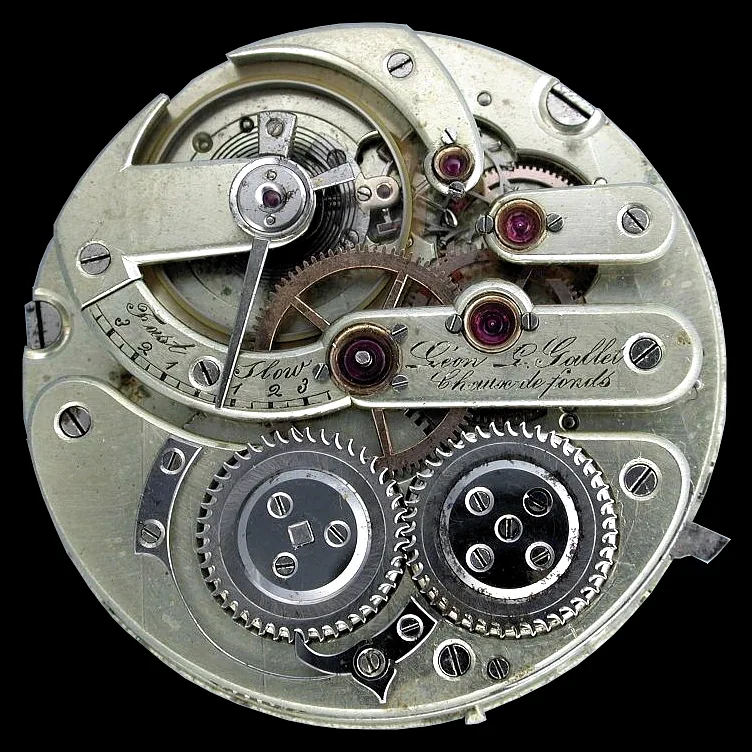
Finding or building an appropriate felsa 0s pocket watch to wrist conversion case is the single most critical aesthetic and physical step of the project. There are two primary paths a watchmaker can take: restoring and modifying an original antique pocket watch case by soldering wrist lugs, or housing the movement inside a completely custom-machined contemporary stainless steel wristwatch case.
If the goal is to retain historical authenticity, a watchmaker can take the original sterling silver, nickel, or gold-filled pocket case and silver-solder fixed wire lugs to the outer band at 12 and 6 o'clock. This creates an authentic vintage trench watch look. However, extreme care must be taken during the soldering process: the movement and crystal must be entirely removed, and heat sinks applied to preserve case tension and prevent warping the bezel snaps. Once soldered, the case must be stress-tested to ensure the wire lugs can withstand modern strap tension.
For daily wearability and moisture protection, a custom-machined modern wristwatch case engineered specifically for 30mm movements is superior. Because standard off-the-shelf modern cases are typically designed for modern ETA or Unitas calibers, a custom brass or stainless steel casing ring (movement adapter) must be turned on a lathe. This casing ring fits over the outer circumference of the Felsa 0s mainplate, compensating for movement tabs, height discrepancies, and stem height alignment. Secure movement clamps (dog screws) are then installed to lock the mainplate tightly against the internal rebate of the case, eliminating any internal movement shift when setting or winding.
5. Crown and Stem Solutions
Engineering a functional crown and winding stem system for a Felsa 0s conversion requires precision lathe work and a thorough understanding of keyless works geometry. Antique pocket watch winding stems rarely feature standard modern thread sizes (such as Tap 9 or Tap 10). Instead, Felsa 0s stems often utilize obsolete metric thread pitches or proprietary stem square dimensions that do not thread directly into modern crowns.
To overcome stem incompatibilities, a watchmaker must either turn a new custom winding stem from annealed steel stock on a precision watchmaker's lathe (and subsequently heat-treat and temper it to prevent snapping), or construct a seamless stem extender. A stem extender involves precision-drilling, threading, and joining the vintage square shank of the Felsa stem to a modern threaded section using high-strength anaerobic thread locker. The length of the stem must be calculated to within hundredths of a millimeter: if the stem is too long, the crown will not seat flush against the case tube; if it is too short, the keyless works will fail to engage the setting setting lever (tirette) properly.
Crown selection must also balance water resistance with historical character. Large onion, pumpkin, or cabochon crowns are historically accurate for conversions and provide comfortable grip when hand-winding the mainspring. The crown must feature an internal rubber gasket that slides over the case tube smoothly without applying lateral force to the winding stem. Ensuring proper alignment prevents premature wear on the sliding pinion, castle wheel, and crown wheel teeth during daily winding routines.
6. Dial and Hand Considerations
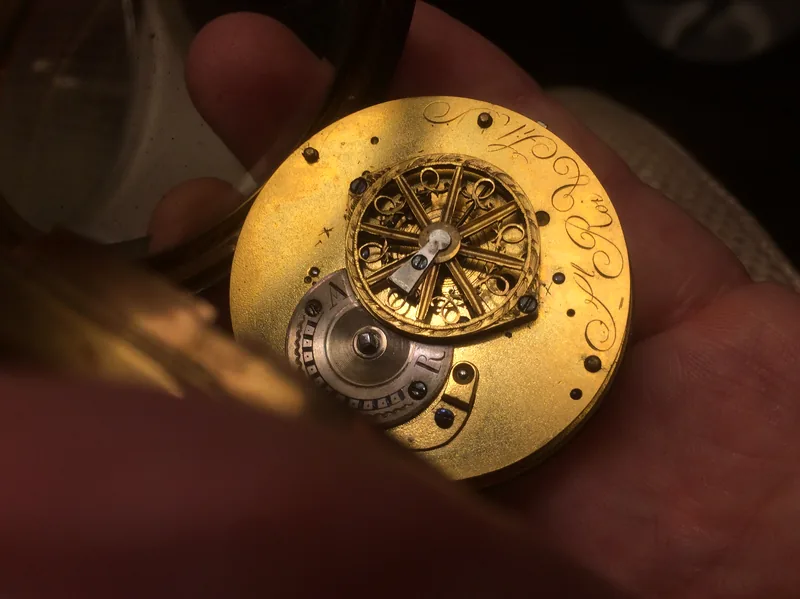
Preserving or modifying the dial and hands of a Felsa 0s movement requires delicate intervention, particularly when shifting movement orientation relative to the case. Original Felsa 0s dials are often made of fired vitreous enamel over a copper base or silvered brass. Vitreous enamel dials offer timeless beauty and zero fading, but they are notoriously brittle; any uncalculated pressure when removing or installing hands can cause spiderweb cracks across the enamel surface.
When reorienting an open-face movement inside a wristwatch case to place the crown at 3 o'clock, the original dial feet (copper pins soldered to the back of the dial) will no longer align with the dial foot locking screws on the Felsa mainplate. Watchmakers must carefully desolder or flush-cut the original dial feet, mark the correct orientation relative to the mainplate rebate, and solder new feet using a specialized capacitive-discharge dial foot soldering machine. Alternatively, precision dial clamps or non-destructive adhesive dots can be utilized if preserving an irreplaceable historical dial face is required.
Hand fitting presents its own set of dimensional challenges. The hole diameters of the hour wheel pipe, cannon pinion, and fourth wheel sub-seconds pivot on vintage Felsa calibers rarely match modern aftermarket hands. Original hands—often blued steel Cathedral, Poire Royale, or Spade styles—should be preserved, restored, and polished whenever possible. If replacement hands are required, hand pipes must be broached or staked using a staking set to achieve exact friction fits over the arbor pivots, ensuring adequate vertical height clearance beneath the inner surface of the wristwatch crystal.
7. Why 0s is less common for conversion
While pocket watch conversions have surged in popularity among vintage horology enthusiasts, conversions utilizing the Felsa 0s movement remain distinctly less common than those using larger American calibers (such as Waltham, Elgin, or Illinois 16s/18s) or large Swiss ébauches like the 16.5-ligne Unitas 6497/6498. Understanding why the 0s size is rarer sheds light on the specialized nature of these custom timepieces.
First and foremost is movement availability. Mass-produced American pocket watches were manufactured in tens of millions, meaning components, donor movements, and drop-in conversion cases are widely available on the secondary market. In contrast, Felsa 0s movements were produced in much smaller manufacturing batches and were frequently branded under obscure Swiss jeweler private-label names. Finding pristine donor Felsa 0s movements with undamaged keyless works, intact balance staff pivots, and complete gear trains requires diligent searching.
Secondly, the physical dimensions of a 0s caliber place it in a unique horological middle ground. Measuring roughly 30mm in diameter, a 0s movement results in a finished wristwatch case size of 36mm to 38mm—which is actually the modern "sweet spot" for classic wristwatch proportions. However, working on a 30mm movement demands significantly higher technical precision than converting a massive 44mm pocket watch. Spare parts for vintage Felsa 0s calibers are no longer manufactured, meaning worn mainspring barrels, damaged staff pivots, or lost click springs must be custom-machined by hand on a lathe. As a result, deciding to convert felsa 0s pocket watch into wristwatch format is a project undertaken almost exclusively by advanced, master-level watchmakers.
8. Final Thoughts on Felsa 0s Conversions
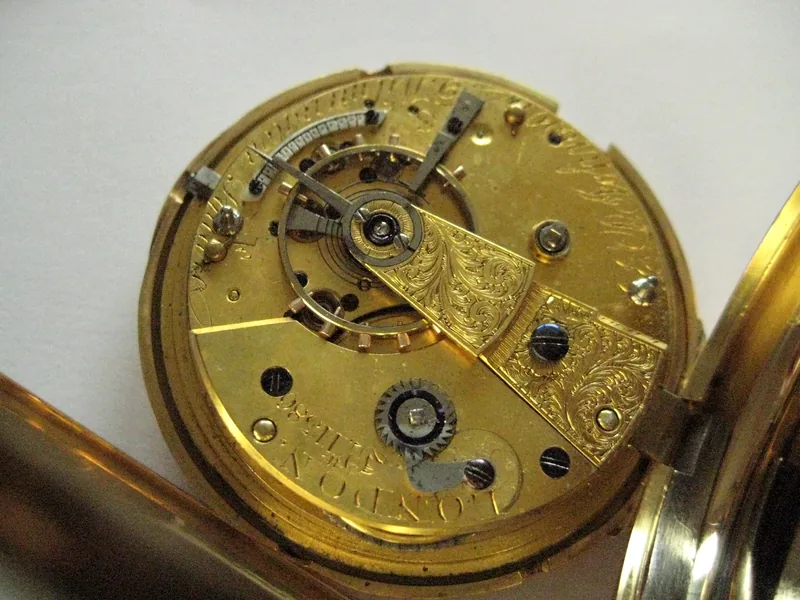
Converting a Felsa 0s pocket watch into a bespoke wristwatch is one of the most rewarding endeavors in artisanal watchmaking. It breathes new physical life into a magnificent piece of early twentieth-century Swiss horological engineering, transforming a forgotten pocket artifact into a functional, highly wearable piece of mechanical art. When executed properly, a Felsa 0s conversion delivers a captivating blend of vintage aesthetic charm, robust gear train operation, and balanced wrist proportions.
However, successful conversion demands unwavering respect for technical detail. From turning custom casing adapters and setting stems on a lathe to soldering lugs, re-aligning dial feet, and poising delicate balance wheels, every step requires patience and master-level bench skill. Collectors seeking a Felsa 0s conversion piece should ensure that the performing watchmaker prioritizes movement stability, proper lubrication with modern synthetic oils (such as Moebius 9010 and HP-1300), and robust environmental protection.
Ultimately, a successfully converted Felsa 0s wristwatch is far more than a simple novelty—it is a wearable monument to Swiss industrial craftsmanship. By housing these historical 30mm ébauches in modern wrist enclosures, we preserve the legacy of Felsa’s early horological innovations for future generations to admire every time they look down at their wrist.