1. Historical Background of Felsa 12s Movements
Felsa SA, founded in 1918 in Lengnau, Switzerland, holds a revered place in the annals of Swiss horology. Long before the manufacturer became world-famous for inventing the bidirectional automatic winding mechanism—the renowned "Bidynator" caliber in 1942—Felsa was a premier producer of high-grade, hand-wound ebauches for pocket watches and early wristwatches. Among these, the Felsa 12s movement family stands out as an engineering bridge between late 19th-century pocket horology and mid-20th-century wristwear. The designation "12s" denotes a 12-size movement platform in standard American watchmaking terms, corresponding roughly to a 12-to-17 ligne platform depending on the specific Swiss caliber layout, yielding an overall ebauche diameter around 38.1mm.
During the early decades of the 20th century, Swiss manufacturers like Felsa supplied raw movement blanks (ebauches) to various private-label brands, casers, and finishing houses across Europe and North America. The Felsa 12s movement was celebrated for its robust architecture, generous wheel train dimensions, and exceptionally stable timekeeping capability. It was produced during an era when portable timepieces were shifting from waistcoat pockets to the wrists of soldiers and adventurers, closely paralleling the evolution seen in authentic WW1 trench watches. Because these movements were designed with classic Swiss bridge configurations and generous tolerances, they represent some of the most reliable mechanical foundations available for modern horological restoration and transformation.
Understanding the historical context of Felsa’s 12s production is crucial for any watchmaker attempting a custom project. These movements were crafted during a transition period when escapement technologies were maturing rapidly. You will often encounter Felsa 12s movements fitted with high-grade bimetallic compensation balance wheels, cut temperature balances with gold adjustment screws, and exquisite Breguet hairsprings. The inherent precision of these components, combined with the structural rigidity of Felsa’s mainplate and finger-bridge arrangements, makes the 12s platform an ideal candidate for converting an antique pocket movement into a fully functional, highly wear-resistant modern wristwatch.
2. Technical Specifications and Movement Architecture
To successfully convert a Felsa 12s pocket movement, a watchmaker must first perform a rigorous technical audit of its architectural layout. The standard Felsa 12s hand-wound movement features a traditional Swiss lever escapement operating at a fundamental beat frequency of 18,000 vibrations per hour (vph), or 2.5 Hz. This traditional low-beat frequency gives the movement its characteristic slow, deliberate tick and reduces mechanical wear over decades of operation. Depending on the original grade specified by the client or finishing house, jewels range from a baseline 15-jewel configuration to high-grade 17-jewel variants with chaton-set cap jewels on the balance staff and escape wheel pivots.
The keyless works architecture on the Felsa 12s is typically a stem-wind and stem-set push/pull mechanism, though some early or specialized variants utilize a negative-set system integrated into the pocket watch case itself. The mainspring barrel is designed to yield an effective power reserve of 36 to 40 hours when fully wound. Mainspring dimensions typically demand a modern alloy replacement spring with a thickness near 0.16mm to 0.18mm to maintain optimal amplitude without overpowering the delicate pallet arbor pivots. The movement's center wheel, third wheel, fourth wheel, and escape wheel feature precisely calculated tooth profiles cut from high-tensile brass, driven by steel pinions that require meticulous polishing during servicing.
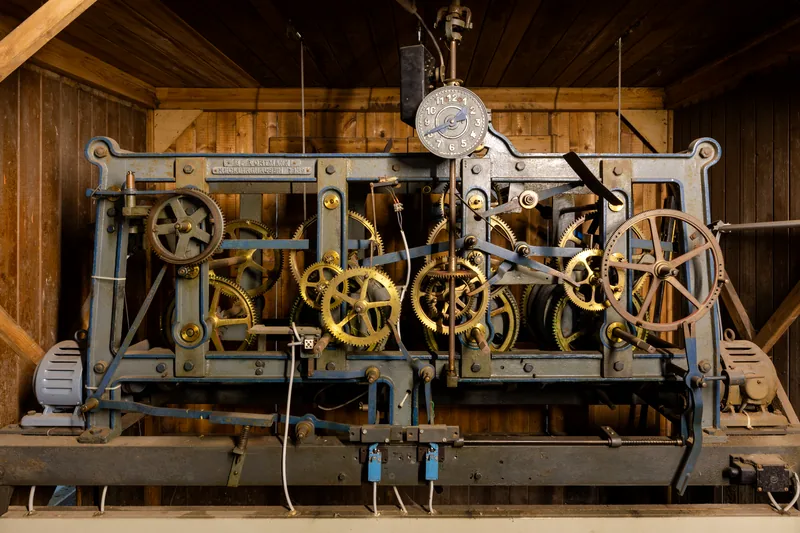
Below is a summary of the technical specifications characteristic of the Felsa 12s caliber family:
- Movement Diameter: Approx. 38.10 mm (12-size class)
- Overall Movement Height: 4.20 mm to 4.80 mm (depending on bridge style and cannon pinion height)
- Escapement: Swiss Lever, straight-line layout
- Beat Rate: 18,000 VPH (2.5 Hz)
- Balance Type: Bimetallic open-rim compensation balance or solid Glucydur balance
- Hairspring: Nivarox or steel blue flat spring / Breguet overcoil variant
- Jewel Count: 15 to 17 jewels (frequently ruby or synthetic sapphire)
- Power Reserve: ~38 hours
- Keyless Works: Positive-set Swiss winding mechanism (Stem Tap 9 or Tap 10 standard)
3. Challenges of Converting Felsa 12s to Wristwatch
A common inquiry among horologists and enthusiasts is: can you convert felsa 12s pocket watch movements into reliable wristwatches without compromising their integrity? The short answer is yes, but the process is rife with technical hurdles that demand advanced bench skills, precision machining, and absolute respect for historical tolerances. The primary obstacle involves modern wrist dynamics versus stationary pocket environments. Antique pocket movements were built to spend most of their lives resting vertically in a vest pocket or flat on a nightstand; when worn on a moving human wrist, they are subjected to multidirectional shocks, accelerations, and position changes that test the limits of their un-shock-protected balance pivots.
Another profound challenge lies in the stem height and keyless works geometry. The distance from the movement rest-seat (the ledge on the mainplate that contacts the casing ring) to the center line of the winding stem—known as the stem height—must align perfectly with the winding stem hole in the wristwatch case. Misalignment by even 0.05mm will introduce radial binding on the winding stem, causing stiff winding, improper setting-gear engagement, or outright failure of the keyless works yoke. Additionally, watchmakers must determine whether the donor Felsa 12s is derived from a open-face (Lépine) or hunter-case (Savonnette) architecture. An open-face movement has its sub-second dial offset at 180 degrees from the winding stem (12 o'clock stem, 6 o'clock sub-second), while a hunter layout places the stem at 3 o'clock and sub-seconds at 9 o'clock relative to standard dial orientation.
When you attempt to convert felsa 12s pocket watch into wristwatch configurations, movement orientation dictates dial design and case ergonomics. If an open-face movement is cased with the crown at 3 o'clock, the small seconds sub-dial moves to the unconventional 9 o'clock position. Conversely, placing the crown at 12 o'clock retains the 6 o'clock seconds layout but creates a "bullhead" style wristwatch. Furthermore, shock protection poses a major risk: early Felsa 12s calibers lack modern spring-loaded jewels (such as Incabloc or Novodiac). A hard drop onto a paved surface can snap the ultra-fine balance pivots (often measuring under 0.09mm in diameter), requiring the watchmaker to turn a new balance staff from a steel blank on a micro-lathe.
4. Lug Welding and Case Selection
Selecting or fabricating the correct housing is perhaps the most visible phase of the project. Watchmakers generally take one of two approaches: modifying an original vintage pocket case through specialized soldering, or engineering a custom, modern 316L stainless steel felsa 12s pocket watch to wrist conversion case. Each method presents unique metallurgical and structural considerations.
When modifying a vintage pocket watch case (typically crafted from sterling silver, nickel-silver, or gold-filled brass), wire lugs must be micro-welded or silver-brazed onto the outer perimeter. Micro-TIG (Tungsten Inert Gas) or laser welding is highly preferred over traditional flame soldering because the heat zone is tightly localized. Excessive heat application can warp the delicate threads of a screw-down bezel or soften the spring tension of a snap-on case back. Lugs made from 1.8mm to 2.2mm solid wire or fabricated custom horns are clamped in a alignment jig to maintain perfect symmetry across the 12 o'clock to 6 o'clock axis before being permanently fused to the case shell.
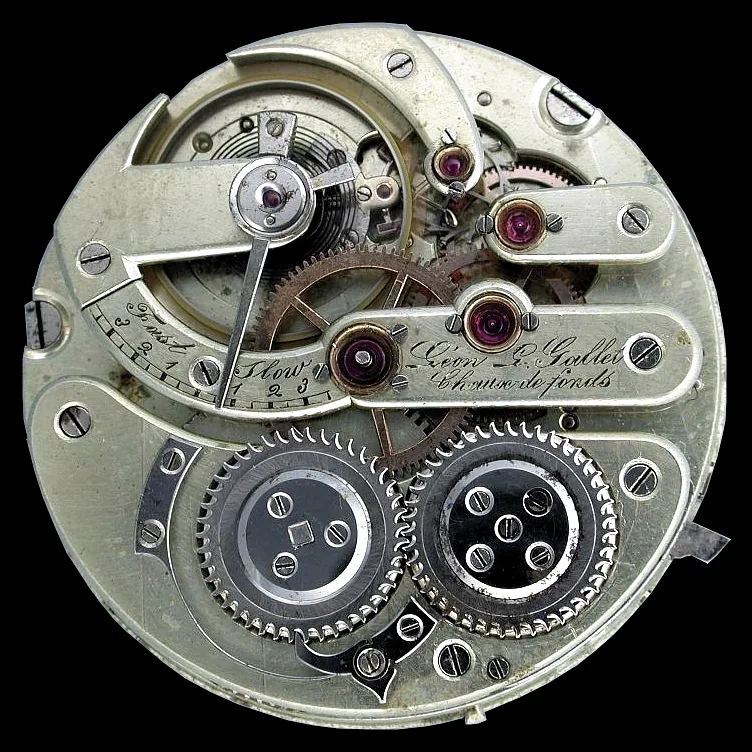
For daily wear durability, however, many horologists prefer modern conversion cases manufactured specifically for 12-size movements. These cases are engineered with internal casing rings or step-bored movement seats that hold the Felsa 12s mainplate securely via steel casing clamps and screws. Below is a comparison table highlighting the operational trade-offs between converted vintage cases and modern CNC conversion cases:
| Factor | Vintage Pocket Case (Modified with Lugs) | Modern CNC Conversion Case |
|---|---|---|
| Material Integrity | Silver, Gold-Plate, or Brass; softer alloys subject to wear. | 316L Stainless Steel or Titanium; highly scratch resistant. |
| Water Resistance | Minimal to None (Gasket-less snap fit or fine threads). | 3 ATM to 5 ATM (Fitted with modern O-ring synthetic gaskets). |
| Crystal Protection | Acrylic or mineral glass; prone to scratching. | Sapphire crystals with anti-reflective coating on front & rear. |
| Movement Mounting | Requires internal brass spacer ring solder-fitted to case interior. | Precision machined internal seat with custom tabs and tension screws. |
| Lug Attachment | Laser/TIG welded wire lugs or custom silver-brazed horns. | Monobloc machined lugs integrated directly into case shell. |
5. Crown and Stem Solutions
Achieving flawless winding and hand-setting operation requires painstaking attention to stem mechanics. Pocket watch stems were designed to operate inside thick pocket watch pendant tubes, often featuring unique square-drive or slotted interfaces. When transitioning a Felsa 12s to a wrist case, the original stem is rarely long enough or properly proportioned to interact with modern crown tubes. The watchmaker must engineer a custom stem solution, which often involves cutting, turning, and threading a hardened high-carbon steel stem blank on a Lorch or Schaublin horological lathe.
The first step is determining the thread pitch of the keyless works pinion. Felsa 12s movements typically conform to Swiss standard thread sizes, most commonly Tap 9 (0.90mm thread diameter) or Tap 10 (0.80mm thread diameter). If a custom stem cannot be turned from scratch, a stem extender made from hardened stainless steel can be fitted to the original stem stub. The junction must be treated with high-strength thread-locking compound (such as Loctite 2701) after verifying that the overall stem runout (eccentricity) remains strictly within a 0.01mm tolerance. Excess runout causes the crown to wobble during winding, wearing down the case tube seal and introducing uneven forces onto the winding pinion.
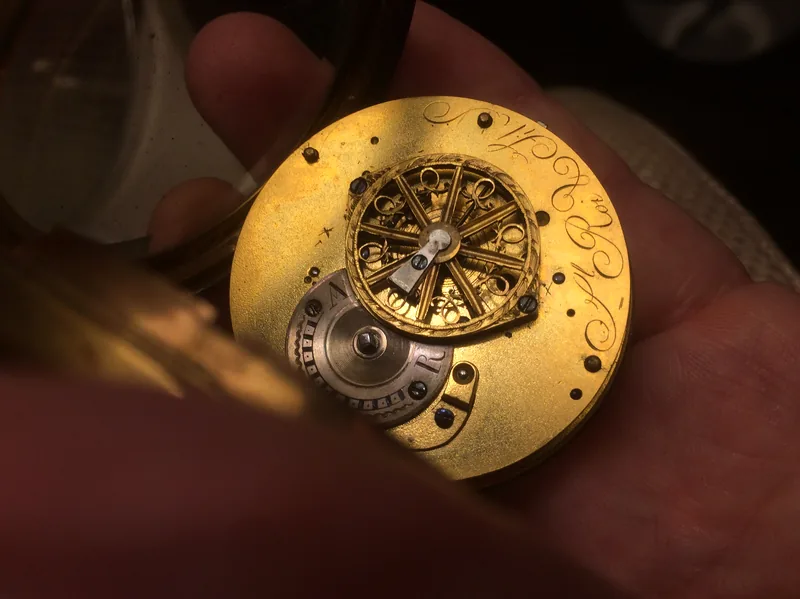
The choice of crown is equally critical for both ergonomics and water/dust sealing. Because a 12s movement possesses a substantial mainspring, a tiny modern crown provides insufficient leverage, making manual winding uncomfortable and taxing on the fingers. Watchmakers typically select an oversized "onion," "pumpkin," or flat "diamond" style crown measuring between 6.5mm and 8.5mm in diameter. The interior of the crown hub should contain an integrated rubber gasket that fits snugly over the case tube, forming a barrier against moisture, skin oils, and ambient dust. During final assembly, the stem length must be micro-adjusted in increments of 0.05mm using a fine ceramic stone until the switch from winding position to hand-setting position produces a crisp, tactile click without any binding against the keyless setting lever.
6. Dial and Hand Considerations
The visual soul of any wristwatch conversion rests in the dial and hands. Original Felsa 12s pocket watch dials were typically constructed from vitreous enamel fused onto a copper plate, or stamped silver/brass metal with hand-painted or champlevé indices. Vitreous enamel dials are virtually immune to aging or fading, but they are exceptionally brittle. Any attempt to drill new holes, cut down the outer diameter, or bend the underlying dial plate will instantly cause spiderweb fracturing across the enamel surface. Consequently, the watchmaker must choose a case that accommodates the original dial diameter precisely, or hand-fabricate a custom brass dial blank finished with period-correct techniques.
Attaching the dial to the Felsa 12s mainplate requires aligning the dial feet with the mainplate mounting holes. Modern conversion cases often change the relative orientation of the movement, which may mean the original dial feet no longer align with the locking screws on the mainplate rim. To solve this without damaging the dial, watchmakers use a specialized micro-spot-welder or solder machine to attach new copper dial feet at the exact coordinates required by the movement architecture. Alternatively, precision-machined dial friction rings or high-tack horological adhesive dots can be deployed for non-destructive mounting, though soldered feet remain the gold standard of professional benchwork.
Hand fitting presents its own set of dimensional constraints. Pocket watch hands are substantially thicker and heavier than standard wristwatch hands, and their mounting hole diameters (arbor sizes) do not match modern ETA or Sellita production standards. For a typical Felsa 12s, the cannon pinion diameter (hour hand post) measures around 1.80mm to 2.00mm, while the hour wheel pipe (hour hand post) measures around 1.20mm to 1.40mm, and the small-seconds pivot measures approximately 0.20mm to 0.24mm. The watchmaker must either re-ream and friction-fit vintage hands using staking punches or broaches, or custom-bush modern hands to fit the Felsa’s oversized arbors. Hand clearance is equally vital: because wristwatches endure rapid movement, the clearance between the hour hand, minute hand, crystal inner surface, and dial face must be continuously verified with a watchmaker's loupe across a full 360-degree rotation.
7. Why 12s is More Common for Conversion
Within the world of antique pocket watch conversions, the 12-size movement platform occupies a absolute "sweet spot" in horological design. Larger pocket watch movements, such as the 16-size (approx. 43.18mm movement diameter) or 18-size (approx. 44.86mm diameter), yield wristwatches that measure 48mm to 52mm across the case excluding the crown. For all but the largest wrists, an 18-size conversion is excessively heavy, prone to catching on clothing, and visually overbearing. On the opposite end of the spectrum, smaller 0-size or 3/0-size movements (often used in ladies' pendant watches) feature delicate wheel trains and ultra-fine balance staffs that struggle to deliver stable timekeeping under daily wrist movement.
The 12s dimension, however, bridges these two worlds seamlessly. With a movement diameter of approximately 38.1mm, a Felsa 12s can be fitted into a modern wristwatch case measuring between 41mm and 43mm in overall outer diameter. This falls squarely within contemporary preferences for modern sports and dress wristwatches, offering commanding wrist presence while retaining comfortable, daily-wear ergonomics. Furthermore, the internal space inside a 12s movement chassis allows for robust, thick balance pivots, heavy barrel arbors, and wide mainsprings that generate high mechanical torque, translating directly into stable amplitude across multiple positions.
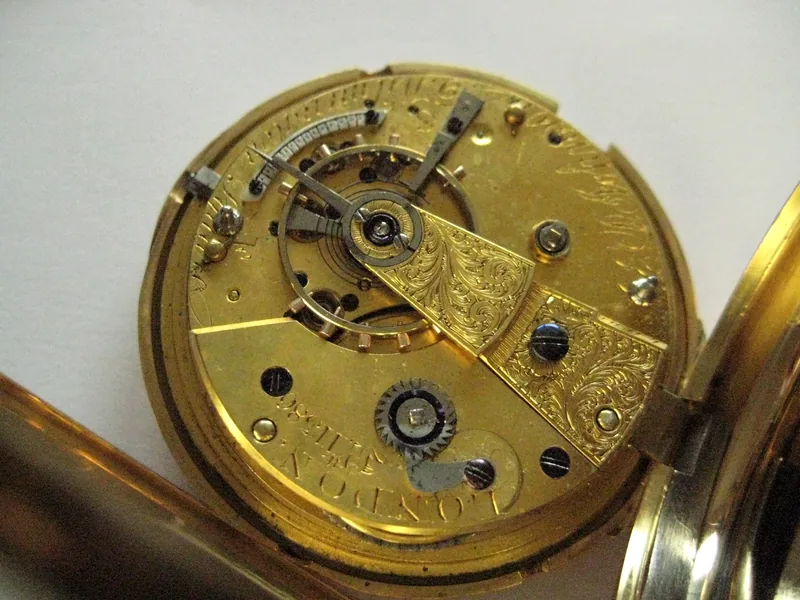
Moreover, the Felsa 12s platform was manufactured in vast quantities during the peak era of Swiss movement exports, meaning that spare components—such as balance staffs, winding pinions, center wheels, and keyless works yokes—remain accessible through vintage material houses and donor movements. This structural survivability makes the 12s far more practical to service, repair, and maintain over long periods than obscure, short-run micro-calibers. For collectors and watchmakers alike, the 12s size represents the ideal convergence of classic pocket watch mechanical grandeur and practical modern wrist functionality.
8. Final Thoughts on Felsa 12s Conversions
To successfully convert felsa 12s pocket watch into wristwatch specifications is to perform an act of mechanical preservation and transformation. Rather than leaving a masterfully crafted 20th-century Swiss movement forgotten in a drawer, a skilled horologist can breathe new life into Felsa’s historic ebauche, elevating it into a unique, wearable piece of mechanical art. The finished timepiece combines the hypnotic charm of a slow-beating, hand-finished pocket watch engine with the modern utility of a rugged wrist enclosure.
However, running a converted Felsa 12s requires an appreciation for its mechanical limitations. Because these vintage movements lack modern anti-magnetic alloys and shock-absorbing jewels like Incabloc, owners should treat their converted wristwatches with care. High-impact activities, sports, or exposure to intense magnetic fields (such as modern laptops and magnetic closures) should be avoided. Regular horological maintenance is paramount: complete disassembly, ultrasonic cleaning of components, epilame treatment of the pallet stones, and precise lubrication using modern synthetic oils (such as Moebius 9010 for high-speed pivots and HP-1300 for heavy gear train arbors) will ensure the movement runs within acceptable tolerances for years to come.
Ultimately, a Felsa 12s wristwatch conversion honors the legacy of Lengnau’s pioneer watchmakers. By meticulously addressing case geometry, stem runout, keyless engagement, dial architecture, and pivot protection, the modern watchmaker builds an enduring bridge between past and present. The result is not merely a timepiece, but a living, ticking monument to early 20th-century Swiss engineering—wrist-borne, functional, and timelessly elegant.