Historical Background of Felsa 13L Movements
The story of Felsa SA, established in 1918 in Lengnau, Switzerland, is intimately bound to the golden age of Swiss ébauche manufacturing. During the early decades of the twentieth century, the horological industry experienced a seismic shift. The utility of traditional pocket watches began to wane as military demands and modern lifestyles accelerated the adoption of timepieces worn on the wrist. Felsa emerged as an extraordinarily innovative manufacture during this era, producing raw movement blanks (ébauches) that were supplied to dozens of prestigious Swiss brands, who finished, branded, and cased them under their own names.
Among Felsa's early mid-sized offerings, the 13 Ligne (13''') caliber family stood out as a masterpiece of functional minimalism and mechanical resilience. Designed primarily during the interwar period, the Felsa 13L bridge architecture reflected traditional Swiss finishing alongside modular, standardized component geometry. Originally intended for small men's pocket watches, pendant watches, and transitional timepieces, these movements bridges the gap between traditional 18-30 ligne pocket watches and the tiny, delicate 8.75-10.5 ligne wristwatch calibers that would come to dominate later decades. Today, horologists and custom builders frequently seek out these movements to antique pocket watch conversions, revitalizing historic mechanical artifacts into functional modern wristwear.
The period during which the Felsa 13L flourished also coincided with the evolution of authentic WW1 trench watches, where military personnel soldered crude wire lugs onto existing small pocket watch cases. As watchmaking evolved into the late 1920s and 1930s, Felsa continued to refine its stem-set and winding systems, producing variations of the 13L with finger bridges, split bridges, and robust balance assemblies. Understanding this historical context is essential for any watchmaker attempting a modern conversion, as the movement reflects the tolerances, metallurgical characteristics, and design philosophies of early 20th-century Swiss micro-engineering.
Technical Specifications and Movement Architecture
To successfully convert felsa 13L pocket watch into wristwatch configurations, a bench watchmaker must first thoroughly analyze its architectural parameters. The designation "13L" refers to the French measure of line or ligne (where 1 ligne equals approximately 2.2558 millimeters). Thus, a 13'' movement possesses a mainplate diameter of approximately 29.33mm. This precise sizing places the caliber in a unique mechanical sweet spot—large enough to retain robust, easily serviceable gear trains, yet compact enough to fit inside ergonomic modern wristwatch cases without feeling oversized or clunky.
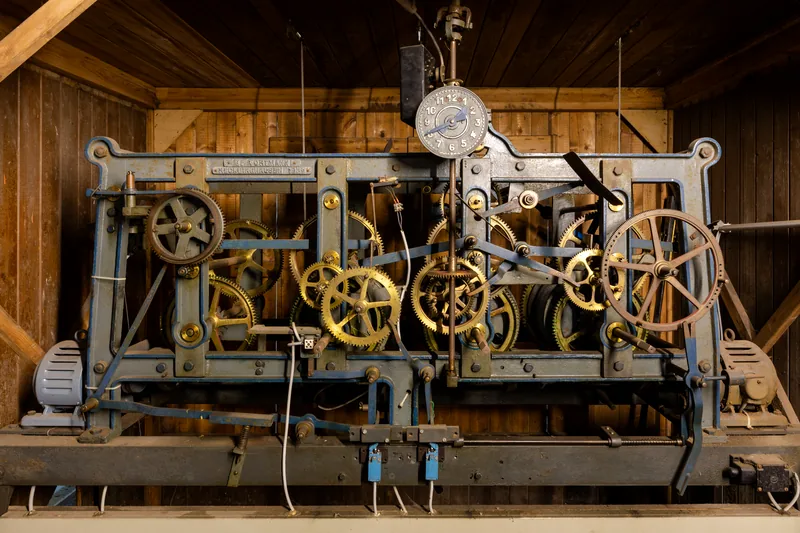
Mechanically, the classic Felsa 13L features a traditional Swiss lever escapement, operating at a frequency of 18,000 vibrations per hour (2.5 Hz). The gear train is arranged in a classic layout, utilizing a standard central center wheel, third wheel, fourth wheel (driving the sub-seconds pivot at 6 o'clock on open-face layouts), and escape wheel. Power is delivered via a mainspring enclosed in a non-suspended mainspring barrel, providing a power reserve ranging between 32 to 38 hours depending on spring thickness and mainplate wear. Most variants feature 7, 15, or 17 jewels, with higher-grade variants employing press-fit or screwed chaton settings for the upper balance and train jewels.
The keyless works on the Felsa 13L rely on a classic yoke and setting lever arrangement, operated via a pull-out stem mechanism. The stem height—measured from the base of the mainplate to the center axis of the winding stem—is remarkably slim for a movement of its era, typically hovering around 1.8mm to 2.1mm depending on the exact sub-caliber variant. The balance assembly utilizes a traditional flat steel or cut bimetallic compensation balance wheel paired with a Breguet overcoil or flat Nivarox hairspring, regulated via a index pointer mounted on the balance cock. The absence of modern shock protection systems (such as Incabloc or KIF) on older 13L variants demands that watchmakers handle the balance staff pivots with extreme caution during the casing process.
Challenges of Converting Felsa 13L to Wristwatch
While the prospect of undertaking a felsa 13L pocket watch to wrist conversion is deeply satisfying, the process presents technical hurdles that require advanced lathe work, metallurgy, and micro-machining skill. The primary obstacle revolves around the orientation of the movement itself. Pocket watch movements from this era were manufactured in two primary configurations: Lepine (open-face) and Savonnette (hunter-case). In a Lepine movement, the winding stem is located at 12 o'clock in line with the sub-seconds dial at 6 o'clock. In a Savonnette layout, the winding stem sits at 3 o'clock, placing the sub-seconds dial at 9 o'clock relative to the stem.
When you convert felsa 13L pocket watch movements of the Lepine variety into a standard wristwatch case, placing the winding stem at 3 o'clock causes the original dial indices to rotate 90 degrees, shifting the sub-seconds register to the 3 o'clock position and 12 o'clock to the 3 o'clock position. Resolving this requires either commissioning a bespoke dial with rotated indices, converting the movement to a driver's watch configuration (stem at 12 o'clock on the top lug), or selectively acquiring Savonnette-layout Felsa 13L movements where the 3 o'clock stem alignment naturally yields a 9 o'clock sub-seconds layout on the wrist.
Another profound challenge lies in shock resistance and structural rigidity. Antique pocket watches were carried in soft vest pockets, protected from the abrupt impacts, rotational forces, and vibrations that a modern wrist-worn watch experiences daily. Unprotected balance staff pivots on a Felsa 13L measure merely 0.08mm to 0.10mm in diameter. Dropping or knocking an un-shock-protected converted wristwatch can instantly snap the delicate balance pivots. Watchmakers must compensate for this by precision-fitting high-grade casing rings that dampen energy transfer, ensuring the movement is suspended securely without binding the balance cock or distorting the mainplate under casing screw tension.
Lug Welding and Case Selection
Selecting the proper housing is the single most important structural decision when planning a conversion project. Watchmakers generally take two approaches: fabricating modern wire lugs directly onto an authentic vintage pocket watch case, or mounting the Felsa 13L movement inside a brand-new, modern stainless steel conversion case. Determining the best case size for felsa 13L conversion projects requires balancing historical accuracy with modern wrist ergonomics.
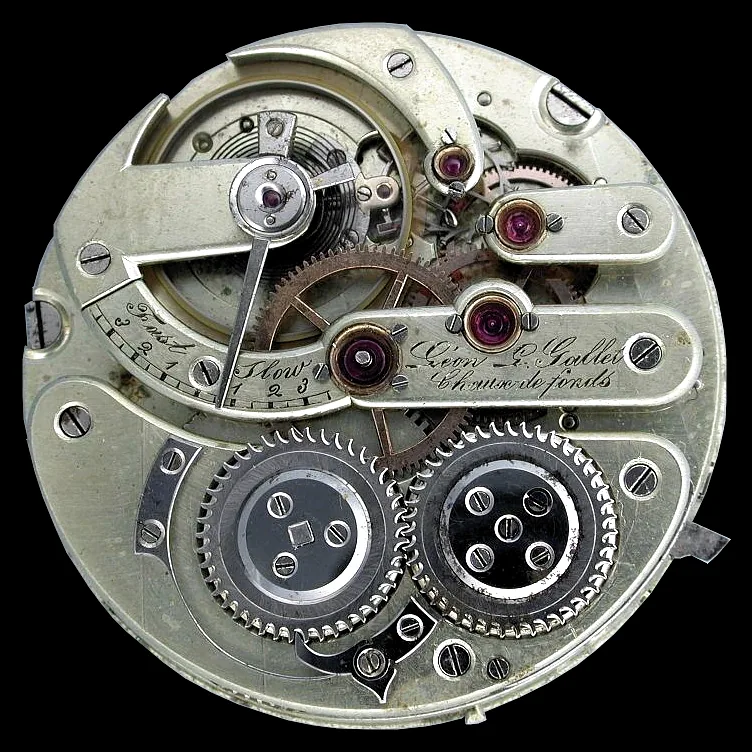
Because the mainplate diameter of the Felsa 13L is approximately 29.33mm, the ideal overall outer diameter for a conversion case ranges between 38mm and 40mm. An outer diameter of 38mm to 40mm leaves ample wall thickness (typically 1.5mm to 2.5mm) for internal movement retention rings, dust gaskets, and threaded caseback seals, while retaining a refined profile on the wrist. Cases larger than 42mm tend to look hollow and require excessively wide internal movement rings, whereas cases smaller than 37mm leave insufficient clearance for the winding stem mechanism and bezel crystal retaining seats.
When working with original vintage silver or gold-filled pocket watch cases, welding or soldering lugs requires meticulous surface preparation and thermal management. The steps involved in silver-soldering wire lugs to a vintage case include:
1. Completely stripping the movement, crystal, bezels, and springs from the pocket watch case shell.
2. Annealing 1.5mm to 2.0mm sterling silver or nickel-silver wire to form custom fixed loop lugs.
3. Filing compound radius joints at the lug tips to precisely match the exterior curvature of the pocket watch case wall at 12 o'clock and 6 o'clock.
4. Applying hard silver solder flux and heating the joint uniformly using a micro-torch with a pinpoint flame, ensuring heat is pulled into the thicker case mass so solder flows smoothly without warping the caseback threads or hinge joints.
5. Pickling the case in a warm sparex solution to strip flux residues, followed by precision hand polishing and ultrasonic neutralisation.
Crown and Stem Solutions
The winding stem and crown integration represents a critical mechanical bridge between the external case interface and the internal keyless works of the Felsa 13L movement. Original pocket watch stems were meant to couple with winding shafts built directly into the pocket watch pendant tube. When adapting the movement to a dedicated wristwatch case, the original stem is almost always too short, improperly threaded, or lacks the necessary sealing shoulders for modern water and dust resistance.
To fabricate a functional stem solution, the watchmaker must determine the thread pitch of the Felsa 13L winding stem. Early Felsa calibers frequently utilize non-standard Swiss taps (such as Tap 8 or Tap 10). Because modern crown tubes are standardized for Tap 9 (0.90mm) or Tap 8 (1.00mm) stem threads, watchmakers frequently turn a custom stem extender on a precision watchmaker's lathe (such as a Schaublin or Levin lathe), or turn a completely new replacement stem from annealed W1 drill rod steel.
Once turned, the steel stem is hardened by heating to bright cherry red (approx. 800°C) and quenching in mineral oil, followed by tempering to a straw blue color (approx. 290°C) to relieve internal stresses while retaining toughness. The crown choice should echo the period aesthetic of the era. Onion-style or crown-style oversized crowns with internal O-ring rubber seals are heavily favored. The inner recess of the crown must slide smoothly over the case stem tube without excessive radial play, ensuring that winding torque is transmitted cleanly to the winding pinion without placing side-load bending forces on the small stem square within the keyless works.
Dial and Hand Considerations
Dials on vintage Felsa 13L pocket watches are almost exclusively crafted from fired vitreous enamel over a copper plate, or stamped silvered brass. Vitreous enamel dials possess a timeless, non-fading luster, but they are exceptionally brittle. Modifying an original enamel dial—such as trimming its outer perimeter or repositioning dial feet—carries a high risk of spider-web cracking or complete shattering of the glass enamel matrix.
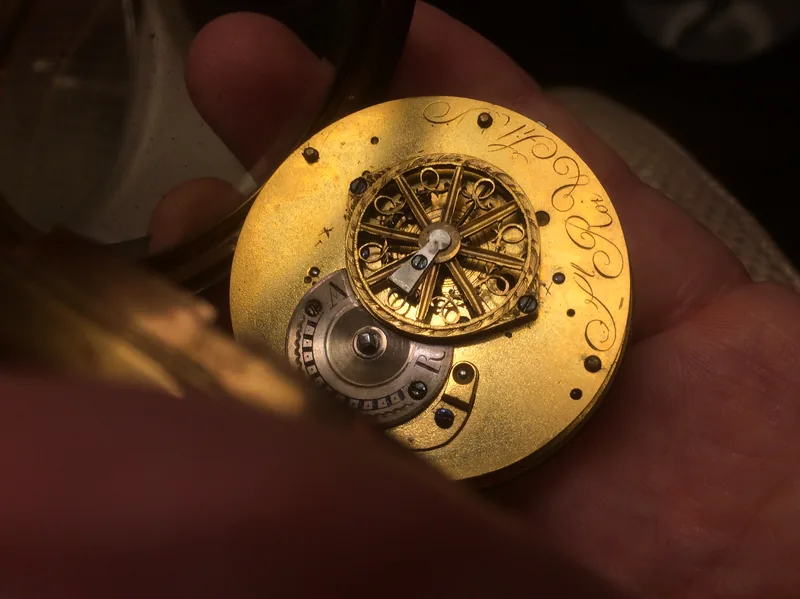
If utilizing the original dial, the case interior must be machined to match the exact outer contour and thickness of the enamel disk without requiring any reduction of the dial itself. Dial feet placement on the Felsa 13L relies on perimeter dial-foot screws set horizontally into the mainplate. If a bespoke dial is produced for a modern conversion case, new copper dial feet must be soft-soldered or micro-spot-welded to the back of the raw dial blank at the precise coordinates matching the mainplate receiver holes.
Hand fitting presents its own set of tight tolerances. The hand-arbor dimensions for the Felsa 13L must be measured with a micrometric caliper or plug gauges:
• Hour wheel pipe diameter: Typically 1.30mm to 1.50mm
• Cannon pinion diameter: Typically 0.80mm to 0.90mm
• Fourth wheel sub-seconds pivot: Typically 0.18mm to 0.22mm
Thermally blued steel hands—preferably Spade, Cathedral, or Breguet-style hands—are selected to preserve historical accuracy. If hand hole diameters are undersized, they must be gently broached using fine diamond-cut hand broaches until they slide onto the arbors with light friction fit. Care must be taken to ensure adequate vertical clearance between the hands themselves, as well as adequate overhead clearance beneath the underside of the front crystal.
Why 13L is more common for conversion
Among the vast expanse of antique Swiss calibers available in the secondary horological market, the question often arises: why convert felsa 13L pocket watch movements over other candidate calibers? The answer lies in the unique proportional harmony and mechanical stability inherent to the 13 ligne dimension. Standard full-sized pocket watches (such as 16, 18, or 19 ligne movements like the Unitas 6497 or Hamilton 992B) result in finished wristwatches measuring 44mm to 48mm in diameter—proportions that are often uncomfortable or visually overwhelming on modern wrists.
Conversely, early ladies' pocket watch calibers (8 to 10.5 ligne) feature delicate micro-components that are notoriously difficult to service, possess tiny mainsprings with lower torque stability, and lack the imposing mechanical presence horologists appreciate through a display caseback. The 13L caliber provides the perfect dimensional balance. Its train wheels and balance wheel are large enough to display hand-finished beveling, Geneva stripes, and polished screw heads, similar to the movement architecture found in early vintage Rolex wristwatches and classic Aegler movements of the 1920s.
Furthermore, Felsa manufactured the 13L in large quantities with high interchangeability across its internal components. Keyless components, balance shafts, and mainspring barrels are far more accessible for the 13L than for obscure single-run ebauches. This availability reduces the friction of restoration, allowing watchmakers to source replacement balance staffs or winding pinions with relative ease. The result is a completed wristwatch conversion that is not merely an artistic showcase, but a practical, daily-wearable timepiece capable of maintaining reliable timekeeping within +/- 15 seconds per day when properly poised and regulated.
Final Thoughts on Felsa 13L Conversions
Executing a successful convert felsa 13L pocket watch into wristwatch project is the ultimate test of a watchmaker's versatility, combining classical hand craftsmanship with precision machining. By taking a movement that spent nearly a century tucked away in a vest pocket or drawer and refitting it into a modern, wrist-worn chassis, you preserve a tangible piece of Swiss horological history. The sweeping motion of the 18,000 vph balance wheel and the tactile resistance of hand-winding a 13L stem offer a mechanical feedback loop that no modern quartz or mass-produced automatic watch can replicate.
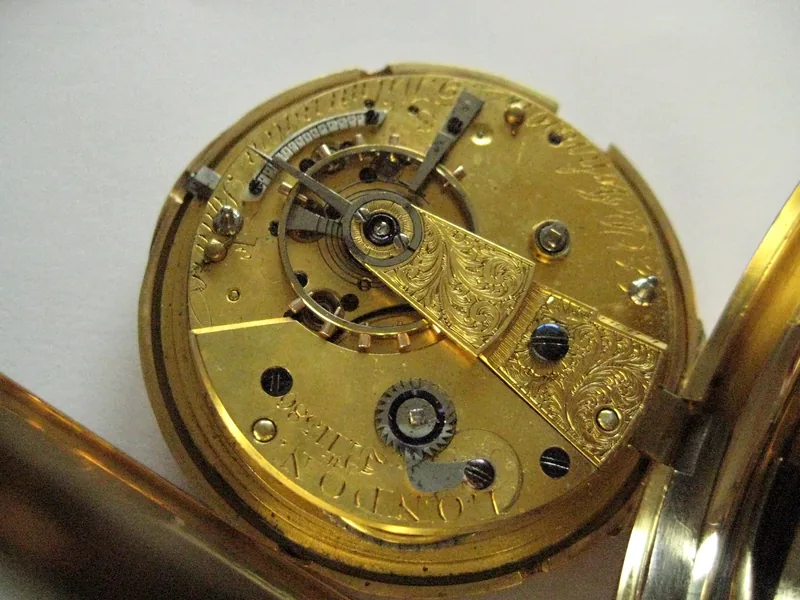
When approaching this transformation, never cut corners on movement preparation. A full mechanical overhaul—including ultrasonic cleaning, repivoting on a lathe if necessary, pegwood cleaning of jewel holes, epilame treatment of the pallet stones, and precise synthetic lubrication with Moebius oils—must precede any final casing. Pay close attention to casing securement, stem alignment, and crystal clearances to ensure your work stands up to years of daily wear.
Ultimately, the Felsa 13L movement remains one of the most rewarding platforms for high-grade pocket watch conversions. Its ideal 29.33mm proportion, robust train design, and rich Swiss heritage make it an enduring favorite among horologists, custom watchmakers, and vintage enthusiasts alike. With careful planning, precise lathe work, and respect for the original engineering, a converted Felsa 13L becomes a striking, functional heirloom that carries the art of 20th-century horology well into the modern era.