1. Historical Background of Felsa 14L Movements
Felsa SA, established in 1918 in Lengnau, Switzerland, holds a revered position in the annals of Swiss horology. Long before the brand gained legendary status for its automatic bidirectional winding rotor—the famous Bidynator caliber introduced in the early 1940s—Felsa established its reputation as a master manufacturer of high-grade raw movements, or ébauches. During the interwar period of the 1920s and 1930s, Swiss watchmaking experienced a fundamental shift. Pocket watches, which had dominated men’s fashion for over two centuries, were rapidly losing ground to the wrist-worn timekeeper—a trend accelerated by military necessity during the First World War and refined by early horological pioneers. It was during this dynamic transition era that Felsa designed and produced the 14L movement, a 14-ligne caliber created specifically to bridge the gap between traditional pocket watches and the emerging demand for large, durable men's wristwatches.
The Felsa 14L movement was engineered during an era when precision manufacturing relied heavily on hand-finishing, meticulous jeweling, and individual adjustment by skilled artisans. Designed as a open-face (Lépine) or hunter (Savonnette) architecture depending on the exact sub-variant, the 14L offered an exceptional balance between physical durability and horological precision. It was supplied to numerous third-party brands, private-label jewellers, and Swiss finishing houses who cased these movements in solid gold, sterling silver, or nickel cases. Much like the famous Aegler movements that powered early vintage Rolex wristwatches, the Felsa 14L represented the absolute peak of Swiss mechanical engineering, featuring traditional bridge layouts, high-grade balance assemblies, and robust wheel trains built to last generations.
Today, as interest in vintage watchmaking and custom craftsmanship continues to climb, watchmakers and collectors frequently turn to these historic calibers. Undertaking a project to convert felsa 14L pocket watch into wristwatch configurations is not merely a modern trend; it is a direct continuation of early 20th-century watchmaking practices, where smaller pocket watch movements were retrofitted into wrist cases. Understanding the historical context of the Felsa 14L provides essential perspective on its physical design, mechanical strengths, and why it remains one of the finest candidates for custom case modification and revival today.
2. Technical Specifications and Movement Architecture
To successfully execute a convert felsa 14L pocket watch project, a watchmaker must first understand the fundamental dimensional and mechanical characteristics of the caliber. In Swiss traditional measurements, one French ligne equals approximately 2.2558 millimeters. Consequently, the Felsa 14L measures precisely 14 Lignes in overall movement diameter, translating to a nominal diameter of approximately 31.58 mm (often measuring between 31.50 mm and 31.80 mm depending on the specific casing lip and tolerance variations). The overall height or thickness of the base caliber ranges between 4.20 mm and 4.50 mm from the top of the mainplate to the highest point of the bridge structure, making it remarkably slim for a mechanical movement designed in the 1920s.
The basic architectural layout of the Felsa 14L features a classic Swiss lever escapement running at a standard frequency of 18,000 vibrations per hour (vph), or 2.5 Hz. Most higher-tier variations feature a 15 to 17-jewel configuration with rubies set in friction-fit settings or polished brass chatons. The balance wheel assembly typically consists of a traditional split bimetallic compensation balance with timing screws, paired with a blued steel Breguet overcoil hairspring, though flat hairspring variations exist in later runs. The going train utilizes standard involute tooth profiles, with a mainspring barrel delivering a power reserve of approximately 36 to 38 hours when fully wound.
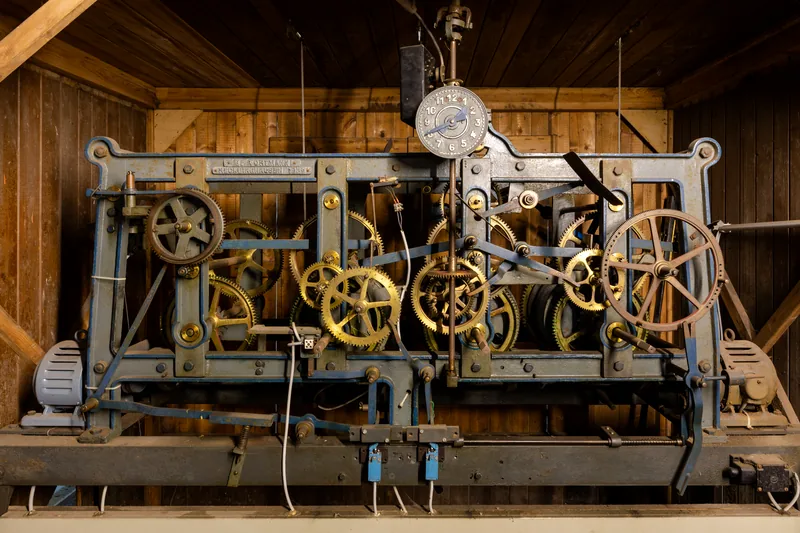
Below is a summary breakdown of the core technical parameters of the Felsa 14L movement, which must be accounted for during any casing or restoration procedure:
- Movement Diameter: 14 Lignes (31.58 mm nominal)
- Movement Thickness: ~4.20 mm to 4.50 mm
- Escapement Type: Swiss inline lever
- Beat Frequency: 18,000 VPH (2.5 Hz)
- Jewel Count: 15 to 17 jewels (varies by finishing grade)
- Stem/Setting Mechanism: Pull-out setting system (Pendant setting or positive clutch lever)
- Hairspring Profile: Breguet overcoil or flat steel hairspring
- Winding Stem Thread: Standard Tap 9 (0.90 mm) or Tap 8 (1.00 mm) depending on stem iteration
3. Challenges of Converting Felsa 14L to Wristwatch
While the prospect of housing an historic Swiss caliber in a modern or custom wrist case is deeply appealing, the physical process presents several complex technical hurdles. The primary challenge in any felsa 14L pocket watch to wrist conversion lies in the orientation of the winding stem relative to the running seconds sub-dial. Most original 14L pocket watches were produced in a Lépine (open-face) orientation, meaning the winding stem is situated at the 12 o'clock position while the small seconds dial sits directly opposite at 6 o'clock. When re-casing a Lépine movement into a standard wristwatch case where the crown must reside at 3 o'clock, the small seconds sub-dial is automatically rotated to the 9 o'clock position. While this creates an attractive asymmetrical layout, it requires custom dial printing or careful realignment to ensure legibility.
Another crucial challenge involves shock protection—or the lack thereof. The balance pivots on a vintage Felsa 14L movement measure a mere 0.08 mm to 0.10 mm in diameter and are supported by fixed, non-shock-absorbed jewel settings. Unlike modern wristwatches equipped with Incabloc, Parechoc, or Novodiac shock-absorbing systems, an un-modified Felsa 14L balance staff is extremely susceptible to fracturing or bending if the wristwatch suffers a direct impact or drop. The bench watchmaker must meticulously inspect the balance staff pivots on a lathe or under high magnification before casing, ensuring the pivots are polished with a burnisher and diamantine paste to eliminate micro-grooves that invite wear.
Finally, controlling movement securement within a modern case requires custom-machined adapter rings (movement holders). Pocket watch cases traditionally held movements via casing screws that threaded outward into the case wall, or via a tight lip friction fit. Modern wristwatch cases utilize movement tabs, internal spacer rings, or perimeter O-rings. Because the Felsa 14L lacks modern perimeter grooves, the watchmaker must machine a brass or 316L stainless steel spacer ring on a bench lathe to perfectly bridge the gap between the 31.58 mm movement perimeter and the internal diameter of the target wristwatch case, ensuring zero axial or radial play.
4. Lug Welding and Case Selection
When planning a conversion project, selecting or fabricating the appropriate housing is the single most important decision impacting both aesthetics and long-term wearability. Watchmakers generally take two distinct pathways: converting an original vintage silver/gold pocket watch case by welding custom lugs directly to it, or selecting a modern custom-manufactured wristwatch case designed for conversion calibers. Determining the best case size for felsa 14L conversion projects comes down to human ergonomics and movement dimensions. Because the movement itself is 31.58 mm in diameter, the ideal overall outer diameter for the finished wristwatch case ranges between **38 mm and 40 mm** (excluding the crown).
A case diameter of 38 mm to 40 mm allows for a reasonable wall thickness, internal retention ring space, and crystal seat clearance without making the finished timepiece overly bulky on the wrist. Larger pocket watch calibers (such as 18 or 19 Ligne movements) often result in unwieldy 44 mm to 48 mm wristwatches; the compact 14 Ligne footprint of the Felsa 14L is uniquely suited to creating an elegantly proportioned, highly wearable wristwatch that mirrors the aesthetic of historical authentic WW1 trench watches.
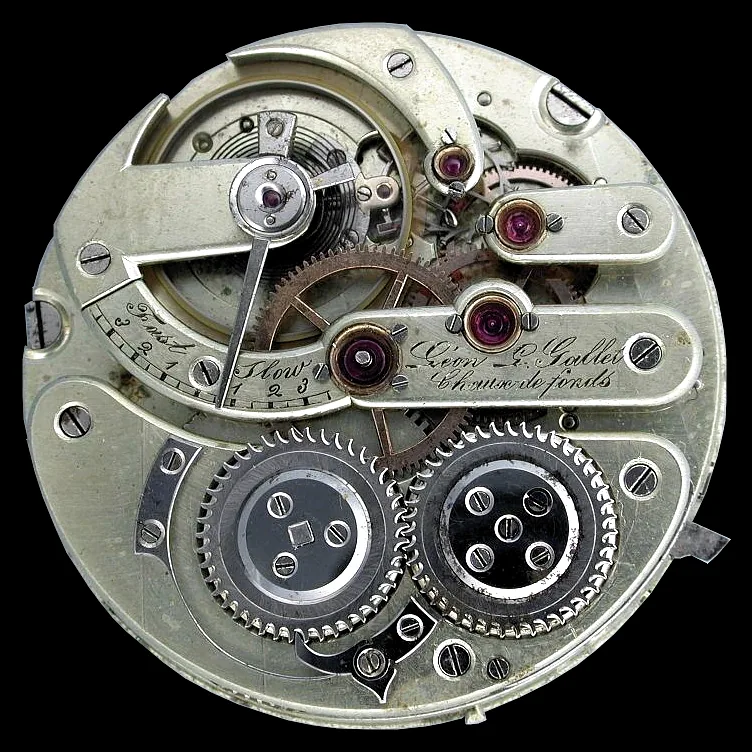
If the watchmaker chooses to modify an original pocket watch case rather than using a modern stainless steel case, attachment of wrist strap lugs requires expert metalwork. Wire lugs or solid fixed lugs must be joined to the 12 o'clock and 6 o'clock positions of the case band. Below is the technical sequence required for silver-soldering or laser-welding lugs to a vintage case:
- Case Strip Down: Remove the movement, bezel, crystal, and case back hinges completely. Ensure all oil, tarnish, and dirt are chemically cleaned via ultrasonic bath.
- Lug Shaping: Anneal 1.5 mm to 2.0 mm sterling silver or gold wire. Bend the wire around a former to shape classic wire lugs or fixed loop lugs that match the contour of the case curve.
- Alignment & Tacking: Mount the case on a dedicated alignment fixture. Use a micro-TIG or jewelry laser welder to tack-weld the lugs into position, ensuring absolute parallelism with the vertical axis of the case.
- Hard Soldering (if laser is unavailable): Apply jeweler's flux and hard silver solder (or gold solder) at the joint interface using a precision micro-torch flame. Heat the surrounding case body uniformly to prevent localized warping or melting of thin pocket watch case walls.
- Clean and Polish: Pickle the case in an acid bath to remove firescale, then hand-finish and polish the lug joints using progressively fine abrasive compounds.
5. Crown and Stem Solutions
Integrating a functional winding crown and stem system is one of the most mechanically demanding steps when you convert felsa 14L pocket watch into wristwatch specifications. Vintage pocket watch stems were constructed differently than modern wristwatch stems. In many antique pocket watch designs, the main stem remained permanently inside the case neck (pendant setting mechanism), using a square male or female coupling to engage the movement's winding pinion. In contrast, modern wristwatches feature a removable stem that inserts through the case tube directly into the movement's keyless works (setting lever, clutch wheel, and winding pinion).
To overcome this discrepancy, the watchmaker must first evaluate the internal keyless works of the specific Felsa 14L variant. If the movement features a self-contained setting lever and clutch mechanism, a custom stem must be turned on a watchmaker’s lathe (such as a Levin or Lorch lathe) or created by adapting a vintage original stem. The stem must feature the precise square profile required to pass through the winding pinion without excessive play, alongside a perfectly turned pivot tip that nests into the mainplate pivot hole.
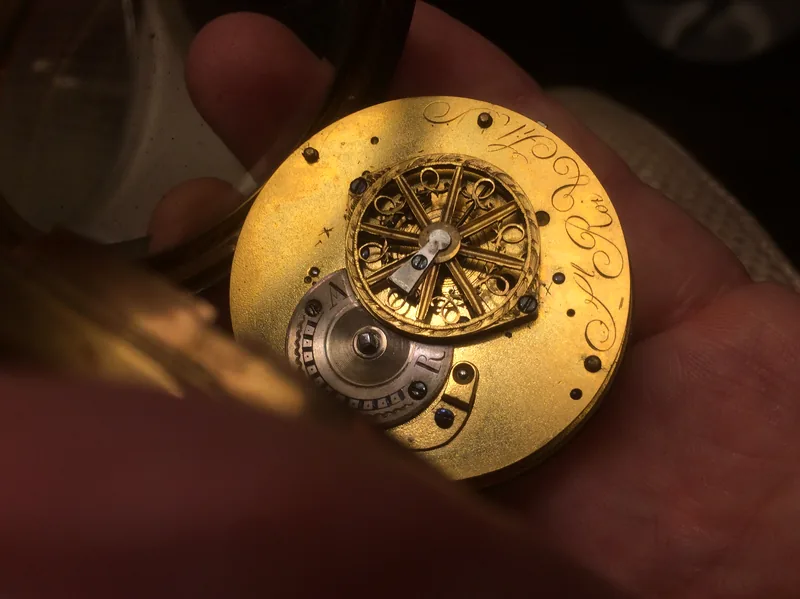
Thread matching is equally critical. The outer end of the stem must be threaded—typically to Tap 9 (0.90 mm)—to accept a suitable crown. Because pocket watch stems often require stem extenders during conversions, the watchmaker must ensure that any female-to-male stem extender is secured with high-strength threadlocker (e.g., Loctite 270) and turned down to prevent rubbing against the interior of the case tube.
Crown selection must carefully balance historical authenticity with water/dust resistance. Oversized onion or pumpkin-style crowns are traditionally favored because they replicate the aesthetic of early 20th-century aviation and trench wristwatches. However, the crown must feature an internal rubber gasket that seals tightly over the case tube. The bench watchmaker must carefully calculate stem length: if the stem is cut 0.10 mm too long, the crown will not sit flush against the case; if it is cut 0.10 mm too short, the setting lever will fail to drop into the hand-setting detent, preventing the user from setting the time.
6. Dial and Hand Considerations
The dial and hand assembly of the Felsa 14L represents the artistic face of the timepiece, but modifying these components requires extreme delicate handling. Vintage Felsa 14L pocket watches predominantly featured enamel dials—specifically hot enamel (grand feu) baked onto a copper substrate—or silvered brass dials. Enamel dials are notoriously brittle. Drilling new holes or attempting to cut away material from an original enamel dial will almost certainly cause severe spider-web fracturing across the glassy surface.
If the original dial is to be preserved during the conversion, the placement of the dial feet must be meticulously addressed. Modern conversion cases may require the movement to sit at a different rotational angle, meaning the original copper dial feet will no longer line up with the mainplate receiving holes. To rectify this without damaging the dial front, watchmakers use a specialized dial-foot soldering machine (a capacitive discharge spot welder) to attach new copper feet at the exact positions required, or selectively employ non-destructive dial dots if preserving rare original artifacts is paramount.
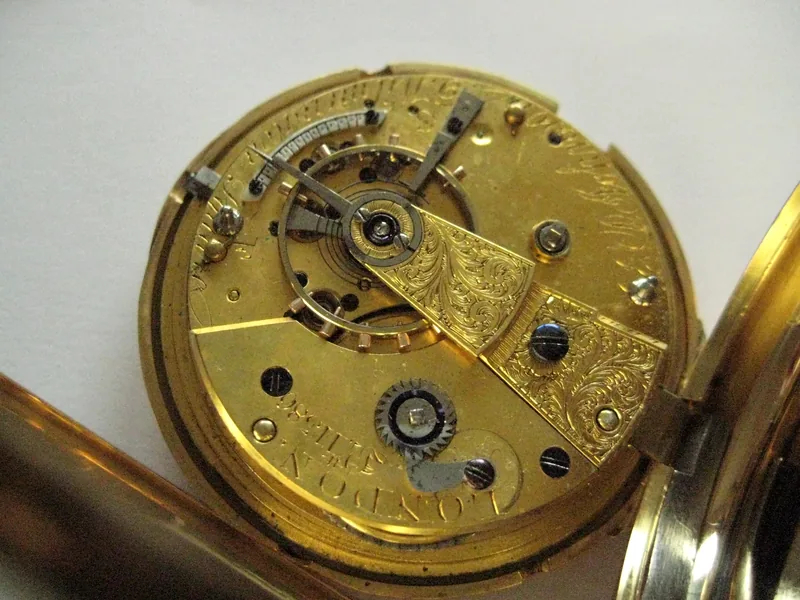
Hand fitting presents its own set of technical dimensional rules. Pocket watch hand arbors are typically larger than modern off-the-shelf wristwatch hands. Below are the standard arbor diameter ranges encountered on the Felsa 14L movement, which must be verified with a micrometer before selecting or modifying hands:
- Hour Wheel Pipe Diameter: ~1.80 mm to 1.95 mm
- Cannon Pinion (Minute) Diameter: ~1.10 mm to 1.20 mm
- Small Seconds Pivot Diameter: ~0.20 mm to 0.24 mm
Because contemporary aftermarket hands rarely match these vintage dimensions out of the box, the watchmaker must ream out smaller hand holes using a set of micro-broaches or close oversized hand sockets using a staking set and hole-closing punches. Vintage cathedral, Breguet, or spade-style hands are ideal choices to maintain period correctness. Furthermore, hand clearance must be checked obsessively under a stereo microscope once installed. The clearance between the underside of the minute hand and the top of the hour hand should sit at a minimum of 0.20 mm, ensuring the hands do not drag across each other or bind against the internal crystal curvature when the case is fully closed.
7. Why 14L is More Common for Conversion
Among the vast universe of antique Swiss calibers, the Felsa 14L has emerged as one of the most widely sought-after movements for custom conversions. The fundamental reason behind the popularity of the felsa 14L pocket watch to wrist conversion lies directly in its physical scale. The vast majority of 19th and early 20th-century pocket watches were manufactured in 18 Ligne (approx. 40.6 mm movement diameter) or 19 Ligne sizes. When housed in a protective case, an 18 Ligne movement yields a giant wristwatch measuring 44 mm to 48 mm across—a size that proves uncomfortable and visually disproportionate for everyday wrist wear for most individuals.
By contrast, the 14 Ligne dimension (31.58 mm) is the "Goldilocks" size for horological conversions. Cased efficiently, a 14L caliber fits seamlessly into a modern 38 mm, 39 mm, or 40 mm wristwatch case. This size profile perfectly mirrors contemporary luxury watch standards while remaining deeply comfortable for daily wear. Collectors seeking antique pocket watch conversions consistently prefer 13.5 to 15 Ligne movements because they offer genuine pocket-watch movement architecture—including open bridges, visible click springs, and large slow-beating balance wheels—without forcing the wearer to sport an oversized wall clock on their wrist.
Additionally, the Felsa 14L benefits from exceptional structural robustness and spare part availability. Because Felsa produced this movement in significant quantities during the interwar era, donor components such as winding pinions, balance staffs, mainspring barrels, and click springs remain relatively accessible through vintage material houses compared to obscure single-run calibers. Its straightforward layout, coupled with generous manufacturing tolerances, makes it a joy for horologists to service, overhaul, and adjust to tight isometric tolerances.
8. Final Thoughts on Felsa 14L Conversions
Converting a historic movement like the Felsa 14L from a forgotten pocket watch into a bespoke, functional wristwatch is the ultimate intersection of historical preservation and active craftsmanship. Rather than allowing a high-grade 1920s Swiss ébauche to collect dust in a drawer or face the melting pot for its precious metal case, a properly executed conversion breathes vibrant new life into a mechanical masterpiece. The result is a uniquely captivating timepiece that blends 100-year-old traditional hand-finishing with modern wrist-worn utility.
However, undertaking a project to convert felsa 14L pocket watch into wristwatch standard requires a high degree of respect for the original engineering. It demands careful attention to technical details: machining precise movement holding rings, custom-fitting stems and crowns, verifying pivot health under magnification, and ensuring complete hand clearances. When performed by a skilled watchmaker who honors vintage horological techniques, a Felsa 14L conversion yields a wearable heirloom—a ticking testament to the golden age of Swiss watchmaking that can be worn, admired, and passed down for another century to come.