Historical Background of Felsa 14s Movements
The Felsa Watch Company, established in 1918 in Lengnau, Switzerland, holds a revered position in the annals of Swiss horology. Long before Felsa revolutionized automatic watch design with the introduction of its bidirectional "Bidynator" movement in the 1940s, the manufactory made its reputation on robust, meticulously engineered hand-wound ebauches. Among these, the 14-ligne calibers—often designated as the Felsa 14s or 14''' series—occupied a crucial technological bridge between traditional pocket horology and the modern wristwatch.
During the early twentieth century, particularly throughout the 1910s and 1920s, the horological industry underwent a massive paradigm shift. The demands of modern industrial life and military operations required timepieces to transition from the safety of a waistcoat pocket to the exposed position of the wrist. During the First World War, commanders and soldiers relied heavily on transitional timepieces, many of which were built using high-grade pocket watch calibers modified with welded wire lugs, similar to authentic WW1 trench watches. The Felsa 14s movement emerged as a favorite platform for watchmakers during this period due to its structural stability, precise gear train geometry, and manageable dimensions.
Unlike larger American or Swiss pocket watch movements measuring 16 or 18 ligne, the Felsa 14s was originally conceived for high-grade men's dress pocket watches, pendant watches, and early large-format wristwatches. This versatility made it an enduring masterpiece of Swiss industrial art. Today, vintage movement collectors and master watchmakers view the Felsa 14s not merely as an antique artifact, but as an ideal candidate for custom wrist conversions, preserving historic mechanical craftsmanship within a modern wearable format.
Technical Specifications and Movement Architecture
To successfully execute a conversion, a watchmaker must first understand the architectural nuances of the Felsa 14s caliber. Standard specifications for this movement family feature a nominal movement diameter of 14 French Lignes (approximately 31.58 mm to 31.80 mm, depending on the specific casing rim execution) and an overall movement height ranging between 4.2 mm and 4.6 mm. The movement operates at a traditional frequency of 18,000 vibrations per hour (2.5 Hz), utilizing a classic Swiss lever escapement driven by a traditional spring barrel cut with fine, low-module gear teeth.
The balance assembly on high-grade Felsa 14s units typically features a cut bimetallic temperature-compensated balance wheel equipped with gold timing screws, or in later iterations, a mono-metallic balance paired with a blue steel flat or Breguet overcoil hairspring. The jeweled train generally consists of 15 to 17 ruby jewels, set either in friction-fit settings or polished brass chatons. The bridge geometry displays classic mid-century Swiss aesthetics, featuring either a finger-bridge layout for the train wheels or a sweeping three-quarter plate design that offers exceptional rigidity and pivot alignment accuracy.
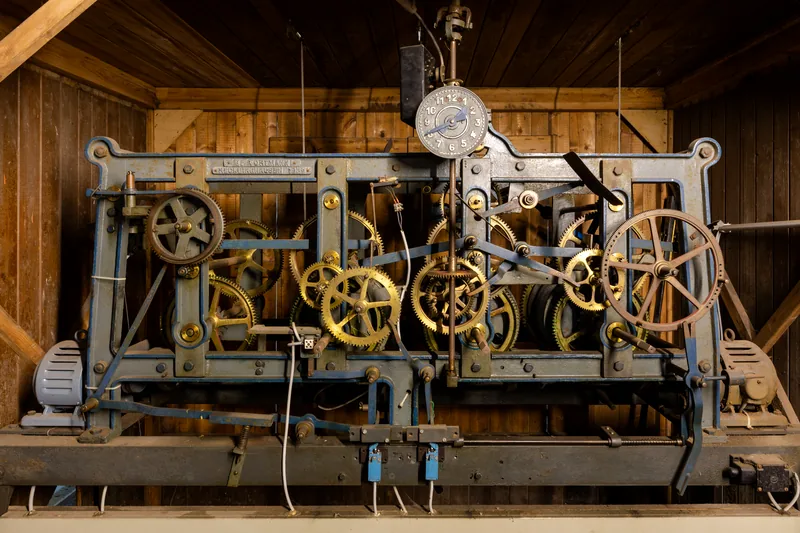
The keyless works mechanism of the Felsa 14s employs a traditional positive setting mechanism (pull to set, push to wind) operated via a sliding pinion and winding pinion mounted on a ground-steel stem. The click mechanism utilizes a stout, hand-finished steel click spring and ratchet wheel, giving the movement a tactile, firm, and acoustically distinct winding feel. Understanding these mechanical characteristics is vital when planning tolerances for a custom case fit, keyless works adjustment, and hand-clearing heights.
Challenges of Converting Felsa 14s to Wristwatch
A primary question presented by collectors and horological enthusiasts is: can you convert felsa 14s pocket watch movements without compromising their mechanical integrity? The answer is yes, provided the conversion is performed by an experienced watchmaker who understands the inherent vulnerabilities of early 20th-century movement architecture when adapted for modern wrist wear.
The primary technical challenge stems from shock protection—or the lack thereof. The balance staff pivots of a Felsa 14s movement are extraordinarily thin, typically measuring between 0.08 mm and 0.11 mm in diameter. Because these movements were designed before the widespread implementation of shock-absorption systems such as Incabloc or Parechoc, the upper and lower balance jewels are fixed rigidly within the mainplate and balance bridge. On the wrist, modern daily impacts—such as dropping a hand onto a table or vigorous gestures—can instantly shear a balance pivot if the movement is not properly cushioned within its conversion housing.
Another major challenge involves dial orientation and sub-seconds placement. Felsa produced 14s movements in both "Lépine" (open-face) and "Savonnette" (hunter case) configurations. In a Lépine movement, the winding stem is located at 12 o'clock in direct alignment with the running seconds arbor at 6 o'clock. Converting a Lépine caliber into a conventional wristwatch requires rotating the movement so that the winding stem resides at 3 o'clock, which relocates the small sub-seconds register to 9 o'clock. Conversely, a Savonnette movement features the stem at 3 o'clock and seconds at 6 o me, making layout planning critical prior to case fabrication.
Lug Welding and Case Selection
When selecting a modern housing, securing a dedicated felsa 14s pocket watch to wrist conversion case is the most reliable strategy. Modern conversion cases are typically CNC-machined from 316L stainless steel or marine-grade bronze, specifically contoured to accept the 31.58 mm movement diameter while incorporating modern features like scratch-resistant sapphire crystals and threaded display casebacks.
For watchmakers attempting to modify historical silver or nickel pocket watch cases, silver-brazing or TIG-welding solid wire lugs directly onto the perimeter of the existing case shell is an alternative approach. However, this process requires complete stripping of the case, precise jigging to ensure lug symmetry, and careful heat control to avoid warping the bezel or caseback snap joints. Modern custom-milled cases present a far superior solution, featuring internal step-bores and movement retention screws that rigidly clamp the Felsa mainplate in place.
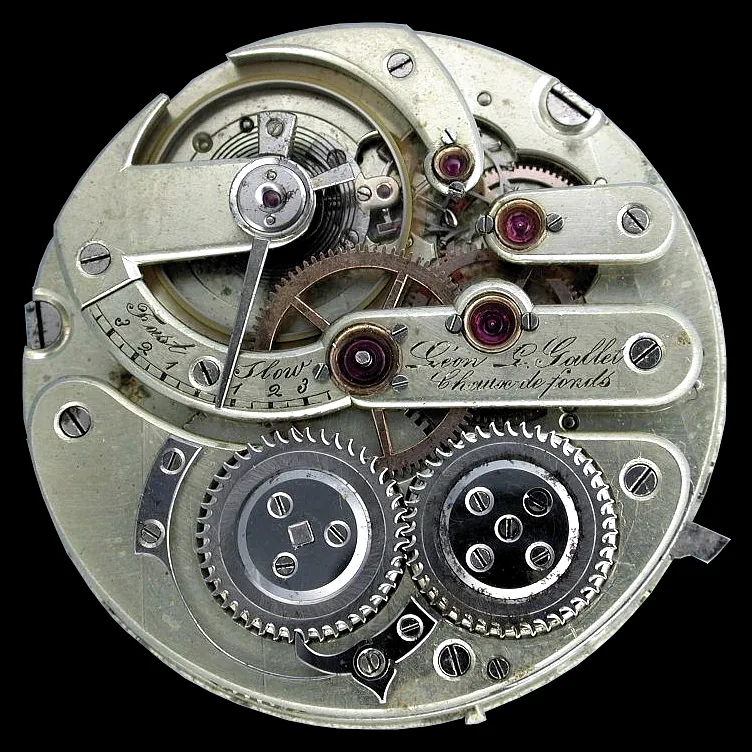
Inside a modern conversion case, custom-machined movement spacer rings (usually turned from brass or stainless steel on a micro-lathe) are critical. These rings bridge the microscopic gap between the perimeter of the Felsa mainplate and the interior case wall, providing dampening properties and ensuring that axial and radial play are completely eliminated. This exact alignment is necessary so the stem exits cleanly through the center of the case tube without binding.
Crown and Stem Solutions
Achieving smooth winding and setting action requires precise custom lathe work on the stem and case tube assembly. The original pocket watch winding stem on a Felsa 14s is rarely long enough or properly threaded to engage a modern wristwatch crown. Consequently, a watchmaker must either turn a new custom-ground stem from annealed W1 tool steel (followed by precision hardening and tempering) or utilize a high-precision stem extender joined with thread-locking compound.
Matching the stem thread pitch is paramount. Modern wristwatch crowns commonly use Tap 10 (0.90 mm) or Tap 9 ( 0.80 mm) internal threads, whereas vintage Felsa stems often utilize proprietary Swiss thread pitches from the early 20th century. Custom-turning a stem allows the horologist to cut an exact thread pitch while tailoring the square section of the stem to fit the sliding pinion of the Felsa keyless works without radial slop.
Water resistance and dust sealing present additional engineering considerations. Modern conversion cases utilize double-O-ring gasketed crowns mated to stainless steel case tubes. The watchmaker must calculate stem extension length down to hundredths of a millimeter: if the stem is too long, the crown will not seat flush against the case tube, exposing the stem to bending forces; if it is too short, the keyless works will fail to enter the setting position or exert excess pressure on the setting lever spring.
Dial and Hand Considerations
Dials on vintage Felsa 14s pocket watches are almost exclusively crafted from grand feu vitreous enamel over copper plates or silvered brass with hand-painted numerals. Enamel dials are notoriously delicate; attempting to cut, bore, or modify dial feet positions on antique enamel will inevitably cause severe stress fractures or glass chipping across the dial face.
When executing antique pocket watch conversions using a original dial, the movement clamping depth within the case must be calculated precisely so the dial rests parallel to the inner bezel lip without binding against the crystal edge. If a modern bespoke dial is created, custom dial feet must be soft-soldered or spot-welded at the exact coordinate locations matching the Felsa 14s mainplate dial-foot receiving holes, secured via lateral set screws.
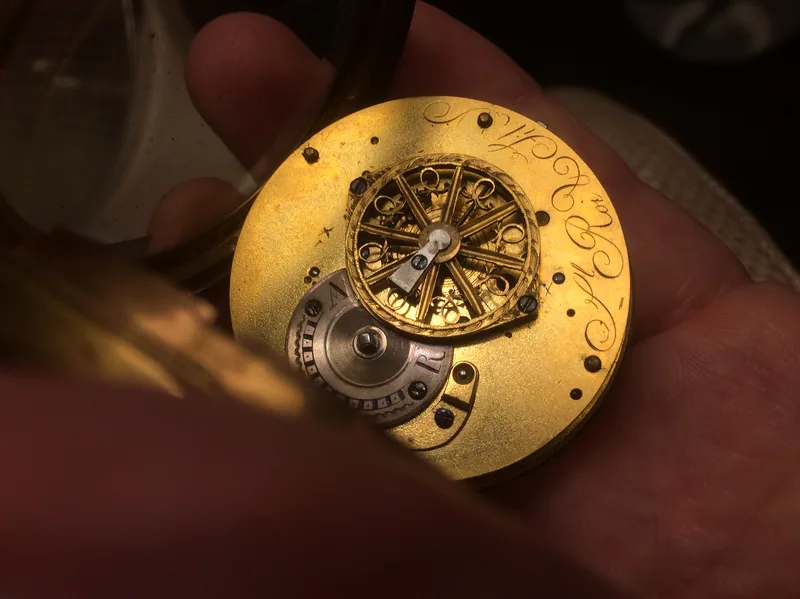
Hand sizing and fitting on the Felsa 14s requires meticulous measurement with a fine micrometer or dial caliper. The canon pinion, hour wheel pipe, and seconds bit arbors feature historical dimensional standards that differ from modern ETA or Sellita movements:
- Hour Wheel Arbor Diameter: Typically ~1.80 mm to 1.85 mm
- Canon Pinion Arbor Diameter: Typically ~1.15 mm to 1.20 mm
- Small Seconds Pivot Diameter: Typically ~0.20 mm to 0.24 mm
Original blued-steel spade or Breguet hands are preferred for historical authenticity. However, if modern replacement hands are fitted, their mounting holes must be broached or closed down using staking set punches to ensure tight friction fits without slippage during daily movement operation.
Why 14s is more common for conversion
In the conversion community, opting to convert felsa 14s pocket watch into wristwatch configurations is far more practical than attempting similar conversions with standard 16s or 18s American pocket watch movements. The main reason for this comes down to basic wrist ergonomics and spatial proportions.
An American 16-size movement measures roughly 43.18 mm in movement diameter alone. Once housed within a protective wristwatch case with adequate wall thickness and crystal seating, the finished timepiece measures 48 mm to 52 mm across—an unwearably large footprint for most modern wrists. By contrast, the compact 14-ligne (31.58 mm) Felsa mainplate translates to a highly desirable overall case outer diameter of 38 mm to 41 mm. This size aligns with contemporary luxury wristwatch proportions, such as those found in historical Swiss dress pieces or early vintage Rolex wristwatches.
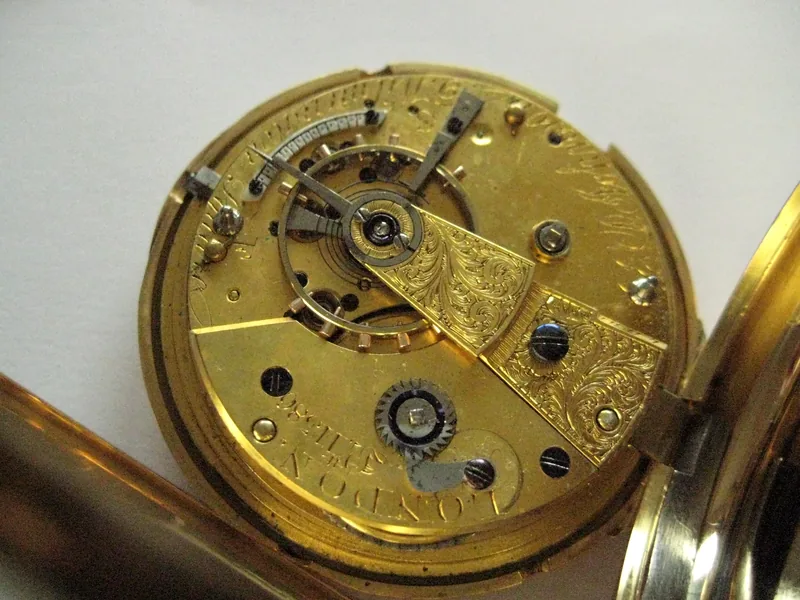
Furthermore, the Felsa 14s caliber strikes an optimal balance between mainspring torque and delicate architecture. It possesses sufficient power reserve (typically 36 to 40 hours) to drive robust, highly legible hands while maintaining a slim enough profile to allow modern conversion cases to keep total thickness under 11.5 mm. This creates an elegant wrist profile that slips easily under a dress cuff while offering true mechanical heritage.
Final Thoughts on Felsa 14s Conversions
Converting a historical Felsa 14s pocket watch into a bespoke wristwatch is a challenging and rewarding horological discipline. It unites century-old Swiss hand-finishing and gear train engineering with contemporary manufacturing, rescuing historical movements from dark drawers and breathing new life into them on the wrist.
Success relies on meticulous attention to mechanical tolerances: fabricating precision spacer rings, ensuring proper alignment of keyless works stems, preserving delicate enamel dials, and respecting the non-shock-protected balance assembly. When performed correctly by a skilled artisan, a Felsa 14s wrist conversion stands as an enduring tribute to the gold age of Swiss mechanical watchmaking—a wearable piece of history that continues to keep time for future generations.