1. Historical Background of Felsa 8s Movements
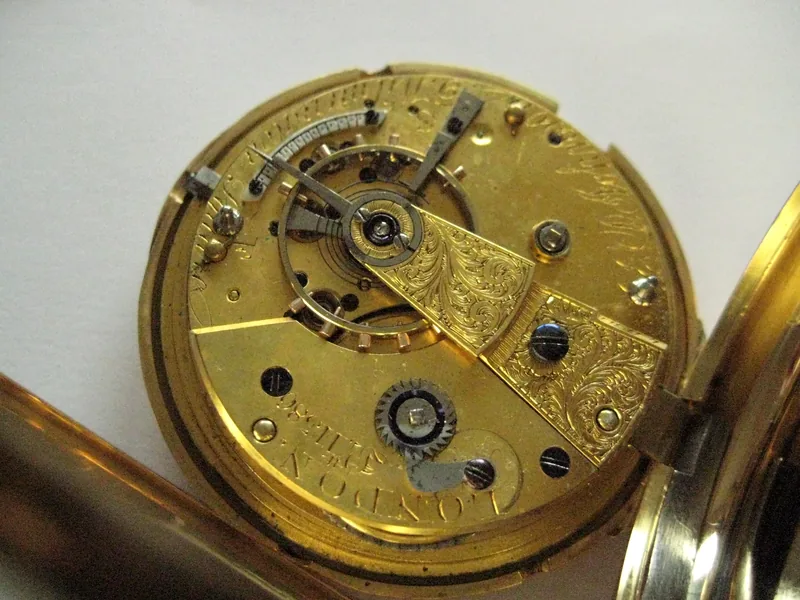
Felsa SA, founded in 1918 in Lengnau, Switzerland, stands as one of the quintessential pillars of Swiss ébauche manufacturing during the golden age of mechanical horology. While widely recognized in modern collector circles for their later mid-century innovations like the Bidynator automatic caliber, Felsa’s early reputation was forged in the meticulous production of high-grade hand-wound pocket watch movements. During the early decades of the twentieth century, the transition from pocket-borne timekeeping to wrist-worn instruments dictated a radical evolution in movement design, sizing, and architecture.
The Felsa 8s platform—representing an 8-size or equivalent medium-ligne caliber architecture—emerged during a pivotal era when watchmakers were forced to shrink traditional pocket watch mechanisms without sacrificing durability or accuracy. These movements were exported globally and utilized by numerous private-label brands, military suppliers, and independent watchmakers who needed dependable, high-torque ébauches. In the era surrounding World War I and the subsequent decade, movements like the Felsa 8s bridges provided the perfect mechanical basis for rugged field timepieces, frequently appearing alongside early military instruments and authentic WW1 trench watches.
Today, as horological purists and custom watchmakers seek out classic mechanical movements to house in modern cases, the Felsa 8s has earned a prestigious reputation. Its robust component geometry, hand-finished steel work, and forgiving dimensional proportions make it an ideal subject for modern restoration and custom adaptation. Understanding the historical context of Felsa’s manufacturing tolerances allows the contemporary watchmaker to appreciate why these century-old movements remain mechanically viable for wear on the modern wrist.
2. Technical Specifications and Movement Architecture
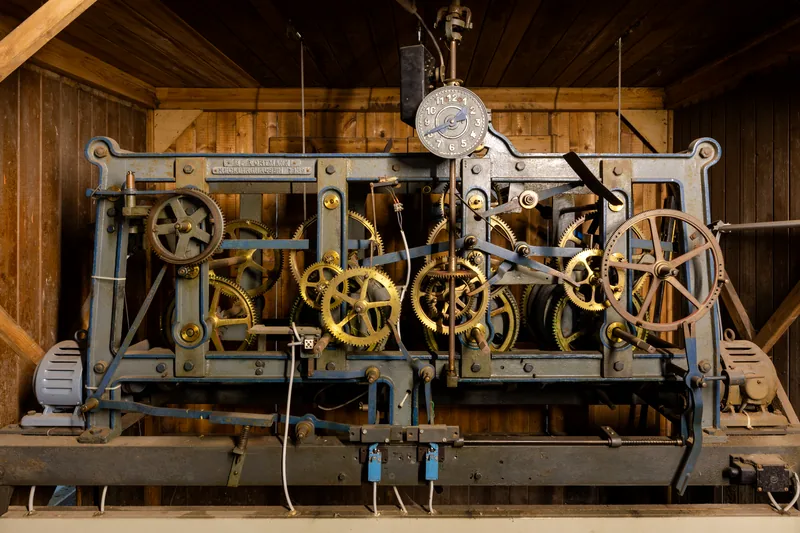
To successfully evaluate the feasibility of a conversion project, a watchmaker must analyze the internal architecture of the Felsa 8s movement. Operating typically at a standard beat rate of 18,000 vibrations per hour (2.5 Hz), the Felsa 8s features a classic Swiss lever escapement driven by a traditional going train. The movement diameter generally sits around 38mm to 39mm depending on the exact plate iteration, making it substantially larger than standard vintage wristwatch calibers yet comfortably smaller than oversized 16-size American railroad movements. The main plate and bridge geometry often mirror classical finger-bridge layouts or a sturdy three-quarter plate configuration finished in nickel plating or traditional Geneva waves.
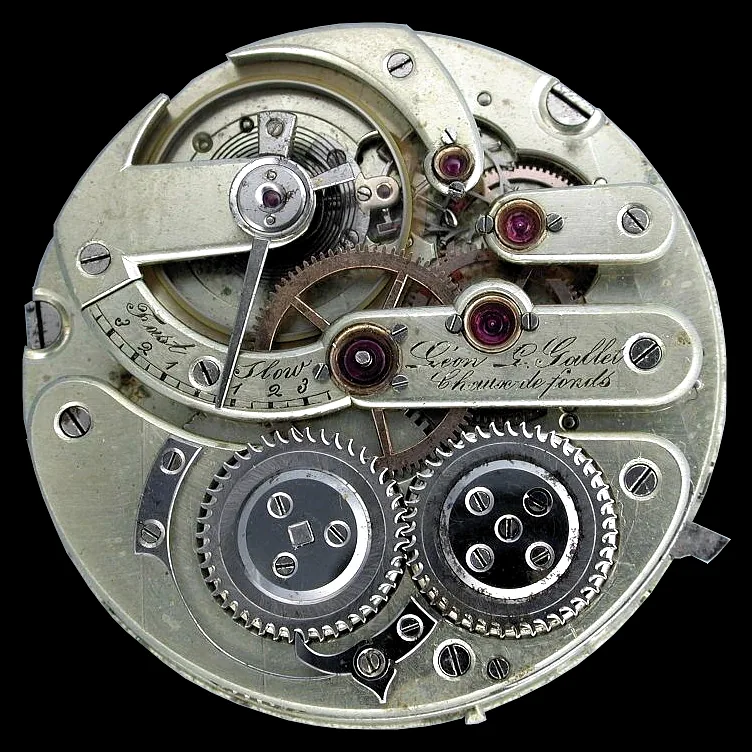
From a mechanical perspective, the gear train arrangement utilizes a centralized center wheel driving a third wheel, fourth wheel, and escape wheel with polished pivots set into rubies. Most Felsa 8s movements feature 15 to 17 jewels, with high-grade variations featuring screwed chatons and endstones on the balance assembly. The balance wheel itself is typically a compensated bimetallic structure equipped with split rims and poising screws, paired with a flat or Breguet overcoil hairspring attached to a traditional index regulator. The winding mechanism utilizes a classic keyless works with a positive setting action driven by a winding pinion, clutch wheel, and setting lever.
Another crucial technical element of the Felsa 8s architecture is stem height and setting depth. Unlike modern standardized ETA calibers, vintage Felsa movements were manufactured before industry-wide movement height standardization. The distance from the dial seat to the center line of the winding stem requires precise measurement with micrometers. Furthermore, the barrel arbor and mainspring housing are engineered to deliver significant torque, necessary to drive the heavier hand assembly of a pocket watch caliber while maintaining an extended power reserve of roughly 36 to 40 hours.
3. Challenges of Converting Felsa 8s to Wristwatch
When clients ask, "can you convert felsa 8s pocket watch movements into functional modern wristwatches?", the technical answer is always affirmative, but the process is rife with horological hurdles. The absolute primary challenge lies in shock protection. Vintage Felsa 8s calibers were designed to sit protected in a vest pocket; consequently, their balance staff pivots are extremely thin and lack spring-loaded shock absorption mechanisms like Incabloc or KIF. Dropping a converted watch onto a hard surface will immediately bend or snap the fine balance pivots, requiring custom lathe turning to manufacture a replacement balance staff from tempered steel.
The second major architectural challenge revolves around dial layout and seconds indicator placement. Pocket watches are divided into Lépine (open-face) and Savonnette (hunter-case) layouts. In a Lépine movement, the winding stem is located at 12 o'clock, with the sub-seconds dial directly opposite at 6 o'clock. When turned 90 degrees to orient the winding stem at 3 o'clock for a wristwatch, the sub-seconds dial shifts awkwardly to 9 o'clock. Conversely, a Savonnette movement places the winding stem at 3 o'clock and sub-seconds at 6 o'clock, which perfectly mirrors standard wristwatch architecture. Identifying whether your Felsa 8s is a Lépine or Savonnette layout dictates the overall aesthetic feasibility of the finished build.
Finally, environmental sealing presents a formidable obstacle. Original pocket watch cases were never designed to be water-resistant or dust-tight by modern standards. Securing a Felsa 8s inside a contemporary wristwatch housing requires creating custom movement holder rings, securing the movement with proper casing clamps, and engineering effective stem and caseback gaskets. Without absolute precision in these tolerances, ambient humidity and skin oils will rapidly penetrate the movement, oxidizing the untreated carbon steel springs and contaminating the synthetic watch oils.
4. Lug Welding and Case Selection
Finding or creating an appropriate felsa 8s pocket watch to wrist conversion case requires a strict balance between historical authenticity and modern ergonomic utility. Because an 8-size movement measures approximately 38mm to 39mm in plate diameter, the exterior diameter of the finished wristwatch case will typically range between 42mm and 45mm. This falls directly into the ideal modern sizing window, avoiding the massive, unwearable 48mm+ proportions that result from converting larger 16s or 18s pocket watches.
Watchmakers approach casing through two primary pathways: custom modern CNC-machined stainless steel conversion cases, or silver-brazing wire lugs onto an original vintage pocket watch case. When constructing a custom wire-lug conversion from an original silver or gold-filled pocket case, precision welding techniques are critical. Micro TIG welding or silver soldering using high-purity solder paste is required to attach hand-bent sterling silver or brass lugs. The watchmaker must carefully apply heat sinks across the pocket watch case to prevent warping the bezel threads, melting delicate solder joints, or damaging internal hinge mechanisms.
If utilizing a modern machined stainless steel conversion case, selecting the correct movement retention system is paramount. The internal shoulder of the conversion case must be precision-bored to match the exact diameter of the Felsa 8s pillar plate dial seat. A custom-machined brass or aluminum movement ring is typically turned on a micro-lathe to bridge any tolerance gap between the movement edge and the inner case wall. Securing tabs (casing clamps) are then custom-fitted using tiny case screws threaded directly into the perimeter of the movement's main plate, preventing any axial or radial movement during daily wear.
5. Crown and Stem Solutions
Interfacing a vintage keyless works with a modern watch crown requires custom machining and specialized horological lathe operations. The original winding stem of a Felsa 8s pocket watch was engineered to thread into a pocket watch crown or interface with a sleeve-setting system inside the original pocket case stem tube. When transferring the movement to a wrist-wearable housing, the original stem is almost always too short, improperly threaded, or worn at the square winding block.
To resolve this, the watchmaker must either turn a new custom winding stem from high-carbon steel rod stock on a watchmaker’s lathe or utilize a precision stem extender coupled with silver solder. The process begins by measuring the square section (the clutch arbor) of the Felsa 8s stem, ensuring it slides without play through the winding pinion and clutch wheel. The threaded end of the stem must then be matched to standard watchmaker tap threads—typically Tap 8 (0.90mm) or Tap 10 (0.60mm)—to accommodate a oversized vintage-style crown.
The choice of crown must harmonize with both the historical era of the movement and the functional needs of a wrist instrument. An oversized "onion" or "pumpkin" crown is historically appropriate for early twentieth-century conversions, offering excellent tactile grip for daily manual winding. Crucially, the crown must incorporate an internal rubber O-ring gasket that slides snugly over the exterior of the case tube, establishing a tight barrier against airborne debris, moisture, and sweat without causing mechanical friction during winding operations.
6. Dial and Hand Considerations
The dial of a Felsa 8s is often an artistic masterpiece—frequently crafted from fired enamel (porcelain) over a copper plate, featuring delicate double-sunk sub-dials and fine tip typography. Preserving an original enamel dial requires extreme caution during the conversion process. Unlike metal painted dials, enamel is exceptionally brittle; applying improper pressure or bending the dial plate will cause microscopic spider cracks or severe chipping around the center hole and edge perimeters.
Attaching the dial securely to the movement inside a new case presents its own geometric challenges. Dial feet locations on vintage Felsa movements vary widely across different production runs. If a replacement metal dial is used or if the original feet have sheared off, new copper dial feet must be attached. On metal dials, this is executed using a specialized capacitive-discharge dial feet spot welder, which fuses new feet onto the back of the dial without blistering the front painted surface. Enamel dials, however, cannot tolerate spot welding heat; in these cases, low-temperature silver-bearing epoxy or custom perimeter clamping rings are employed to seat the dial securely against the movement plate.
Hand fitting on a converted Felsa 8s requires meticulous clearance adjustments. Vintage hands are usually blued carbon steel, hand-forged and friction-fitted onto the hour wheel, cannon pinion, and fourth wheel pivot. Because a modern wristwatch case uses a flat or slightly domed sapphire/mineral crystal, vertical clearance between the hands and the interior crystal surface is tight. The watchmaker must carefully adjust the height of the cannon pinion and hour wheel, curvature of the minute hand tip, and exact level of the sub-seconds hand using staking tools and hand-fitting presses to ensure no friction occurs between the hands themselves or against the crystal face.
7. Why 8s is More Common for Conversion
Among the vast universe of vintage horology, the decision to convert felsa 8s pocket watch into wristwatch configurations has gained immense traction among professional restoration specialists. The core reason behind this popularity is scale. Standard 16-size (44.5mm plate) and 18-size (44.8mm plate) American pocket watches yield wristwatches with total case diameters exceeding 50mm. These massive proportions are uncomfortably heavy, vulnerable to striking doorframes, and visually disproportionate on average wrists. The 8s size, by contrast, hits the absolute sweet spot for modern wrist proportions.
Beyond physical dimensions, the Felsa 8s platform offers superior mechanical stability compared to micro-sized 0-size or 3/0-size ladies' pocket watch calibers. Extremely small vintage movements suffer from delicate, micro-thin pivots and tiny mainsprings that offer low torque, making them prone to erratic timekeeping when subjected to the arm movements of daily wear. The Felsa 8s balance wheel possesses enough physical mass and rotational inertia to maintain a stable amplitude and resist subtle position errors, delivering consistent performance that rivals classical luxury wristwatches, including early vintage Rolex wristwatches which relied on similar high-grade Swiss lever architectures.
Furthermore, the availability of parts and ébauche compatibility renders the Felsa 8s far more serviceable than obscure, short-lived calibers. Because Felsa produced these movements in considerable quantities, donor movements for gears, winding crowns, keyless works parts, and balance assemblies remain accessible within the collector community. This ensures that a completed Felsa 8s conversion is not merely a display piece, but a fully functional, maintainable timepiece designed to be worn and serviced for decades to come.
8. Final Thoughts on Felsa 8s Conversions
Transforming a classic Felsa 8s pocket watch movement into a bespoke, wearable wristwatch represents a beautiful intersection of historic preservation and modern mechanical artistry. By taking an internal movement that was once destined to sit forgotten in a drawer or converted for scrap metal, watchmakers give a second life to early twentieth-century Swiss horological engineering. When executed correctly, the resulting timepiece seamlessly blends antique aesthetics with practical modern wrist wearability.
However, successful conversion demands unwavering commitment to high watchmaking standards. From calculating stem height tolerances and silver-soldering wire lugs to re-truing bimetallic balance wheels and custom-fitting movement holders, every step requires specialized tooling and deep technical knowledge. Attempting shortcut solutions—such as using crude adhesives, ill-fitting universal cases, or forced stem alignments—will inevitably ruin a historic caliber and result in mechanical failure.
For the discerning enthusiast or master technician, a properly converted Felsa 8s wristwatch is far more than a novelty; it is a tangible piece of mechanical history. Ticking smoothly at 18,000 beats per hour beneath a sapphire crystal, a restored Felsa caliber stands as an enduring testament to the beauty of classical Swiss micro-engineering—bridging the gap between the pocket watch era and the contemporary wrist.