Historical Background of Hamilton 12L Movements
The Hamilton Watch Company, established in Lancaster, Pennsylvania, in 1892, earned its reputation as the "Watch of Railroad Accuracy." While Hamilton's legendary 16-size and 18-size movements dominated rail transportation, the early decades of the twentieth century brought a drastic shift in consumer tastes. As men transitioned away from heavy, bulky pocket timepieces in favor of sleeker, more elegant attire during the Roaring Twenties, Hamilton responded by refining their 12-size (12s / 12L) caliber lines. These 12-size movements represented a high-water mark for American mass-production horology, combining exceptional hand-finishing, thermal-compensated balances, and precision adjustment with a significantly slimmer profile.
During the 1910s through the 1930s, Hamilton produced several iconic 12-size grades, most notably the Grade 910, Grade 912, Grade 914, Grade 920, and Grade 922, culminating later in the Masterpiece series and Grade 400 models. The Grade 912, in particular, became an industry workhorse with over 500,000 units produced. These movements were traditionally housed in solid gold or gold-filled open-face pocket watch cases. However, during various economic downturns and precious metal booms, thousands of these pocket watch cases were sold and melted down for scrap gold, leaving high-grade, fully functional movements orphaned without housing.
Today, watchmakers and custom artisans routinely repurpose these historic American engines. The modern impulse to convert hamilton 12L pocket watch into wristwatch configurations stems from a desire to preserve horological history while making these high-grade movements wearable for a modern audience. Just as soldiers during the First World War modified pocket movements into authentic WW1 trench watches, contemporary horologists give new life to discarded 12L Hamilton calibers by adapting them to custom wrist cases.
Technical Specifications and Movement Architecture
To execute a successful conversion, a watchmaker must first understand the structural layout and dimensional tolerances of Hamilton’s 12-size architecture. In American watchmaking terminology, a "12-size" movement measures approximately 1.5 inches (38.1 millimeters) in diameter at the pillar plate, though minor variations exist across specific movement series. This diameter places the 12L in a sweet spot: significantly smaller than a massive 16-size pocket movement (43.18mm), yet substantial enough to showcase intricate bridge finishing, gold chatons, and micrometer regulators through a modern sapphire caseback.
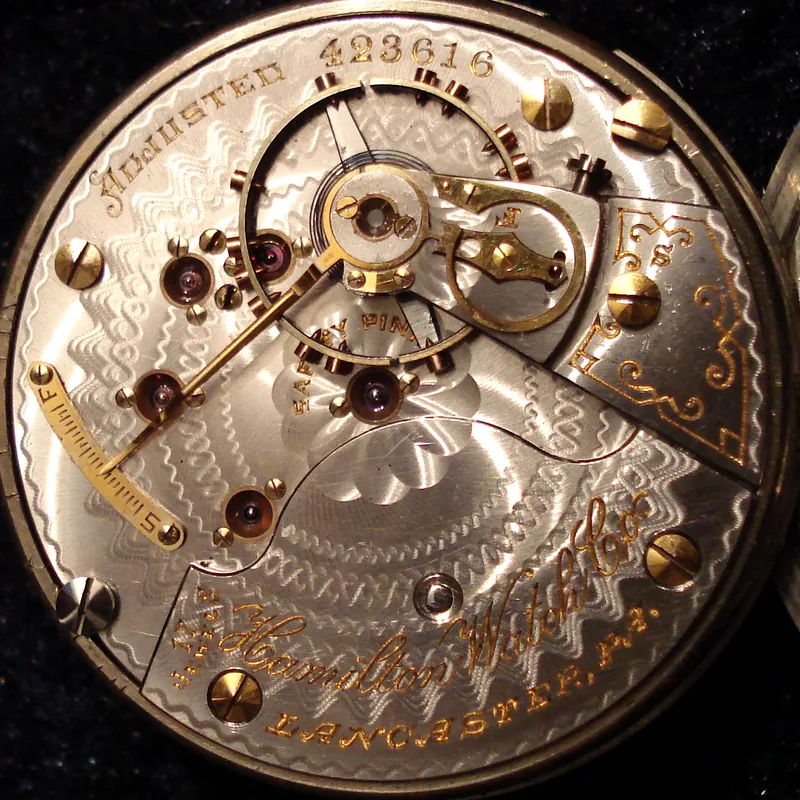
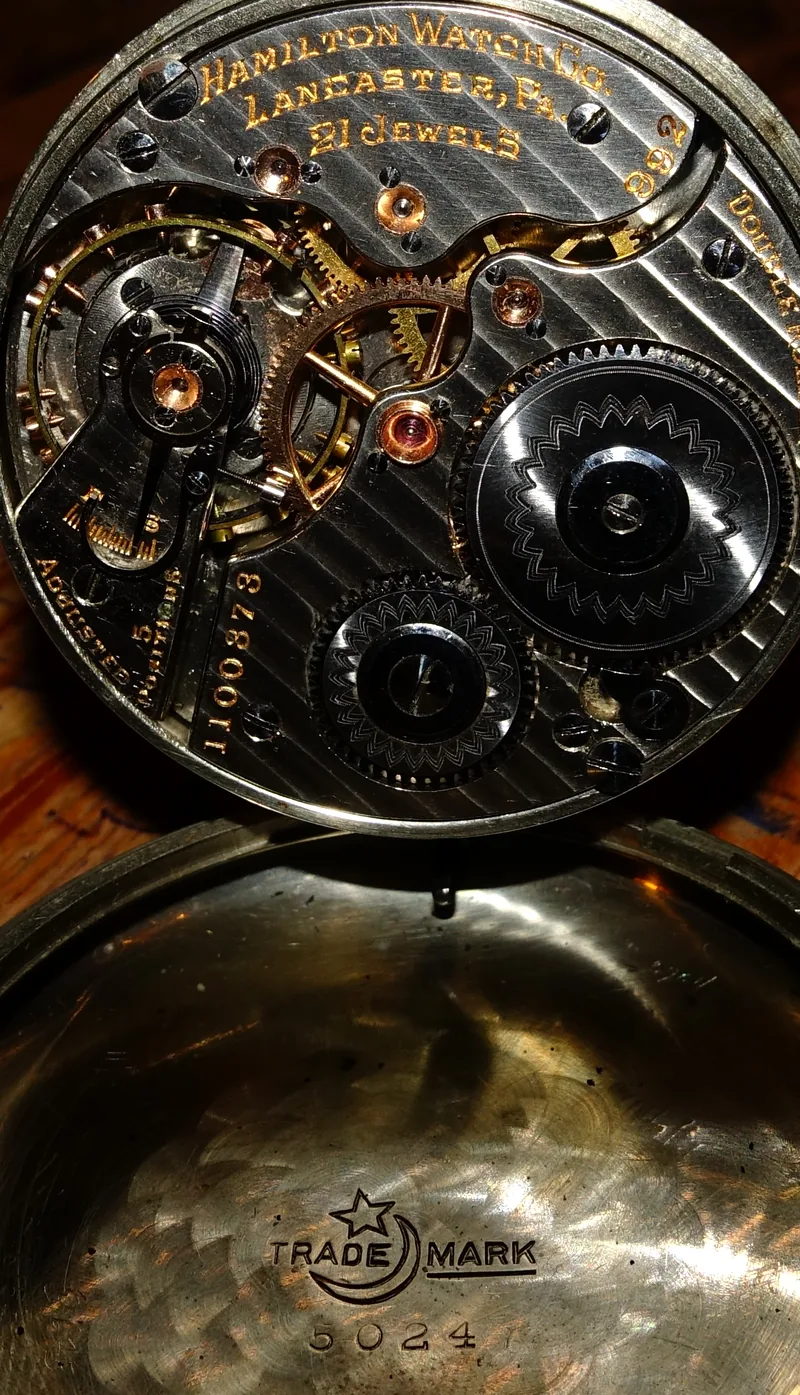
Technically, the majority of Hamilton 12L movements utilize a 3/4 plate or bridge design made of nickel, decorated with elegant Damaskeening (Geneva stripes or radial patterns). Standard movement specifications typically feature 17 to 23 ruby jewels, a cut bimetallic compensation balance wheel with gold timing screws, a Breguet overcoil hairspring, and a micrometric reed regulator (often the classic Whipple or patent spring design). The escapement operates at a traditional frequency of 18,000 vibrations per hour (2.5 Hz), giving the balance wheel its majestic, slow, and steady cadence.
A critical consideration when planning to convert hamilton 12L pocket watch components is the winding and setting architecture. The majority of 12s Hamilton movements employ a pendant-set mechanism utilizing a negative setting system (where the sleeve in the case neck holds the stem in the setting position). Unlike modern wristwatch movements that feature positive setting keyless works built directly onto the mainplate, the Hamilton 12L relies on external sleeve pressure to shift between winding and setting modes. Understanding this mechanical distinction is paramount when selecting or custom-machining conversion stems and crowns.
Challenges of Converting Hamilton 12L to Wristwatch
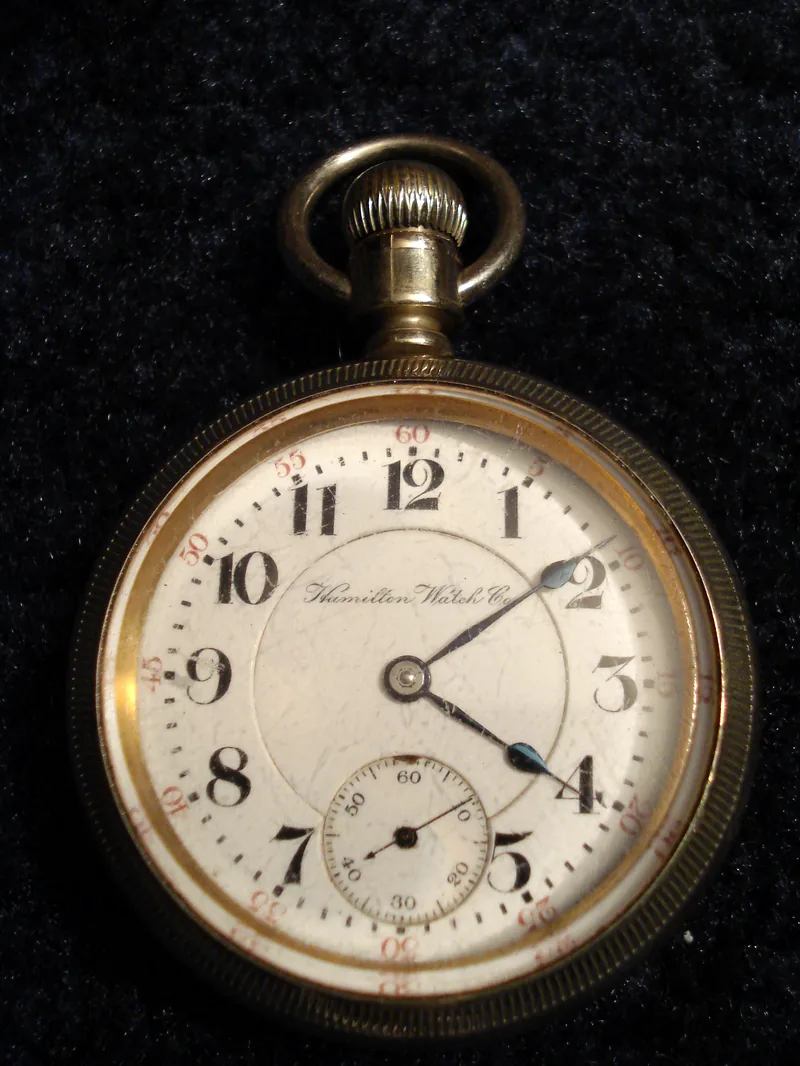
While the prospect of wearing a 100-year-old high-grade Hamilton movement on the wrist is compelling, the conversion process presents formidable technical hurdles. The primary issue revolves around movement orientation. Most Hamilton 12L movements were manufactured as Lépine (open-face) calibers, meaning the winding stem is positioned at 12 o'clock, directly aligned with the small seconds sub-dial at 6 o'clock. If you rotate the movement in a wrist case so the crown sits at the conventional 3 o'clock position, the small seconds sub-dial shifts to the 9 o'clock position. If an open-face dial is kept with the crown at 3 o'clock, the main 12 o'clock marker will be oriented sideways unless a bespoke dial is fitted or a custom Savonnette (hunter) movement is sourced.
The second major technical challenge is the complete absence of shock protection. Vintage Hamilton 12L movements were engineered for pocket carry, protected inside a vest pocket, where sudden impacts were minimal. The balance pivots measure only fractions of a millimeter in diameter and are supported by fixed jewel cap settings without spring-loaded shock absorbers like Incabloc or Novodiac. Wearing a 12L wristwatch during modern everyday activities risks shearing the delicate balance staff pivots upon any moderate impact. Precision care and specialized wrist habits are mandatory for preservation.
Lastly, environmental sealing poses a continuous challenge. Antique pocket watches were rarely dustproof and almost never water-resistant. Modern custom conversion cases must incorporate modern nitrile or silicone gaskets around the crystal, caseback, and crown tube to guard the pristine nickel finish, steel balance springs, and unplated steel winding components against atmospheric humidity and perspiration, which cause rapid corrosion and oil contamination.
Lug Welding and Case Selection
Selecting the correct enclosure and lug configuration is crucial to achieving a balanced, comfortable, and aesthetically pleasing timepiece. When calculating the best case size for hamilton 12L conversion, the watchmaker must account for both movement clearance and wrist ergonomics. Since the naked movement plate measures 38.1mm, the minimum external diameter of a custom wrist case generally falls between 42mm and 44mm, depending on wall thickness, movement ring spacing, and bezel profile.
There are two primary approaches to case selection in a hamilton 12L pocket watch to wrist conversion project: modifying an existing vintage pocket watch case or utilizing a custom CNC-machined modern wristwatch conversion case. Modifying an original silver or gold-filled pocket case involves silver-soldering or micro-TIG welding custom wire lugs directly onto the perimeter of the existing case shell. This traditional method preserves the antique aesthetic and original bow/pendant construction, reminiscent of early 20th-century field conversions, but leaves the watch vulnerable to moisture and dust due to snap-back fitment.
Alternatively, modern custom-built conversion cases machined from 316L stainless steel, bronze, or titanium provide superior protection and usability. These modern cases incorporate threaded display backs with sapphire crystals, rubber O-ring seals, and pre-engineered spring bar lugs (usually with 22mm lug width). To secure the 38.1mm Hamilton plate firmly inside a 42mm–44mm stainless steel case, a custom movement spacer ring must be lathe-turned from brass or stainless steel, secured with perimeter movement clamps and casing screws to eliminate dial drop and stem misalignment.
Crown and Stem Solutions
Perhaps no step in the conversion process tests a watchmaker’s micro-machining skill more than resolving the winding stem and setting mechanism. As previously mentioned, standard Hamilton 12-size movements (such as the Grade 912 or 910) were built with negative-setting mechanisms. In an original pocket watch case, a friction sleeve located inside the pendant tube holds the stem detent. When you pull the pocket watch crown up, the sleeve releases pressure, allowing an internal square setting arbor within the movement to drop into engagement with the setting clutch.
When adapting this mechanism to a modern wristwatch case designed for positive-setting movements (where the crown stem pulls out directly via an internal setting lever), the watchmaker has two engineering pathways. The first approach is to retro-fit a converted positive-setting mechanism into the movement. This requires modifying the setting springs and detent works on the dial side of the mainplate, substituting custom-machined stem detent parts so the stem stays retained within the movement mechanics rather than relying on an external pendant sleeve.
The second, more common method involves custom-turning a conversion stem on a watchmaker’s lathe. The watchmaker starts with a blank stem stock, turns the square winding arbor to match Hamilton's precise square dimension, threads the outer end to accept a standard modern crown (typically Tap 9 or Tap 10 threads), and integrates a modified sleeve or spring assembly inside the modern case crown tube. The crown must feature internal double-O-ring seals to prevent water ingress while applying proper mechanical friction to engage both the winding ratchet wheel and setting wheel seamlessly.
Dial and Hand Considerations
The dial and hand assembly dictates the visual character of the conversion. Original Hamilton 12L pocket watch dials are horological masterpieces in their own right, crafted either from multi-sunk fired vitreous enamel on copper plates or silvered brass with hand-painted, raised gold, or etched numerals. Preserving an original dial maintains authenticity, but creates mounting challenges when changing movement orientation within a wrist case.
If you choose to place the winding stem at 3 o'clock while retaining an original open-face single-sunk or double-sunk enamel dial, the original dial feet will no longer line up with the mainplate's dial-foot locking screws. To correct this, the original dial feet must be cleanly milled off, and new copper dial feet must be hard-soldered or spot-welded at the correct positions using a micro dial-foot soldering machine. Extreme caution is required when working with vitreous enamel dials; excessive heat will crack or craze the delicate glass enamel surface, rendering it irreplaceable.
Hand fitting presents another hurdle requiring precise mechanical tolerance. Vintage 12-size Hamilton hour and minute wheel posts use imperial dimensioning, which does not match modern off-the-shelf wristwatch hand holes. The hour hand hole for a typical Hamilton 12s measures approximately 1.78mm to 1.82mm, while the minute hand socket measures roughly 0.95mm to 1.00mm. The small seconds hand post is equally distinct. Watchmakers must either ream and adjust original vintage pocket watch hands, close down modern hand sockets on a staking tool, or custom-turn hand bushings on a lathe to secure proper frictional fit on the hand cannons.
Why 12L is more common for conversion
In the world of custom horology and antique pocket watch conversions, the Hamilton 12L stands out as the most popular candidate for recasing—and for very sound practical reasons. Larger pocket watch movements, such as the famous 16-size (43.18mm) or 18-size (44.86mm) railroad grades, result in finished wristwatches measuring 48mm to 52mm in case diameter. Unless the wearer has massive wrists, a 16s conversion feels unwieldy, top-heavy, and highly susceptible to accidental impact during everyday wear.
Conversely, smaller pocket watch movements like the 0-size or 3/0-size are exceedingly delicate, challenging to service, and rarely feature high-grade micro-adjusters or decorated bridge work. The 12-size movement bridges this gap perfectly. Housed in a tailor-made 42mm or 43mm case, a 12L conversion scales identically to modern oversized sports wristwatches while offering superior wrist presence and historic charm.
Furthermore, Hamilton produced hundreds of thousands of 12-size movements during the golden era of American industrial design. Because many of these watches were cased in high-karat gold cases that were scrapped during gold rushes, there is an abundant supply of orphan movements available in immaculate mechanical condition. Their interchangeability of parts, high structural quality, and readily available donor components make the 12L far more practical to service, restore, and maintain than obscure European pocket calibers or rare low-volume American movements.
Final Thoughts on Hamilton 12L Conversions
Converting a historical American timepiece is a delicate balancing act between horological preservation and creative reinterpretation. Purists rightly argue that pristine, complete, untouched pocket watches in their original factory cases should be preserved for historical conservation. However, for orphaned, high-grade Hamilton 12L movements whose gold cases were long ago melted down, building a high-quality wrist conversion represents an ultimate form of horological salvation.
When executed by a skilled watchmaker who respects mechanical tolerances, proper stem geometry, dial preservation, and movement clamping, a converted Hamilton 12L transcends being a mere novelty. It becomes a functional, living piece of American industrial art—a 100-year-old high-precision engine ticking smoothly on the wrist, showcasing micro-engineering that rivals the finest high-end Swiss manufactures.
Whether you are a collector looking to commission a hamilton 12L pocket watch to wrist conversion or a watchmaker undertaking the technical challenge yourself, success relies on uncompromising attention to detail. Respect the movement’s technical limits, treat the balance pivots with care, engineer a robust crown and case assembly, and you will possess a unique, wearable masterpiece that honors America's rich watchmaking heritage for generations to come.