1. Historical Background of Hamilton 12s Movements
The Hamilton Watch Company, established in Lancaster, Pennsylvania, in 1892, earned its reputation as "America's Timekeeper" by producing exceptionally precise, reliable timepieces. While the brand built its early legacy on massive 18-size and 16-size railroad chronometers engineered to prevent catastrophic train collisions, the dawn of the 20th century brought a dramatic shift in consumer taste. By the 1910s and through the Roaring Twenties, American men began moving away from bulky, heavy pocket timepieces toward sleeker, more refined dress watches that could slide effortlessly into a vest pocket. In response to this demand, Hamilton introduced its celebrated 12-size (12s) movement line.
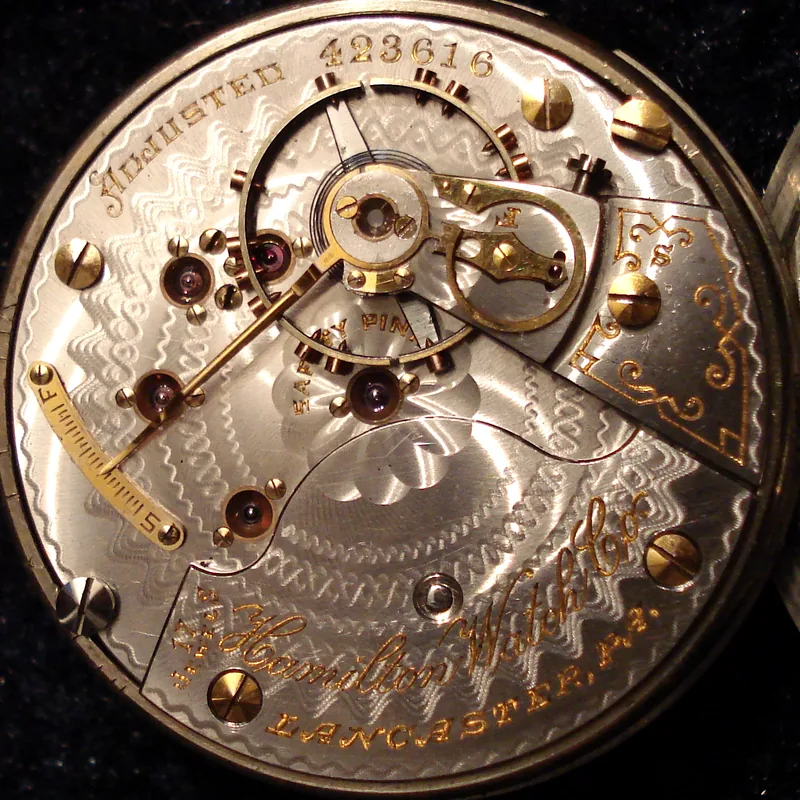
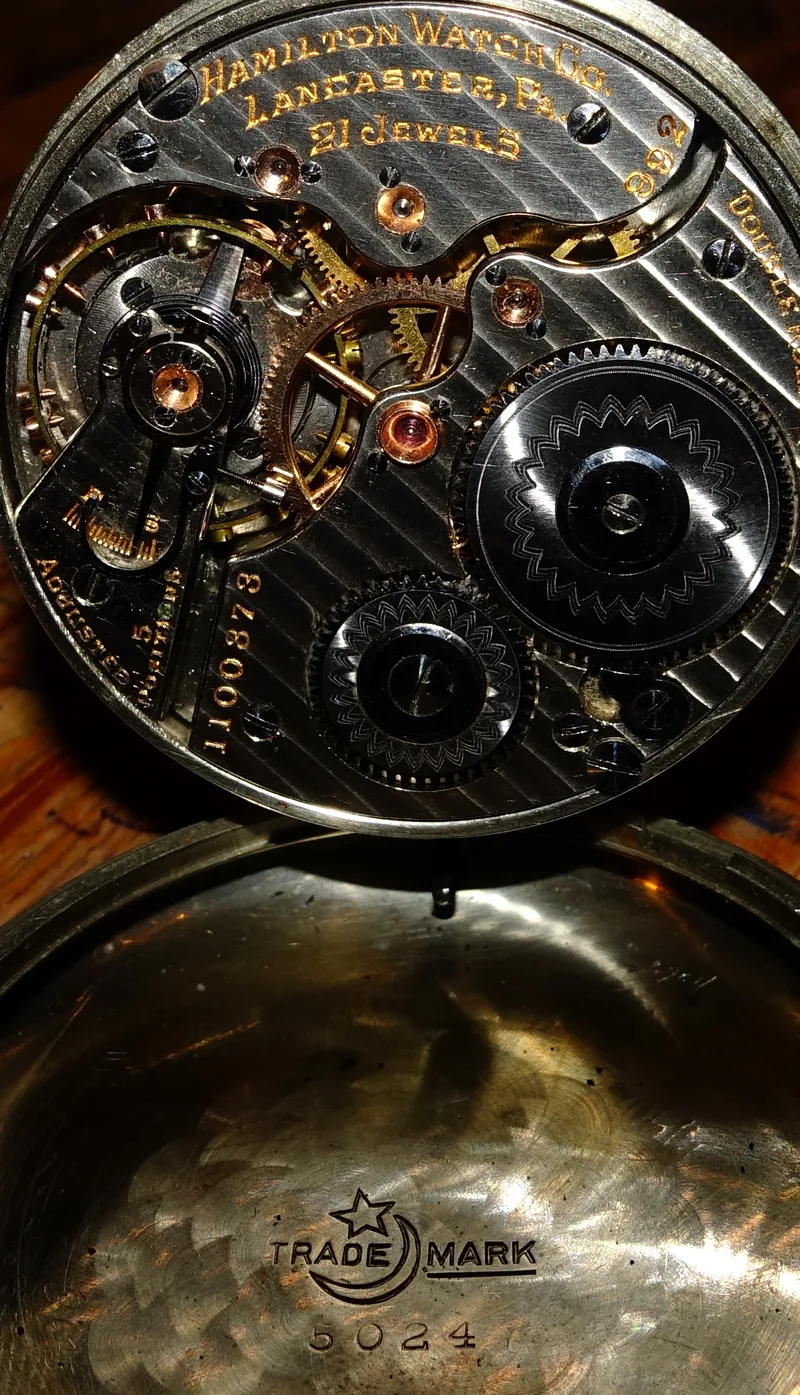
The 12s platform represented a pinnacle of industrial watchmaking, combining high-grade mechanical finishing with scaled-down proportions. Legendary grades such as the 910, 912, 914, 900, 920, and the ultra-luxurious 922 Masterpiece demonstrated that a smaller, slimmer watch did not require compromising on precision or durability. These movements featured breathtaking nickel plating adorned with elaborate damaskeening—intricate geometric patterns cut into the bridges—alongside gold center wheels, raised gold jewel settings (chatons), and micro-metric regulator assemblies. Millions of these movements were produced during the golden age of American watchmaking, housed in elegant gold-filled or solid gold pocket cases.
As pocket watches fell out of style over the subsequent decades, countless solid precious metal cases were melted down for bullion value during economic downturns, leaving behind pristine, fully functional 12s movements sitting idle in watchmaker drawers. Today, these surviving movements represent a golden era of American horology. Converting a Hamilton 12s pocket watch into a wristwatch—often referred to in collector circles as a "marriage watch"—is not merely a modification; it is a meticulous preservation technique that resurrects vintage engineering for modern wearable enjoyment.
2. Technical Specifications and Movement Architecture
Understanding the architectural nuances of the Hamilton 12s caliber is essential for any watchmaker undertaking a conversion project. According to the traditional American watch sizing scale, a 12-size movement measures approximately 1 11/30 inches, or 39.37 millimeters in diameter (bare plate size). This size makes the movement inherently suitable for modern wrist proportions, as it allows for a finished wristwatch case diameter between 42mm and 45mm without requiring excessively thick case walls.
Mechanically, Hamilton 12s movements operate at a standard frequency of 18,000 vibrations per hour (vph) or 2.5 Hz, yielding the characteristic five-tick-per-second sweeping second hand that vintage watch enthusiasts cherish. The escapement architecture relies on a traditional cut bimetallic compensated balance wheel paired with a Breguet overcoil hairspring to compensate for temperature variations and position errors. High-grade variants feature 17, 19, 21, or even 23 ruby jewels, with top-tier models incorporating cap jewels on the escape wheel and pallet fork to minimize friction and oil migration.
One critical technical element of the Hamilton 12s is its winding and setting layout. Depending on the specific grade and production era, these movements utilize either a bridge-plate or three-quarter plate configuration. More importantly, most Hamilton 12s movements were designed with a "negative setting" mechanism (also known as pendant setting), where the detent and spring mechanism responsible for switching between winding and hand-setting modes resides inside the pocket watch case neck, rather than on the movement plates themselves. Mastering or modifying this keyless work structure is the central technical challenge when attempting to convert hamilton 12s pocket watch into wristwatch configurations using modern positive-set cases.
3. Challenges of Converting Hamilton 12s to Wristwatch
When clients ask, "can you convert hamilton 12s pocket watch models into reliable daily wristwatches?" the technical answer is yes, but it requires addressing several fundamental engineering vulnerabilities inherent to early 20th-century movements. The most critical issue is shock absorption. Hamilton 12s movements were manufactured decades before the invention of modern shock protection systems like Incabloc or KIF. The balance staff pivots on a 12s movement are microscopic—often measuring between 0.08mm and 0.11mm in diameter—and sit directly against rigid ruby cap jewels. A sudden impact, such as dropping the watch or striking a hard surface, can instantly snap a pivot stem, necessitating a complex balance staff replacement on a lathe.
Environmental exposure presents another severe hurdle. Pocket watches were designed to live inside protective vest pockets, shielded from rain, dust, and body humidity. They possess zero water resistance and lack rubber gaskets around the stem tube, bezel, or case back. When recased into a wristwatch format, exposure to wrist perspiration, ambient humidity, and ambient particulate matter increases dramatically. A custom conversion must incorporate sealed crown stems, precision-machined case tolerances, and high-quality synthetic gaskets to safeguard the delicate balance spring and steel train wheels from corrosion.
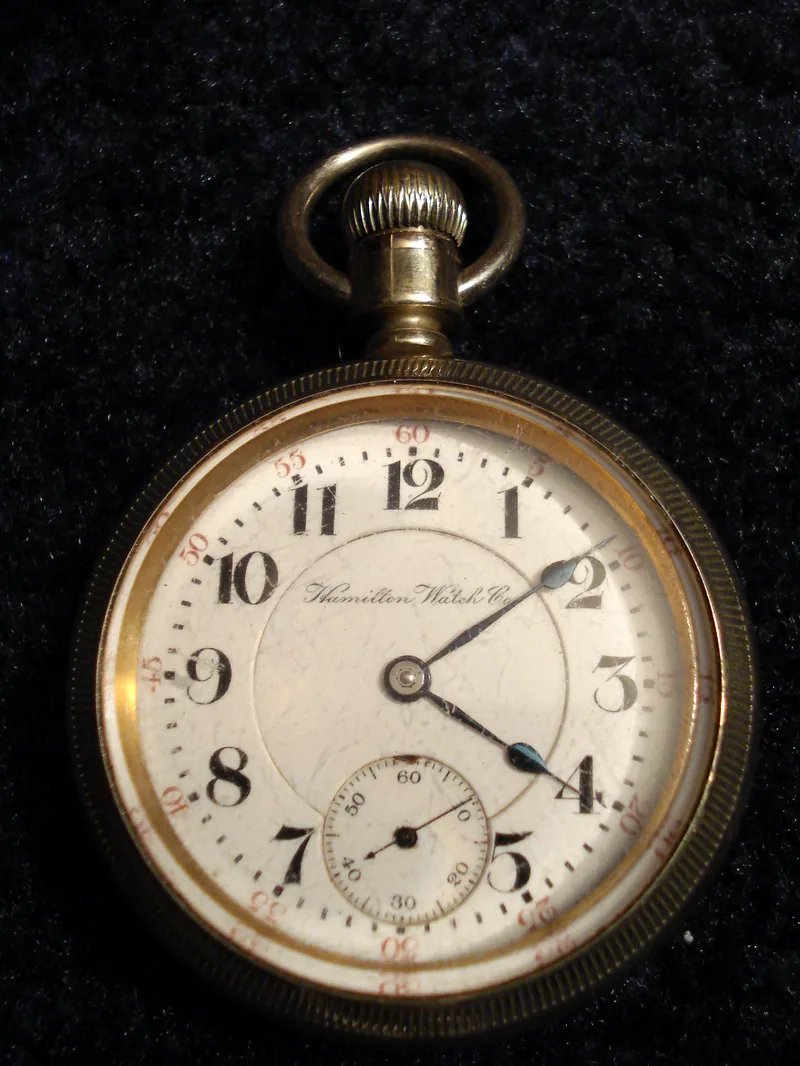
Finally, dial layout and orientation dictate the aesthetic viability of the conversion. Hamilton produced 12s movements in two primary configurations: Open-Face (where the winding stem is at 12 o'clock and the running sub-seconds hand is at 6 o'clock) and Hunter-Case (where the winding stem is at 3 o'clock and sub-seconds are at 6 o'clock). If an open-face movement is installed in a modern wristwatch case with the stem positioned at 3 o'clock, the sub-seconds subdial moves to the 9 o'clock position, creating an asymmetrical layout that requires a custom dial or acceptance of a "bullhead" (top-stem) case configuration.
4. Lug Welding and Case Selection
The choice of housing is arguably the most visual decision in any project to convert hamilton 12s pocket watch into wristwatch form. Historically, craftsmen converted pocket watches by taking the original gold or silver pocket case, removing the top pocket loop (pendant bow), and hand-soldering or brazing custom wire lugs directly onto the exterior perimeter. While this method preserves the original vintage pocket case, silver soldering or laser-welding lugs to thin gold-filled shell cases requires extreme skill to avoid scorching the metal, warping the hinge seats, or damaging vintage glass crystals.
In contemporary horology, a dedicated hamilton 12s pocket watch to wrist conversion case made from 316L stainless steel, titanium, or solid bronze is the preferred standard. Modern conversion cases are specifically CNC-machined to accommodate the exact 39.37mm outer diameter of the 12s movement plates. These cases feature screw-down display backs fitted with mineral or sapphire crystals, offering an unobstructed view of the stunning damaskeened plates and golden gear train, while utilizing modern threaded bezels and rubber seals for superior dust and moisture resistance.
| Conversion Method | Primary Advantages | Key Drawbacks | Ideal Application |
|---|---|---|---|
| Modified Original Case | Preserves period-correct case aesthetics and original engravings. | Non-water resistant, soft metals wear quickly, high risk of heat damage during lug welding. | Museum pieces, light dress wear, historical preservation. |
| Custom CNC Conversion Case | Superior structural rigidity, display caseback, integrated gaskets, modern lug stability. | Increases overall watch dimensions; non-original exterior aesthetic. | Daily wear, modern wrist presence, maximum movement protection. |
When selecting or custom-fitting a conversion case, the inner movement ring (spacer ring) must be custom-lathed from brass or stainless steel. The movement must be secured firmly within the ring using custom casing clamps and case screws to prevent internal shifting. Any micro-movement of the caliber inside the case during arm swing will apply shear stress to the winding stem, leading to stem bending, keyless work wear, or binding of the balance wheel against the internal case wall.
5. Crown and Stem Solutions
The mechanical interface between the exterior crown and the interior movement keyless works represents one of the most intricate engineering hurdles in Hamilton 12s conversions. As noted, most Hamilton 12s pocket watches utilize a "negative set" mechanism. In a native pocket watch, a slotted friction sleeve residing inside the case pendant tube grips the winding stem. Pulling the crown outward pulls the stem up into a sleeve groove, forcing the internal movement clutch into setting mode. Conversely, modern wristwatches use a "positive set" arrangement, where the setting lever, yoke, and detent spring are built onto the movement plate itself, holding the stem captive with a setting screw or push-pin releasing mechanism.
To successfully integrate a negative-set Hamilton 12s movement into a modern positive-set wristwatch case, the watchmaker has two distinct technical paths:
- Converting the Movement Keyless Works: Retrofitting or modifying the winding pinion, clutch, and sleeve assembly to function with a fixed-length threaded stem. This often requires sourcing or custom-machining a conversion stem that incorporates a built-in spring collar or custom sleeve shoulder.
- Installing a Case-Mounted Spring Sleeve: Utilizing a specialized stem assembly inside the conversion stem tube that emulates the exact axial tension of the original pocket watch pendant sleeve. This allows the wearer to click between winding and setting modes cleanly without placing excessive tensile force on the original movement components.
Additionally, modern wristwatch crowns feature internal O-ring gaskets to seal out humidity. Modern stem threads typically utilize standard Swiss thread taps (such as Tap 10 / 0.90mm or Tap 9 / 1.00mm), whereas vintage Hamilton stems feature proprietary thread pitches and imperial shank geometries. Watchmakers must either turn a custom conversion stem on a micro-lathe—threading one end to match the Hamilton winding arbor square and the other to match the modern crown—or utilize specialized hardened steel stem extenders turned down to exact concentric tolerances.
6. Dial and Hand Considerations
The dial of a Hamilton 12s movement is often a work of art in its own right. Hamilton produced these timepieces with either double-sunk vitreous enamel dials or beautifully silvered/gilded metal dials with raised gold enamel numerals. Vitreous enamel consists of ground glass fused onto a copper plate at temperatures exceeding 1,400°F (760°C). While enamel never fades or oxidizes, it is extremely brittle. During a conversion, handling an enamel dial requires specialized brass dial tweezers and non-marring tools to prevent spiderweb cracking around the dial feet, central cannon pinion hole, or sub-seconds aperture.
Dial attachment presents another challenge. The dial feet on a vintage Hamilton 12s are positioned to lock into side-facing set-screws located along the edge of the pillar plate. If a modern conversion case requires rotating the movement or altering its depth profile to fit a lower-profile bezel, the dial feet may conflict with the movement casing ring. In no scenario should original dial feet be clipped off rare enamel dials; instead, custom brass spacer plates or non-destructive dial clamp adapters should be fabricated to maintain complete originality.
Hand fitting is equally technical. The arbor dimensions for a Hamilton 12s cannon pinion, hour wheel, and seconds pivot are significantly larger than standard modern wristwatch calibers (such as an ETA 6497 or Unitas 6498). The vintage hand hole diameters must be precisely measured using fine micrometers or plug gauges. When original hands are rusted, damaged, or lost, modern hand blanks must be custom-bushed: hard brass collars are pressed into the hand hubs and reamed out on a watchmaker lathe using precision broaches until an exact friction fit against the vintage post is achieved.
7. Why 12s is more common for conversion
Within the vintage American horology community, watchmakers convert various pocket watch sizes, ranging from massive 18-size railroad grade giants down to delicate 0-size ladies' pendant movements. However, the 12-size movement has emerged as the clear gold standard for wristwatch conversions. The primary reason is ergonomic balance and modern wrist aesthetics. An 18s movement has a plate diameter of 44.86mm, which yields a finished conversion watch measuring 48mm to 52mm in diameter—uncomfortably large for the vast majority of wearers. A 16s movement (43.18mm plate) results in a finished case of roughly 46mm to 48mm, which, while wearable, presents a thick, bulky profile on the wrist.
In contrast, the 39.37mm plate diameter of the Hamilton 12s allows watchmakers to build finished wristwatches with case diameters between 41.5mm and 43.5mm and overall thicknesses under 12mm. These dimensions match the contemporary footprint of modern sports and pilot wristwatches (such as those powered by the Unitas 6497 movement), providing commanding wrist presence while remaining comfortable, balanced, and dress-shirt compatible.
Furthermore, Hamilton produced its 12s calibers during the height of its mechanical perfection. The sheer volume of 12s movements manufactured between 1910 and 1930 means that spare parts—such as balance staffs, mainsprings, click springs, and escape wheels—remain far more accessible and affordable than those for rarer, smaller sizes. The combination of ideal spatial proportions, mechanical reliability, robust component availability, and extraordinary damaskeened movement aesthetics makes the 12s platform the absolute sweet spot for horological marriage builds.
8. Final Thoughts on Hamilton 12s Conversions
Undertaking a project to convert hamilton 12s pocket watch into wristwatch form is a deeply rewarding horological pursuit that bridges historical preservation with functional art. When executed by a skilled watchmaker who respects the integrity of the original movement, a converted Hamilton 12s transforms an abandoned piece of American industrial history into an heirloom wristwatch capable of serving another century of daily wear. The mesmerizing dance of the oversized balance wheel, coupled with the intricate damaskeening visible through a display back, offers a level of mechanical charm that mass-produced modern movements simply cannot match.
However, owners of these converted timepieces must remember that they are wearing sensitive vintage micro-engineering on their wrists. Operating a hand-wound Hamilton 12s wristwatch requires mindful care: winding the crown smoothly without forcing the mainspring stop-work, keeping the watch away from modern strong magnetic fields (such as smartphones, speakers, and laptops), and strictly avoiding modern liquid exposure. With periodic servicing—specifically cleaning, re-bushing, and re-oiling with modern synthetic lubricants like Moebius 9010 and HP1300 every four to five years—a Hamilton 12s conversion watch stands as a timeless testament to the golden era of American horology.