1. Historical Background of Hamilton 13L Movements
The Hamilton Watch Company, established in Lancaster, Pennsylvania, in 1892, earned an indelible reputation as "America's Railroad Timekeeper." While the brand built its empire on massive 18-size and 16-size pocket watches designed to prevent railway disasters, the early decades of the 20th century demanded smaller, more versatile mechanical platforms. As military conflicts and evolving civilian fashions shifted preferences away from vest pockets, Hamilton began refining smaller movement architectures. Among these, the 13-ligne (13L) size designation held a crucial strategic position between traditional men's pocket watch calibers and emerging wristwatch movements.
During the 1910s and 1920s, Hamilton developed various pendant-style pocket watch movements designed primarily for ladies' lapel watches or men's dress pocket watches. These movements incorporated traditional American pocket watch architecture—such as separate bridge layouts, exposed click springs, and ornate damaskeening—scaled down to a nominal diameter of approximately 29.33 millimeters. During World War I, Hamilton repurposed several of these smaller pocket watch platforms for military use, creating early wrist-worn instruments that bridged the gap between pocket timepieces and modern wristwatches.
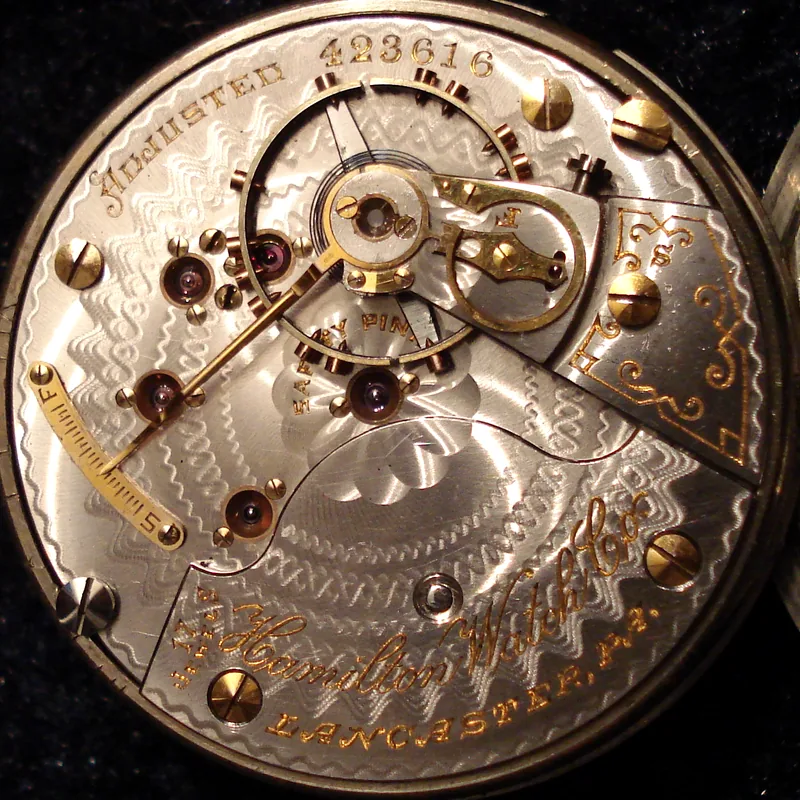
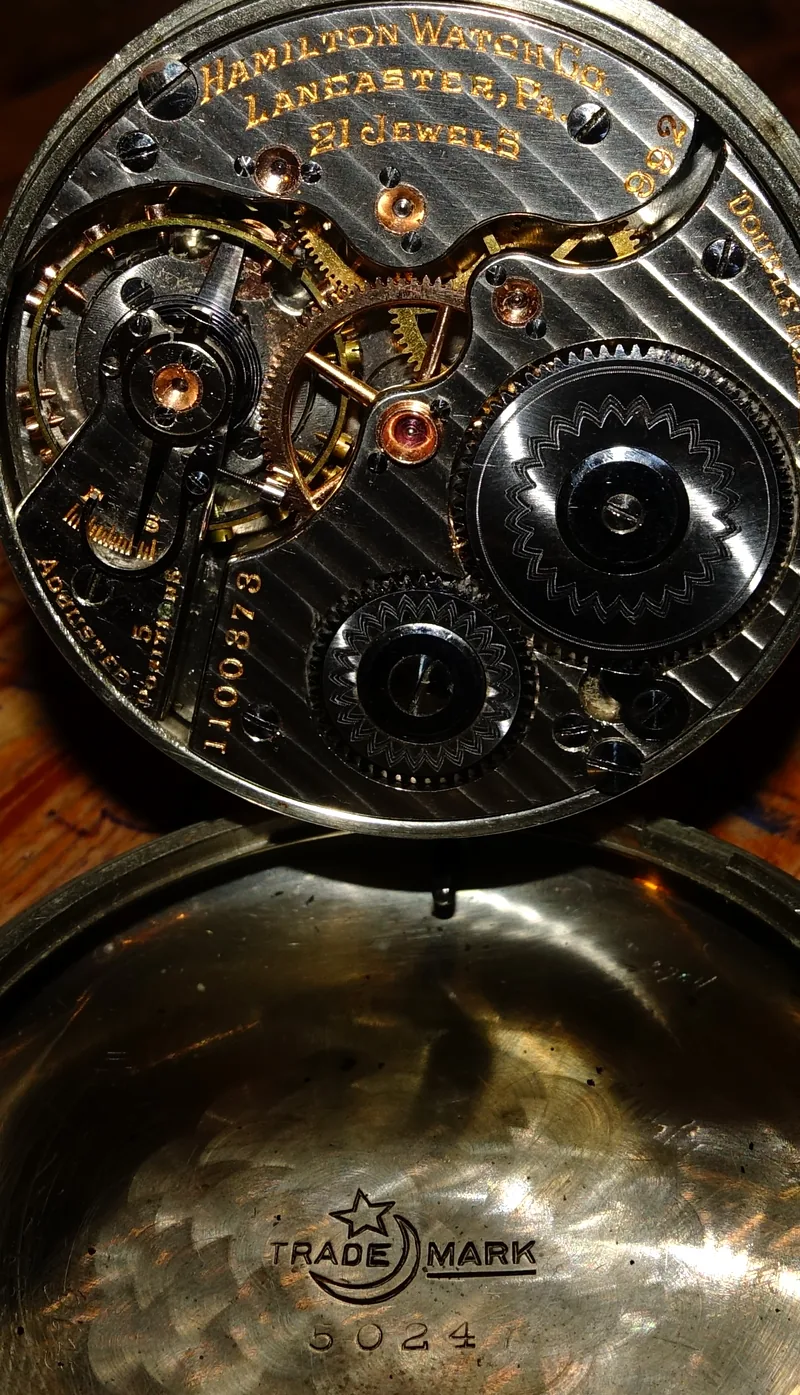
Today, enthusiasts and horologists frequently seek to convert hamilton 13L pocket watch platforms into wearable wristwatches. These movements represent the zenith of American manufacturing precision: high-grade nickel plates decorated with delicate damaskeening, gold jewel settings, cut bimetallic compensation balance wheels, and hand-fitted Breguet hairsprings. To undertake a hamilton 13L pocket watch to wrist conversion is not merely to repurpose a micro-mechanical tool, but to preserve a tangible artifact of American industrial art and wear it on the wrist.
2. Technical Specifications and Movement Architecture
To successfully execute a conversion, a watchmaker must thoroughly understand the engineering architecture of the Hamilton 13L platform. The term "13L" refers to the French ligne measurement (13 lignes equals 29.33 mm in movement plate diameter). Unlike modern mass-produced wrist movements, Hamilton's 13L pocket watch movements were engineered with extreme durability, robust gear trains, and exquisite hand finishing. They typically featured 17, 19, or 21 ruby jewels, with higher-grade variants utilizing screwed gold chatons to secure the jewels within the mainplate and bridges.
The escapement assembly in a typical Hamilton 13L movement is built around a double roller escapement paired with a steel escape wheel and a finely polished pallet fork. The balance wheel is generally a expansion balance with timing screws, coupled with a blued steel hairspring equipped with a Breguet overcoil for improved isochronism across different physical positions. The power delivery system relies on a mainspring housed in a safety barrel, designed to protect the delicate gear teeth of the center wheel, third wheel, and fourth wheel in the event of an abrupt mainspring breakage.
From an architectural standpoint, Hamilton designed these 13L calibers with either a finger-bridge layout or a combined three-quarter plate construction. The winding mechanism predominantly uses a negative-set stem mechanism common to American pendant-set watches, or a positive sleeve-set system depending on the exact grade and production year. Understanding these specific stem interactions, mainplate height, center wheel protrusion, and cannon pinion heights is essential before attempting any re-casing procedure.
3. Challenges of Converting Hamilton 13L to Wristwatch
While the prospect of wearing a century-old American movement on the wrist is compelling, attempting to convert hamilton 13L pocket watch into wristwatch configurations presents significant technical challenges. The primary obstacle revolves around dial orientation and sub-second layout. Pocket watches were traditionally manufactured in two primary formats: open-face (Lépine) and hunting case (Savonnette). Open-face pocket watches position the crown at 12 o'clock and the running sub-seconds hand at 6 o'clock. When re-cased into a standard wristwatch configuration with the crown placed at 3 o'clock, an open-face dial moves the sub-seconds register to 9 o'clock—a layout that requires careful aesthetic planning.
Another major challenge involves shock protection. Vintage 13L pocket watch movements were engineered during an era before the invention of modern shock-absorption systems like Incabloc or Kif. The delicate balance pivots—often measuring less than 0.10 millimeters in diameter—are held rigidly in solid jewel caps. Wearing a converted 13L wristwatch without modern shock protection means the timepiece is far more vulnerable to drop impacts and sudden physical shocks than a contemporary automatic wristwatch. Careful balance pivot inspection and jewel adjustment are non-negotiable steps prior to casing.
Additionally, protecting the movement from dust, ambient humidity, and perspiration presents a formidable challenge. Pocket watch movements were never intended to endure the high-moisture environment of a human wrist. Original pocket watch cases relied on snap-fit or screw-down bezels and backs that were not sealed with rubber gaskets. When adapting a vintage Hamilton 13L to a wrist-worn case, the watchmaker must ensure that custom gaskets, crystal seals, and stem O-rings are perfectly fitted to protect the raw steel wheels and polished screws from moisture-induced corrosion.
4. Lug Welding and Case Selection
Choosing the correct housing is perhaps the single most critical decision in the conversion process. When determining the best case size for hamilton 13L conversion projects, watchmakers generally aim for an overall outer case diameter between 36mm and 38mm. Because the raw movement measures roughly 29.33mm, a 36–38mm case leaves ample room for a protective movement retaining ring without making the final watch excessively bulky on the wrist. This offers a stark contrast to conversions involving massive 16-size railroad movements, which routinely result in unwieldy 44mm to 48mm cases.
There are two primary technical pathways for casing a 13L Hamilton movement: modifying an original pocket watch case or commissioning a custom modern 316L stainless steel wristwatch case. Modifying an original nickel, sterling silver, or gold-filled pocket watch case requires high-precision lug welding. Watchmakers utilize micro-TIG welding or specialized silver-soldering techniques to attach custom wire lugs or traditional angled lugs directly to the pocket watch case band. The case band must be carefully prepared, cleaned of oxides, and heat-controlled during welding to prevent warping the delicate crystal bezel threads or deforming the movement seat.
Alternatively, utilizing a modern, CNC-machined stainless steel case designed specifically for vintage movement adaptations offers superior structural integrity and moisture protection. When fitting a 13L caliber into a contemporary case, a custom movement adapter ring (movement holder) must be turned on a watchmaker's lathe. This ring must feature precise inner steps to match the Hamilton mainplate edge, proper clearance for the balance wheel rotation, and threaded set-screw recesses to lock the movement solidly inside the case shell without placing lateral stress on the winding bridge.
5. Crown and Stem Solutions
The winding and setting mechanism represents one of the most intricate mechanical hurdles when you convert hamilton 13L pocket watch movements into wristwatch cases. Most American 13L pocket watch movements utilized a negative-setting mechanism built into the original pocket watch case pendant. In a negative-set system, a spring-loaded sleeve inside the case neck holds the winding stem in the setting position until the stem is depressed into the winding mode. When removing the movement from its original case, the setting spring remains behind, leaving the movement in a native state that requires mechanical adaptation.
To overcome this, watchmakers must either convert the movement's setting work to a positive-set action or construct a custom winding stem with a integrated setting sleeve mechanism fitted into the new wristwatch case neck. A custom stem must be precisely turned on a lathe using hardened steel, matching the thread pitch of the Hamilton center arbor and winding square. The stem tap must fit securely into a modern, gasket-sealed wristwatch crown—such as an onion crown or a broad flat crown—that complements the historical aesthetic while providing an airtight seal.
Furthermore, calculating proper stem height alignment is crucial. In a wristwatch conversion, the centerline of the winding stem inside the case tube must align perfectly with the winding pinion cavity in the mainplate to within fractions of a millimeter. Even a minor misalignment of 0.05mm can introduce binding, excessive wear on the winding teeth, hard setting feel, or even snap the delicate stem under winding tension. Custom brass or steel shims are often machined to raise or lower the movement within the case cavity to guarantee perfect axial stem alignment.
6. Dial and Hand Considerations
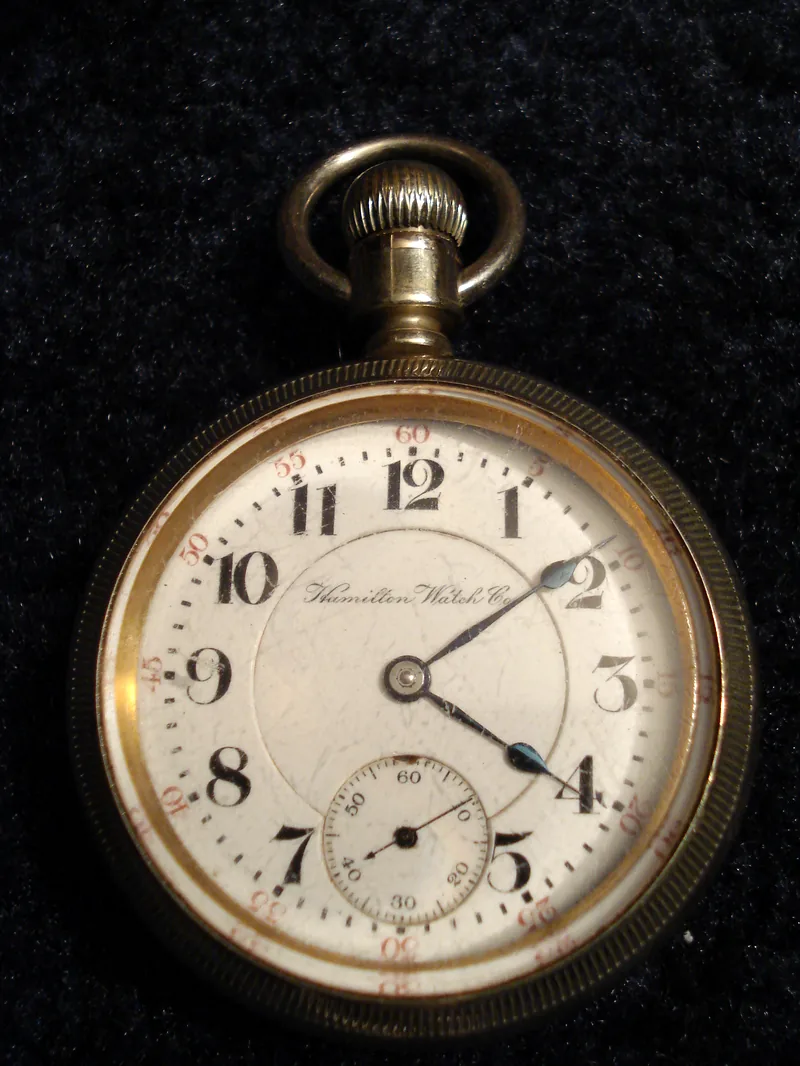
The visual identity of a converted wristwatch rests entirely on its dial and hand combination. Original Hamilton 13L dials were typically constructed using grand feu double-sunk enamel on copper plates, or painted metal dials with silvered or gold finishes. Vitreous enamel dials are prone to hairline cracking when exposed to torsional stress, making their handling during conversion delicate. If the original enamel dial is preserved, the watchmaker must inspect the dial feet positions. When converting an open-face movement with the crown positioned at 3 o'clock, keeping the original dial intact results in the sub-seconds register rotating to 9 o'clock, which creates a classic pilot-style or regatta-style asymmetry.
If the client prefers a standard 6 o'clock sub-seconds placement, the original dial feet must be removed, and the dial plate rotated 90 degrees. However, this re-orientation places the hour and minute hand arbor in a non-standard position relative to the sub-seconds wheel, which requires either a completely re-designed custom dial or extensive dial modification. Dial feet are attached using specialized dial-foot soldering equipment or micro-screws, ensuring heat does not crack the fragile enamel face. Similar craftsmanship can be found in historical antique pocket watch conversions where original dial graphics were adapted for wrist wear.
Selecting and fitting the hands demands similar precision. Modern off-the-shelf wristwatch hands rarely fit vintage Hamilton hand arbors. The hour wheel pipe, cannon pinion, and fourth wheel pivot diameters on a 13L Hamilton movement require hands with precise internal socket dimensions. The watchmaker must either resize vintage spade, blued-steel cathedral, or Poire hands using hand-broaches and staking sets, or turn custom hand bosses on a lathe. Blued steel hands are traditionally preferred, hardened and thermally blued over a flame to maintain historical authenticity while providing exceptional legibility against white or ivory dials.
7. Why 13L is more common for conversion
Among vintage watch enthusiasts and custom watchmakers, the Hamilton 13L movement standard occupies a "sweet spot" for conversion projects. Large American railroad pocket watches—such as 16-size (43.18mm) or 18-size (44.86mm) models—produce converted wristwatches that often exceed 46mm to 50mm in outer case diameter. For the average wrist, these conversions are heavy, top-heavy, and prone to catching on shirt cuffs. Conversely, smaller 0-size or 3/0-size movement platforms can be overly delicate, with fragile gear trains that are difficult to service and lack visual presence.
The 13-ligne scale offers ideal ergonomic balance. When placed in a modern customized case, a 13L movement results in a overall watch diameter of 36mm to 39mm—the classic size range favored by luxury watchmakers throughout the mid-20th century. This footprint mirrors the historic dimensions seen in early military timepieces and authentic WW1 trench watches, which were themselves converted from small pocket watch movements to meet the tactical demands of battlefield officers.
Furthermore, Hamilton produced its 13L platforms in significant volume with exceptionally high quality control. Replacement parts, mainsprings, staff pivots, and jewels remain relatively accessible through vintage supply houses compared to rare European calibers. The visual brilliance of Hamilton's damaskeened bridges, visible through a sapphire exhibition caseback, gives the owner a view of classic American industrial finishing that rivals high-end Swiss horology, such as early vintage Rolex wristwatches and historic Geneva calibers.
| Parameter | 16S / 18S Pocket Watch | Hamilton 13L Conversion | Standard Modern Dress Watch |
|---|---|---|---|
| Movement Diameter | 43.18mm – 44.86mm | 29.33mm (13 Lignes) | 25.60mm – 30.00mm |
| Resulting Case Size | 44mm – 48mm | 36mm – 39mm | 38mm – 40mm |
| Wearability & Comfort | Heavy / Bulky | Balanced / Classic Ergonomics | Lightweight / Streamlined |
| Visual Impact | Over-sized statement piece | Refined, vintage proportions | Standard contemporary aesthetic |
8. Final Thoughts on Hamilton 13L Conversions
Performing a high-grade hamilton 13L pocket watch to wrist conversion is a masterclass in modern horological restoration. It brings together micro-machining, historical preservation, custom case fitting, and classical movement overhaul. Rather than allowing damaged or homeless American pocket watch movements to sit forgotten in horological scrap drawers, a thoughtful conversion breathes new life into a functional mechanical masterpiece.
When executing a conversion, the watchmaker's guiding principle should always be reversibility and structural respect for the movement. Using custom movement adapter rings, precision-turned stems, and non-destructive dial mounting techniques ensures that the intrinsic historical integrity of the movement is honored. A well-executed conversion resulting in the best case size for hamilton 13L conversion projects—typically 36mm to 38mm—delivers a wrist instrument of unbelievable character, technical brilliance, and timeless style.
Ultimately, wearing a converted Hamilton 13L wristwatch connects its owner directly to the Golden Age of American watchmaking. Every tick of the slow-beating balance wheel (typically 18,000 vibrations per hour) serves as a reminder of the craftsmanship that once defined Lancaster, Pennsylvania. Whether displayed through a sapphire exhibition back or worn daily as a conversation piece, a converted 13L Hamilton is far more than a timepiece—it is a wearable tribute to mechanical history.