1. Historical Background of Hamilton 14s Movements
The Hamilton Watch Company, established in Lancaster, Pennsylvania, in 1892, earned an enduring reputation as "America's Railroad Timekeeper." While the company built its fame on ultra-precise 18-size and 16-size pocket watches designed to meet strict railroad chronometric standards, Hamilton also produced high-grade dress pocket movements aimed at discerning gentlemen. Among these, the 14-size (14s) movement holds a unique place in American horological history. Manufactured predominantly during the golden age of American industrial watchmaking from the late 1890s through the 1920s, the 14s caliber was engineered as an elegant, slim, yet highly accurate alternative to bulky railroad watches.
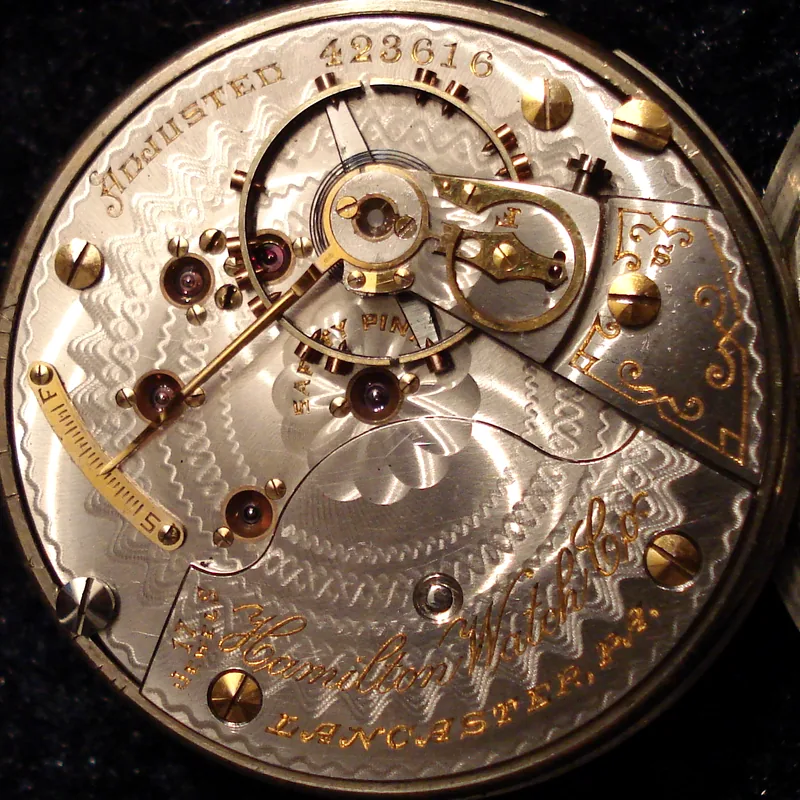
Hamilton’s 14-size line included iconic grades such as the Grade 920, 922, 934, 936, and 986. These movements were crafted during an era when Hamilton spared no expense in material quality and finishing. Featuring bridge plates finished with exquisite sunburst or wave damaskeening, raised gold screw settings, gold train wheels, and hand-polished steel components, 14s movements represented the pinnacle of domestic luxury. Unlike mass-produced utility movements of later decades, these early pocket watch movements were hand-adjusted for temperature, isochronism, and multiple positions by master timing technicians in Lancaster.
As wristwatches rapidly eclipsed pocket watches in popularity following World War I, many 14s movements—often encased originally in solid gold or gold-filled hunter and open-face cases—were melted down for their precious metal during economic downturns, leaving behind pristine loose movements. Today, artisan watchmakers and collectors seek out these surviving 14s movements to preserve American industrial heritage by re-imagining them for contemporary wrist wear.
2. Technical Specifications and Movement Architecture
Understanding the architecture of a Hamilton 14s movement is critical before undertaking any conversion project. In American standard sizing, a 14-size movement features a mainplate diameter of 1.62 inches (approximately 41.15 mm). This size provides a generous canvas for internal horological mechanics while retaining dimensions that can be successfully integrated into a modern oversized wristwatch case. Most Hamilton 14s movements operate at a traditional frequency of 18,000 vibrations per hour (vph) or 2.5 Hz, offering the classic, slow-beat sweep second tick characteristic of antique pocket timepieces.
From a mechanical perspective, 14s movements typically feature 17, 19, or 21 fine ruby jewels, often set in solid gold chatons held by blued steel screws. The escapement design relies on a cut bimetallic compensation balance wheel paired with a blued steel Breguet overcoil hairspring. Precision adjustment is facilitated by Hamilton’s micro-metric regulator springs (such as the Reed or star-wheel type regulator), allowing micro-fractional alterations to the active length of the hairspring. The power delivery system relies on a safety barrel containing a high-grade mainspring, yielding a power reserve typically ranging between 36 and 42 hours on a full wind.
The architecture is primarily offered in two formats: open-face (Lépine) and hunting (Savonnette) plate layouts. Open-face movements place the winding stem at 12 o'clock in direct vertical alignment with the sub-seconds dial at 6 o'clock. Hunting movements position the stem at 3 o'clock relative to a sub-seconds dial at 9 o'clock. Recognizing these dimensional and structural nuances is essential when attempting to convert hamilton 14s pocket watch into wristwatch builds, as plate geometry dictates dial design, stem geometry, and case alignment.
3. Challenges of Converting Hamilton 14s to Wristwatch
When enthusiasts evaluate whether they can convert a vintage timepiece, a common question arises: can you convert hamilton 14s pocket watch movements safely without compromising their historical integrity? The answer is yes, but the procedure presents several complex technical hurdles that require specialized watchmaking equipment and deep mechanical expertise. The primary challenge stems from shock resistance—or the total lack thereof. Antique 14s movements were built with rigid balance jewels lacking modern shock-absorption systems like Incabloc or KIF. When worn on the wrist, the balance staff pivots (often measuring a delicate 0.08 mm in diameter) are subject to sudden impacts that can easily snap a pivot if the watch is bumped or dropped.
A second major challenge is the fundamental orientation of the mainplate train and sub-seconds indicator. An open-face 14s movement has its stem at 12 o'clock. If dropped directly into a standard wristwatch case with the stem protruding at 3 o'clock, the sub-seconds register moves to 9 o'clock, resulting in an unconventional asymmetrical dial layout unless a custom dial is constructed or a crown-at-12 ("bullhead") case style is adopted. Conversely, hunter movements naturally place the stem at 3 o'clock and seconds at 9 o'clock, which creates a classic pilot-style horizontal layout but requires careful sourcing of appropriate donor movements.
Furthermore, vintage balance assemblies and escapements are vulnerable to moisture, dust, and magnetic fields. Pocket watch movements were designed to operate inside thick, tightly sealed outer cases kept warm and dry inside a vest pocket. Adapting a 14s movement to a wrist environment demands a high-quality, modern case equipped with heavy-duty gaskets, synthetic seals, and high-clarity crystals to safeguard the delicate balance assembly, escapement, and untreated steel components from ambient humidity and dust exposure.
4. Lug Welding and Case Selection
Selecting or fabricating an appropriate hamilton 14s pocket watch to wrist conversion case is one of the most vital steps in the conversion process. Because 14s movements have a diameter of ~41.15 mm, the finished conversion case will measure between 43 mm and 46 mm in total outer diameter, depending on wall thickness and retaining ring dimensions. Custom-machined 316L stainless steel, titanium, or solid bronze conversion cases designed specifically for 14s movements are the modern standard, offering modern water-resistance gaskets, display casebacks, and pre-fitted lugs.
However, traditional artisan horologists often choose to modify original pocket watch cases by welding or brazing custom wire lugs directly to the original silver, gold-filled, or nickel pocket watch shell. This method requires expert thermal management. When welding lugs (typically made of matching stainless steel or nickel wire) onto an original pocket watch case, TIG (Tungsten Inert Gas) welding or micro-laser welding is preferred over torch soldering. Laser welding focuses intense heat into an isolated spot, preventing thermal deformation of the case threads, crystal bezel seat, and hinge assemblies.
When selecting or designing lugs for a 14s conversion, ergonomics must be kept at the forefront. Due to the wide 43 mm+ total case footprint, straight or flat lugs will cause the watch to sit awkwardly on small to medium wrists, creating an unsightly gap between the strap and the wrist skin. Curved, downward-sloping lugs with a short lug-to-lug tip distance (ideally keeping total span under 52 mm) ensure the heavy watch sits securely and comfortably. The spring bar or screw-bar holes should be drilled cleanly to accept robust 20 mm or 22 mm high-grade leather or canvas straps.
5. Crown and Stem Solutions
The winding and setting mechanics of a vintage Hamilton 14s pocket watch movement differ substantially from modern wristwatches. Most 14s Hamilton movements employ either a positive-set (pendant set) or negative-set mechanism inside the pocket watch case neck. In a negative-setting system, the detent and setting sleeve reside within the pocket watch case stem tube rather than inside the movement plate itself. When removing the movement from its original housing, the watchmaker loses this case-bound setting mechanism, requiring custom lathe work to adapt the winding arbor for modern wrist cases.
To overcome this, a watchmaker must machine a custom stem adapter or thread a new winding stem extension on a watchmaker’s lathe (such as a Levin or Schaublin lathe). The stem must be precisely trimmed so that the shoulder seats cleanly against the movement's winding pinion while maintaining correct engagement with the clutch lever. The external stem thread (usually Tap 9 or Tap 10 size) must mate seamlessly with a newly fitted vintage-style crown.
Crown selection is both an aesthetic and functional decision. Because winding an un-weighted 14s mainspring requires moderate tactile force due to the strong spring torque, tiny modern crowns are impractical and ruin historical proportions. Large onion, pumpkin, or cabochon-style crowns are favored. These crowns must incorporate internal rubber O-ring seals that slide smoothly over the conversion case tube, preventing dust, humidity, and micro-particulates from traveling down the stem winding channel into the keyless works.
6. Dial and Hand Considerations
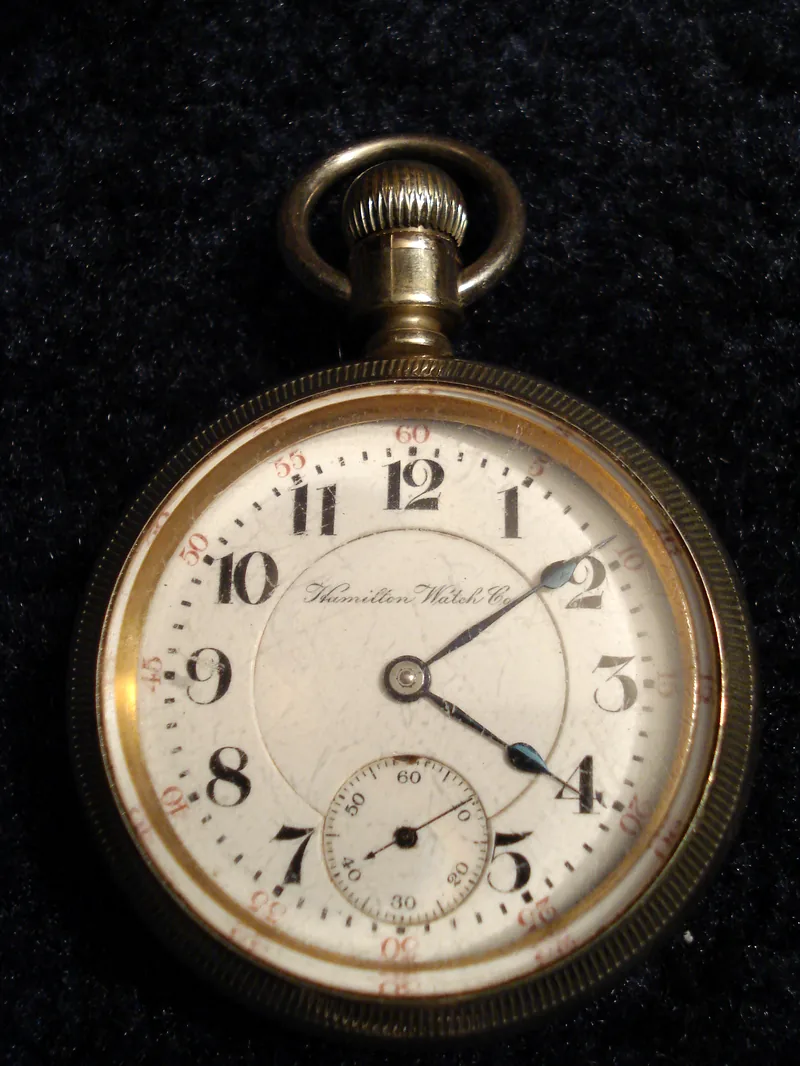
The visual impact when you convert hamilton 14s pocket watch into wristwatch creations depends largely on how the dial and hands are adapted. Original Hamilton 14s pocket watch dials were typically manufactured using vitreous enamel (grand feu enamel) fused to a copper plate, or silver-plated brass featuring hand-engraved or printed numerals. Vitreous enamel dials are immune to fading and discoloration, but they are exceptionally brittle. Drifting, filing, or soldering dial feet on an enamel dial without micro-fracturing or cracking the surface requires specialized equipment and gentle technique.
When repositioning a movement within a wrist case (for instance, rotating an open-face movement so the stem sits at 3 o'clock), the original dial feet will no longer line up with the mainplate receiving holes. Watchmakers must carefully remove the original copper dial feet, mill flat mounting spots on the underside, and attach new dial feet using silver solder or low-temperature electrical spot-welding tools. Alternatively, specialized non-destructive dial adhesive pads (dial dots) can be employed if retaining absolute originality of an un-mutilated museum-grade dial is desired.
Hand fitting presents another micro-mechanical challenge. Vintage 14s hands feature non-standard arbor hole sizes compared to modern Swiss movements. The hour wheel post, cannon pinion, and fourth wheel pivot dimensions must be precisely measured using a digital micrometer or dial caliper. Original blued steel hands are preferred for their historic accuracy and anti-corrosive properties; if replacement hands are necessary, modern hand broaches must be used to carefully open hand friction tubes to fit the oversized Hamilton arbors without crushing the delicate pivots beneath.
7. Why 14s is more common for conversion
In the conversion community, the Hamilton 14s movement has emerged as the clear favorite among master watchmakers and custom builders. To understand why, one must look at the relative scale of historical American pocket watch sizes: 18-size, 16-size, 12-size, and 10-size. An 18-size movement measures ~44.86 mm in plate diameter alone, yielding a finished wristwatch that measures upwards of 50 mm to 52 mm in case width—an uncomfortably large size for the vast majority of human wrists. While 16-size movements are wildly popular, they still yield cases around 48 mm, which borders on excessive for daily wear.
At the lower end, 12-size (~39.37 mm) and 10-size movements offer smaller footprints, but their thinner, smaller movement components are significantly more fragile, harder to source replacement parts for, and often lack the high-jeweled, heavily decorated bridge aesthetic found on premium pocket watches. The 14s sits in an ideal mechanical sweet spot: with a plate diameter of 41.15 mm, it fits into a final wrist case measuring between 43 mm and 45 mm—the classic sizing for modern pilot, marine, and oversized dress watches.
| American Watch Size | Plate Diameter (mm) | Average Converted Case Size (mm) | Wrist Ergonomics & Wearability |
|---|---|---|---|
| 18s (18 Size) | 44.86 mm | 50 mm - 54 mm | Extremely heavy; oversized; limited daily wearability |
| 16s (16 Size) | 43.18 mm | 47 mm - 49 mm | Large statement piece; requires substantial wrist size |
| 14s (14 Size) | 41.15 mm | 43 mm - 45 mm | Optimal proportions; comfortable pilot/marine aesthetic |
| 12s (12 Size) | 39.37 mm | 41 mm - 43 mm | Compact; less striking finish; delicate balance pivots |
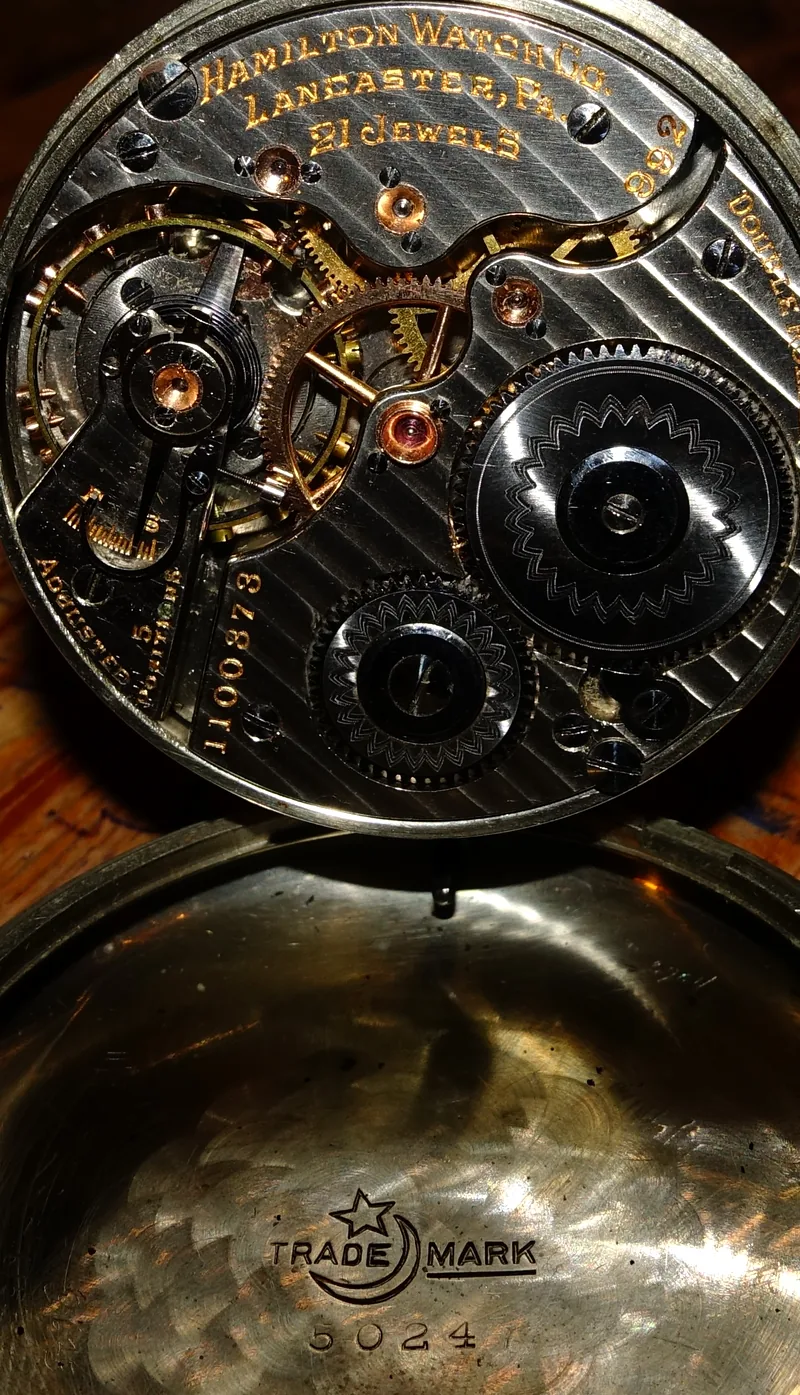
In addition to ideal physical proportions, Hamilton's 14s production run coincided with the height of the factory’s artistic finishing capabilities. The damaskeening patterns on 14-size Hamilton calibers—such as the double-sunk Grade 920 or Grade 986—are far more intricate and ornate than the minimalist industrial finishing found on late-era pocket watches. When housed behind a modern anti-reflective sapphire display caseback, a converted Hamilton 14s offers visual movement aesthetics that rival modern Haute Horlogerie timepieces costing tens of thousands of dollars.
8. Final Thoughts on Hamilton 14s Conversions
Deciding to convert hamilton 14s pocket watch into wristwatch configurations is both an artistic endeavor and an act of horological preservation. While some purists argue that antique pocket watches should remain in their original cases, the reality of the antique market is that thousands of high-grade movements lie orphaned in drawers, stripped of their precious metal gold and silver cases decades ago. Re-casing these mechanical marvels gives them a second life on the wrist, allowing a new generation to admire early 20th-century American craftsmanship every day.
Executing a successful conversion requires patience, precision machining tools, and a deep respect for historical engineering. From calculating stem tolerances and welding custom wire lugs to fitting domed sapphire crystals that clear elevated hand stacks, every step demands uncompromising attention to detail. When performed by a skilled craftsperson, a converted Hamilton 14s wristwatch becomes more than a custom instrument—it stands as a wearable piece of mechanical history, ticking with the same precision and beauty that left Lancaster, Pennsylvania, over a century ago.