Historical Background of Hamilton 16s Movements
The Hamilton Watch Company, established in Lancaster, Pennsylvania in 1892, earned its enduring title as "The Watch of Railroad Accuracy" by producing some of the most reliable and meticulously finished mechanical movements in horological history. During the golden age of American rail travel, precision timekeeping was not merely a matter of luxury; it was a critical safety imperative to prevent head-on train collisions. Hamilton dominated this market by manufacturing high-grade pocket watches that strictly adhered to the rigorous Railroad Standard specs finalized in the late 19th and early 20th centuries. Among the various movement sizes produced by the manufacturer, the 16-size (16s) platform emerged as the undisputed sweet spot between extreme mechanical durability and manageable physical dimensions.
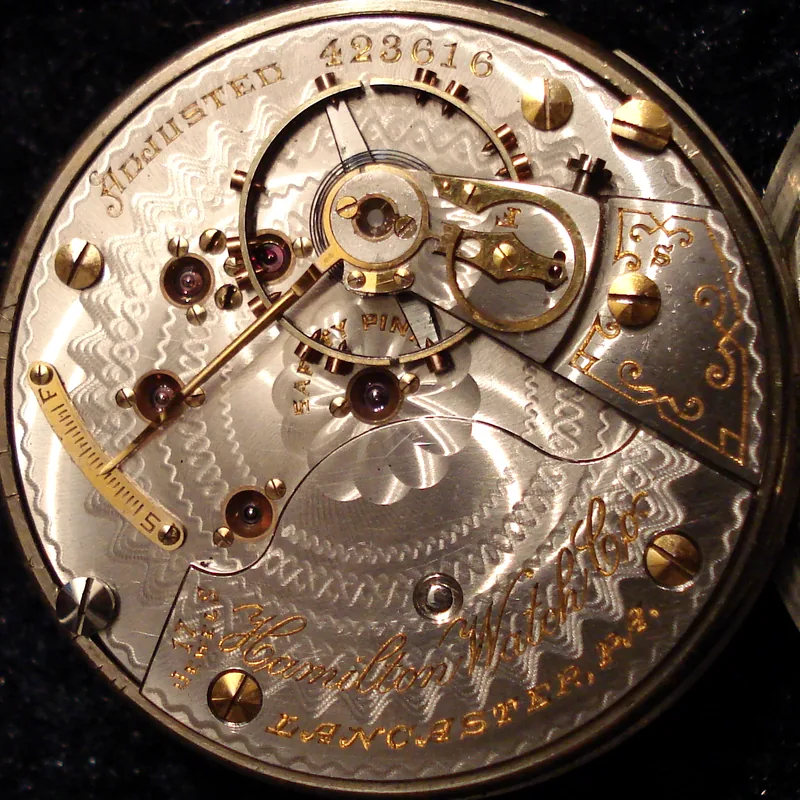
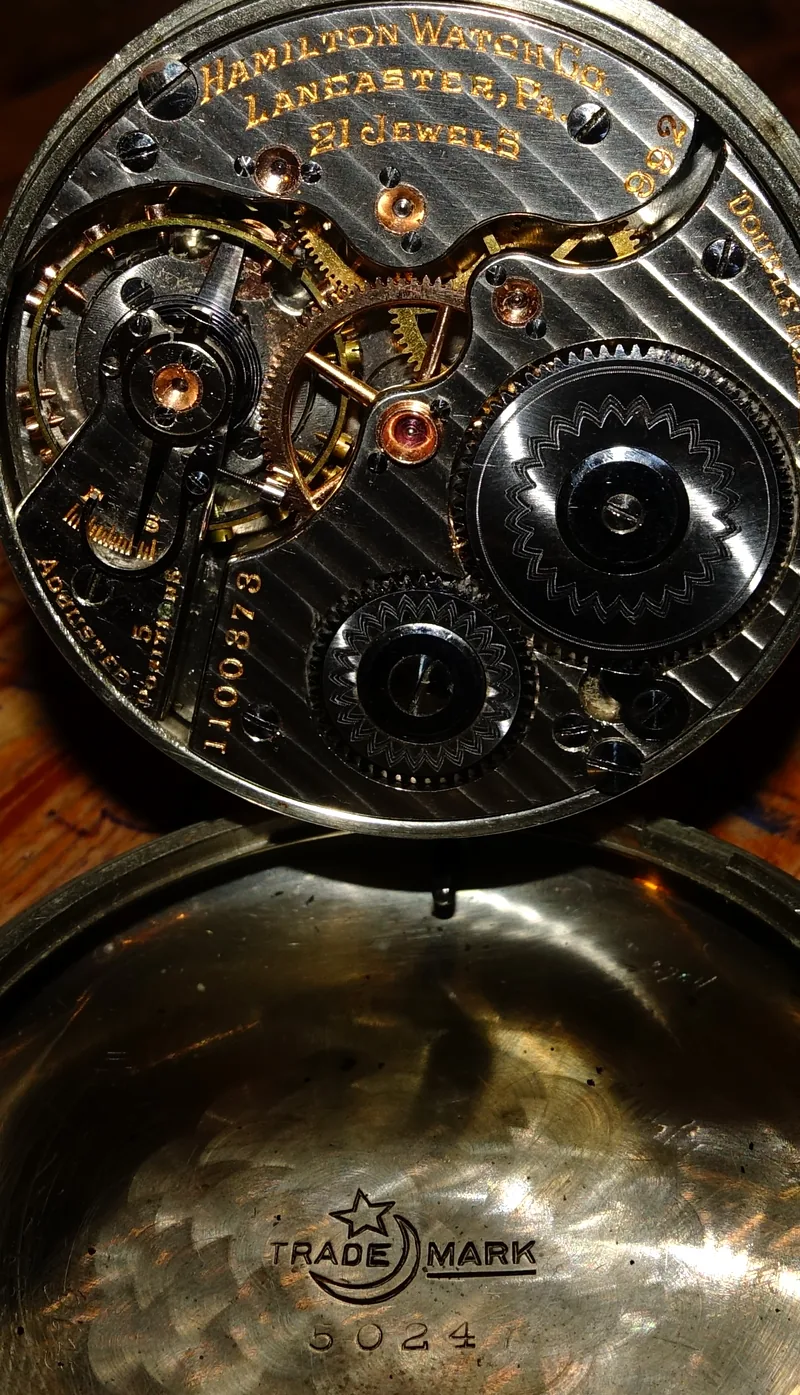
Chief among these legendary 16s calibers were iconic movements such as the Hamilton Grade 992, 992B, 950, 950B, and 972. Introduced in 1903, the original Grade 992 became the flagship railroad movement of America, with over 500,000 units manufactured during its multi-decade production run. These movements featured exquisite nickel plates decorated with elaborate Damaskeening patterns, gold jewel settings, raised screwed chatons, and micrometer regulators. As wristwatches surpassed pocket watches in popularity following World War I and II, millions of these masterpiece-grade pocket watch movements were left sitting in drawers, melted down for their precious metal cases, or forgotten in antique shops. Today, horologists and custom watchmakers frequently salvage these orphaned movements to convert Hamilton 16s pocket watch models into bespoke, wear-ready modern wristwatches.
Understanding the provenance of a Hamilton 16s movement is crucial before undertaking any conversion project. A movement manufactured in 1910 carries over a century of kinetic history, featuring metallurgy, friction tolerances, and gear train geometry designed specifically for a pocket-borne environment. When a watchmaker undertakes the effort to convert a Hamilton 16s pocket watch into a wristwatch, they are not merely performing a mechanical modification; they are recontextualizing a piece of American industrial heritage, translating the golden era of Lancaster horology into an extraordinary piece of modern wearable art.
Technical Specifications and Movement Architecture
To successfully execute a conversion, a watchmaker must thoroughly understand the architecture of the 16-size American movement standard. In Lancashire and American watchmaking scales, a "16-size" designation corresponds to a movement plate diameter of 1.7 inches, or approximately 43.18 millimeters. The actual physical outer diameter of a bare Hamilton 16s movement typically measures between 43.15mm and 43.25mm depending on the exact grade, plate design, and manufacturing era. The overall thickness of these movements varies between 6.0mm and 7.5mm, making them substantially larger and thicker than standard modern hand-wound wrist watch movements like the Unitas 6497/6498, yet remarkably similar in overall spatial footprint.
The architectural layout of a classic Hamilton 16s movement is a study in classic watchmaking engineering. Most high-grade 16s movements feature either a 3/4 plate design or split-bridge layout housing 21 to 23 synthetic ruby or sapphire jewels. The gear train is driven by a heavy-duty mainspring enclosed inside a safety barrel or motor barrel—a critical mechanical feature that prevents destruction of the wheel train if the mainspring snaps under tension. The escapement operates at a traditional frequency of 18,000 vibrations per hour (vph) or 2.5 Hz, producing the majestic, slow-sweeping cadence characteristic of vintage pocket watches. Precision regulation is achieved via a Reed or Swan-neck micrometer regulator acting upon a cut bimetallic compensation balance wheel or an anti-magnetic Elinvar balance spring assemble.
A crucial technical distinction when planning a conversion is whether the movement was built as an open-face (Lépine) or hunting-case (Savonnette) movement. An open-face Hamilton 16s movement features its winding stem at the 12 o'clock position in relation to the running seconds sub-dial at 6 o'clock. Conversely, a hunting-case movement features the stem at 3 o'clock while keeping the sub-seconds dial at 6 o'clock. Understanding this architecture directly determines dial orientation, stem placement, and overall ergonomics when selecting an appropriate custom wristwatch enclosure.
Challenges of Converting Hamilton 16s to Wristwatch
Clients often ask watchmakers: can you convert hamilton 16s pocket watch movements into reliable wristwatches for daily wear? While the short answer is yes, the process presents significant technical challenges that demand advanced horological skills, custom machining, and careful material evaluation. Pocket watch movements were originally designed to sit upright inside a protective vest pocket, cushioned against violent impacts and isolated from moisture, wrist sweat, and ambient environmental humidity. Rehousing such a movement onto an active human wrist exposes it to forces and hazards it was never originally engineered to withstand.
The primary mechanical vulnerability lies in the balance staff and pivot architecture. Standard vintage Hamilton 16s movements—with the exception of later military-spec or specialized variants—do not feature modern shock absorption systems such as Incabloc or Novodiac. The hardened steel balance pivots measure mere hundredths of a millimeter in diameter and rest directly against unyielding ruby endstones. A sudden sharp shock to the wrist, such as knocking the watch against a door frame or wearing it while golfing, can easily snap a balance pivot or shatter an endstone. Converting these pieces requires educating the wearer on physical shock limitations or, in advanced custom builds, retrofitting shock-resistant jewel settings.
Another major technical obstacle involves water resistance and dust sealing. Antique pocket watch cases relied on snap-on or fine-threaded screw bezels that offered zero resistance to water vapor or liquid ingress. Modern wrist wear requires high-grade rubber or Viton synthetic gaskets around the case back, crystal, and winding crown. Achieving a reliable atmospheric seal requires an engineered wristwatch case designed specifically for the unique dimensions, stem height, and securing tabs of the 16-size Hamilton movement platform.
Lug Welding and Case Selection
When selecting a conversion pathway, watchmakers generally choose between two primary methods: retrofitting an original vintage pocket watch case by adding wrist lugs, or sourcing a modern custom-machined steel hamilton 16s pocket watch to wrist conversion case. The traditional historical method involves taking an original nickel, silver, or gold-filled 16s pocket watch case, removing the top bow, and silver-soldering or micro-laser welding wire lugs directly onto the 12 o'clock and 6 o'clock outer edges of the case band. While this approach retains authentic antique patina, it suffers from severe limitations in water resistance, crystal durability, and overall structural integrity.
The contemporary preferred standard among master horologists is utilizing a modern, precision-engineered CNC stainless steel conversion case tailored specifically for 16-size American movements. These cases typically measure between 44mm and 48mm in outer diameter, crafted from marine-grade 316L stainless steel. They are designed with dual sapphire crystals—a scratch-resistant domed crystal over the dial and a flat display crystal on the exhibition case back—allowing the wearer to admire the intricate Damaskeening and balance movement. Internal casing rings or custom movement clamps (casing clamps) are turned on a lathe to securely lock the 43.18mm Hamilton movement into place without lateral movement or vertical play.
Proper alignment during case selection is critical. The distance from the movement rest seat to the center of the stem hole (the stem height) must match the case geometry precisely to within hundredths of a millimeter. If the movement sits too high or too low inside the conversion case, the winding stem will bind against the case tube, causing excessive friction, rough winding, dial canting, or complete failure of the setting mechanism. Custom bronze, brass, or stainless steel movement holder rings are routinely machined to bridge any geometric gaps between the vintage movement plates and the modern case wall.
Crown and Stem Solutions
Mastering the winding stem and hand-setting mechanism is arguably the most complex step when you convert a Hamilton 16s pocket watch into a wristwatch. Modern wristwatches utilize a pull-out setting stem (pendant setting) where pulling the crown outward shifts the keyless works into the hand-setting position. However, classical 16s Hamilton railroad watches (such as the 992 and 992B) were engineered with a lever-setting mechanism mandated by strict railroad safety standards to prevent accidental time adjustment.
On a lever-set Hamilton 16s, the wearer must unscrew the front bezel and pull out a tiny steel setting lever located near the 1 o'clock or 2 o'clock position on the dial perimeter. Only when this lever is extended does turning the crown adjust the hands; pushing the lever back in locks the watch back into winding mode. Integrating a lever-set movement into a modern wristwatch conversion case requires either utilizing a case with a dedicated lever cutout slot beneath a screw-down bezel, or modifying the internal keyless works to convert the movement into a friction-sleeve pendant setting layout. Converting a lever-set 992B into a pendant-set configuration demands specialized custom stems and modification of the setting wheel, clutch, and setting spring.
Furthermore, standard pocket watch stems feature non-standard thread pitches (often historical American threads like 10-36 or custom tap sizes) that do not fit modern wristwatch crowns. Watchmakers must either turn a custom dual-threaded adapter stem on a micro-lathe or source specialized conversion stems featuring a vintage square-pivot on the movement end and a standard modern metric thread (such as Tap 9 or Tap 10) on the crown end. The crown tube must be fitted with internal double-O-ring gaskets to seal out humidity while preserving a smooth, tactile hand-winding feel worthy of a master-grade movement.
Dial and Hand Considerations
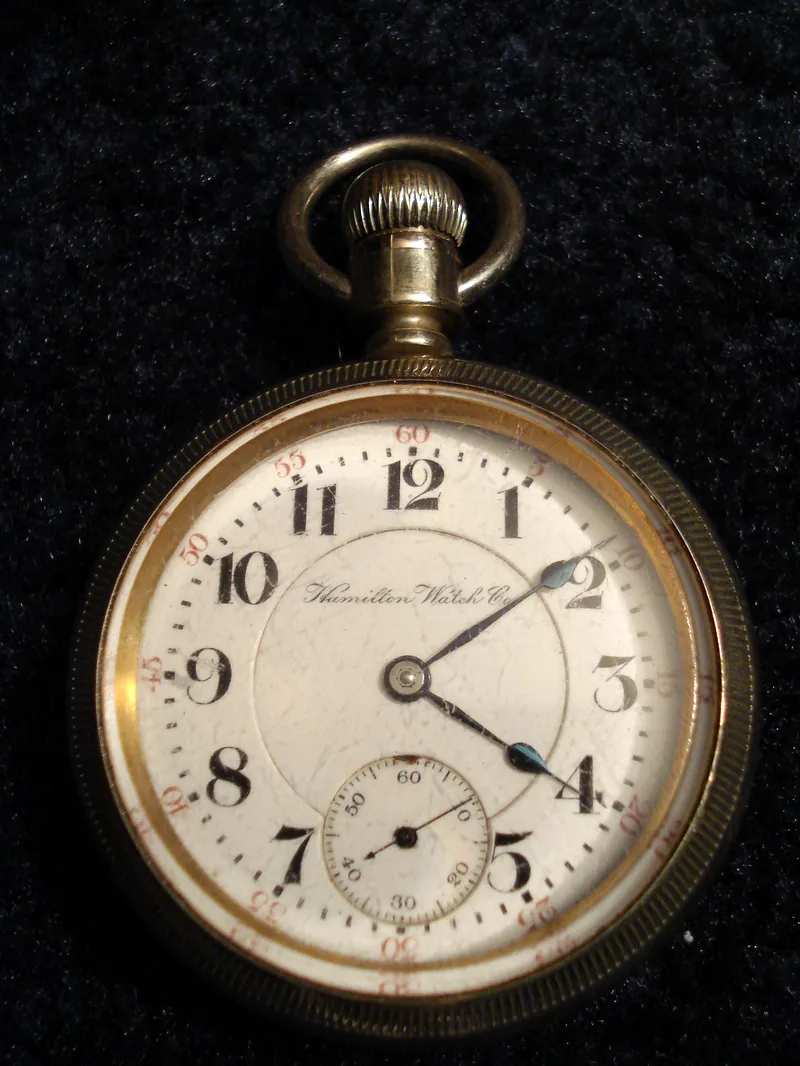
The aesthetic core of any wristwatch conversion lies in the harmony between the dial, hands, and case proportions. Original Hamilton 16s pocket watch dials were manufactured from double-sunk vitreous enamel (porcelain) baked onto copper plates. These dials are horological works of art, featuring deep, high-contrast black numerals, red minute tracks, and recessed sub-seconds wells. However, because porcelain dials are extremely brittle, age-induced hairline fractures and edge chipping around the dial feet are common obstacles during casing modifications.
Dial orientation presents another significant spatial puzzle during a conversion project:
- Open-Face (Lépine) Dials: If an open-face 16s dial is placed into a wristwatch case with the winding stem rotated to the traditional 3 o'clock wrist position, the running sub-seconds hand ends up at 9 o'clock, and the 12 o'clock marker rotates to 3 o'clock. To keep 12 o'clock at the top of the wrist, the crown must remain at 12 o'clock (bullhead style), or a custom-printed aftermarket dial must be fitted to re-orient the layout.
- Hunting-Case (Savonnette) Dials: Hunting-case movements natively place the winding stem at 3 o'clock and the running seconds at 6 o'clock when the 12 o'clock marker is at the top. This makes hunting-case Hamilton movements highly coveted for standard ergonomic wristwatch conversions.
Hand mounting requires equal precision. Vintage Hamilton 16s hand sockets (the hour wheel tube, cannon pinion stem, and fourth wheel pivot) do not conform to modern wristwatch hand standards. The blue-steel spade, plum plum-leaf, or cathedral hands must either be meticulously restored, polished, and thermally blued original components, or custom-broached modern hands specifically adjusted to fit Hamilton's historical friction-fit tolerances. The clearance between the underside of the top sapphire crystal and the top of the hand arbor must be precisely calculated to prevent the sweep seconds or minute hand from dragging against the inner crystal face.
Why 16s is More Common for Conversion
Within the custom horology community, the 16-size movement is overwhelmingly favored over other historical American pocket watch sizes, such as 18-size (18s), 12-size (12s), or 10-size (10s). The primary driving factor is spatial proportion. An 18s movement features a plate diameter of roughly 44.86mm. When housed inside a protective wristwatch enclosure with proper wall thickness and crystal gaskets, the resulting wristwatch measures 50mm to 54mm in outer diameter—a size that is uncomfortably large, heavy, and unwearable for the vast majority of human wrists.
On the smaller end of the spectrum, 12s and 10s movements offer smaller case footprints (around 38mm to 41mm), but they present distinct mechanical limitations. These smaller pocket watch movements were rarely engineered to the uncompromising railroad-grade quality standards of 16s movements. They frequently feature lower jewel counts, less intricate balance assemblies, simpler plate finishing, and significantly thinner, more fragile components. Furthermore, spare parts for 12s and 10s Hamilton movements are considerably harder to source compared to the widely produced 16-size platforms.
The 16s platform strikes an ideal equilibrium. With a movement size of ~43.2mm, it fits perfectly inside modern "oversized" wristwatch cases measuring 44mm to 46mm—a popular size category popularized by modern luxury brands like Panerai, IWC, and Pilot-style timepieces. Additionally, because movements like the Hamilton 992, 992B, and 992E were produced in large quantities over several decades, replacement components such as mainsprings, staff arbors, balance springs, and jewel settings remain readily available, making long-term serviceability completely viable.
Final Thoughts on Hamilton 16s Conversions
Converting a Hamilton 16s pocket watch into a wristwatch is a sophisticated fusion of historical preservation, mechanical engineering, and fine artistic craftsmanship. When executed by an experienced watchmaker who respects the integrity of the original horological artifact, a converted 16s piece transforms an inactive piece of history into a striking, fully functional wristwatch that can be worn and admired daily. The visual impact of looking through a sapphire display case back at a 100-year-old nickel plate hand-decorated with deep Damaskeening, gold chatons, and a slow-beating compensated balance wheel is an experience that no mass-produced modern watch can truly replicate.
Ethical horology dictates that complete, pristine, rare, or museum-grade historical pocket watches in solid gold original cases should generally be preserved intact. However, for the vast quantity of pristine loose movements whose original precious-metal cases were long ago melted down for scrap metal, conversion builds offer a triumphant second life. By pairing an orphaned vintage Hamilton movement with a modern, high-precision stainless steel case, sapphire crystals, and custom-engineered stem assemblies, watchmakers honor the legendary legacy of Lancaster craftsmanship, ensuring that America’s greatest mechanical timepieces continue to mark time on the wrists of future generations.