Historical Background of Hamilton 18s Movements
The Hamilton Watch Company, established in Lancaster, Pennsylvania in 1892, built its legendary reputation on the backs of precision timing instruments designed specifically for the rapidly expanding American railroad system. During the late 19th and early 20th centuries, railway safety depended entirely on accurate timekeeping. A variance of mere seconds could result in catastrophic head-on train collisions. To combat this, strict standards were instituted by official railroad time inspectors, giving rise to the "Railroad Grade" pocket watch. At the vanguard of this horological revolution was the 18-size (18s) movement, the foundational workhorse of Hamilton's early production line.
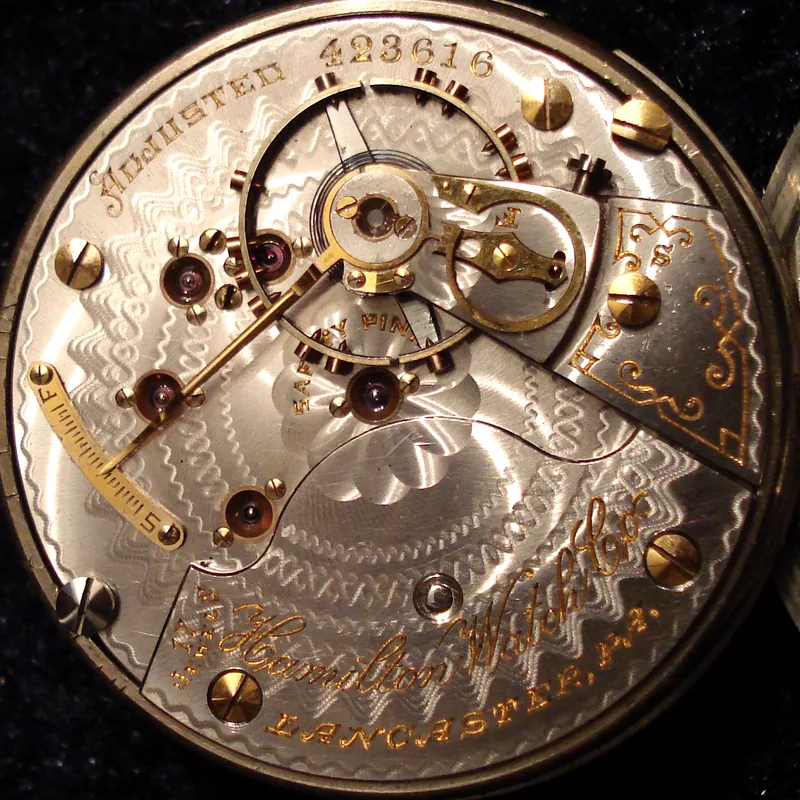
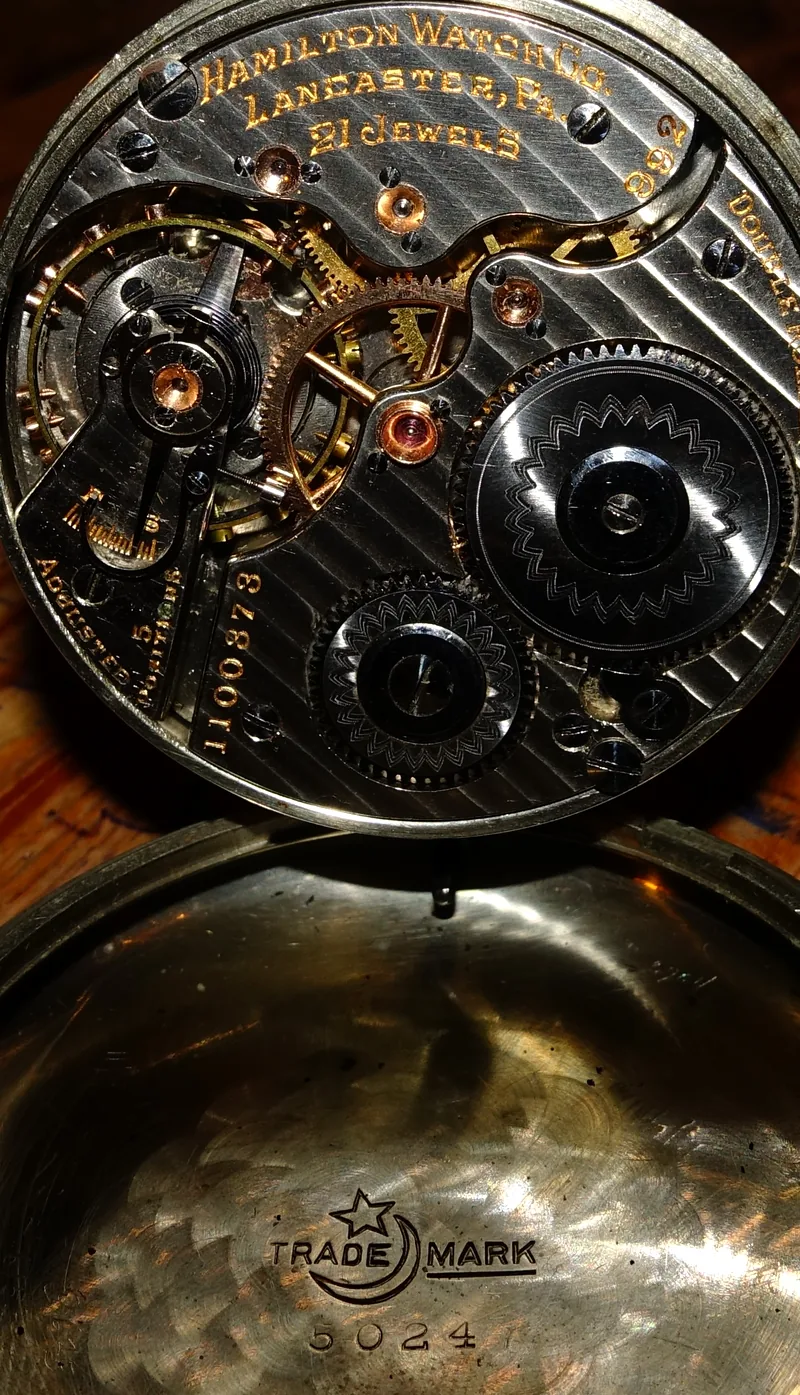
The 18s movements produced by Hamilton—most notably the revered Grade 940, Grade 920, Grade 926, and Grade 936—represented the absolute pinnacle of American industrial manufacturing. These movements were not merely functional timing devices; they were masterpieces of micro-engineering. Featuring full-plate and three-quarter-plate architecture, heavy damaskeening (decorative nickel plating polishing), adjusted to up to five or six positions, temperature, and isochronism, these calibers routinely achieved chronometric precision that rivaled Swiss observatory standards. The Grade 940 alone, produced from 1898 through the late 1920s with over 200,000 units manufactured, remains one of the most famous railroad pocket watch movements in history, renowned for its massive 21-jewel setup set in screwed gold chatons and double-roller escapement design.
As micro-engineering progressed into the 1910s and 1920s, smaller movement sizes—specifically the 16-size (16s)—began to surpass the 18s in popularity due to reduced weight and smaller pocket footprint. By the end of World War I, the 18s was largely phased out of new production in favor of the more compact 16s and 12s movements. Today, these historic 18s calibers represent a golden era of American horology, attracting vintage watchmakers and enthusiasts who seek to repurpose these majestic mechanical engines into wearable modern wristwatches.
Technical Specifications and Movement Architecture
Understanding the architecture of an 18s Hamilton movement requires familiarity with traditional American sizing standards. In the American movement scale, "size" is determined by the diameter of the pillar plate measured in Lancashire gauge. An 18s movement features a base plate diameter of approximately 1.766 inches, or 44.86 millimeters. This gargantuan footprint makes the 18s significantly larger than standard modern wristwatch movements (such as the popular Unitas/ETA 6497, which measures 36.6mm). When attempting to convert hamilton 18s pocket watch into wristwatch configurations, this baseline dimension dictates every aspect of the project's physical geometry.
Architecturally, Hamilton 18s movements were built around heavy nickel plates secured by robust steel screws. The gear train consists of high-grade brass or gold-plated wheels driving a steel pinion arrangement, designed for extreme durability and long service intervals. The balance assembly in high-grade 18s movements is particularly impressive: a large, bi-metallic cut expansion balance wheel with gold timing screws, paired with a blued steel hairspring featuring a Breguet overcoil. The beat rate operates at a steady, rhythmic 18,000 vibrations per hour (vph), or 2.5 Hz, yielding the stately, resonant ticking sound characteristic of antique pocket horology.
Another defining technical characteristic of 18s Hamilton movements is the winding and setting architecture. The vast majority of railroad-grade 18s calibers feature lever-setting mechanisms rather than the pull-out crown systems common on modern wristwatches. In a lever-set movement, a small steel lever located under the bezel at the 1 o'clock or 2 o'clock position must be pulled outward to disengage the winding arbor and engage the hand-setting gear train. This feature was mandatory on railroads to prevent accidental hand adjustment if the crown caught on clothing. Understanding this mechanical architecture is critical when designing or selecting a conversion casing platform.
Challenges of Converting Hamilton 18s to Wristwatch
When clients or collectors ask, "can you convert hamilton 18s pocket watch movements into functional wristwatches?", the technical answer is yes—but it presents a mountain of engineering challenges that far exceed those encountered when converting smaller 16s or 12s movements. The primary obstacle is raw scale. An 18s movement plate measures roughly 45mm across. Once you factor in the necessary wall thickness of a protective stainless steel casing, internal movement holding rings, gasket seals, and threaded bezel rings, the final external case diameter inevitably balloons to 48mm to 52mm. On average human wrists, a watch of this size stretches the limits of wearable ergonomics.
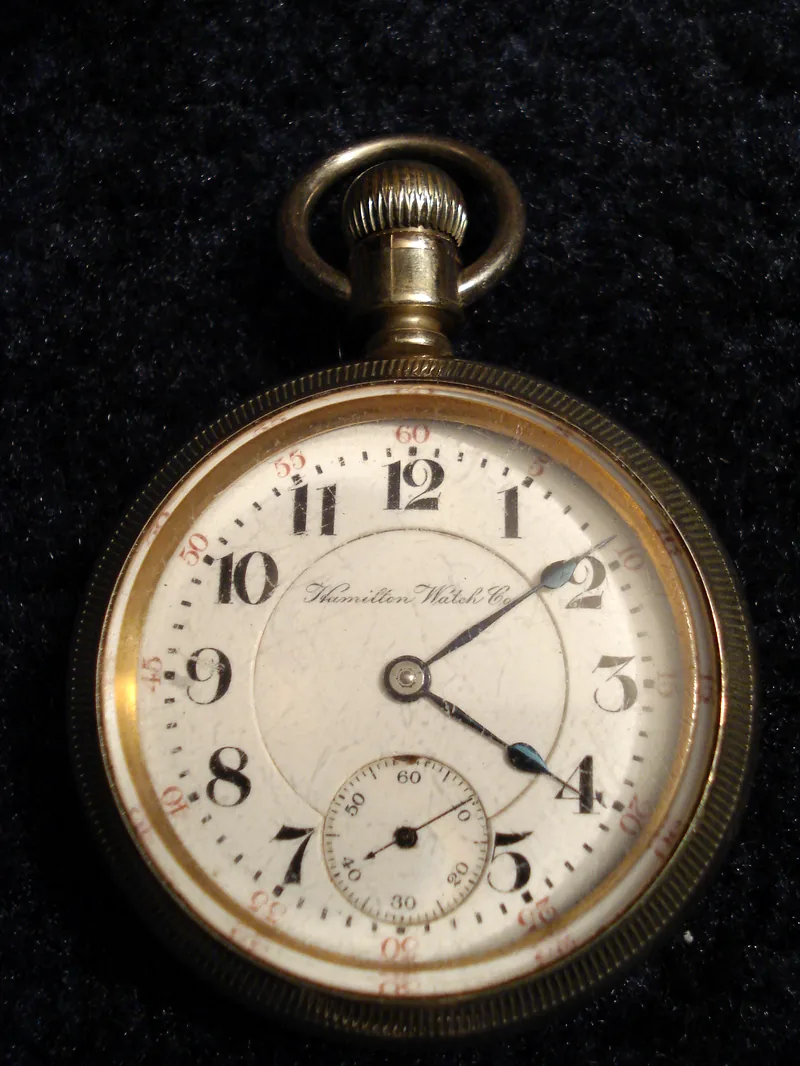
Beyond external dimensions, hand-set orientation presents a major technical headache. Pocket watch movements are designed in two classic formats: open-face (Lépine) and hunter-case (Savonnette). Open-face movements have the winding stem located at 12 o'clock and the running seconds subdial at 6 o'clock. If an open-face 18s movement is cased into a standard wristwatch configuration with the winding crown positioned at 3 o'clock, the small seconds subdial is rotated to the 9 o'clock position. Conversely, hunter-case movements have the stem at 3 o'clock and the seconds subdial at 6 o'clock, which aligns perfectly for a wristwatch format. However, high-grade Hamilton 18s railroad movements (like the Grade 940) were almost exclusively produced as open-face calibers, forcing conversion builders to accept a 9 o'clock small-seconds layout or perform extensive, costly dial modifications.
Finally, shock protection—or the complete lack thereof—poses a massive operational risk. Antique 18s pocket watches were designed to sit vertically in a vest pocket, subject to minimal sudden impact. Their balance staff pivots are hardened steel pins turned down to microscopic diameters (often around 0.08mm to 0.10mm) resting in rigid ruby cap jewels without spring-loaded shock absorbers like Incabloc or KIF systems. Wearing a heavy, un-shock-protected 18s balance assembly on an active human wrist exposes the delicate balance staff to severe shear forces. A single accidental knock against a doorframe can snap the vintage pivot instantly, requiring custom lathe work to turn a new staff from raw steel wire.
Lug Welding and Case Selection
Selecting or fabricating an appropriate hamilton 18s pocket watch to wrist conversion case is the single most defining phase of the conversion project. Because off-the-shelf commercial watch cases are rarely designed for 44.86mm movements, watchmakers generally choose between two primary paths: acquiring custom-machined modern conversion cases or modifying original vintage pocket watch cases by welding or soldering custom wrist lugs directly onto the frame.
If modern CNC conversion cases are used, they are typically milled from 316L stainless steel or bronze. These cases feature deep internal step bores specifically machined to accept the 18s Hamilton pillar plate dimensions, secured via custom movement tabs or a brass casing ring. However, due to the limited demand for 18s conversions compared to 16s conversions, finding off-the-shelf 18s cases can be difficult, often requiring bespoke machining on a lathe or CNC mill. Modern cases offer superior water resistance, fitted synthetic rubber gaskets, and front and rear scratch-resistant sapphire crystals that showcase the intricate Hamilton damaskeening.
The alternative, traditional method involves vintage case modification, often utilizing original silverode, nickel, or gold-filled pocket watch cases. Watchmakers carefully remove the pendant loop and attach hand-formed lugs using micro-TIG welding, laser welding, or silver brazing techniques. Micro-laser welding is vastly preferred over torch soldering because it generates localized heat, preventing heat discoloration, warping of the case rim, or damage to delicate original pocket watch hinges. Lugs must be engineered with a steep downward curvature (anatomical drop) to ensure that the massive 50mm+ case sits flush against the wrist rather than floating awkwardly above it.
Crown and Stem Solutions
Managing the winding and setting interface on an 18s Hamilton movement requires custom machining and precise mechanical fitting. Antique American pocket watches typically utilize either a negative setting system (where the setting sleeve and detent mechanism reside within the pocket watch case neck) or a positive setting system (where the mechanism resides within the movement itself). Hamilton 18s movements often feature custom stem thread pitches and heavy square winding arbors that are entirely non-standard by modern horological metrics.
When adapting a modern conversion case to an 18s movement, the original pocket watch stem can rarely be reused as-is. Watchmakers must turn a custom winding stem on a micro-lathe or utilize precision stem extenders and threaded sleeve adapters. The stem must be precisely adjusted to length: too short, and the winding pinion will fail to engage the castle wheel fully; too long, and the crown will stand off from the case tube, allowing dust and moisture to infiltrate the movement cavity.
Because these large movements utilize powerful, thick mainsprings designed to run heavy balance wheels for 30 to 40 hours, the manual winding resistance is substantial. Pairing an 18s conversion with a small, low-profile modern wristwatch crown makes winding painful and difficult. Watchmakers usually install oversized onion, pumpkin, or diamond-style crowns measuring 8mm to 10mm in diameter. These large crowns provide the necessary mechanical advantage to compress the heavy mainspring while remaining aesthetically proportional to the massive 50mm case profile.
Dial and Hand Considerations
The visual centerpiece of any Hamilton watch is its dial. Standard railroad-grade 18s pocket watches feature brilliant, hand-enameled fired porcelain dials with double-sunk or triple-sunk subdial constructions. These original porcelain dials are breathtakingly beautiful, but they present significant handling hazards during a conversion. Fired glass enamel on a copper backing is exceptionally brittle; stress from case clamps, dropping movement holders, or improper hand removal can cause irreversible spider-web cracking or flaking.
To retain the original enamel dial during a conversion, the inner dimension of the chosen conversion case must be precisely matched to the outer bezel margin of the dial. Because porcelain dials vary slightly in thickness and diameter due to original kilning processes, custom spacer rings or plastic friction shims are often necessary. If the original enamel dial is severely damaged or if the builder prefers a custom aesthetic, custom-machined metal dials (cut from brass or silver and laser-etched) can be substituted, though purists strongly prefer preserving Hamilton's original historic typography and enamel work.
Hand mounting requires equal precision. Hamilton 18s movements feature oversized mounting posts for the hour cannon pinion, minute wheel post, and small-seconds bit arbor compared to modern wristwatches. Original blued-steel hands—such as spade, whip, or moon-style hands—should be retained whenever possible. Watchmakers must carefully stake the hand bosses to achieve a tight friction fit without bending the delicate steel shafts. Furthermore, because pocket watch hand stacks are unusually tall, the front crystal of the conversion case must feature a dramatic domed profile (high-praise acrylic or high-profile domed sapphire) to ensure the center second or minute hand does not scrape against the underside of the glass.
Why 18s is less common for conversion
While pocket watch conversions have exploded in popularity among horological enthusiasts, 18s calibers remain far less common than their 16s, 12s, or 10s counterparts. The reasons boil down to practical wearability, historical preservation, and component availability. When evaluating whether to convert hamilton 18s pocket watch into wristwatch format, these factors must be weighed carefully by the artisan and collector alike.
First and foremost is daily wearability. A 16s pocket watch movement measures roughly 43.18mm in diameter, allowing it to fit into sleek 44mm to 46mm conversion cases—a size profile widely accepted in modern sport-watch culture (akin to a Panerai Luminor or IWC Big Pilot). By contrast, an 18s movement forces the finished casing into the 50mm to 55mm realm, with overall thickness often exceeding 16mm. A watch of these proportions is extremely heavy, prone to snagging on sleeves, and uncomfortable for long periods on average-sized wrists.
Second is component availability in the aftermarket custom parts industry. Case manufacturers and aftermarket dial makers focus overwhelmingly on 16s movements because they match standard Unitas 6497/6498 proportions much more closely. Finding prefabricated, drop-in conversion cases, custom crowns, or replacement hands for 18s Hamiltons is exceptionally difficult, forcing the builder to execute bespoke machining, lathe turning, and hand-fitting for almost every component.
Finally, there is the matter of historical conservation. High-grade Hamilton 18s movements—such as the Grade 940, 946, or early 17-jewel variants—are prized artifacts of American industrial history. Modern horological conservators increasingly advocate for preserving these historical instruments in their original pocket watch cases. Stripping a pristine, historical Grade 940 pocket watch of its original solid silver or gold-filled case simply to melt down the metal and convert the movement into an oversized wristwatch is viewed by many purists as destructive to horological heritage. As a result, ethical watchmakers usually limit 18s conversions to "orphan" movements whose original cases were long ago melted down for scrap metal value.
Final Thoughts on Hamilton 18s Conversions
Converting an 18-size Hamilton pocket watch movement into a wearable wristwatch is one of the most demanding, ambitious projects a watchmaker or enthusiast can undertake. It is an exercise in extreme horology, bridging late-19th-century American heavy industrial manufacturing with modern micro-engineering and custom case craft. When executed properly, the result is nothing short of breathtaking: a living, ticking piece of American railway history strapped directly to the wrist.
However, success requires a deep respect for mechanical realities. From managing the immense 44.86mm physical footprint to custom-machining winding stems, designing downward-swept lugs, accommodating lever-set mechanisms, and protecting un-shock-proof balance staffs, every phase of the process presents complex engineering hurdles. It demands traditional watchmaking equipment—micro-lathes, staking sets, laser welders, and precision measuring tools—alongside a refined artistic vision.
For those willing to navigate the challenges, an 18s Hamilton conversion serves as a bold, uncompromising statement piece. The majestic, slow beat of the 18,000 vph balance wheel, visible through a sapphire display back showcasing exquisite, hand-executed damaskeening and screwed gold chatons, offers a tactile mechanical connection to a bygone era of American mechanical supremacy that no modern mass-produced wristwatch can ever truly replicate.