Historical Background of Hamilton 8s Movements
The Hamilton Watch Company, established in Lancaster, Pennsylvania, in 1892, earned its reputation by manufacturing some of the most precise timepieces in American horological history. While the brand built its legend on the back of massive, ultra-precise 18-size and 16-size railroad chronometers, the turn of the 20th century brought a shift toward slighter, more elegant dress watches. This era birthed the Hamilton 8-size (8s) movement architecture. Designed primarily for refined gentlemen’s dress pocket watches and high-grade pendant watches, these movements represented a masterclass in American micro-engineering, packing railroad-grade precision components into a significantly scaled-down caliber plate.
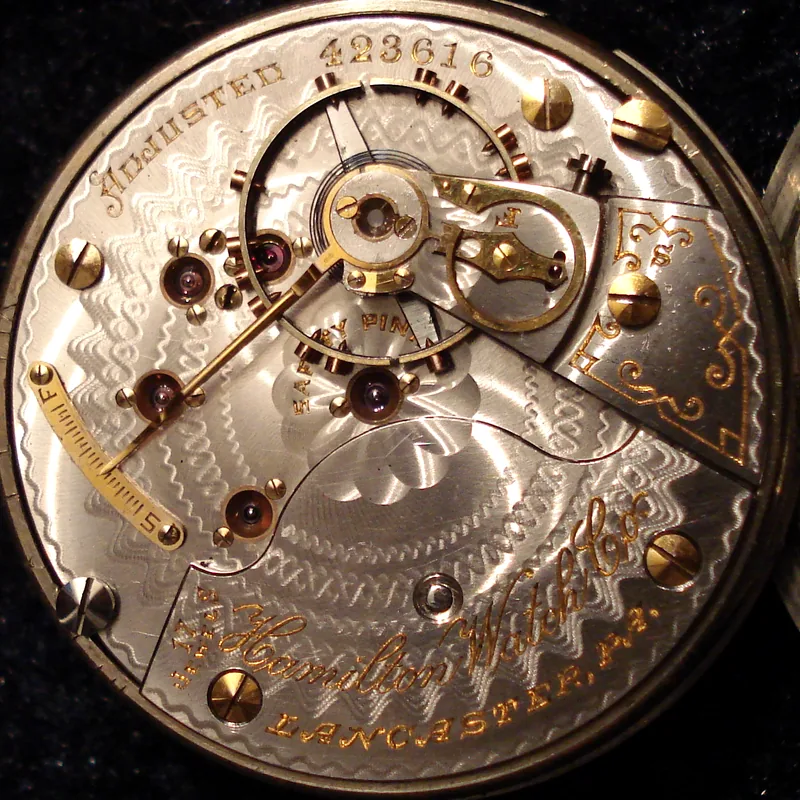
During the 1910s through the 1930s, Hamilton produced several iconic 8s grades, including the Grade 900, Grade 986, Grade 989, and early iterations that laid the mechanical groundwork for the famed 987 series. These movements were crafted during an era when decorative embellishment was as vital as timekeeping integrity. Master watchmakers hand-finished these calibers with striking ray-pattern damaskeening, polished screw heads, gold-plated train wheels, and raised screwed gold chatons housing synthetic or natural ruby jewels. Unlike mass-produced modern movements, an 8s movement from Lancaster carries the physical fingerprint of hand-adjusted horology, having been adjusted to multiple positions, temperature, and isochronism right at the factory floor.
As pocket watch usage declined in the mid-20th century in favor of wrist-worn timepieces, thousands of these beautifully preserved 8s movements were left forgotten in drawers or melted down for their solid gold and silver cases. Today, horological enthusiasts and bench watchmakers view these surviving movements not as obsolete relics, but as pristine canvases for restoration. When you convert a Hamilton 8s pocket watch into a wristwatch, you are not merely creating a custom timepiece; you are preserving a crucial chapter of industrial art and giving new life to an American mechanical masterpiece.
Technical Specifications and Movement Architecture
Understanding the internal engineering of the Hamilton 8s size movement is essential before attempting any conversion process. In traditional American movement measurement, an 8-size movement features a pillar plate diameter of approximately 1.18 inches (30.00 mm). This physical dimension is critical: at roughly 30mm, the raw movement sits in a ideal sweet spot for modern wristwear. Compared to massive 16-size movements (approx. 43.18 mm) or tiny 0-size movements, the 8s provides structural stability, high legibility, and high resistance to wear without taking up excessive real estate on the wearer's wrist.
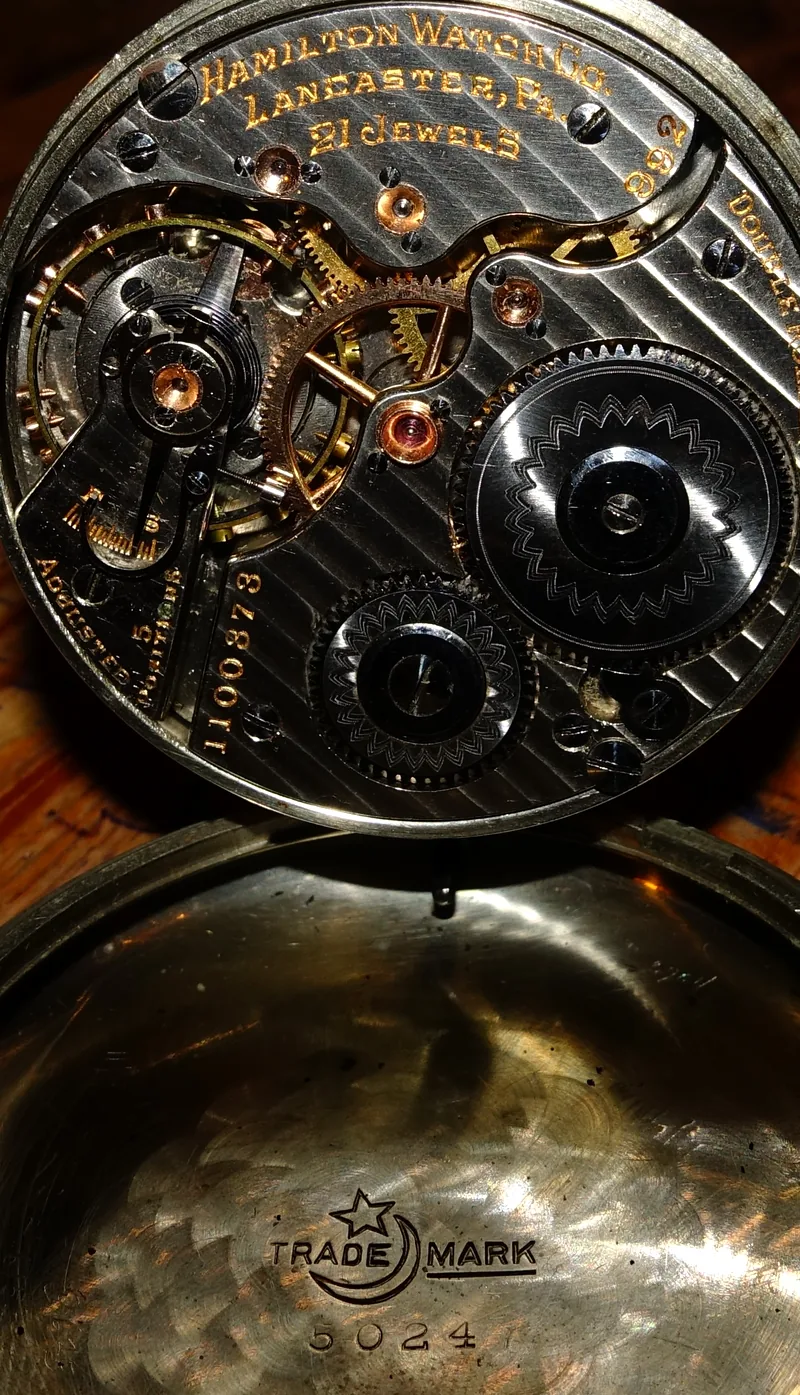
Mechanically, Hamilton 8s movements feature a classic manual-wind layout driven by a going barrel, a center wheel, third wheel, fourth wheel, and an escape wheel driving a Swiss-style lever escapement. Most high-grade 8s movements boast 17 to 23 jewels, with higher-grade variants featuring ruby or sapphire jewels set into solid gold screwed chatons. The balance assembly typically utilizes a cut bimetallic expansion balance wheel designed to compensate for temperature variations, paired with a blued steel Breguet overcoil hairspring. This hairspring geometry ensures concentric breathing of the spring, greatly improving timekeeping stability across different wrist orientations.
Winding and setting systems in Hamilton 8s movements generally rely on a negative setting mechanism (sleeve-set) or a positive setting system (pull-out stem), depending on the specific grade and production year. The winding stem engages with a clutch wheel and winding pinion held beneath a balance-side or barrel-bridge setting mechanism. Understanding the stem tap size (typically American standard pitches like Tap 9 or Tap 10) and sleeve spring tension is crucial when planning to fit the movement into a new housing or when attempting to convert a Hamilton 8s pocket watch into a wristwatch using modern case components.
Challenges of Converting Hamilton 8s to Wristwatch
A common question asked by vintage watch enthusiasts is: can you convert hamilton 8s pocket watch movements into practical daily wristwatches? The short answer is yes, but the long answer involves overcoming substantial mechanical, engineering, and ergonomic hurdles. The first major challenge is the total lack of modern shock absorption. Vintage Hamilton 8s balance staffs run on balance jewels held in rigid chatons without spring-loaded shock systems like Incabloc or KIF. A sudden impact, such as dropping the watch onto a hard surface or bumping it against a doorframe, can instantly bend or snap the micro-pivots on the balance staff, requiring a complete staff reproduction on a watchmaker’s lathe.
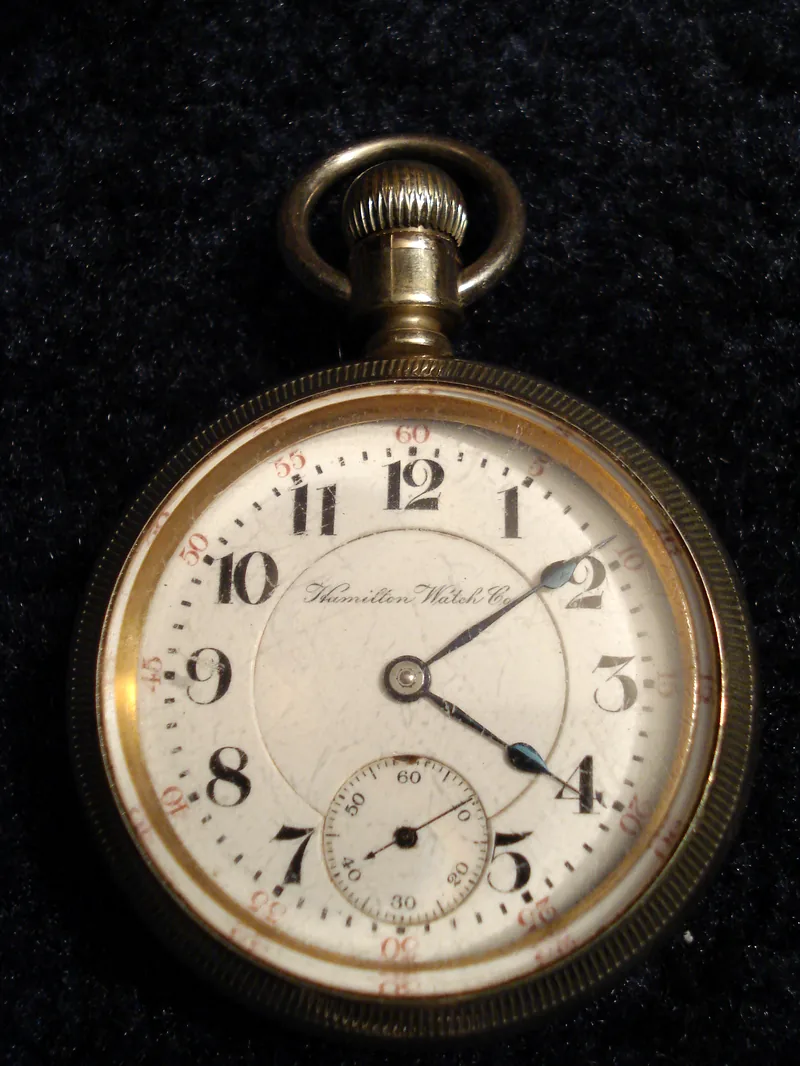
The second technical obstacle involves dial layout and movement orientation. Pocket watches generally come in two formats: Lépine (open-face) and Savonnette (hunter-case). In an open-face 8s movement, the winding stem is located at the 12 o'clock position, with the sub-seconds register positioned opposite at 6 o'clock. If you rotate the movement inside a wristwatch case so that the stem sits at the conventional 3 o'clock position, the sub-seconds dial moves to the 9 o'clock position. Conversely, if you use a hunter-case movement (stem at 3 o'clock, sub-seconds at 6 o'clock), the stem lines up naturally at 3 o'clock on the wrist, but hunter movements are significantly less common in the 8s category.
Finally, environmental sealing presents a perpetual struggle. Original pocket watch cases were designed to sit inside a vest pocket, offering minimal protection against ambient humidity, dust, or moisture. When rehousing an 8s movement, the bench watchmaker must engineer modern gaskets, crystal seals, and stem O-rings to protect the delicate steel components—such as the balance spring and escape wheel—from rust. Without proper sealing, the micro-environment inside a wristwatch case can degrade oil lubrications and corrode raw steel within months of regular wear.
Lug Welding and Case Selection
When executing a conversion, the artisan must choose between two primary paths: modifying an original vintage pocket watch case or sourcing a dedicated hamilton 8s pocket watch to wrist conversion case. The traditional path involves taking an original nickel, silver, or gold-filled 8s pocket watch case and retrofitting it with custom wrist lugs. This process requires precise lug welding using Micro-TIG (Tungsten Inert Gas) welding equipment or high-temperature silver soldering. The watchmaker must select wire lugs, solid bar lugs, or styled Art Deco lugs, notch them to match the curve of the case rim, and execute clean, structurally sound welds without warping the case wall or damaging the delicate snap-bezel threads.
Because thermal transfer during welding can ruin original enamel dials or distort silver cases, modern makers increasingly opt for precision-machined stainless steel modern conversion cases designed specifically for 8s calibers. These cases are CNC-milled from 316L stainless steel, offering an outer diameter of 36mm to 39mm—the ideal classical dress watch size. A custom Hamilton 8s pocket watch to wrist conversion case typically features a sapphire front crystal, an exhibition caseback displaying the hand-damaskeened movement, and internal retaining grooves designed to accept customized movement spacers.
To secure the movement inside a modern conversion case, a custom movement holder ring (movement spacer) must be turned on a lathe, usually from solid brass or 316L stainless steel. This ring bridges the small gap between the 30mm 8s pillar plate and the internal case diameter. The spacer must include precise relief cuts for the stem tube, setting levers, and movement mounting screws or casing clamps. A properly fitted ring guarantees zero movement shift when the crown is pulled, keeping the balance wheel isolated from structural stress during manual winding.
Crown and Stem Solutions
Adapting the winding and setting interface of a pocket watch movement to operate smoothly on a wrist-worn case is one of the most mechanically demanding phases of the conversion project. Original pocket watch stems were thick, heavy-duty steel rods fitted with oversized onion or pumpkin crowns suited for thumb-and-forefinger winding. Fitting these components into a sleek wristwatch profile requires custom lathe work, stem cutting, and thread matching. The watchmaker must often make a custom stem extension or turn a completely new stem from annealed drill rod steel, which is then hardened and tempered to prevent snapping under torque.
The core difficulty stems from the setting mechanism design. Many Hamilton 8s calibers feature negative setting systems, where a split-sleeve clip inside the case neck holds the stem in the setting position, and a spring inside the movement pushes it back into the winding position. Modern wristwatch cases are engineered for positive setting systems, where the crown pulls out and clicks into place via a setting lever and detent spring internal to the movement. To convert a negative-set 8s movement for use in a modern case, the watchmaker must either install a custom internal sleeve inside the new case tube or re-engineer the movement’s setting jumper to operate safely with a standard pull-out crown stem.
Furthermore, moisture isolation at the stem tube requires careful crown selection. The watchmaker must install an O-ring sealed crown that slides over a precision-machined case tube. The crown must match the aesthetic era of the Hamilton movement—such as a polished cabochon, onion, or trench-style crown—while maintaining internal rubber packing. This setup prevents dust and sweat from entering along the stem channel, protecting the steel winding pinion and keyless works from corrosion.
Dial and Hand Considerations
The visual identity of a conversion watch rests largely on its dial and hand configuration. Original Hamilton 8s dials generally fall into two categories: high-grade double-sunk vitreous enamel dials or silvered metal dials featuring painted or raised gold enamel numerals. Enamel dials are immortal—they never fade, oxidize, or yellow with age. However, they are exceptionally brittle. Removing an original enamel dial to service the movement requires extreme care, as placing pressure on the edge can instantly cause spider cracks or chip the porcelain around the dial foot mounting holes.
When deciding to convert a Hamilton 8s pocket watch into a wristwatch, you must address the orientation of the dial feet. If you are re-orienting an open-face movement (stem at 12, sub-seconds at 6) to fit a wrist layout with the stem at 3, the dial must be rotated 90 degrees clockwise. Doing so places the sub-seconds register at 9 o'clock. If the owner desires a traditional 6 o'clock sub-seconds layout with a 3 o'clock stem, a custom dial must be produced or an original dial must have its feet removed, re-soldered using a low-temperature micro-spot welder, or secured using specialized dial dots, though soldering original copper feet remains the professional standard.
Hand fitting presents another micro-mechanical challenge. Vintage Hamilton 8s hands are crafted from heat-blued steel, featuring delicate spade, Breguet, or cathedral geometries. The center wheel tube and cannon pinion post diameters on an 8s movement do not match modern ETA or Seiko hand standards. Therefore, original hands should be preserved and re-poised whenever possible. If the original hands are missing or damaged, modern replacement hands must be broached with micro-reamers to enlarge their mounting holes, or closed down using a staking set to fit the original Hamilton post dimensions securely.
Why 8s is more common for conversion
In the world of custom horology and vintage movement conversions, the 8s caliber has quietly emerged as the ultimate choice for custom watchmakers. While 18-size pocket watches (found in massive turn-of-the-century railroad watches) are plentiful, converting an 18s movement results in a wrist case measuring between 48mm and 52mm in diameter. These massive "marriage watches" are awkward, heavy, and susceptible to heavy impacts. Similarly, 16-size movements yield cases around 44mm to 46mm, which remain too bulky for refined, everyday dress wear.
The 8-size movement, with its 30mm movement plate, produces an finished wristwatch case size of roughly 36mm to 39mm depending on wall thickness. This specific dimension aligns perfectly with standard wrist proportions and contemporary preferences for classic, timeless dress watch sizes. The resulting watch fits comfortably beneath a shirt cuff, balances evenly on the wrist, and distributes its weight without feeling top-heavy or cumbersome. It offers all the visual wonder of an American pocket watch movement—complete with gold chatons and damaskeened bridges—in a modern, everyday form factor.
Additionally, 8s movements are far more abundant in high-grade finishes than smaller 0-size or 3/0-size ladies’ pendant movements. Smaller vintage movements were often built with simplified plate geometries, smaller balance wheels that are hard to regulate, and fewer functional jewels. The 8s movement, by contrast, sits right in the "Golden Ratio" of pocket watch horology: large enough to maintain top-tier railroad-adjacent accuracy and elaborate bridge damaskeening, yet small enough to comfortably transition to the human wrist without engineering compromises.
Final Thoughts on Hamilton 8s Conversions
To successfully convert a Hamilton 8s pocket watch into a wristwatch is to participate in an act of historical preservation through mechanical art. At a time when modern watches are increasingly defined by disposable electronic circuits or mass-produced industrial calibers, wearing a hand-adjusted, 100-year-old American mechanical movement on your wrist offers a tactile connection to horological history. Every ticking beat of the balance wheel reflects the skill of Lancaster craftsmen who turned, polished, and timed these components by hand a century ago.
However, owning and wearing a converted 8s watch demands an understanding of its vintage nature. Prospective owners must remember that these timepieces lack modern shock resistance and water sealing. They should be treated as high-grade mechanical treasures: worn with care, kept away from magnetic fields, protected from water, and serviced every three to five years by a qualified watchmaker who understands vintage American horology, full teardowns, ultrasonic cleaning, and proper synthetic oil application.
Whether you choose to weld wire lugs onto a worn vintage pocket case or install the caliber inside a modern CNC-machined sapphire exhibition case, a properly executed Hamilton 8s conversion stands as a testament to timeless mechanical design. By bridging the gap between past and present, these converted timepieces ensure that America's rich horological legacy continues to mark time—not hidden away in a collector's velvet box, but proudly ticking on the wrist for generations to come.