Historical Background of Hamilton 992B Movements
The Hamilton Watch Company of Lancaster, Pennsylvania, earned its immortal moniker, "The Watch of Railroad Accuracy," through decades of unyielding dedication to industrial precision. Introduced in 1940 as the ultimate evolution of the legendary Model 992 series, the Hamilton 992B was designed specifically to meet and exceed the stringent standard guidelines imposed by North American railroad inspectors. These standard requirements demanded a timepiece with at least 21 jewels, adjusted to five or six positions, temperature, and isochronism, capable of maintaining variance within a mere 30 seconds per week. The 992B represented the pinnacle of American mass-produced mechanical horology, serving as the trusted instrument in the pockets of conductors and engineers across tens of thousands of track miles.
Unlike its predecessor—the standard friction-jeweled or screw-set 992—the 992B incorporated revolutionary materials and manufacturing techniques developed during the interwar era. It was constructed with a high level of part interchangeability and featured Hamilton’s proprietary anti-magnetic, rust-resistant hairspring alloy alongside a mono-metallic balance wheel. As steam gave way to diesel and digital equipment eventually rendered mechanical timekeeping obsolete on the railways, millions of these high-grade calibers were retired to drawers and safes. Today, watchmakers and enthusiasts frequently look to give these horological masterpieces a second life through antique pocket watch conversions, transforming an iconic pocket instrument into a modern wearable wrist watch.
Understanding the historical weight of the Hamilton 992B is paramount before undertaking any conversion project. Executing a Hamilton 992B conversion requires balancing deep respect for historical integrity with the mechanical adaptations required to secure a heavy 16-size movement inside a contemporary wristwatch case. When done correctly, a converted 992B is not merely a oversized fashion statement; it is a living piece of mid-century industrial Americana re-engineered for the wrist.
Technical Specifications and Movement Architecture
To successfully convert Hamilton 992B into wristwatch configurations, a watchmaker must first master the physical geometry and architecture of this exceptional movement. The 992B is an American 16-size caliber, measuring precisely 43.18 mm (1.70 inches) in plate diameter. The movement architecture features a 3/4 plate design crafted from nickel silver (German silver), finished with elegant, crisp Ray-type or straight Damaskeening patterns. The movement houses 21 friction-set synthetic ruby jewels, including cap jewels on the escape wheel and balance arbors, which dramatically reduce friction across the high-speed elements of the gear train.
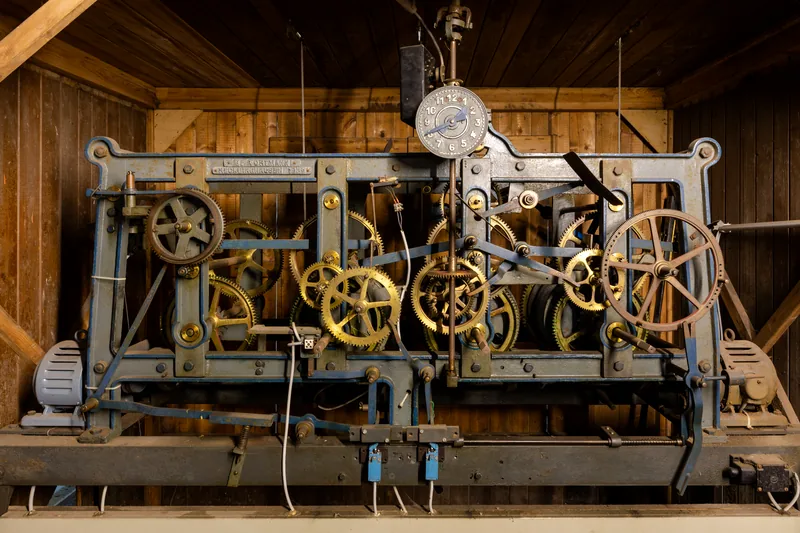
At the heart of the 992B's accuracy is its balance assembly, which beats at a traditional frequency of 18,000 vibrations per hour (2.5 Hz). The assembly features an Elinvar Extra hairspring paired with a solid, un-cut mono-metallic balance wheel made of beryllium alloy. This combination renders the movement virtually impervious to thermal expansion issues and magnetic interference—a massive technical advantage when translating the movement to a modern wrist environment full of stray magnetic fields from smartphones and laptops. Power is delivered via a mainspring enclosed in a safety barrel, featuring a motor-barrel design that ensures power is cleanly transmitted even in the event of a mainspring breakage, protecting the delicate teeth of the center wheel.
The micro-metric regulator on the balance cock uses a spring-loaded friction snail cam, allowing watchmakers to execute hyper-precise rate adjustments. The entire power train runs on polished steel pivots riding inside tight-tolerance jewel holes. The sheer mass and robust cross-section of the 992B’s plates, wheels, and arbors make it structurally indestructible under normal operation, but its physical dimensions present immediate packaging challenges when selecting or fabricating a wristwatch enclosure.
Challenges of Converting Hamilton 992B to Wristwatch
The primary technical obstacle when planning a Hamilton 992B pocket watch conversion revolves around sheer physical scale. An American 16s movement is substantially larger than conventional wrist watch calibers (such as the ETA 6497/6498, which measures 36.6 mm in diameter). Fitting a 43.18 mm plate into a housing with proper wall thickness, crystal seating, and gasket seals results in a finished watch case diameter of 47 mm to 50 mm. For smaller wrists, this footprint can be difficult to wear unless the case architecture utilizes radically dropped, short, or articulated lug geometries.
Another profound technical challenge is the movement's setting mechanism. The Hamilton 992B is strictly a lever-set movement, as mandated by historical railroad safety rules to prevent the crown from being accidentally pulled out into setting mode while working on a train. To set the time, a small setting lever located near the dial perimeter must be pulled outward, engaging the setting wheel train. Translating this mechanism into a wristwatch case without compromising moisture resistance or ruining the case lines demands precise milling, specialized bezels, or custom setting lever cutouts within the case band.
Finally, modern wristwatches are subjected to severe, dynamic multi-axis shock forces that a pocket watch held upright in a waistcoat pocket never experienced. The 992B movement lacks modern balance shock protection systems like Incabloc, KIF, or Novodiac. The balance staff pivots on a 992B are finely turned steel pins measuring only fraction of a millimeter in diameter. A hard drop or sudden impact to the wristwatch case can easily snap a balance pivot. Watchmakers carrying out a conversion must educate owners on the vulnerability of vintage non-shockproof movements, or carefully store the watch for light, non-impact wear.
Lug Welding and Case Selection
When engineering a modern housing for a Hamilton 16s Railway Special wrist watch, custom builders generally choose between two distinct methodologies: vintage case modification with welded wire lugs, or modern CNC-machined conversion cases built specifically for 16-size movements. Modifying an original gold-filled or nickel pocket watch case involves soldering custom silver or steel wire lugs directly to the outer case band at 12 o'clock and 6 o'clock. This technique echoes the historical techniques used to produce authentic WW1 trench watches, maintaining the original pocket watch aesthetics while adding wrist functionality.
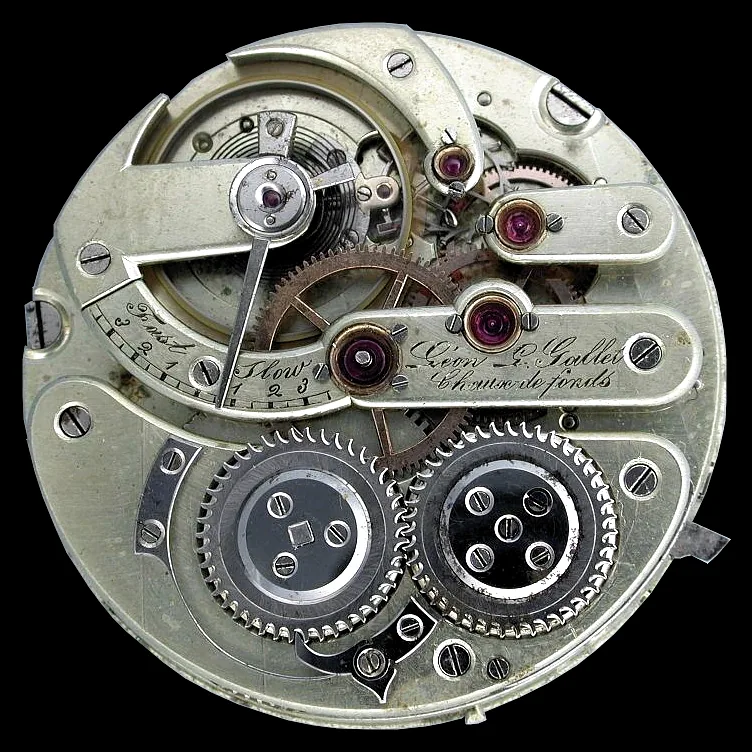
However, welding wire lugs onto thin pocket watch cases presents significant structural risks. Original pocket watch cases were not engineered to withstand torsional twisting forces applied by a modern leather strap. Excessive torque can flex the case back, allowing moisture and dirt to enter the movement chamber. For this reason, modern horologists usually prefer custom-machined 316L stainless steel wristwatch cases designed specifically to accept 16s American movements. These conversion cases feature heavy-duty screw-down exhibition casebacks fitted with sapphire or mineral crystals, showcasing the breathtaking Damaskeening and jewel settings of the 992B movement.
To properly secure the 43.18 mm movement inside a 316L stainless steel case, a precise movement spacer ring (often machined from brass or stainless steel) is required. This ring clamps the movement firmly against the internal case shoulder using case screws and tabs. The lugs on these modern 47-50 mm conversion cases are typically angled sharply downward at a 45-degree trajectory. This aggressive curvature pulls the strap flush around the wrist, visually reducing the immense wrist presence and preventing the watch from hovering awkwardly over the arm.
Crown and Stem Solutions
Interfacing the winding stem of a Hamilton 992B with a modern wristwatch crown requires intricate lathe work and an understanding of American stem threads. Standard high-grade American pocket watch movements utilize specific stem thread pitches (frequently Tap 10 or Tap 12, depending on the winding sleeve and arbor design). Modern wristwatch crowns, by contrast, are typically threaded in standard metric sizes such as Tap 0.9 mm (Tap 9). To connect the original winding mechanism to a heavy-duty wristwatch crown, a watchmaker must turn a custom winding stem extension on a watchmaker's lathe or utilize precision stem adapters.
The depth of the stem channel within the case must be calculated with sub-millimeter precision. If the stem is turned even 0.10 mm too short, the square shoulder of the stem will fail to fully engage the winding pinion, leading to gear slippage, grinding, and premature wear of the winding teeth. Conversely, if the stem is too long, the crown will float away from the case band, exposing the stem to moisture, dirt, and bending stresses.
Managing the lever-setting feature requires equal precision. In custom conversion cases, watchmakers often incorporate a subtle notch or hinged access slot underneath a threaded front bezel. To set the time, the owner unscrews the front bezel slightly (or opens a small hinged door), pulls out the lever, turns the crown to adjust the blued steel hands, pushes the lever back in, and reseals the bezel. This procedure preserves the full anti-accidental-setting integrity of the original railroad design while providing complete operational functionality on the wrist.
Dial and Hand Considerations
The classic Hamilton 992B was equipped with brilliant white double-sunk or single-sunk porcelain enamel dials featuring bold black Arabic numerals, minute tracks, and prominent red 5-minute markers (the famous "Melmont" or "Montgomery" safety dials). These porcelain dials are masterpieces of decorative craft, but they present significant risks during a conversion. Vitreous enamel on copper backing is exceptionally brittle; age, internal stress, and temperature changes create microscopic hairline cracks. Attempting to fit a cracked porcelain dial into a tight-fitting wristwatch case will often cause the dial to shatter or flake along the edges.
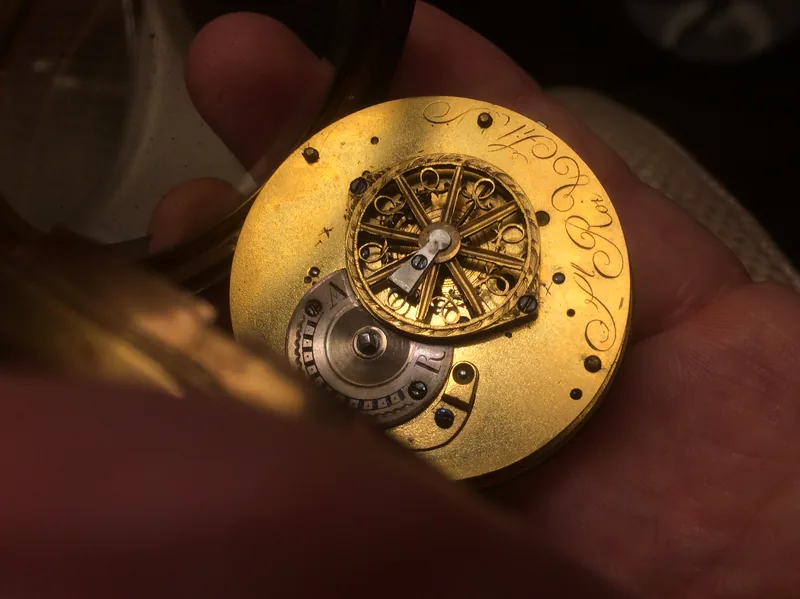
Furthermore, standard 992B movements are "open-face" configurations. In an open-face pocket watch, the winding stem is located at 12 o'clock, and the small sub-seconds dial is positioned directly opposite at 6 o'clock. When you re-orient this movement inside a wristwatch case with the crown positioned at the standard 3 o'clock location, the sub-seconds register shifts to the 9 o'clock position. If the owner desires a traditional 3 o'clock crown with sub-seconds at 6 o'clock, a custom-fabricated dial with repositioned dial feet must be used, or the movement must be worn in a "driver's watch" configuration with the crown at 12 o'clock.
The hands on a 992B are heavy, flame-blued steel in Spade or Indicator styles. Because of the expanded distance between the movement mainplate and the front crystal in a modern conversion case, hand clearance must be checked painstakingly under a stereo microscope. The minute hand must clear the raised center ring of a double-sunk dial without dragging, while the underside of the crystal must provide adequate vertical clearance above the hour and minute hand cannons. The hands must be carefully friction-fitted onto the original steel canon pinion, hour wheel pipe, and fourth wheel pivot without altering the original arbor diameters.
Why Hamilton 917/921/945 is More Common for Conversion
While the urge to convert Hamilton 992B into wristwatch configurations remains strong due to the model's historic status, seasoned watchmakers far more frequently opt to convert Hamilton's 10-size movement family—specifically Calibers 917, 921, and 945. The fundamental reasoning boils down to wearable ergonomics and movement functionality. A 10-size movement measures approximately 37.8 mm in diameter, which drops perfectly into modern 42 mm to 44 mm wristwatch cases—a size profile vastly more comfortable and aesthetically proportionate for daily wear on an average wrist.
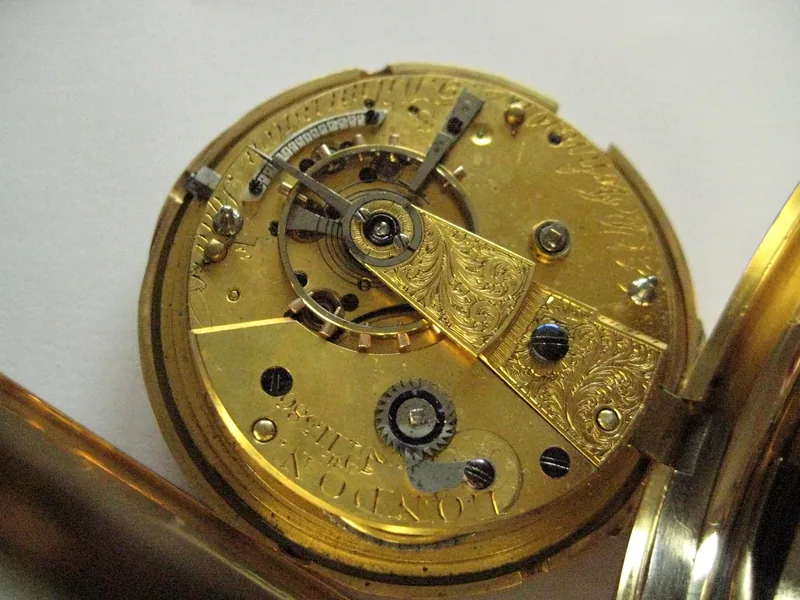
The technical differences between the 16-size 992B and the 10-size 917/921 series are outlined in the comparison matrix below:
| Technical Specification | Hamilton 992B (16-Size) | Hamilton 917 / 921 / 945 (10-Size) |
|---|---|---|
| Movement Diameter | 43.18 mm | 37.80 mm |
| Finished Case Diameter | 47.00 mm – 50.00 mm | 41.00 mm – 43.00 mm |
| Setting Mechanism | Lever-Set (Pull-out lever) | Pendant-Set (Pull-out crown) |
| Jewel Count | 21 Jewels (Friction set) | 17 Jewels (917) / 21 Jewels (921) / 23 Jewels (945) |
| Original Purpose | Heavy Industrial Railroad Standard | Slim Dress Pocket Watches |
| Wrist Wearability | Massive / Statement Piece | Proportional / Daily Wear |
Crucially, the 917, 921, and 945 calibers are pendant-set movements. Pulling the winding crown outward directly engages the hand-setting works, exactly like a modern manual-wind wristwatch. This eliminates the mechanical headache of accommodating a setting lever within the wristwatch bezel assembly. Additionally, Hamilton designed these 10-size calibers for slim dress pocket watches, resulting in a much lower movement height (thickness) compared to the industrial, high-profile construction of the 992B mainplate and bridges.
Nevertheless, the 10-size movements lack the intense, heavy-duty industrial aesthetic and pure railroad heritage of the 992B. The 921 features beautiful Geneva stripes and high-grade finishing, but the 992B’s massive balance wheel, heavy blued balance screws, and bold American railroad lineage give a completed 16s conversion an unmistakable presence that smaller calibers simply cannot match.
Final Thoughts on Hamilton 992B Conversions
A completed Hamilton 992B pocket watch conversion represents a striking synthesis of 20th-century American industrial craftsmanship and contemporary horological custom construction. When performed by a skilled master watchmaker, the process transforms a bench-bound pocket watch movement into a wearable piece of kinetic mechanical art. The finished watch draws immediate attention not only for its impressive physical footprint, but for the magnificent sight of its damaskeened nickel plates, gleaming red rubies, and slow, rhythmic 18,000 vph balance wheel beating through an exhibition caseback.
However, horologists and collectors must approach these conversion projects with a clear sense of preservation ethics. Intact, pristine, original-matching-number railroad pocket watches in museum-grade original cases are finite historical artifacts. The best candidates for a custom conversion are loose, orphaned 992B movements whose original gold or silver cases were melted down during historical precious metal scrap booms. Rescuing an un-cased, bare movement from obscurity and building a high-grade stainless steel housing around it honors the original engineers of the Hamilton Watch Company.
Ultimately, wearing a converted Hamilton 16s Railway Special wrist watch connects the owner directly to the golden age of American industrial dominance. Taking a movement that once regulated thousands of tons of steam and steel across thousands of miles of iron track, and re-engineering it to sit comfortably on the modern wrist, is one of the most rewarding pursuits in custom watchmaking. With proper casing, custom stem engineering, and mindful wear to protect its non-shockproof balance staff, a converted 992B will keep precise time for another century to come.