1. Historical Background of Illinois 12s Movements
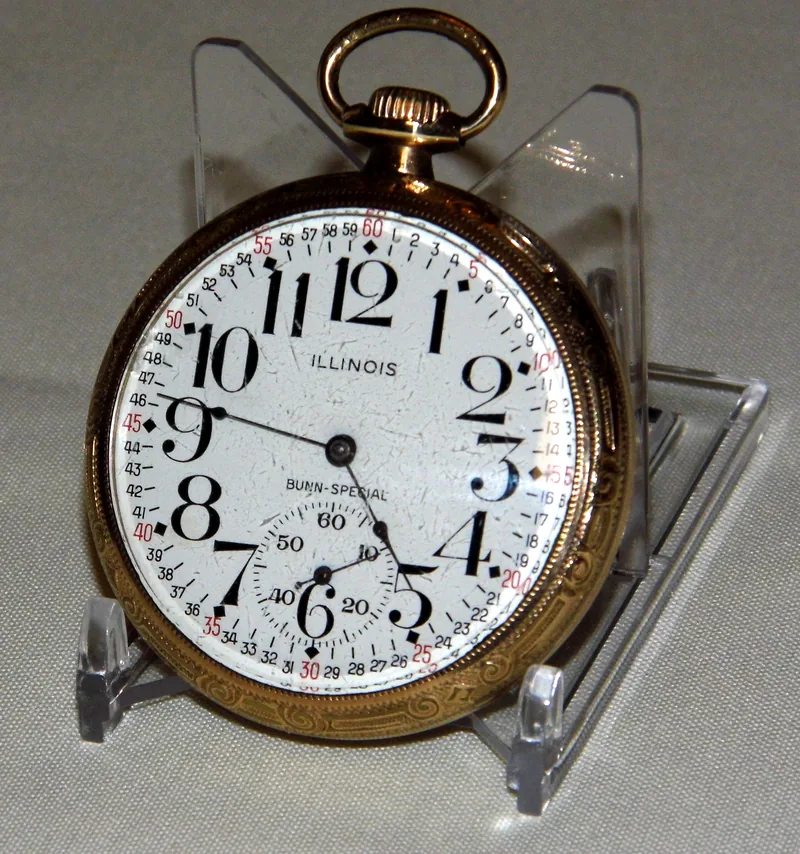
The Illinois Watch Company, operating out of Springfield, Illinois, holds a sacred place in American horological history. Founded in 1869, the manufacture earned an unwavering reputation for engineering precision, producing some of the finest railroad-grade and luxury timepieces ever crafted on American soil. While massive 18-size and 16-size movements dominated the late 19th-century landscape due to strict railroad accuracy mandates, the turn of the 20th century ushered in a dramatic aesthetic pivot. As gentlemen’s attire shifted toward tailored suits and sleeker evening wear, the demand for slimmer, more refined pocket watches surged, prompting Illinois to perfect the 12-size (12s) movement format during the 1900s through the 1920s.
The 12-size Illinois movements became the gold standard for high-grade American dress watches. Unlike basic utility movements of the era, Illinois poured immense technical innovation into their 12s architecture. Grades such as the Autocrat, Aristocrat, Sangamo Special 12s, Marquis, and Grade 405 demonstrated that a smaller form factor did not require sacrificing accuracy or durability. These movements featured exquisite nickel plating decorated with intricate, hand-executed damaskeening—ranging from geometric ray patterns to elaborate ribbon work—alongside gold-flashed train wheels, raised solid-gold jeweled chatons, and micro-metric screw regulators. Today, these movements represent the pinnacle of Gilded Age micro-engineering.
As original pocket watch cases were melted down for gold scrap during various economic downturns throughout the mid-to-late 20th century, thousands of immaculate, high-grade Illinois 12s movements were left "orphaned" in watchmakers' drawers. In contemporary horology, converting these historic, high-grade movements into custom wristwatches—often called "marriage watches"—has emerged as a premier craft. Converting an Illinois 12s pocket watch into a wristwatch breathes vibrant new life into American industrial art, taking a masterpiece once hidden away in a vest pocket and elevating it into an everyday kinetic sculpture worn on the wrist.
2. Technical Specifications and Movement Architecture
To successfully execute a conversion, a watchmaker must first master the physical geometry and mechanical architecture of the Illinois 12s platform. According to the traditional American movement sizing system, a size 12 movement measures 1.5 inches (38.1 millimeters) across the base plate. The actual pillar plate diameter typically measures right at 37.8mm to 38.2mm, with a movement thickness ranging between 4.2mm and 5.5mm depending on the specific grade and bridge layout. This specific dimensional footprint makes the 12s movement uniquely well-suited for conversion compared to its larger horological siblings.
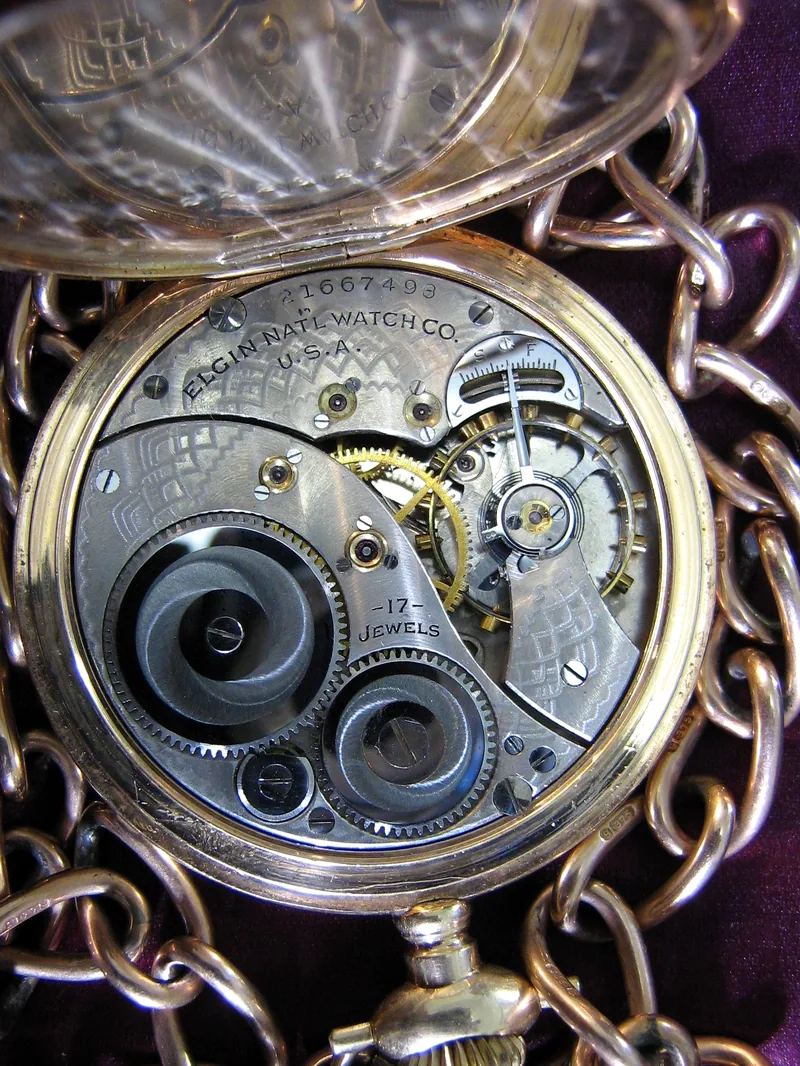
Mechanically, high-grade Illinois 12s movements were engineered with extreme technical sophistication. Standard configurations range from 17 to 23 fine ruby and sapphire jewels. Key architecture includes a going barrel or safety barrel assembly driving a straight-line lever escapement. The heart of the movement features a heavy, temperature-compensated split-bimetallic balance wheel fitted with gold timing screws, paired with a hand-curved Breguet overcoil hairspring. Precision adjustment is facilitated by specialized micro-metric regulator assemblies—most notably Reed's spring-turned micrometer regulator or Illinois' proprietary star-wheel regulator system—allowing adjustments down to fractions of a second per day.
Understanding the bridge arrangement is equally critical for the conversion artisan. Illinois produced 12s movements in both bridge-model configurations (featuring separate, stylized bridges for the barrel, center wheel, third/fourth wheels, and balance) and three-quarter plate designs. The three-quarter plate offers extreme rigidity, whereas bridge models offer unmatched visual elegance through the display back of a modern conversion case. Most Illinois 12s movements utilize a keyless work arrangement governed by a negative-setting (sleeve-set) mechanism built into the original pocket watch case neck, though some high-grade models incorporate positive-setting mechanisms, which significantly impacts how the winding stem must be adapted.
3. Challenges of Converting Illinois 12s to Wristwatch
If you ask an experienced watchmaker, "can you convert illinois 12s pocket watch movements into functional wristwatches?" the answer is a resounding yes—but with severe technical caveats. The primary hurdle stems from shock protection. Antique Illinois movements were designed to rest stationary inside a padded vest pocket. They lack modern shock-absorption systems such as Incabloc or Novodiac spring retention on the balance jewels. The delicate balance staff pivots, which measure a mere 0.07mm to 0.09mm in diameter, are sitting directly in rigid jewel caps. Sudden impacts from daily wrist wear, such as clapping hands or dropping a hand onto a desk, can instantly snap a balance pivot, requiring a custom lathe-turned replacement staff.
The second major technical obstacle involves dial layout and subsecond hand orientation, dictated by whether the original movement was built as an open-face (Lépine) or hunter-case (Savonnette) caliber. An open-face Illinois 12s movement places the winding stem at 12 o'clock and the small seconds subdial directly opposite at 6 o'clock. If you re-case an open-face movement into a standard wristwatch layout with the crown at 3 o'clock, the small seconds subdial rotates to the 9 o'clock position. Conversely, a hunter-case movement has the stem at 3 o'clock and small seconds at 6 o'clock in its original orientation, which translates perfectly to a traditional wristwatch layout, but hunter movements in 12s are considerably rarer and often utilize positive-setting keyless works that complicate stem fabrication.
Finally, environmental protection poses a significant threat to an exposed antique movement. Pocket watch movements from the early 1900s were never intended to withstand the ambient humidity, perspiration, and atmospheric pressure changes experienced on a human wrist. The movement plates, steel balance screws, click springs, and winding pinions are prone to rapid oxidation if encasing seals fail. Converting a 12s movement demands a modern housing that provides absolute dustproofing and water resistance while thermally isolating the sensitive hairspring from skin temperature fluctuations.
4. Lug Welding and Case Selection
Achieving a professional-grade conversion requires careful evaluation of the outer housing. Historically, artisans attempted conversions by taking the original gold-filled or sterling pocket watch case, cutting off the pendant bow, and hard-soldering or welding wire lugs directly onto the perimeter of the case walls. While this vintage technique preserves the original pocket watch body, laser welding lugs onto thin pocket watch metal requires extreme thermal control to prevent warping the bezel threads or scorching original enamel. Furthermore, original cases rarely provide the moisture sealing required for modern wrist wear.
The modern standard for high-end conversions relies on a dedicated, custom-engineered illinois 12s pocket watch to wrist conversion case. These cases are precision CNC-machined from solid 316L surgical-grade stainless steel or marine-grade bronze. A purpose-built conversion case is engineered with an internal movement lip, custom movement holding ring (casing ring), and dual synthetic O-ring gaskets on the front bezel and screw-down display caseback. The display caseback is equipped with an anti-reflective sapphire crystal, allowing an unobstructed view of the fully restored, damaskeened Illinois bridge work and spinning balance wheel.
Case proportions must be carefully balanced to ensure comfort on the human wrist. Because the Illinois 12s movement plate measures ~38mm, the finished conversion case typically features an overall external diameter of 42mm to 44mm, with a lug-to-lug span of 50mm to 52mm. Lug architecture should feature a subtle downward ergonomic curve, bringing the strap flush against the wrist and lowering the center of gravity. Whether opting for traditional screw-bar lugs or modern spring-bar configurations, the case must securely isolate the heavy brass plate movement inside a vibration-dampening movement ring made of brass or Delrin.
5. Crown and Stem Solutions
Resolving the crown and winding stem geometry represents the most mechanically intricate phase of the entire process to convert illinois 12s pocket watch into wristwatch configurations. The vast majority of Illinois 12s pocket watch movements utilize a "negative setting" (or sleeve-set) system. In this design, the detent mechanism—the split sleeve that clicks between setting and winding positions—resides inside the pendant neck of the original pocket watch case, not within the movement plates. The movement itself simply contains a square-holed winding arbor resting in a neutral position.
When transferring a negative-set Illinois 12s movement into a modern wristwatch case, the watchmaker must install a custom conversion stem or adapt a "positive-setting" conversion mechanism. The watchmaker must turn a custom steel winding stem on a micro-lathe or modify a vintage Illinois stem extension. The new stem must feature an exact square profile at its base to engage the Illinois winding pinion, a smooth pilot pivot to fit the plate recess, and a threaded outer section (typically Tap 10 or Tap 9) to accept a modern, gasketed wristwatch crown.
Modern conversion cases often incorporate a spring-loaded stem capture mechanism within the case tube, effectively replacing the action of the original pocket watch sleeve. Alternatively, the watchmaker can fit a positive-locking setting sleeve directly into the custom casing ring. The crown depth and stem length must be calculated to fractions of a tenth of a millimeter: if the stem is too long, the crown will not seat against the case O-ring, exposing the movement to moisture; if too short, the keyless work will fail to fully engage the setting wheels, leading to slipping teeth or broken winding pinion leaves.
6. Dial and Hand Considerations
The dial is the soul of any wristwatch conversion, but adapting authentic Illinois 12s dials presents unique structural vulnerabilities. Most original Illinois pocket watches featured double-sunk or single-sunk fired enamel (porcelain) dials painted with elegant Roman or Gothic Arabic numerals. While these enamel dials never fade or tarnish, ceramic enamel is exceptionally brittle. The mechanical shock transferred through a wristwatch case can cause micro-fractures ("hairlines") or catastrophic flaking around the dial foot attachments and center arbor holes if the dial is clamped too tightly against the mainplate.
Securing the dial requires exact alignment of the copper dial feet into the original movement plate recut-channels and eccentric clamping screws. If a modern custom dial or refinished metal dial is used instead of original porcelain, the dial feet must be soft-soldered or precision-welded using a micro-spot welder to match the exact hole locations of the Illinois 12s plate geometry. Additionally, clear spacing must be maintained between the bottom of the hour wheel and the back of the dial plate to prevent friction that would compromise the movement's balance amplitude.
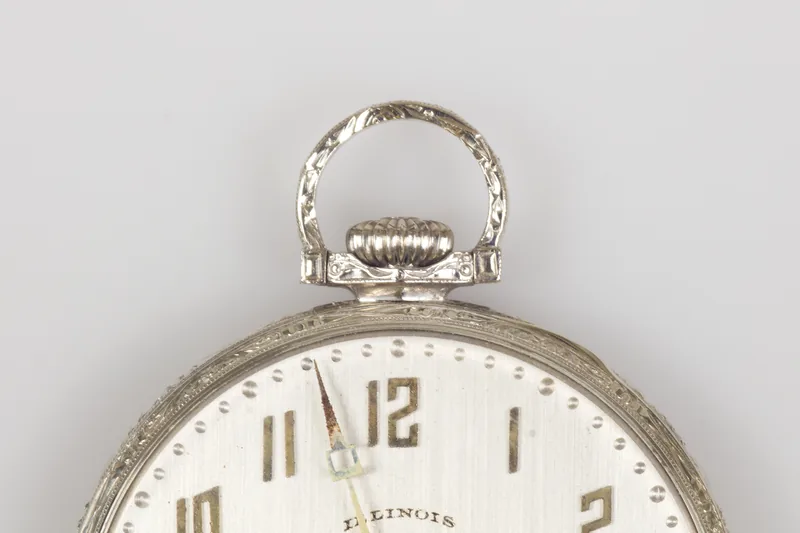
Hand fitting on an Illinois 12s movement demands specialist horological tools and custom adjustments. The hole dimensions for vintage American pocket watch hands differ radically from modern Swiss wristwatch standards (such as ETA or Sellita dimensions). The center wheel pipe (hour hand hole) and cannon pinion (minute hand hole) on a 12s Illinois movement require hand sockets tailored specifically to antique American gauge sizes. Original blued-steel spade, plum, or Cathedral hands must be carefully polished, re-blued using traditional thermal methods (heating to ~290°C/550°F on a brass-filings tray), and hand-broached to friction-fit the arbors without binding against the undersurface of the front sapphire crystal.
7. Why 12s is More Common for Conversion
In the world of vintage movement conversions, the Illinois 12s movement occupies the absolute sweet spot of horological design and wearable ergonomics. To understand its dominance, one must evaluate the alternative pocket watch sizes. Larger American pocket watches, specifically the 18-size (~44.8mm movement diameter) and 16-size (~43.2mm movement diameter), were designed as heavy-duty railroad chronometers. When installed into a modern protective wristwatch case with outer walls and bezel gaskets, an 18s movement results in a massive case measuring 50mm to 55mm across—uncomfortably large for the vast majority of wrists.
On the opposite end of the spectrum, smaller pocket watch movements such as 10-size, 6-size, or 0-size offer smaller physical diameters, but present severe mechanical compromises. These smaller movements feature thinner, fragile gear trains, micro-sized balance staffs that break under minimal stress, and simplified bridge aesthetics. Furthermore, replacement parts for smaller vintage sizes are notoriously scarce compared to the widely produced 12-size platform. The 12s hits the ergonomic ideal: its 38.1mm movement plate allows watchmakers to craft a sleek, balanced 42mm wristwatch that possesses modern wrist presence without crossing into cartoonish proportions.
From an aesthetic perspective, the 12s era coincided with the absolute zenith of American movement finishing. During the 1910s and 1920s, Illinois was competing fiercely with Hamilton and Waltham for the affluent gent's market. Consequently, Illinois 12s movements showcase some of the most spectacular damaskeening ever created, including multi-color gold inlay, radial sunburst patterns, and micro-beveling on structural bridges. Converting a 12s movement preserves a physical size that maximizes the visual impact of this immaculate hand-finishing under a sapphire display back while delivering an effortlessly wearable timepiece on the wrist.
8. Final Thoughts on Illinois 12s Conversions
Transforming a century-old American pocket watch movement into a functional modern wristwatch is far more than a mere mechanical modification; it is an act of horological preservation. When executed correctly using a purpose-built illinois 12s pocket watch to wrist conversion case, custom-turned winding stems, and meticulously restored gear trains, the result is a bespoke timepiece that bridges two centuries of manufacturing excellence. A converted Illinois 12s marries the soul of Gilded Age hand craftsmanship with the rugged utility required for contemporary lifestyle wear.
However, owning and operating a converted vintage wristwatch requires an understanding of its mechanical limitations. Even after a complete overhaul—involving sonic cleaning, epilame treatment, re-jeweling, and fresh lubrication with modern synthetic oils like Moebius 9010 and HP-1300—a converted 12s Illinois watch remains a delicate vintage instrument. Owners must treat these timepieces with the respect due to a 100-year-old artifact: avoid exposure to water, remove the watch before engaging in high-impact physical activities, keep it away from strong magnetic fields generated by modern electronics, and wind the mainspring manually with a soft, steady touch.
Ultimately, for those who appreciate the rich tapestry of American industrial heritage, mastering how to convert illinois 12s pocket watch into wristwatch creations offers deeply satisfying rewards. Watching the heavy, gold-screwed balance wheel of an Illinois Grade 405 or Sangamo-era movement pulse steadily through a sapphire caseback while strapped to your wrist provides a intimate connection to history that no mass-produced modern watch can ever replicate. It stands as an enduring tribute to the master artisans of Springfield, Illinois, whose extraordinary work continues to tick precisely a century after it was forged.