1. Historical Background of Illinois 13L Movements
The Illinois Watch Company, operating out of Springfield, Illinois, stands as one of the premier titans of golden-era American horology. Founded in 1869, Illinois quickly established a reputation for manufacturing high-grade, exceptionally precise timekeeping instruments that rivaled the finest Swiss houses. While the company is rightfully legendary for its massive Railroad-grade 16-size and 18-size movements—such as the Sangamo Special and Bunn Special—their production of smaller, wristlet-appropriate calibers during the early 20th century represents a vital turning point in horological history.
Among these smaller platforms, the 13 Ligne (often designated as 13L, measuring approximately 29.33 mm in movement diameter) holds a distinctive position. Introduced during the transition era between traditional pocket timepieces and the emergence of the modern wristwatch, the 13L bridge and plate architecture was engineered during a period when miniaturization did not mean sacrificing accuracy or finish quality. These movements were produced primarily throughout the 1910s and 1920s, a decade defined by the rapid adoption of personal wristlet timepieces driven by military necessity during World War I and shifting civilian fashions shortly thereafter.
Master watchmakers today revere the Illinois 13L caliber because it reflects classical American manufacturing philosophy: nickel or gilt plates decorated with exquisite rayed or damaskeened patterns, raised gold or brass screw-set jeweled chatons, cut bimetallic compensation balance wheels, and high-grade Breguet overcoil hairsprings. To convert illinois 13L pocket watch mechanisms into modern wristwatches is not merely a custom modification; it is an act of historical preservation that returns an incredible artifact of industrial craftsmanship back to daily active service on the wrist.
2. Technical Specifications and Movement Architecture
To successfully execute an illinois 13L pocket watch to wrist conversion, a watchmaker must first perform a thorough technical analysis of the movement's architecture. The 13 Ligne designation corresponds to a plate diameter of 29.33 mm (13 French Lignes), though total casing diameter with the edge lip frequently measures between 30.0 mm and 30.5 mm depending on the precise movement run and setting mechanism configuration. The overall height (thickness) of the raw movement ranges between 4.2 mm and 4.8 mm, providing a remarkably trim profile compared to bulkier pocket watch calibers.
Architecturally, Illinois produced the 13L in both 15, 17, and high-jewel 19 or 21-jewel variants. Below is a breakdown of standard technical specifications for the caliber:
| Parameter | Specification / Measurement |
|---|---|
| Nominal Size | 13 Ligne (13''') / American Size 3/0s - 0s equivalent |
| Plate Diameter | 29.33 mm (Casing diameter: ~30.2 mm) |
| Movement Height | 4.2 mm – 4.8 mm |
| Escapement Type | In-line Swiss-style Lever Escapement |
| Balance Wheel | Cut bimetallic expansion balance with timing screws |
| Hairspring | Steel or Elinvar Breguet overcoil hairspring |
| Beat Frequency | 18,000 Vibrations Per Hour (VPH) / 2.5 Hz |
| Setting Mechanism | Pendant-set (sleeve) or Lever-set (caliber dependent) |
The train wheel layout utilizes solid brass or gold train wheels driving a central cannon pinion, hour wheel, and minute wheel assembly. The upper train bridge usually features distinctive finger bridges or a three-quarter plate configuration typical of Springfield manufacturing. Crucially, the balance assembly runs at a traditional beat rate of 18,000 VPH, requiring precise endshake and sideshake adjustments across the balance staff pivots to ensure accurate rates across multi-position wrist wear.
3. Challenges of Converting Illinois 13L to Wristwatch
While the conversion of vintage pocket watches is a booming craft, smaller calibers present technical hurdles that test the skill of any master watchmaker. The primary mechanical challenge when attempting to convert illinois 13L pocket watch into wristwatch configurations involves shock resistance—or the complete lack thereof. Unlike modern wristwatches that employ Incabloc, KIF, or Novodiac spring-loaded balance jewel settings, vintage 13L movements feature rigid, friction-set or screw-down balance jewels. A direct impact to the wrist can easily shear the hardened steel balance staff pivots, which typically measure less than 0.10 mm in diameter.
The second major hurdle involves dial and movement orientation. Illinois 13L movements were produced in two distinct configurations: Open-Face (Lépine) and Hunting (Savonnette) layouts. In an open-face movement, the winding stem is positioned at 12 o'clock, with the running sub-seconds hand directly opposite at 6 o'clock. If cased into a standard wristwatch conversion with the crown positioned at 3 o'clock, the sub-seconds register will end up at 9 o'clock. Conversely, a hunting movement features the stem at 3 o'clock and seconds at 6 o'clock, making hunting layout movements highly prized for wrist conversions.
Finally, dust and moisture intrusion pose continuous risks to unsealed vintage movements. Antique pocket watch cases depended on tight snap-fit or screw-bezel tolerances, but were never designed for total immersion or sweat exposure during wrist wear. Watchmakers must overcome this by custom-fitting inner movement rings, installing modern rubber O-ring gaskets on stems and case backs, and maintaining an environment reminiscent of early authentic WW1 trench watches, where mechanical protection was paramount.
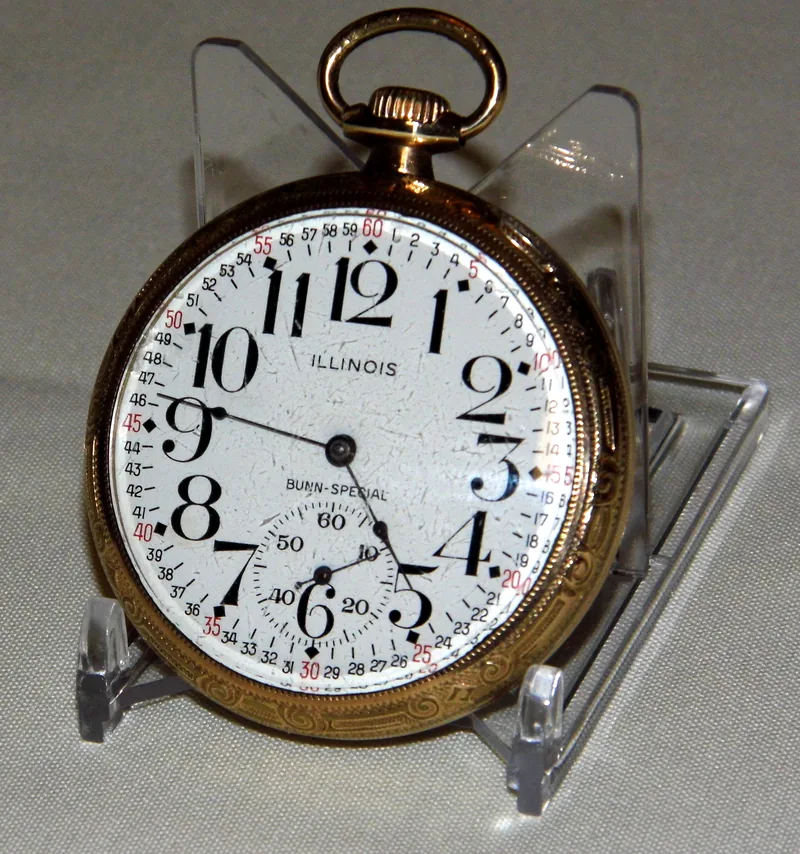
4. Lug Welding and Case Selection
Finding or fabricating the correct housing is the defining step in achieving a harmonious, comfortable conversion. Choosing the best case size for illinois 13L conversion project requires balancing historical aesthetics with modern wearable proportions. Because the movement diameter sits at roughly 29.33 mm, the ideal custom modern wristwatch case should feature an outer diameter of 36 mm to 38 mm, with an internal aperture diameter of exactly 30.5 mm to accept the movement sleeve smoothly.
There are two primary methods for casing an Illinois 13L:
- Modern Machined Stainless Steel / Bronze Cases: Precision CNC-machined cases designed specifically for 13 Ligne movements. These offer threaded display case backs fitted with sapphire crystals, modern spring-bar lug holes (usually 18mm or 20mm lug width), and silicone crown gaskets.
- Vintage Pocket-to-Wrist Adaptations (Silver Soldered Wire Lugs): Sourcing an original solid silver, sterling, or gold-filled antique pocket watch case and permanently silver-soldering custom wire lugs to the case periphery at 12 and 6 o'clock.
When soldering wire lugs to an antique pocket watch case, the watchmaker must completely strip the case of all movement components, crystals, and springs. Using silver solder with a melting point around 650°C (1202°F) and a precision micro-torch, solid 1.5mm wire rods of nickel, sterling silver, or brass are fused onto the case flanks. The assembly is then quenched, pickled in acid to remove flux oxidation, and hand-polished. Custom brass or stainless steel movement adapter rings are then turned on a precision watchmaker's lathe to bridge any fraction-of-a-millimeter gap between the 13L plate edge and the internal case wall, securing the movement with movement clamps and screws.
5. Crown and Stem Solutions
Perhaps no component causes more technical friction during a conversion than the winding and setting stem mechanism. Illinois 13L movements predominantly use a pendant-setting system driven by a winding sleeve located within the pendant neck of the original case. When extracting the movement from its host pocket watch case, the original stem is frequently too short, missing, or integrated into the antique case sleeve rather than remaining captive inside the movement.
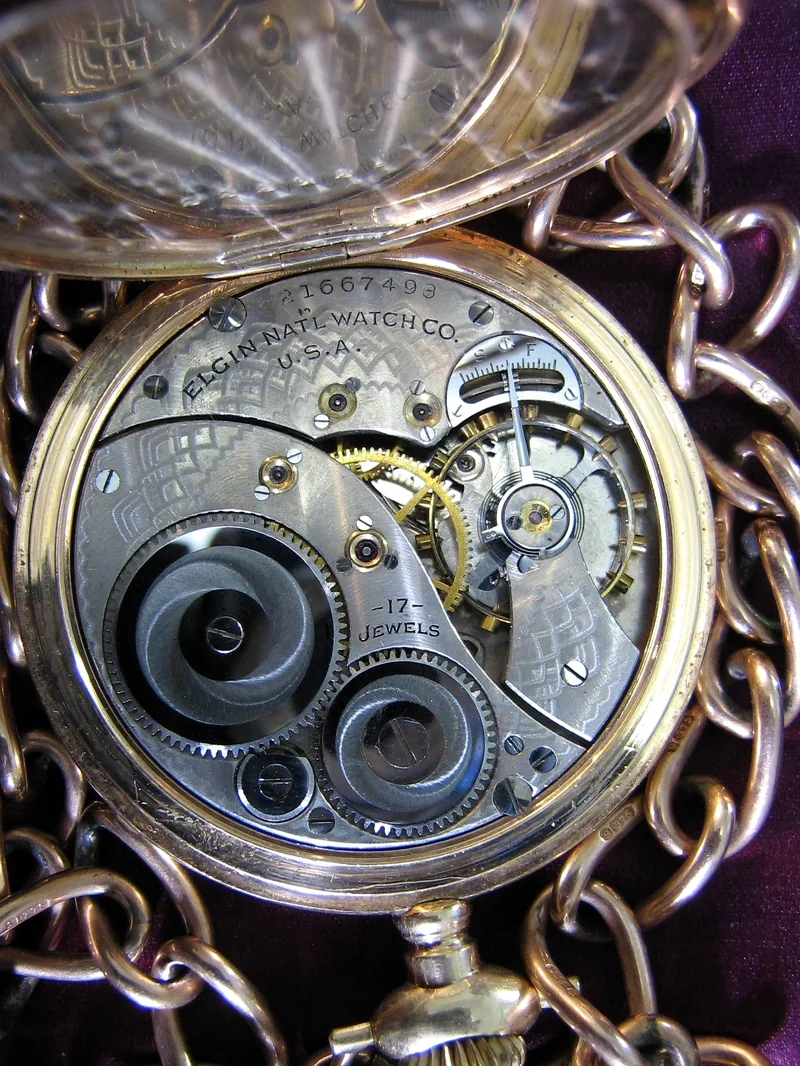
To engineer a modern crown and stem assembly, the watchmaker must measure the winding arbor's female thread pitch or square winding profile. Illinois 13L stems typically employ tap 10 or tap 9 stem threading. If utilizing a new modern conversion case with a standard push-pull or screw-down crown, the original winding stem must be precisely trimmed, or a threaded stem extender must be fitted using thread-locking compound (Loctite 242 or 271) to join the vintage stem core to the new crown body.
Furthermore, because vintage pendant-set movements rely on a spring-loaded sleeve to toggle between the "wind" and "set" positions, the mechanical detent pressure must be perfectly calibrated. If the setting force is too high, pulling the crown outward can snap the delicate stem shoulder. If too loose, the watch will accidentally shift into setting mode during daily winding. Watchmakers frequently custom-turn replacement winding sleeves on a lathe to match the exact depth clearance of the new case tube, capping the assembly with a period-correct onion or pumpkin crown for authentic tactile feedback.
6. Dial and Hand Considerations
The visual soul of any Illinois 13L conversion lies within its dial and hand suite. Most original Illinois 13L pocket watches feature double-sunk or single-sunk vitreous enamel (fired porcelain) dials, or metal silvered dials with painted Art Deco typography. Vitreous enamel dials are immune to UV fading or aging, but they are exceptionally brittle. Removing, re-mounting, or working around fragile dial feet requires extreme caution to avoid hair-line cracking.
Dial foot alignment presents an immediate hurdle when re-orienting a movement within a new case layout. If turning an open-face movement 90 degrees to align the crown at 3 o'clock, the original dial feet will no longer line up with the plate receiving holes if you attempt to keep the original dial upright. Watchmakers address this in one of three technical ways:
- Dial Foot Soldering: Carefully removing the original copper dial feet using a specialized micro-spot welder or silver solder flux, grinding the back flush, and soldering new copper feet at the precise coordinates required by the re-oriented plate holes.
- Machining a Custom Conversion Dial: Fabricating a modern brass dial blank, precision-engraving or printing custom graphics, and soldering feet specifically tailored for the 13L plate configuration.
- Fitting Dial Dots / Clamps: For delicate porcelain dials where heat transfer would shatter the glaze, specialized non-degassing horological adhesive pads or perimeter dial clamps are employed.
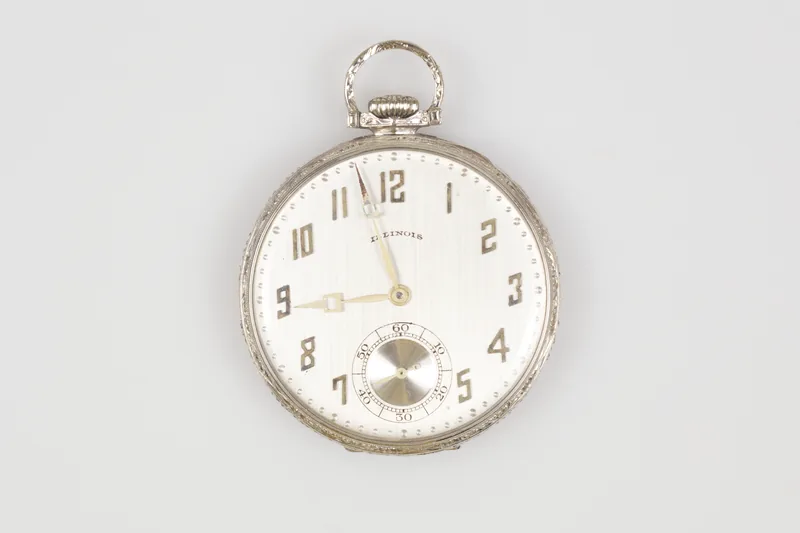
Hand fitting requires equal precision. The center wheel cannon pinion and hour wheel pipe dimensions on vintage American 13L movements do not standardly match modern Swiss ETA movement hand hole sizes. The hour wheel neck typically measures approximately 1.30 mm to 1.45 mm, while the cannon pinion top measures around 0.80 mm to 0.90 mm, with sub-seconds pivots measuring 0.18 mm to 0.21 mm. Original blued-steel spade, cathedral, or moon hands must be hand-trued, re-bushed, or carefully reamed out using broaches to achieve flawless friction fits without rubbing against the crystal or dial surface.
7. Why 13L is more common for conversion
Among the vast universe of American horological artifacts, the 13 Ligne platform has surged in popularity among custom horologists and collectors seeking high-grade antique pocket watch conversions. The fundamental reason for this preference comes down to **wearable ergonomics**. Standard American pocket watches come in 18-size (~44.8 mm movement diameter) or 16-size (~43.2 mm movement diameter). When cased into a modern wristwatch housing, an 18-size movement yields a gargantuan 48mm to 52mm case—far too large for comfortable, elegant daily wear on an average wrist.
By contrast, the 13L movement's ~29.33 mm footprint allows for final cased wristwatch diameters between 36 mm and 38 mm. This exact size profile matches the classic mid-century vintage aesthetic, mirroring proportions made famous by mid-century Swiss timepieces and vintage Rolex dress models. It sits flatly against the wrist, slides easily under a dress cuff, and delivers optimal weight distribution.
Additionally, the Illinois Watch Company produced the 13L platform in substantial volume during the peak of its production run, making replacement movement components, balance staffs, mainsprings, and train wheels relatively accessible compared to extremely obscure boutique Swiss movements. The stunning visual presentation of the Illinois damaskeening—featuring nickel bridges embellished with intricate geometric ray patterns—gives the wearer an open sapphire display back view that rivals modern haute horlogerie finishing at a fraction of the cost.
8. Final Thoughts on Illinois 13L Conversions
Executing an **illinois 13L pocket watch to wrist conversion** is a masterclass in modern horological restoration. It bridges the gap between early 20th-century American industrial mastery and modern wearable art. Every stage of the process—from turning custom brass adapter rings on the lathe to truing a century-old Breguet overcoil hairspring—demands patience, technical proficiency, and deep respect for the original mechanical architecture.
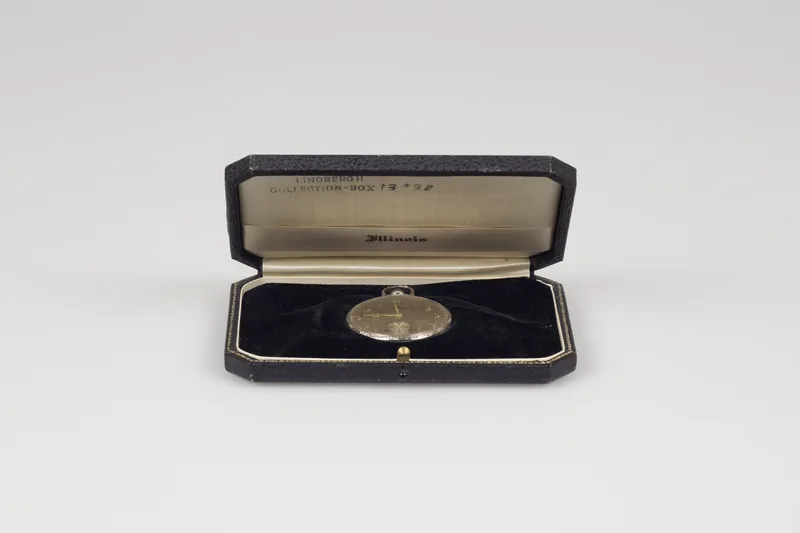
When properly serviced, fully disassembled, ultrasonically cleaned, re-pivoted, and lubricated with modern synthetic horological oils (such as Moebius 9010 and HP-1300), an Illinois 13L caliber will easily maintain daily rates well within +/- 15 seconds per day. Wearing a converted 13L is not just about telling time; it is about keeping a living piece of American micro-engineering active, vibrant, and ticking faithfully on your wrist for another century to come.