1. Historical Background of Illinois 14L Movements
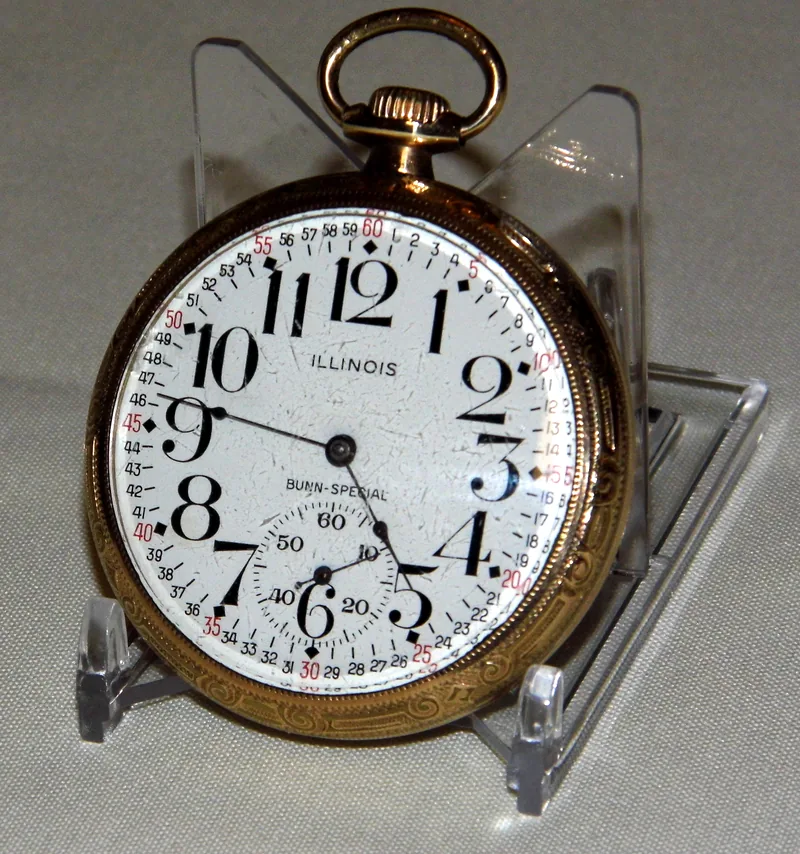
The Illinois Watch Company, operating out of Springfield, Illinois from 1869 until its acquisition by Hamilton in 1927, produced some of the finest American horological movements ever engineered. Among their vast catalog, movements built around the 14 Ligne chassis (roughly 31.58mm in diameter) represent a pivotal bridge between late Victorian pocket watch craftsmanship and the early 20th-century revolution in wrist-worn timekeeping. During the golden age of American watchmaking, Illinois movements were revered for their precision, exquisite damaskeening, and robust railway-grade lineage.
Originally, 14 Ligne movements were crafted for higher-end men's dress pocket watches, transitional trench-style timepieces, and specialized civilian models. As world events shifted tactics on the battlefield during the First World War, the necessity of hands-free timekeeping forced watchmakers to improvise. Pocket watch movements were adapted into strap-bound cases, establishing the archetype for modern wristwatches. To explore similar historical adaptations from this era, collectors often look into authentic WW1 trench watches, which paved the way for modern horology.
Today, vintage Illinois movements—particularly high-grade 14L calibers featuring 17, 19, or 21 jewels—are highly prized donor movements for custom wristwatches. Preserving these historical artifacts through careful recasing breathes new life into century-old American engineering, allowing contemporary watch enthusiasts to wear functional industrial art on their wrists rather than keeping it locked away in a display cabinet.
2. Technical Specifications and Movement Architecture
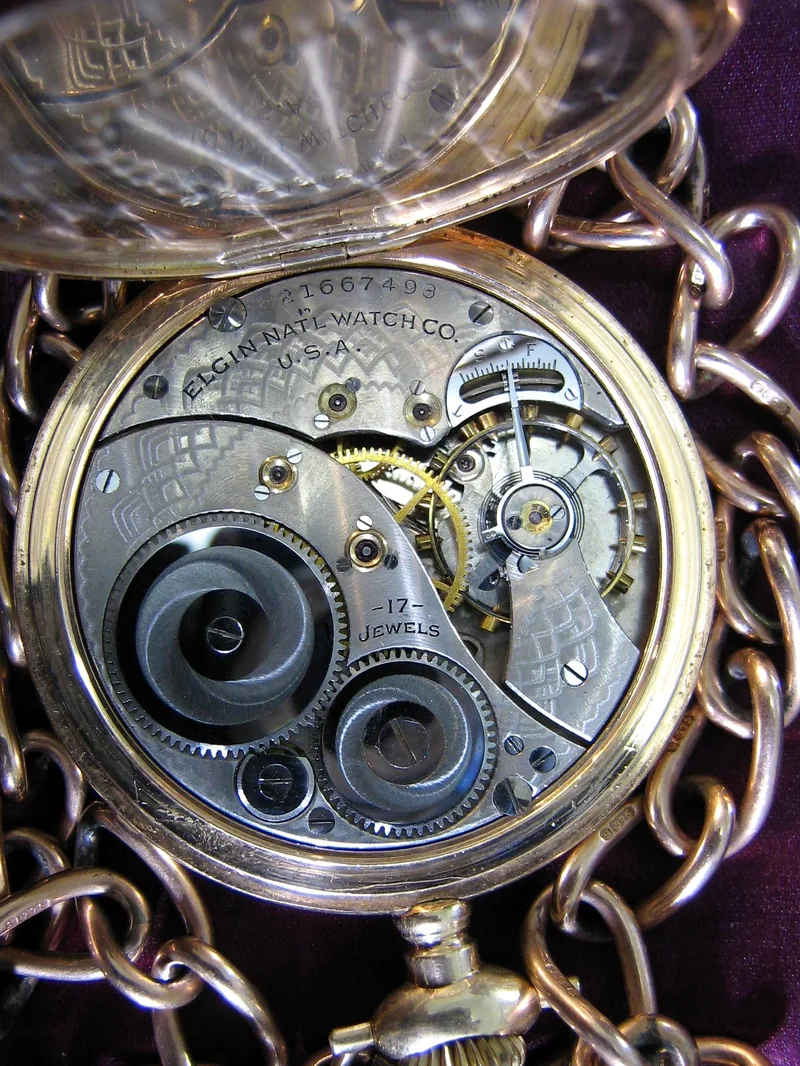
Understanding the architectural nuances of the Illinois 14L movement is critical before undertaking a conversion project. Measuring approximately 31.58mm across the pillar plate, the 14 Ligne dimension offers an ideal balance of structural rigidity and spatial efficiency. The plate layouts typically follow classical American design philosophies: split three-finger bridges, gold-plated train wheels, raised screwed jewel chatons, and intricate nickel-plated damaskeening patterns ranging from simple sunbursts to elaborate herringbone motifs.
Mechanically, these movements feature a traditional lever escapement operating at a beat rate of 18,000 vibrations per hour (vph) or 2.5 Hz. The balance assembly usually features a cut bimetallic compensation balance wheel with gold or brass timing screws, paired with a blued steel Breguet overcoil hairspring. Power delivery is managed through a safety barrel assembly designed to protect the geartrain in the event of a mainspring breakage. Jewel counts vary depending on the specific grade (such as Grades 175, 273, or 274), but high-grade variants feature fully jeweled trains down to the escape wheel and balance endstones.
Another major technical aspect of the 14L architecture is the winding and setting arrangement. While standard modern mechanical watch movements utilize a positive setting system integrated entirely within the movement, American pocket watches from Illinois frequently incorporated negative-set (sleeve-set) or friction-set mechanisms. Converting these movements requires precise knowledge of how the winding pinion, clutch, and setting stem interact within a non-original casing architecture.
3. Challenges of Converting Illinois 14L to Wristwatch
Attempting to convert illinois 14L pocket watch into wristwatch configurations presents several technical hurdles that require professional bench skills, custom machining, and horological problem-solving. The primary challenge stems from the fundamental difference between pocket watch environments and wrist environments. Pocket watches reside safely in a vest pocket, whereas wristwatches are subjected to constant lateral forces, impacts, torsional stress, and exposure to dust and moisture.
The absence of shock absorption on the balance pivots is perhaps the greatest vulnerability. Unlike modern movements equipped with Incabloc or KIF shock systems, the delicate balance staff pivots on an Illinois 14L rest directly against solid jewel endstones. A sudden impact can easily bend or snap a staff pivot. Therefore, the conversion housing must be engineered to offer maximum structural stability, and the finished watch must be worn with the care appropriate for an antique instrument.
A second major hurdle is movement orientation and layout. Illinois 14L movements were manufactured in two primary configurations: "Open Face" (Lépine) and "Hunter" (Savonnette). In an open-face movement, the winding stem is at 12 o'clock, and the small seconds subdial is at 6 o'clock. If you rotate an open-face movement inside a wristwatch case so the crown sits at 3 o'clock, the seconds subdial shifts to the 9 o'clock position. Conversely, a hunter movement features the winding stem at 3 o'clock and the seconds subdial at 6 o'clock, creating a traditional wristwatch dial symmetry. Identifying whether you have an open-face or hunter caliber dictates the final dial aesthetics and ergonomic orientation of your build.
4. Lug Welding and Case Selection
Selecting the correct housing is paramount to a successful project when you decide to convert illinois 14L pocket watch movements into modern wearability. The market offers two primary paths: building wire lugs onto an original vintage pocket watch case, or installing the movement into a modern CNC-machined conversion case specifically turned to match the dimensions of 14 Ligne calibers.
When determining the best case size for illinois 14L conversion projects, external ergonomics and movement securement must be carefully balanced. Because the bare movement diameter is approximately 31.58mm, the ideal modern case size generally falls between 38mm and 42mm in outer diameter. A 40mm stainless steel case with an internal movement ring, spacer clamps, and modern rubber gaskets provides an exceptional balance—giving the watch a modern presence on the wrist while protecting the antique caliber from environmental dust and humidity.
If you choose to retain an original sterling silver, gold-filled, or nickel pocket watch case, silver-soldering or laser-welding custom wire lugs directly to the case body is required. This method yields a charming, period-correct look reminiscent of early trench timepieces. However, extreme caution must be taken to remove all glass, movement components, and bezel assemblies prior to heating or welding to prevent thermal warping or damage. For broader inspiration on historical conversions, browse our collection of antique pocket watch conversions to see how various case styles complement distinct historical movements.
5. Crown and Stem Solutions
Resolving winding stem and crown mechanics is frequently the most tedious part of an illinois 14L pocket watch to wrist conversion. Illinois pocket watches were manufactured around American stem standards, which relied on standard thread pitches and sleeve-setting keyways distinct from modern Swiss stem taps (such as Tap 9 or Tap 10). When transplanting the movement into a modern wristwatch case, the original pocket watch stem is almost always too short, improperly threaded, or designed for a case-mounted setting sleeve.
To overcome this, a watchmaker must execute one of three solutions:
- Fabricating a Stem Extension: Turn a custom threaded adapter on a precision lathe to join the original square-profile Illinois stem section to a modern stem tap.
- Custom Stem Machining: Machining a completely new stem from annealed tool steel stock, hardening it in oil, and tempering it back to spring blue hardness to match both the internal square/clutch dimensions of the Illinois movement and the external crown tube of the modern case.
- Converting Negative Setting to Positive Setting: Modifying the setting lever spring and yoke within the movement plate so that pulling the crown out manually shifts the clutch into the setting position without needing a mechanical sleeve inside the pendant tube.
Furthermore, selecting the right crown is crucial for both function and historic aesthetics. An onion, pumpkin, or oversized trench-style crown pays homage to early 20th-century watch design while offering sufficient leverage to wind the thick mainspring of a 14L caliber without straining the winding pinion gears.
6. Dial and Hand Considerations
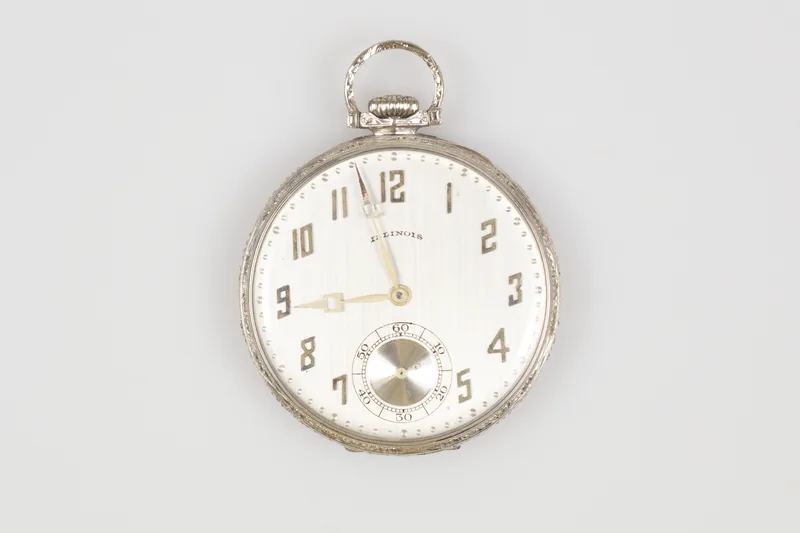
The dial and hands serve as the visual centerpieces of any custom build. Original Illinois 14L pocket watches feature either single-sunk porcelain enamel dials, double-sunk enamel dials, or engine-turned metal dials. Porcelain dials are notoriously brittle; drilling new mounting holes or trimming the outer diameter is extremely risky and can lead to immediate hairline cracking or catastrophic spider-web fracturing across the enamel surface.
When working with original enamel dials, the movement mounting ring inside the new case must be machined with adequate clearance so that no lateral clamping pressure is exerted onto the edges of the dial plate. The original dial feet—thin copper posts soldered to the rear brass backing plate—must fit cleanly into the locating holes on the pillar plate and be secured via the original side screws or friction pins. If the dial feet are missing or damaged, soft-soldering or utilizing low-profile dial feet pads is necessary, taking care never to apply high heat directly beneath fragile porcelain.
Hand fitting presents its own set of tolerance challenges. American pocket watch hand hole dimensions (hour wheel pipe diameter and cannon pinion arbor diameter) do not match modern Swiss standards. Original blued steel hands (spade, cathedral, or Breguet moon styles) should be retained whenever possible. If replacement hands are required, standard hands must be re-reamed or closing-punched on a staking set to ensure exact friction fit. Furthermore, hand clearance under modern domed sapphire or mineral crystals must be checked carefully—the total stack height from the cannon pinion tip to the top of the center sweep seconds arbor is often taller than standard modern wristwatch movement profiles.
7. Why 14L is More Common for Conversion
In the world of custom horology, 14 Ligne calibers occupy a unique "Goldilocks" zone compared to other popular pocket watch movement sizes like 16 Size (16S ~43.18mm) or 18 Size (18S ~44.86mm). While 16S and 18S conversions result in massive wristwatches measuring 45mm to 50mm in diameter—which can be cumbersome and top-heavy for daily wear—the 14L movement naturally lands in the comfortable 38mm to 42mm case range, making it exceptionally versatile for modern wrist sizes.
On the opposite end of the spectrum, smaller pocket watch calibers like 0 Size or 3/0 Size (often used in ladies' pendant watches) possess extremely delicate balance staffs and tiny mainspring barrels, making them far more fragile and difficult to service or source spare parts for. The 14L platform retains the heavy-duty gear teeth, thick mainsprings, and oversized balance wheels characteristic of American railroad-era engineering while maintaining dimensions that translate perfectly to a modern wrist profile.
Additionally, the availability of high-grade donor movements makes the 14L a favorite among independent watchmakers. Tens of thousands of these calibers were produced during Illinois' peak production years. Many survive in solid gold cases that were melted down during economic downturns, leaving behind pristine, fully functional loose movements eager to be housed in contemporary custom cases.
8. Final Thoughts on Illinois 14L Conversions
To successfully convert illinois 14L pocket watch into wristwatch form is to bridge two distinct eras of horological craftsmanship. It transforms an obsolete pocket watch movement into a daily wearable masterpiece that honors early 20th-century American manufacturing. While the technical demands—from stem lathe work to custom movement ring fitting and shock preservation—require advanced horological skill, the resulting timepiece is entirely unique.
When properly cleaned, oiled with modern synthetic lubricants (such as Moebius 9010 and 9104), and adjusted in multiple positions, a high-grade Illinois 14L movement can maintain timekeeping performance rivaling modern mechanical watches. By understanding the mechanical architecture, selecting the proper case sizing, and executing precise custom fitting, you ensure that a piece of Springfield's industrial heritage continues to tick reliably for generations to come.