1. Historical Background of Illinois 16s Movements
The Illinois Watch Company, established in Springfield, Illinois, in 1869, stands as one of the quintessential pillars of American industrial horology. Renowned for their uncompromising precision, exquisite damaskeening, and technical innovation, Illinois movements represent the pinnacle of late 19th and early 20th-century mechanical timing. During the golden age of American railroading, the demand for precise, ultra-reliable timekeeping led to strict standardizations established by Webb C. Ball. Illinois met and frequently exceeded these stringent requirements, crafting movements that survived decades of rigorous service on conductors' belts and engine cabs across North America.
The 16-size (16s) platform emerged as the industry's ultimate workhorse. Transitioning away from the bulkier 18-size movements that dominated the late 1800s, the 16s format provided a balanced architecture: large enough to maintain exceptional kinetic stability and precision, yet compact enough for everyday pocket carry. Iconic Illinois calibers such as the Bunn Special, Sangamo Special, A. Lincoln, and Grade 405 demonstrated the zenith of American manufacturing. These movements featured high jewel counts, raised gold chatons, double rollers, micrometer regulators, and temperature compensation balance wheels that rivaled the finest Swiss chronometers of the era.
In contemporary horology, the practice of converting these historical pocket watch movements into wearable wristwatches—often called a "marriage watch" or "conversion watch"—bridges a century of engineering with modern aesthetics. While the practice originated out of necessity during World War I when soldiers soldered wire lugs onto pocket cases to create early trench watches, modern horologists undergo this process to liberate movements trapped in melted down or unsalvageable solid gold cases. By housing these mechanical masterpieces in custom wrist cases, watchmakers preserve living horological history, allowing the mechanical brilliance of the Illinois Watch Company to be appreciated daily on the wrist.
2. Technical Specifications and Movement Architecture
To execute a successful project when you convert illinois 16s pocket watch into wristwatch, a deep technical understanding of the 16s platform's dimensions and architecture is required. According to the traditional American Lancashire gauge system, a 16-size movement possesses a pillar plate diameter of 1.7 inches, which converts to precisely 43.18 millimeters. The total height (thickness) of an Illinois 16s movement varies depending on the grade and layout, generally ranging between 5.5mm and 7.0mm from the top of the mainspring barrel bridge to the tip of the cannon pinion. This substantial surface area provides ample space for elaborate nickel damaskeening patterns, gold-filled screw settings, and bold, readable wheel train layouts.
A critical architectural distinction in Illinois movements lies in the configuration: Lépine (open-face) versus Savonnette (hunting case). Open-face movements place the winding stem at 12 o'clock in direct linear alignment with the sub-seconds dial at 6 o'clock. Hunting-case movements position the winding stem at 3 o'clock, with the sub-seconds register remaining at 6 o'clock (at a 90-degree offset from the stem). When converting these movements to a wristwatch format, open-face calibers naturally place the crown at 3 o'clock but push the sub-seconds dial to the 9 o'clock position. Conversely, hunting movements retain the traditional wristwatch configuration of a 3 o'clock crown and a 6 o'clock sub-seconds register, making movement layout a foundational consideration prior to disassembly.
From a gear train and escapement perspective, top-tier Illinois 16s movements feature 17, 21, or 23 synthetic or natural ruby/sapphire jewels. High-grade models incorporate adjusted balance assemblies with Breguet hairsprings, steel escape wheels, and compensated bimetallic balance wheels with gold timing screws. The keyless works and setting mechanisms vary between sleeve-set (where the casing sleeve holds the setting stem in winding or setting position) and lever-set configurations. Lever-set movements require a setting lever located near the edge of the dial to be physically pulled outward to engage the hand-setting train—a mechanical safeguard originally designed to prevent accidental time setting on railroad lines.
3. Challenges of Converting Illinois 16s to Wristwatch
Converting a vintage pocket watch movement into a wearable wristwatch is far more complex than dropping a movement into an oversized case. The primary engineering hurdle is shock protection—or the total lack thereof. Vintage Illinois 16s movements were designed to rest vertically inside a vest pocket, subjecting them to minimal kinetic shock. They lack modern shock-absorption systems like Incabloc, KIF, or Novodiac. The balance staff pivots measure a fraction of a millimeter in diameter and rest inside rigid jewel holes. Wearers must understand that a sudden drop or heavy impact on a hard surface can easily shear or bend the delicate balance staff pivots, requiring custom lathe turning to repair.
Environmental sealing poses another significant challenge. Pocket watches were never designed to resist water immersion, sweat, or high atmospheric humidity. Original pocket cases relied on tight metal-to-metal snap bezels or fine screw threads. When adapting a 16s movement for wrist wear, the watchmaker must mitigate moisture ingress around the winding stem tube, crystal bezels, and caseback joints. Without proper rubber O-rings and gasket channels designed into the custom case, atmospheric humidity and wrist perspiration can penetrate the movement cavity, causing rapid oxidation of carbon steel hairsprings, winding stems, and un-plated steel gear train pivots.
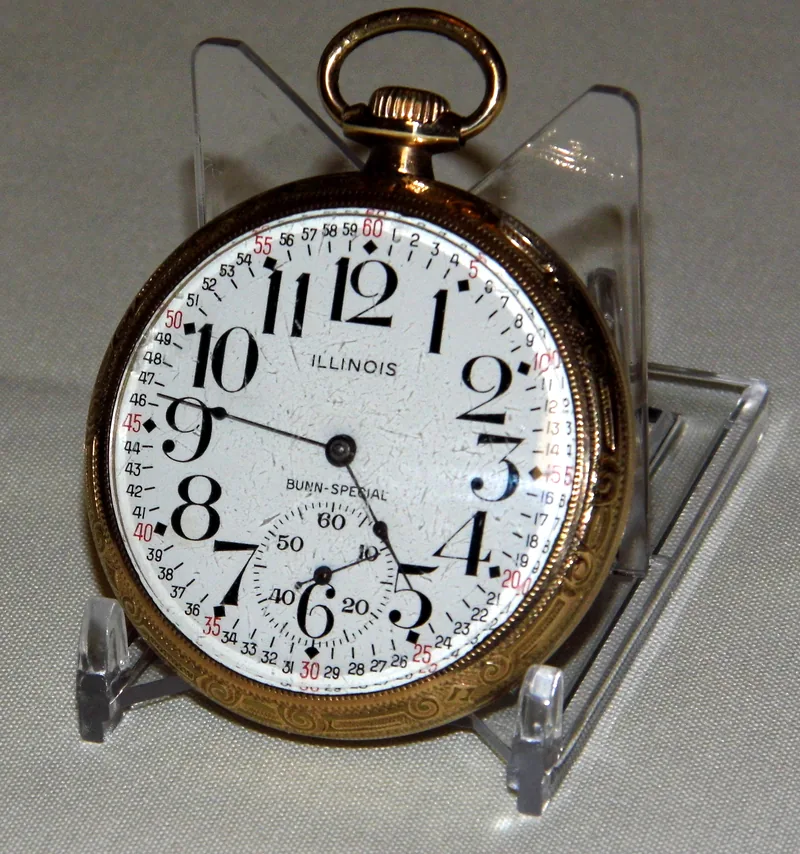
Furthermore, setting mechanism mechanics present an operational hurdle. Many high-grade Illinois 16s movements utilize a lever-setting system, requiring access to a tiny setting lever located at the perimeter of the dial (usually near 1 o'clock or 4 o'clock). In a modern screw-down bezel or front-loading wristwatch case, accessing this lever to adjust the time requires unscrewing the front bezel—a process that introduces dust and damages seals if done frequently. Watchmakers must either modify the lever assembly, source friction-set or sleeve-set Illinois movements, or utilize specialized cases with dedicated lever-access cutouts to maintain functional integrity without compromising case sealing.
4. Lug Welding and Case Selection
Selecting or fabricating an appropriate case is the structural foundation of the conversion process. When searching for an illinois 16s pocket watch to wrist conversion case, horologists generally choose between two distinct methodologies: vintage pocket case modification or modern CNC-machined conversion cases. Traditional vintage conversion involves taking an original nickel, silver, or gold-filled 16s pocket watch case, removing the original top bow and pendant, and silver-soldering or micro-TIG welding custom steel or brass wire lugs directly onto the case perimeter at the 12 o'clock and 6 o'clock positions. This method preserves historic patina but yields a watch with zero modern water resistance and high vulnerability to wear.
The contemporary and far more durable approach relies on custom 316L stainless steel pilot-style conversion cases specifically engineered for American 16s dimensions. These cases feature an internal diameter matched precisely to the 43.18mm Illinois movement plate, often incorporating internal movement rings or rim stepped grooves. The overall wrist case diameter typically lands between 45mm and 48mm, with a thickness of 12mm to 15mm. High-grade modern conversion cases feature sapphire crystals on the front for scratch resistance, mineral display casebacks to showcase the damaskeened movement, and integrated rubber O-ring gaskets across all joint surfaces to provide dust and splash protection.
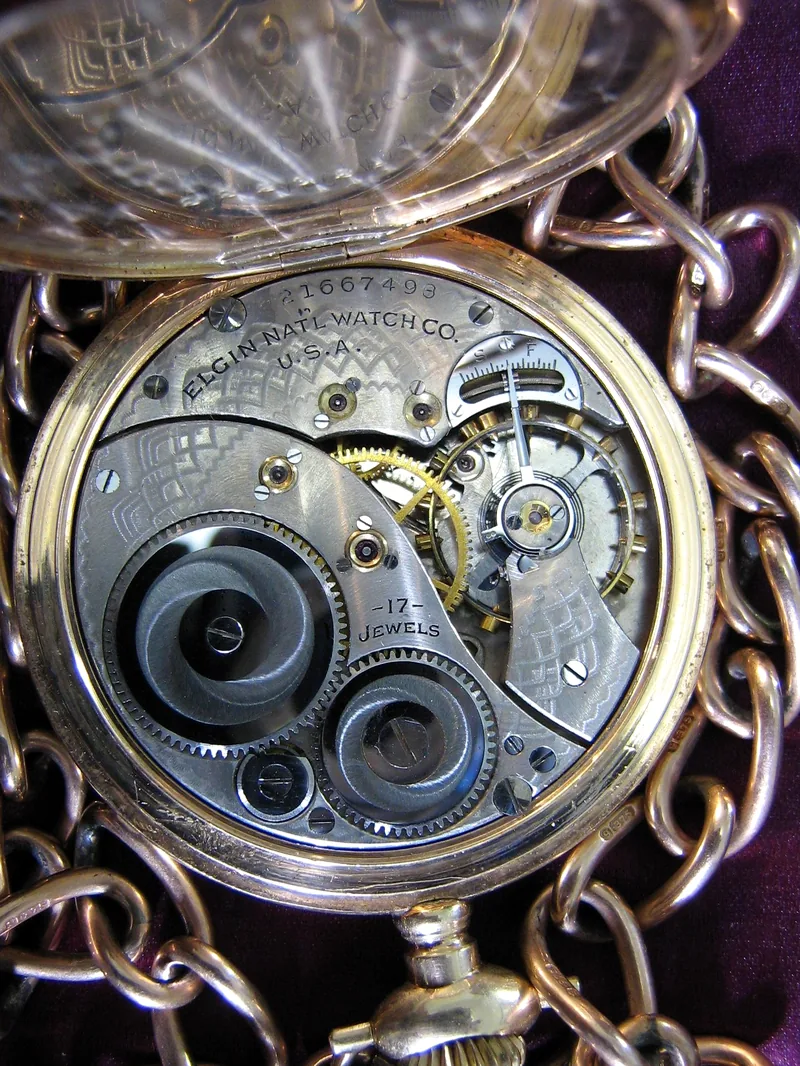
Securing the movement inside the case requires custom-machined casing clamps and screws. Pocket watch movements were originally secured via perimeter casing screws that expanded outward into the body ring of the pocket case. In modern conversion cases, the watchmaker must fabricate custom-fitted movement tabs or turn a brass movement adapter ring on a bench lathe. This adapter fills any microscopic dimensional tolerances between the Illinois pillar plate and the inner case wall, ensuring the movement remains rigidly anchored against rotational torque when the movement is wound or subjected to motion.
5. Crown and Stem Solutions
The winding and setting stem geometry represents one of the most intricate lathe-machining challenges in pocket-to-wrist conversions. Modern wristwatch stems utilize standard ISO thread taps (such as Tap 10 or Tap 9) that thread directly into a modern crown. Conversely, vintage Illinois 16s stems were built to proprietary American standards, utilizing non-metric thread profiles or square shank profiles designed to mate with pocket watch case sleeves. Because an original pocket watch stem is typically far too short or incorrectly proportioned to extend through a modern wristwatch case tube, a custom stem solution must be fabricated.
There are two primary methods for resolving stem fitment: stem extension adapters or custom stem machining on a watchmaker’s lathe (such as a Levin or Lorch lathe). Stem extensions screw onto the existing male threads of the Illinois stem, bridging the distance through the case tube to the new wrist crown. However, extensions add a potential point of failure under rotational stress. The superior horological method is to turn a solid piece of high-carbon steel wire on a lathe, cutting the exact square flats, pivot shoulders, and winding pinions required by the Illinois keyless works, while threading the outer end to a standard metric tap to accept a modern, gasket-sealed onion or diamond wristwatch crown.
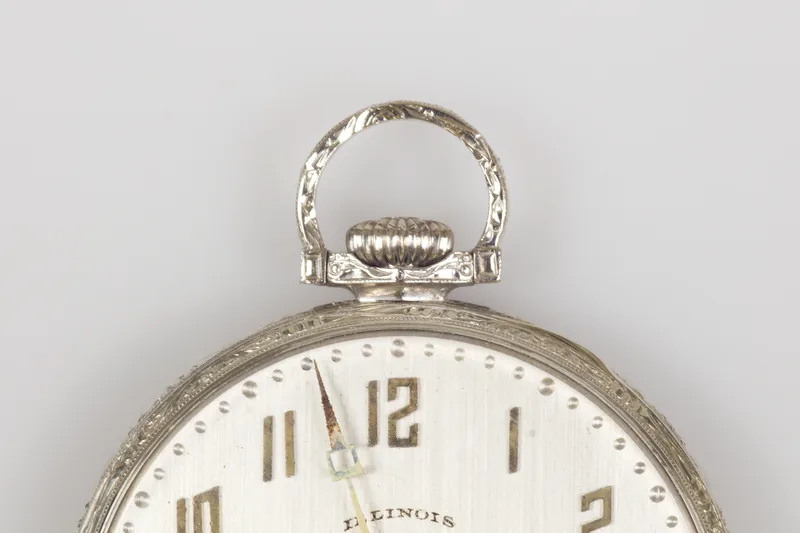
Additionally, watchmakers must account for winding torque dynamics. A 16s mainspring is substantially thicker and stiffer than a standard wristwatch mainspring, designed to drive heavy, high-inertia spade hands for 30 to 40 hours. Winding a fully un-wound Illinois 16s mainspring places significant torsional shear stress on the stem shaft. The crown must feature a thick stem neck, an internal steel shoulder, and a securely fitted case tube to absorb this lateral load. Without proper stem support, repeated daily manual winding will fatigue the steel and snap the stem inside the keyless works.
6. Dial and Hand Considerations
The visual identity of a converted Illinois timepiece depends heavily on the execution of the dial and hands. Vintage Illinois dials are predominantly made of double-sunk or single-sunk vitreous enamel (porcelain) fused onto a copper plate. While vitreous enamel dials are visually stunning and never fade, they are extremely brittle. Attempting to modify, cut, or drill an enamel dial will cause immediate stress fractures (hairlines) or catastrophic chipping across the surface. Therefore, the original dial dimensions and sub-seconds placement must be respected entirely when selecting a case layout.
Dial foot attachment presents another spatial puzzle. Illinois dials feature copper feet soldered to the backside, which insert into corresponding receiving holes on the pillar plate and lock in place via side-facing dial screws. If the original dial is damaged and an aftermarket or custom dial is used, new dial feet must be soft-soldered or attached using precision dial dots. When using an original open-face Illinois dial, the movement rotation shifts the 12 o'clock marker to the 3 o'clock crown position, resulting in a unique dial layout where 12 o'clock is oriented to the right, or requiring a brand-new custom dial printed with the proper 12 o'clock orientation relative to the stem.
Hand clearance and bushing fitment require meticulous adjustment under a microscope. Original pocket watch hands were constructed from blued steel or gold and feature tall hand pipes (bushings) designed to clear the thick steps of sunk enamel dials. Modern conversion cases often feature lower profile crystal clearances. The watchmaker must ensure that the hour hand, minute hand, and tiny sub-seconds hand have sufficient vertical clearance below the inner glass surface while remaining parallel to one another. The mounting hole diameters for the Illinois 16s cannon pinion, hour wheel, and seconds bit are non-standard by modern metrics; original hands must be carefully broached or closed using a staking set to achieve a perfect friction fit on the arbor pivots.
7. Why 16s is more common for conversion
Horologists and collectors frequently ask: can you convert illinois 16s pocket watch movements with higher success than other sizes? The answer lies in the optimal physical proportions of the 16-size format. When evaluating American pocket watch standards—ranging from the massive 18-size down to the smaller 12, 10, and 0-sizes—the 16s platform strikes a perfect mechanical and aesthetic equilibrium that naturally translates to modern wristwatch wearability.
To understand why watchmakers overwhelmingly convert illinois 16s pocket watch into wristwatch configurations compared to other sizes, consider the comparative dimensional breakdown:
- 18-Size (44.86mm movement diameter): Requires an outer case diameter of 50mm to 55mm. This results in an uncomfortably large, heavy instrument on the wrist that overhangs the wrist joints of most wearers.
- 16-Size (43.18mm movement diameter): Fits perfectly into standard oversized pilot cases measuring 45mm to 47mm. This offers a commanding wrist presence akin to modern luxury aviation watches while maintaining ergonomic balance.
- 12-Size (39.75mm movement diameter): Yields a very wearable 41mm-42mm watch, but 12s movements generally feature thinner mainsprings, smaller balance wheels, and less robust train plates, offering diminished kinetic durability on the wrist.
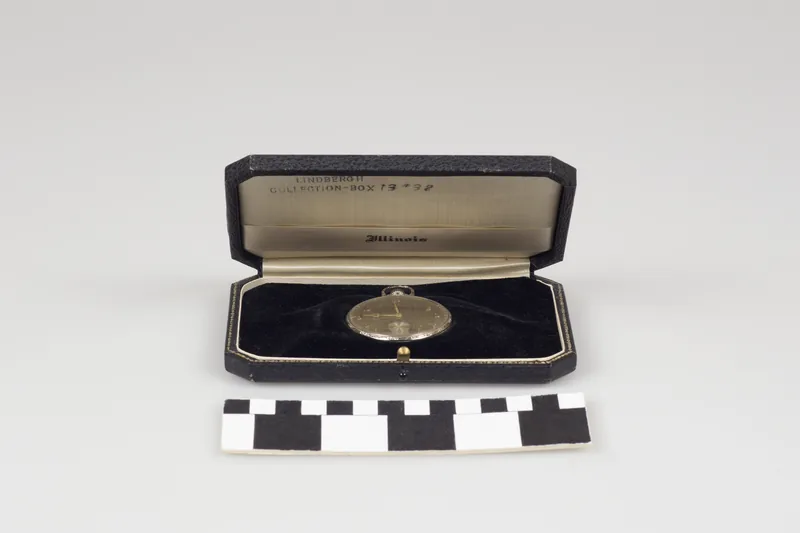
Furthermore, parts availability and aftermarket support for 16-size movements far surpass any other size. Because 16s was the standard for railroad-grade timepieces for over half a century, millions of these movements were produced. Spare components—such as mainsprings, balance staffs, jewel settings, and winding pinions—remain widely available across horological supply houses. This abundance of parts, combined with the availability of specialized off-the-shelf conversion cases engineered specifically for 16s movement contours, makes the 16s platform the ideal choice for conversion projects.
8. Final Thoughts on Illinois 16s Conversions
Converting an Illinois 16s pocket watch movement into a functional wristwatch represents a delicate synthesis of historic preservation, modern mechanical design, and micro-machining skill. While purists occasionally debate the ethics of altering vintage pocket timepieces, the horological community broadly embraces conversions when executed on orphaned movements whose original precious metal cases were melted down long ago. Rather than allowing these magnificent examples of late 19th and early 20th-century American engineering to sit forgotten in material drawers, conversion breathes new life into historic industrial art.
A converted Illinois 16s watch is not merely a device for telling time; it is a wearable mechanical museum. The sight of a hand-damaskeened nickel bridge plate, ruby jewels set in solid gold chatons, and a slow-beating 18,000 VPH balance wheel operating beneath a sapphire display caseback offers a visual experience that few modern mass-produced timepieces can replicate. However, wearers must remain mindful of the movement's antique nature: these watches require gentle hand-winding, avoidance of wet environments, and protection from severe impacts or strong magnetic fields.
Ultimately, a successful Illinois 16s conversion honors the master craftsmen of Springfield, Illinois, who built these movements over a century ago. By pairing rugged custom cases, engineered stem assemblies, and precise hand adjustments with timeless railroad-grade architecture, modern watchmakers ensure that the mechanical legacy of the Illinois Watch Company continues to tick proudly into the 21st century.