1. Historical Background of Lemania 0s Movements
The story of Lemania is inextricably bound to the golden age of Swiss mechanical horology. Founded in 1884 by Alfred Lugrin in L'Orient, Switzerland, the manufacture initially operated under the name A. Lugrin & Cie before establishing itself as one of the premier movement makers (ébaucheurs) under the Lemania brand. Lugrin was a brilliant self-taught technician who specialized in complex mechanisms, particularly chronographs and split-second timers. By the early 20th century, Lemania had earned a reputation for precision engineering, supplying base calibers to iconic names across the Swiss watchmaking industry, including Omega, Tissot, and Patek Philippe.
During the late Victorian and Edwardian eras, pocket watch sizing followed distinct standardized systems. In the American sizing convention, a "0s" (zero size) movement measures approximately 1 and 5/30 inches in diameter, or roughly 29.63 mm to 30 mm. In European terms, this corresponds closely to a 13 to 13.5 ligne movement. The 0s footprint was historically significant: it represented a transitional size, sitting right at the boundary between small gents' dress pocket watches and larger ladies' pendant watches. During the early 1910s, as military officers began binding pocket timepieces to their wrists for quick reference in combat, movements in the 0s class became prime candidates for early military timepieces and authentic WW1 trench watches.
Lemania produced 0s movements with exceptional build quality, employing fine train finishes, precision lever escapements, and robust spring barrel designs. Unlike many mass-produced standard American 0s movements from Waltham or Elgin, Lemania’s 0s calibers frequently featured high-grade Swiss architectural characteristics: split bimetallic compensation balances, hand-burnished steel chatons, fine swan-neck regulators, and exquisite bridge layouts. Understanding this rich heritage is essential before attempting a modern conversion, as working on a Lemania 0s requires respecting century-old metallurgy and hand-finished craftsmanship.
2. Technical Specifications and Movement Architecture
To successfully execute a conversion, a watchmaker must first master the architectural nuances of the Lemania 0s movement. Measuring roughly 29.5 mm to 30.5 mm in diameter with a thickness varying between 4.2 mm and 5.1 mm depending on the exact caliber reference, these movements possess an ideal dimensional scale for contemporary wrist wear. They are typically engineered around a traditional Swiss finger-bridge layout or a split 3/4 plate design. The gear train utilizes a classic right-angle lever escapement driving a balance wheel vibrating at 18,000 beats per hour (2.5 Hz), secured with a flat or Breguet overcoil hairspring depending on the original execution grade.
The jeweling on Lemania 0s calibers ranges from basic 7-jewel military specifications to fully jeweled 15-, 17-, or even 19-jewel variants featuring screwed gold chatons for the upper pivot jewels. The winding mechanism is predominantly stem-set (pendant set) using a rocking bar or sliding pinion arrangement, though very early iterations may incorporate a pin-set system where a small pusher near the rim must be depressed to engage hand setting. Below is a detailed technical summary of the typical Lemania 0s caliber architecture:
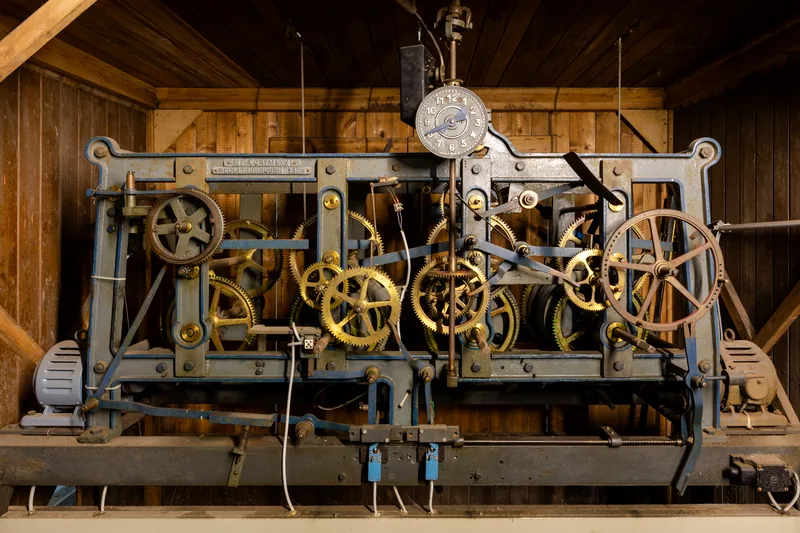
From a mechanical perspective, the mainspring barrel generates a torque profile tailored to drive a relatively heavy, non-shock-protected balance wheel. Power transfer through the center wheel, third wheel, fourth wheel, and escape wheel must be exceptionally smooth; any friction introduced by worn pivot holes or misaligned jewel settings will dramatically alter the amplitude. Modern restorers must also pay attention to the stem height relative to the main plate center—a crucial tolerance when fitting the finished caliber into a newly engineered wrist case.
3. Challenges of Converting Lemania 0s to Wristwatch
A common inquiry among horological enthusiasts and bench watchmakers is simple: can you convert lemania 0s pocket watch into a daily wearable wristwatch? The answer is yes, but the endeavor presents a unique set of technical hurdles that differentiate it from larger 16s or 18s pocket watch projects. Unlike massive pocket movements that easily fit into oversized 44mm or 46mm modern cases, a 0s movement yields a subtle, highly refined 36mm to 38mm wristwatch. However, working within these compact tolerances drastically reduces the margin for mechanical error.
The primary challenge centers on stem alignment and casing orientation. Lemania 0s movements exist in two classic layouts: Lépine (open-face, where the crown is positioned at 12 o'clock in line with the sub-seconds register at 6 o'clock) and Savonnette (hunter-case, where the crown is at 3 o'clock and the sub-seconds register is at 9 o'clock relative to the movement layout). If you attempt to convert lemania 0s pocket watch into wristwatch configurations using a Lépine movement, standard 3 o'clock crown placement forces the sub-seconds register to shift to the 9 o'clock position unless a custom dial re-layout is commissioned or a bullhead case configuration is adopted.
Another severe technical obstacle is the total lack of modern shock protection. The balance pivots on a vintage Lemania 0s are extremely thin—often measuring between 0.08 mm and 0.11 mm in diameter. In an unconverted pocket watch, these delicate pivots survived because pocket watches rested securely in a vest pocket. Mounted on a moving wrist, however, daily impacts pose a constant threat of snapping the balance staff. Watchmakers must either accept this vulnerability and recommend gentle wear, or perform complex lathe work to turn down the jewel settings and fit a retrofitted shock system such as Incabloc or KIF—a high-risk modification reserved for elite restorers.
4. Lug Welding and Case Selection
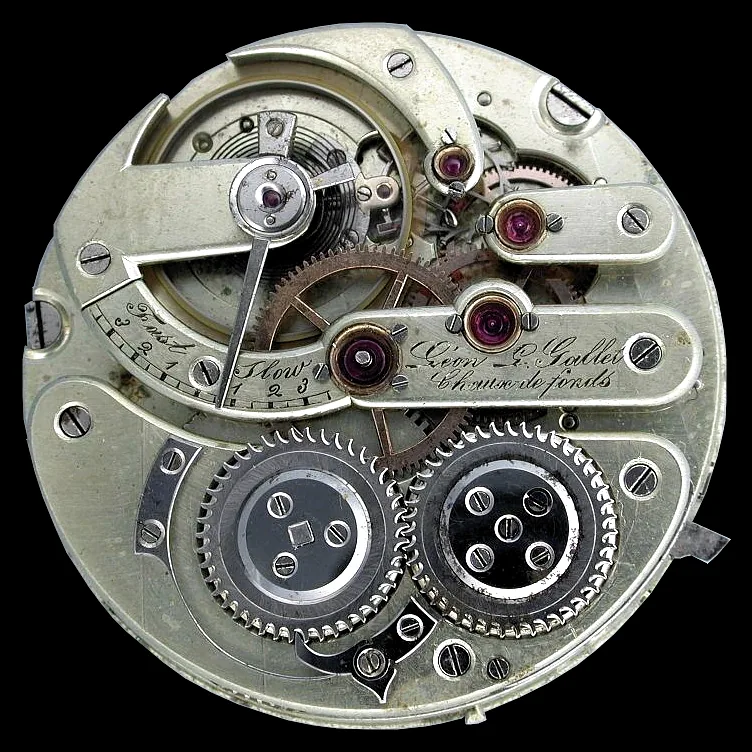
Choosing or fabricating an appropriate housing is the foundation of any successful restoration. When sourcing a lemania 0s pocket watch to wrist conversion case, watchmakers generally choose between two distinct paths: modifying the original vintage pocket watch case by soldering custom wire lugs, or machining an entirely new custom 316L stainless steel container specifically engineered for the caliber’s exact dimensions. Each methodology demands specialized bench tools and metallurgic expertise.
If retaining the original sterling silver or gold-filled pocket watch case, the conversion relies on precision lug attachment. Traditional high-heat soldering with an oxy-acetylene torch risks warping thin vintage case walls or damaging delicate snap bezels. Instead, modern horologists utilize micro-TIG welding or PUK pulse-arc welders. Wire lugs—usually shaped from solid 1.5mm to 2.0mm sterling silver, nickel-silver, or gold wire—are carefully fitted to the contours of the case at 12 and 6 o'clock. The welding spot is bombarded with argon gas shielding to prevent oxidation, allowing a seamless fusion without burning the surrounding metal. This aesthetic closely mirrors early military wire-lug adaptors, creating a piece that honors the heritage of antique pocket watch conversions.
Alternatively, constructing or adapting a modern wristwatch case provides superior structural integrity and modern water resistance. A custom 316L stainless steel case must feature an internal step or a custom-turned brass movement ring. Because pocket watch movements lack the standardized casing grooves of modern wristwatches, the movement must be secured using custom-bent casing clamps or custom-threaded perimeter screws. The outer dimension of a typical 0s conversion case lands at a very wearable 36.5 mm to 38 mm diameter, offering ideal wrist proportions while protecting the historic movement within a rigid structure.
5. Crown and Stem Solutions
Interfacing a 100-year-old winding system with a modern wristwatch case tube demands custom fabrication on a watchmaker’s lathe. Pocket watch crowns relied on long, stout stems designed to pass through a thick pendant sleeve. On a wristwatch conversion, the distance from the movement stem-entry port to the outer edge of the crown tube is significantly shorter, requiring precise calculation of thread pitch, stem length, and square shank dimensions.
To fabricate a functional stem for a Lemania 0s, the watchmaker must determine the original thread pitch—frequently obsolete Swiss metric sizes like 0.90mm or 1.00mm tap size. If the original stem is intact but too short, a stem extender turned from high-carbon steel can be threaded and loctited onto the original shaft. If a completely new stem must be cut, high-grade annealed steel wire (such as Blue Steel rod) is turned down on a Lorch or Levin watchmaker's lathe. The square section that engages the sliding clutch pinion must be milled or hand-filed using a micro-indexing plate to ensure absolute zero-play engagement during winding and setting modes.
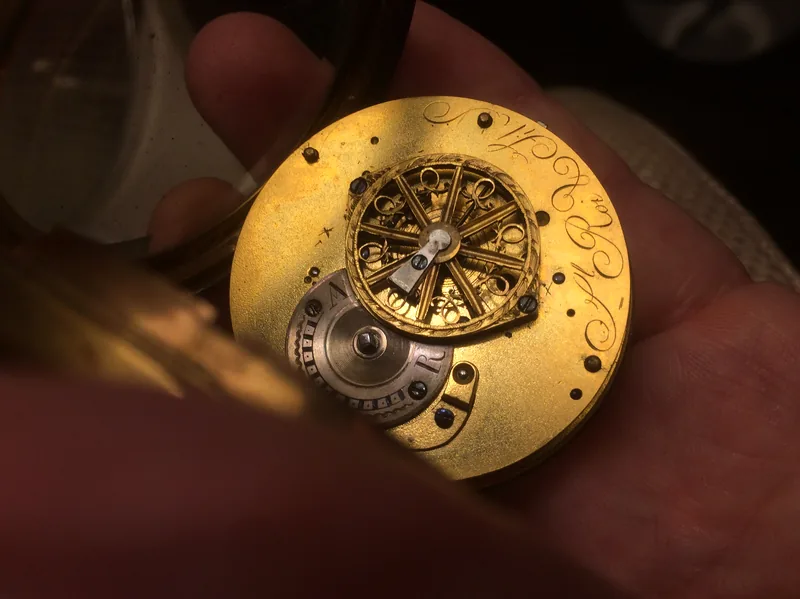
Crown selection is equally critical for both utility and moisture protection. Historical authenticity favors an onion, pumpkin, or cabochon style crown, matching the aesthetic of early 20th-century timepieces. However, because modern wear exposes the watch to dust and skin humidity, the custom crown should incorporate an internal rubber O-ring seal that slides smoothly over an external case tube. This hybrid approach preserves the vintage silhouette while offering basic environmental defense for the bare steel setting components inside.
6. Dial and Hand Considerations
Dials on Lemania 0s movements are almost exclusively double-sunk or single-sunk fired enamel over copper plates. Vitreous enamel dials retain their brilliant, deep white luster for centuries without fading, but they are notoriously brittle. Drilling new holes, filing edges, or removing original dial feet can instantly cause hairline stress fractures across the porcelain surface. When undertaking a conversion, preserving the dial’s original structural integrity is paramount.
If the dial feet must be repositioned to align with a new casing orientation, soft soldering with high-heat soldering irons should be avoided at all costs, as the thermal shock will crack the enamel. Bench watchmakers use specialized capacitive discharge spot welders (dial foot welders) or cold-bonding metal epoxies to attach new copper dial feet without transferring damaging heat to the front surface. In cases where the sub-seconds register shifts position due to rotating a Lépine movement to a 3 o'clock crown orientation, the watchmaker must decide whether to retain the offset 9 o'clock sub-dial layout—a characteristic hallmark of classic conversions—or commission a custom hand-painted brass replacement dial that mirrors vintage military typographies.
Hand fitting presents its own clear set of mechanical requirements. Vintage pocket watch hands feature specific hole diameters for the center hour wheel, cannon pinion, and fourth wheel pivot that rarely match off-the-shelf modern hands. Original blued steel spade, Breguet, or cathedral hands should be carefully restored:
- Polishing: Fine rust spots are polished out using micro-abrasive diamantine paste on a wood lap.
- Thermal Re-bluing: Hands are chemically cleaned, placed in a brass filing tray filled with brass shavings, and heated over an alcohol flame to precisely 290°C (554°F) until a rich, uniform cornflower blue oxide layer forms.
- Piping/Fitting: The mounting collets of the hands are gently resized using micro-broaches or staking punches to ensure an exact friction fit without binding against the underside of the crystal or the dial surface.
7. Why 0s is Less Common for Conversion
While large 16s and 18s American pocket watches from brands like Hamilton, Illinois, and Waltham dominate the modern conversion landscape, seeing a fully executed Lemania 0s conversion is remarkably rare. Understanding why this specific caliber size is less frequently encountered reveals the true complexity of high-grade horological restoration.
The foremost factor is raw rarity and historical survival rates. Lemania produced far fewer 0s ébauches compared to the millions of standard pocket watch movements turned out by American industrial giants or mass-market Swiss firms like AS or Fontainemelon. Many 0s Lemania movements were used in high-end dress watches or early luxury wristwatches—such as those linked to vintage Rolex wristwatches and Rebberg-era Swiss collaborations—making surviving, unmolested loose movements significantly harder to find on the open market today.
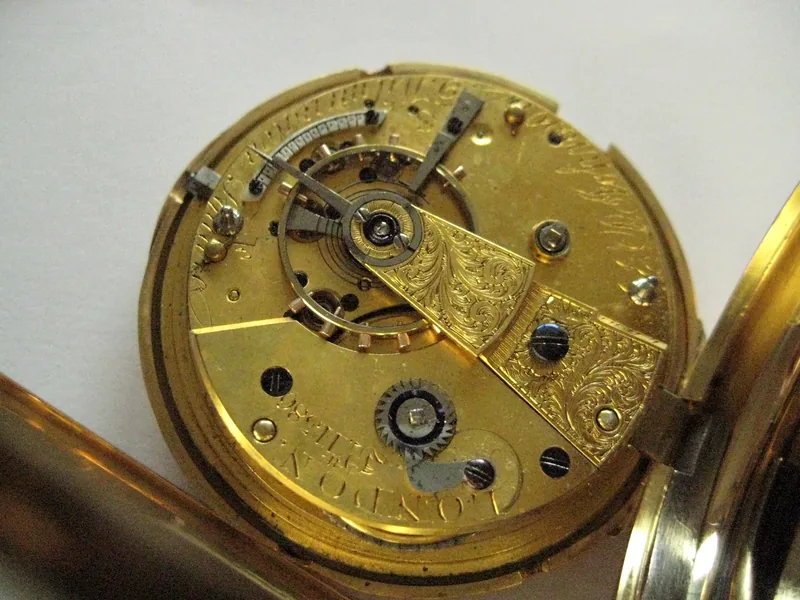
Furthermore, the technical precision needed to work on a 0s caliber pushes it out of the comfort zone of casual hobbyists. The tiny balance wheel, delicate train pivots, and micro-scale winding components require genuine watchmaking skills, specialized lathe work, and micro-welding equipment. A simple mistake—such as over-tightening a mainspring or applying excessive pressure on a balance pivot during casing—will instantly destroy irreplaceable components. Below is a comparative overview highlighting why 0s conversions demand far greater expertise than traditional large-format conversions:
| Parameter | Standard 16s / 18s Conversion | Lemania 0s Conversion |
|---|---|---|
| Movement Diameter | 43.0 mm – 44.5 mm | 29.5 mm – 30.5 mm |
| Resulting Case Size | 44 mm – 48 mm (Very Large) | 36 mm – 38 mm (Classic Proportions) |
| Parts Availability | Abundant NOS and donor parts | Extremely scarce; custom fabrication needed |
| Pivot Sensitivity | Thicker pivots, high shock tolerance | Ultra-thin pivots; highly vulnerable |
| Casing Complexity | Low to Moderate | Very High (tight clearance & custom stems) |
8. Final Thoughts on Lemania 0s Conversions
To successfully convert lemania 0s pocket watch into wristwatch specifications is to accomplish one of the most rewarding challenges in modern bench horology. Rather than creating an oversized, unwieldy wrist clock, a properly cased 0s Lemania transforms into an elegant, historically rich timepiece featuring perfect 37mm proportions that wear comfortably on any wrist. It bridges the gap between historical pocket watch art and functional modern fashion.
However, this process should always be approached with horological reverence. Loose, un-cased Lemania movements whose original cases were melted down decades ago are ideal candidates for this form of revival, giving forgotten mechanical masterpieces a second life. By applying proper micro-welding techniques, custom lathe-turned winding stems, carefully fitted movement rings, and delicate balance adjustments, a master watchmaker preserves a piece of Swiss heritage that can be admired daily on the wrist rather than left hidden in a drawer.
Ultimately, a Lemania 0s conversion stands as a testament to vintage craftsmanship. When executed with precision, patience, and technical discipline, the finished timepiece is far more than a simple modification—it is a bespoke work of wearable horological history, echoing the early 20th-century transition from pocket timekeeping to the modern wrist instrument.