1. Historical Background of Lemania 12L Movements
The story of Lemania begins in 1884, when Alfred Lugrin established the Fabrique d'Horlogerie Lugrin in L'Orient, Switzerland. Renowned for its exceptional expertise in manufacturing complex chronograph movements and robust base ébauches, the manufacture eventually adopted the name Lemania Watch Co. in the 1930s. Among the vast array of calibers produced during the golden age of Swiss mechanical watchmaking, the Lemania 12L movement occupies a unique position as a bridge between classic pocket horology and the modern wristwatch era.
Originally designed during a period when pocket watches were gradually yielding dominance to wrist-worn timepieces, the 12L caliber was engineered to provide high chronometric reliability in a compact, durable architecture. During the early-to-mid 20th century, Lemania supplied movements not only under its own name but also as an ébauche supplier to elite Swiss manufactures and military contractors. The 12L movement saw service in civilian open-face pocket watches, small nurse's watches, and converted field timepieces, establishing a reputation for structural resilience and straightforward serviceability.
As the wrist-worn format took over the horological world—a shift accelerated by military necessity, as seen in authentic WW1 trench watches—the dimensions of movements shifted radically. The 12L was specifically birthed during this transitional era. Its architectural balance between robust pocket watch bridge construction and compact wrist-friendly proportions makes it an indispensable historical artifact, showcasing how Swiss manufactures adapted traditional pocket movement layouts to suit demanding modern environments.
2. Technical Specifications and Movement Architecture
To successfully execute a conversion project, a watchmaker must thoroughly analyze the engineering blueprint of the Lemania 12L movement. Measured in French lines, "12L" indicates a movement diameter of 12 lignes, which translates to approximately 27.07 millimeters. This compact footprint sets it apart from large 16 to 19 ligne pocket watch movements, making it an exceptionally refined candidate for casing into a modern wristwatch format without creating oversized proportions on the wrist.
The core movement architecture of the Lemania 12L features a traditional Swiss finger-bridge or split-bridge layout, secured by blued steel screws to a mainplate finished with Geneva stripes (Côtes de Genève) or perlage. Operating at a standard frequency of 18,000 vibrations per hour (2.5 Hz), the movement delivers a classic, steady beat. Depending on the specific execution, the Lemania 12L was supplied in variations ranging from 15 to 17 jewels, utilizing raised brass or press-fit ruby chatons for the wheel train pivots. The balance assembly utilizes a cut bimetallic balance wheel or a monometallic glucydur balance paired with a Breguet overcoil or flat Nivarox balance spring.
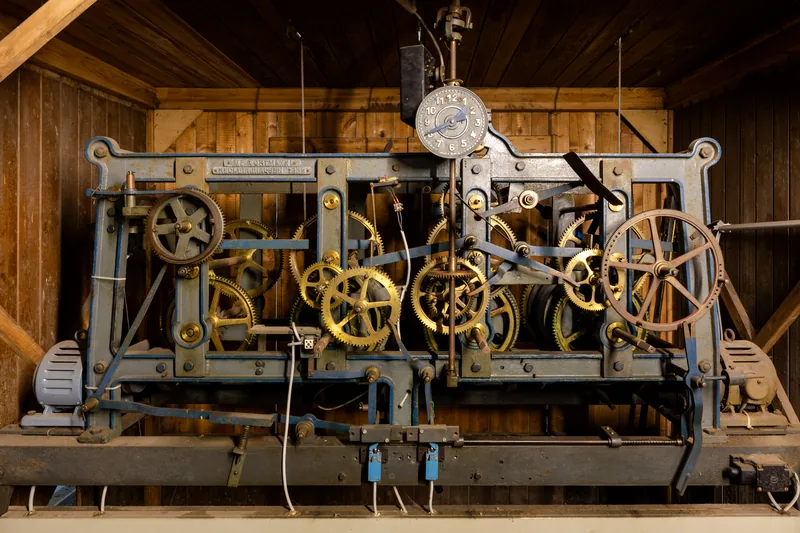
The keyless works mechanism of the 12L uses a positive-set system with a robust winding stem and sliding pinion structure. Power is delivered to the gear train through an oversized mainspring barrel providing roughly 38 to 42 hours of power reserve. Understanding these architectural specifications is critical before embarking on a conversion: the movement's stem height, sub-second pivot position, and casing lip dimensions dictate every choice made during the modern re-casing procedure.
3. Challenges of Converting Lemania 12L to Wristwatch
When you decide to convert lemania 12L pocket watch into wristwatch configurations, you step into a domain that demands both extreme mechanical precision and creative watchmaking solutions. The primary obstacle encountered in any conversion is the dial layout orientation. Most original Lemania 12L pocket watches were built in a "Lépine" configuration (open-face), meaning the crown sits at 12 o'clock and the running sub-seconds hand resides at 6 o'clock. When re-cased into a standard wristwatch configuration where the crown must be located at 3 o'clock, a traditional Lépine dial will position the sub-seconds register at 9 o'clock unless a custom dial is fabricated or the original dial is rotated.
Another major challenge is shock protection. Early iterations of the Lemania 12L movement lacked spring-loaded jewel shock absorbers (such as Incabloc or KIF systems) on the balance staff pivots. Pocket watches carried in a vest pocket experience relatively gentle, predictable motion. However, wristwatches are subject to violent acceleration, impacts, and directional shifts. Converting an unshocked 12L caliber requires meticulous balance staff inspection, precise endshake adjustment, and an acute awareness that the finished timepiece will require modern wrist care to prevent snapping thin balance pivots.
Lastly, casing tolerances pose a distinct technical hurdle. The stem height—the distance from the movement rest plane to the center line of the winding stem—is uniquely deep on traditional pocket calibers compared to modern ETA or Sellita movements. Aligning the stem of a 12L caliber perfectly through a modern wristwatch case tube without causing stem binding, friction on the mainplate, or keyless works popping out of setting requires custom-machined casing rings and strict tolerance management.
4. Lug Welding and Case Selection
Selecting the proper housing is the foundational step of any successful lemania 12L pocket watch to wrist conversion. The internal diameter of your target case must perfectly accommodate the 27.07mm movement mainplate, while leaving ample clearance for the balance wheel to swing without acoustic or mechanical interference. Watchmakers generally take two approaches: converting an original pocket watch case by silver-soldering custom wire lugs, or engineering a modern stainless steel conversion case fitted with a custom-turned movement holding ring.
If you choose to retain the original nickel, silver, or gold pocket watch case, adding lugs requires precise micro-welding or hard-soldering techniques. Wire lugs—crafted from sterling silver or nickel wire—must be shaped on a mandrel, aligned perfectly along the 12-to-6 o'clock axis, and joined to the case body using low-temperature silver solder or micro-TIG (Tungsten Inert Gas) welding. Heat control is paramount; excess heat can distort the case rim, ruin original hinge solder joints, or warp the bezel threads.
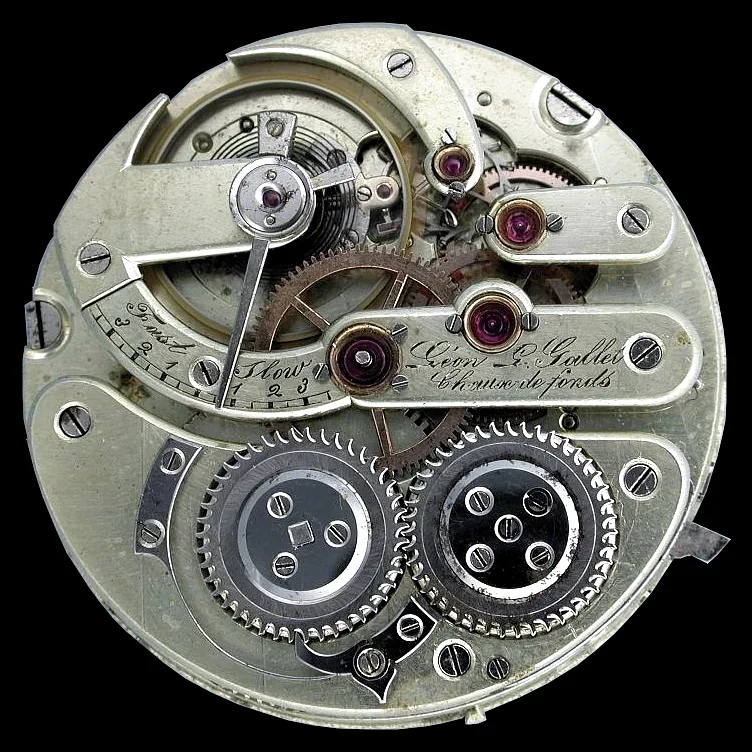
When choosing a modern custom wristwatch case, understanding the best case size for lemania 12L conversion is critical for achieving correct aesthetics and comfort. Because the movement sits at ~27mm, the optimal overall case exterior diameter ranges between 34mm and 38mm. A 35mm or 36mm outer case size yields optimal proportions, retaining an authentic mid-century vintage aesthetic while providing enough wall thickness for internal securing screws and a proper gasket system. A custom movement ring turned from brass or 316L stainless steel is then fitted, featuring movement tabs (casing clamps) that lock the 12L movement firmly inside the case perimeter.
5. Crown and Stem Solutions
Managing the winding and hand-setting mechanism during a conversion demands custom machining skills. The original pocket watch winding stem on a Lemania 12L is frequently too short, worn out, or threaded with a non-standard antique Swiss pitch that does not match modern wristwatch crowns. Successfully linking the keyless works to a functional wrist crown requires either extending the original stem or turning a completely new stem blank on a watchmaker's lathe.
To fabricate a new stem, the watchmaker starts with annealed carbon steel stock, turning down the pivot, square section, winding arbor groove, and threaded stem end to match the original 12L keyless works dimensions. Once turned and fitted, the newly machined stem must be heat-treated, quenched, and tempered to a straw color to ensure the square section resists the high torque of manual winding without snapping.
Selecting the crown involves balancing historical design with functional dust protection. An oversized onion crown, pumpkin crown, or flat vintage crown provides excellent grip for daily hand-winding. Crucially, the crown must include an internal rubber O-ring gasket that seats over an external case tube. This creates an effective barrier against atmospheric moisture and dust, protecting the non-plated raw steel components of the 12L keyless works from rapid corrosion.
6. Dial and Hand Considerations
The dial is the visual anchor of the timepiece, and working with vintage Lemania dials requires incredible finesse. Original Lemania 12L pocket watch dials are often constructed from vitreous enamel on a copper plate or silver-plated brass. Enamel dials are notoriously fragile; cutting or drilling them to reposition dial feet will crack the glass-like surface unless specialized tools and capacitive-discharge dial foot soldering equipment are utilized.
When you convert lemania 12L pocket watch movements into wristwatch configurations, dial foot placement is almost always an issue if you alter the movement orientation. The copper feet on the back of the dial must align precisely with the casing cutouts and securing eccentric screws on the 12L mainplate. If you are creating a modern custom dial, dial feet must be soft-soldered or resistance-welded to the dial blank at precise radial coordinates. Furthermore, the dial thickness must be carefully calculated so the hour wheel and cannon pinion extend sufficiently far above the dial surface to seat the hands properly.
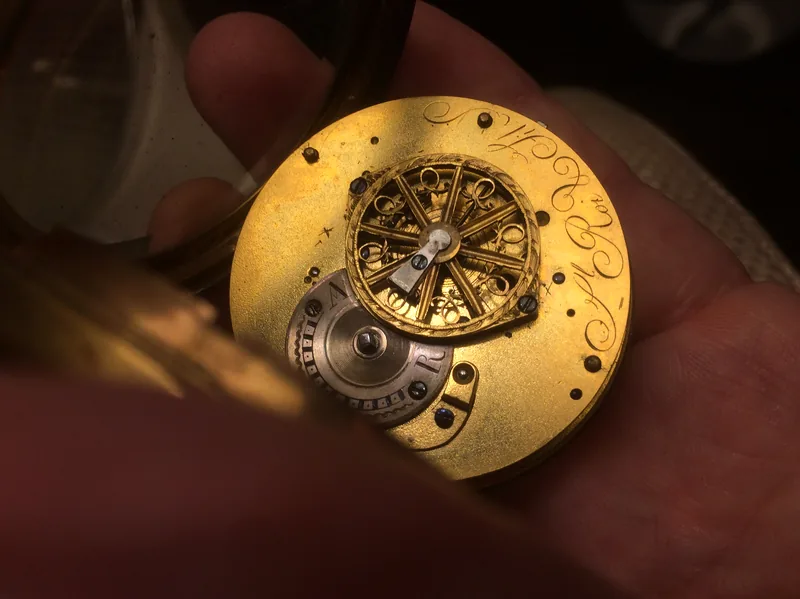
Hand fitting presents its own set of mechanical checks. The center wheel tube, cannon pinion, hour wheel, and sub-second pivot dimensions on a 12L must be measured with a digital micrometer to ensure proper hand hole tolerances. Standard hand hole sizes for the Lemania 12L typically require custom broaching or closing of the hand collets. Hands must be carefully contoured to curve clear of the crystal perimeter while maintaining flat, parallel alignment with each other to prevent hand-clashing during setting.
7. Why 12L is More Common for Conversion
Among horologists and custom builders, the Lemania 12L movement stands out as one of the most practical and popular choices for historical movement conversions. Many collectors who explore antique pocket watch conversions quickly discover that standard 16 or 18 ligne pocket watch movements (such as the popular Unitas 6497 or Hamilton 917) result in massive wristwatches measuring 44mm to 48mm in diameter—proportions that are often uncomfortable for daily wear.
In contrast, the 12 Ligne diameter (~27mm) naturally fits into classic 35mm to 38mm cases. This size range matches the iconic golden ratio of classic mid-century Swiss wristwatches, similar to the dimensions found in vintage dress watches and early military pieces, including classic vintage Rolex wristwatches of the 1930s and 1940s. The 12L gives the wearer a genuine piece of pocket watch history housed in a modern, highly wearable case silhouette.
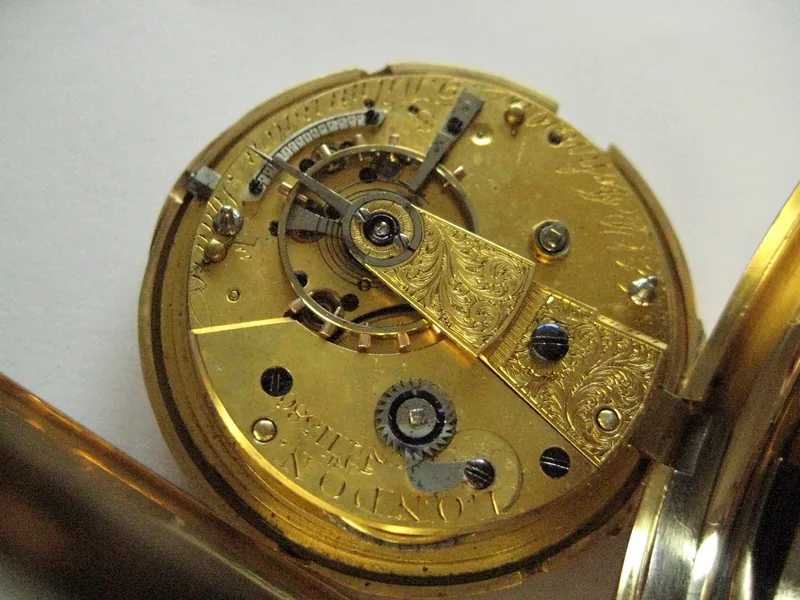
Beyond ergonomic advantages, the Lemania 12L movement is prized for its structural integrity and historical pedigree. Built with heavy-duty train bridges, generous pivot diameters, and high-grade Swiss lever escapements, these movements survive the conversion process remarkably well. Parts availability—while requiring horological search efforts—is generally superior compared to obscure, unbranded Swiss cylinder movements from the same era, making the 12L a far more sustainable long-term restoration candidate.
8. Final Thoughts on Lemania 12L Conversions
Converting a historic Lemania 12L pocket watch movement into a functional wristwatch is a deeply rewarding horological pursuit. It combines master-level micro-mechanics, custom lathe turning, heat treating, case engineering, and historic preservation. By taking a movement that might otherwise sit hidden in a drawer or damaged case and giving it a secondary life on the wrist, watchmakers honor the original Swiss artisans who crafted these mechanical treasures nearly a century ago.
However, successful execution relies on preserving the integrity of the original caliber. Non-destructive conversion methodologies—such as using precision custom casing rings rather than modifying original mainplates—ensure that the historic movement remains uncompromised. When performed with expert skill, accurate crown fitting, custom stem machining, and tasteful dial choices, a Lemania 12L conversion creates a bridge between horological eras, yielding a bespoke timepiece that carries true historic soul into everyday modern life.