Historical Background of Lemania 12s Movements
The history of watchmaking is rich with manufacture names that defined precision timing, but few carry the engineering gravitas of Lemania. Founded in 1884 by Alfred Lugrin in L'Orient, within the famed Vallée de Joux, the manufacture initially operated under the name A. Lugrin & Cie. Lugrin established his reputation by specializing in complex ebauches, split-second chronograph mechanisms, and high-grade movement blanks. By the early 20th century, the workshop transitioned into Fabrique d'Horlogerie Lemania, taking its name from Lac Léman. During this golden era of mechanical horology, Lemania produced pocket watch calibers that were renowned for their structural rigidity, ease of servicing, and exceptional timekeeping abilities under demanding military and civilian conditions.
Among their standard non-chronograph production, the 12-size (often designated in American trade terms as 12s, corresponding to a movement plate diameter of approximately 39.7mm, or in Swiss sizing as 17 to 19-ligne pocket/pendant calibers) occupied a critical sweet spot. Produced heavily throughout the 1920s, 1930s, and 1940s, these movements coincided with a pivotal era in horology: the historical shift from pocket-worn timepieces to wrist-worn instruments. Lemania supplied these 12s ebauches to numerous military branches, railway operators, and prestigious Swiss houses. Their robust construction made them popular across international markets, laying the technical foundation for what modern custom watchmakers view as prime candidates for historical preservation.
In modern horology, horological craftsmen frequently turn to these vintage calibers to execute custom projects. If you explore antique pocket watch conversions, you will quickly realize that Lemania’s mid-sized pocket movements represent a high watermark of mid-century Swiss industrial architecture. Their hand-finished bridges, oversized balance wheels, and high-torque mainspring barrels make them ideal candidates for horologists seeking to give historical mechanical movements a second life on the wrist.
Technical Specifications and Movement Architecture
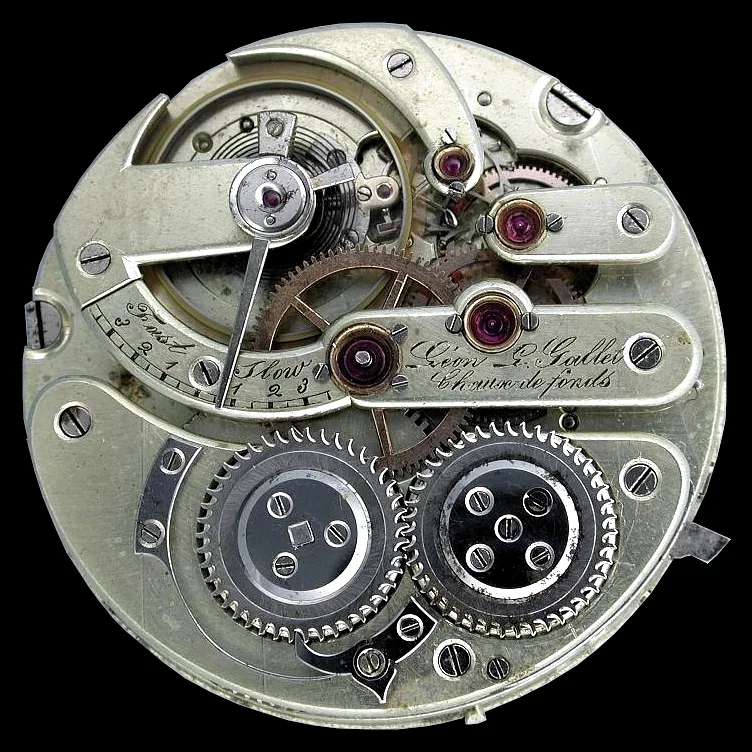
Understanding the architectural blueprint of a Lemania 12s caliber is essential before making any attempt to uncase or remount the movement. Typically engineered with a traditional Swiss lever escapement, a standard Lemania 12s movement features a 15-jewel to 17-jewel train, cut bimetallic balance wheel or mono-metallic Glucydur balance, and a flat or Breguet overcoil hairspring. The plates are typically crafted from brass, finished with rhodium plating or nickel coating, and adorned with traditional Damaskeening or Geneva stripes (Côtes de Genève). The train wheel layout follows a classic pocket watch architecture, utilizing a prominent mainspring barrel bridge, an intermediate train bridge, and an independent balance cock.
The dimensions of a true 12s pocket watch caliber present specific mechanical characteristics. With a plate diameter varying between 38.5mm and 39.7mm depending on the exact series and casing lip, the height of the movement generally sits between 4.5mm and 5.8mm from the mainplate to the top of the winding bridge arbor. The keyless works—the setting lever, setting lever spring, clutch wheel, and winding pinion—are engineered with heavy-duty tolerances designed for a long pendant stem. Beat rates on these vintage workhorses operate at a traditional 18,000 vibrations per hour (2.5 Hz), offering a sweeping second hand motion paired with a classic horological sound profile.
Power delivery in the Lemania 12s is managed through a mainspring designed to drive a heavy balance wheel across a 36-to-42-hour power reserve. The center wheel, third wheel, fourth wheel (driving the small second hand), and escape wheel pivots run in brass bushings or pressed synthetic ruby jewels. Because pocket watches were intended to sit vertically in a vest pocket or flat on a nightstand, the oil retention grooves on the jewels and the endstone clearances were calculated for lower movement speeds and higher torque compared to modern high-beat wristwatch movements.
Challenges of Converting Lemania 12s to Wristwatch
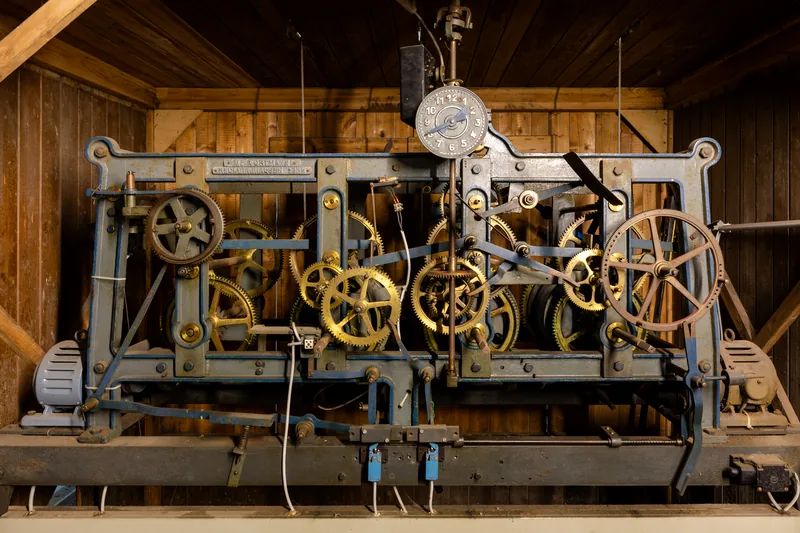
When clients ask us, "can you convert lemania 12s pocket watch into a daily wear piece?", the technical answer is always yes—provided the watchmaker addresses several critical engineering obstacles. The foremost challenge lies in shock protection. Vintage 12s Lemania movements were constructed prior to the universal adoption of shock-absorbing balance jewel systems like Incabloc or KIF. The thin balance pivots (often measuring under 0.10mm in diameter) rest inside rigid jewels. When worn on the wrist, a sudden impact can easily shear off a balance pivot, requiring micro-lathe turning of a new balance staff. Watchmakers must counsel clients that a converted timepiece demands deliberate care.
The second major hurdle revolves around dial orientation and sub-second positioning. In an open-face pocket watch movement (Lépine caliber), the winding stem is positioned at 12 o'clock, and the small second sub-dial sits directly opposite at 6 o'clock along the vertical axis. When you realign this movement inside a wristwatch case so that the crown rests at the conventional 3 o'clock position, the sub-seconds register moves to the 9 o'clock position. Conversely, if the original donor movement was a hunter-case layout (Savonnette caliber), placing the crown at 3 o'clock shifts the sub-seconds register to 6 o'clock. Managing dial layout and hand clearance without ruining the historic aesthetics requires strict mathematical planning.
Finally, environmental sealing presents a constant obstacle. Pocket watch movements were never intended to encounter wrist sweat, atmospheric humidity, or modern air quality variations. Dust and moisture ingress can rapidly oxidize bare steel screws, mainspring arbors, and balance springs. Enclosing a 12s movement inside a contemporary housing requires precision sealing gaskets, custom-fitted movement rings, and absolute isolation from external moisture.
Lug Welding and Case Selection
When selecting a modern housing, choosing the correct lemania 12s pocket watch to wrist conversion case is the single most critical step for structural success. Modern watchmakers generally choose between two primary paths: custom CNC-machined solid stainless steel conversion cases engineered specifically for 12s dimensions, or historical case adaptations utilizing modified silver, brass, or gold pocket cases fitted with custom-welded wire lugs.
For custom conversion cases, the housing is milled with a specific internal flange diameter, thread pitch for a screw-down display caseback, and recess channels for dual nitrile rubber gaskets. The interior bore must accept a custom-turned aluminum or brass movement casing spacer ring. This ring bridges the microscopic gap between the 39.7mm movement edge and the internal wall of a 42mm or 44mm wristwatch case. The casing ring is secured using traditional movement clamps and screws fitted directly into the perimeter threaded holes of the Lemania mainplate, ensuring the movement cannot shift under shock.
If a client prefers an early-20th-century aesthetic reminiscent of authentic WW1 trench watches, the watchmaker may adapt an original pocket watch case by silver-soldering or laser-welding custom wire lugs onto the case band. Lug welding requires complete disassembly of the case components to avoid distorting the hinge pins or annealing the metal. Hard silver solder or micro-TIG welding is applied at precise angles (typically with a 20mm to 22mm lug width spacing) to accept modern leather straps. Once welded, the case band is polished, hand-finished, and verified for structural load capacity.
Crown and Stem Solutions
Adapting the keyless works of a pocket watch to function reliably in a wristwatch case requires custom lathe work and precise thread matching. In an original pocket watch setup, the stem is held within a sleeve mechanism built directly into the pocket watch case neck. Wristwatch cases, however, rely on a free-floating stem that engages directly with the movement’s internal setting lever, yoke, and clutch wheel, requiring a completely different force vector during winding and setting.
To convert a Lemania 12s, the watchmaker must turn a new winding stem on a precision watchmaker's lathe or fit a custom stem extender to the existing hardened steel stem. The winding stem thread pitch on vintage Lemania pocket movements frequently utilizes historical Swiss metric threading (such as Tap 9 or Tap 10). The stem must be cut to an exact length: too long, and the crown will stand off from the case tube, allowing moisture ingress; too short, and the setting lever cannot fully drop into the hand-setting position, resulting in stripped keyless works teeth.
Crown selection is equally vital. To maintain an authentic period aesthetic while providing functional grip, horologists typically fit an onion crown, pumpkin crown, or broad vintage flat crown. Modern conversion crowns are fitted with internal O-ring gaskets that slide smoothly over the external case tube. This creates a dust-proof and splash-resistant barrier while allowing the wearer to comfortably wind the heavy 12s mainspring daily without applying excessive lateral torque to the stem arbor.
Dial and Hand Considerations
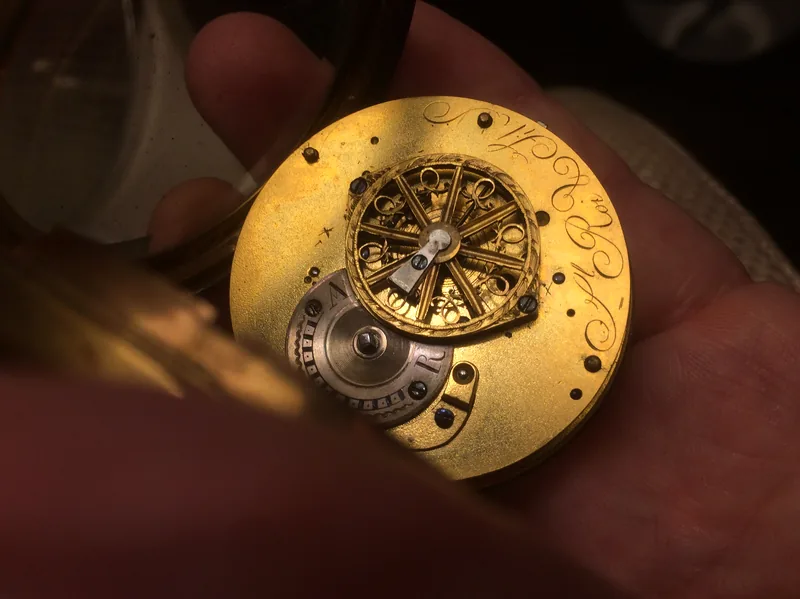
The dial is the soul of any conversion project, but working with original Lemania 12s dials presents high risk. Most original pocket watches of this era feature double-sunk or single-sunk vitreous enamel (porcelain) dials fired onto a copper baseplate. Vitreous enamel is exceptionally brittle; drilling new dial foot locations or filing edges will cause microscopic stress cracks (spider webbing) that can destroy the dial face completely.
If the original enamel dial is retained, the movement casing ring and case inner aperture must be machined to match the exact outer diameter and step-height of the dial plate. Dial feet must align perfectly with the original mainplate locking screws. If the conversion layout requires rotating the dial 90 degrees to position the crown at 3 o'clock, new dial foot locations must be secured using specialized brass dial feet micro-soldered via low-temperature capacitive discharge welders, or using precision-fitted mechanical dial clamps.
Hand fitting presents its own set of dimensional standards. The cannon pinion, hour wheel pipe, and fourth wheel pivot arbor on a Lemania 12s movement are significantly larger than those found in standard vintage wristwatches. The hour wheel pipe diameter typically measures around 1.80mm to 2.00mm, while the cannon pinion sits around 1.20mm. Vintage blue-steel spade, Breguet, or cathedral hands must be meticulously broached using handheld diamond broaches to match these exact diameters down to hundredths of a millimeter, ensuring proper friction-fit height without binding against the undersides of the crystal.
Why 12s is more common for conversion
In the world of custom horological conversions, watchmakers work with a wide range of pocket watch sizes, ranging from small 0s and 6s pendant watches up to massive 18s American railroad grades. However, the 12s form factor has emerged as the definitive standard for wearable, everyday wrist conversions. When we evaluate the ergonomics, a movement measuring roughly 38mm to 40mm installs perfectly into a completed wristwatch case measuring between 42mm and 44mm in overall outer diameter.
By contrast, converting a giant 16s or 18s pocket watch yields a final wristwatch case diameter exceeding 48mm to 52mm. Unless worn over a flight jacket, such pieces are overly bulky, prone to catching on door frames, and top-heavy on the wrist. Conversely, smaller 0s or 3s movements often lack the structural robustness, power reserve, and striking visual bridge presence that vintage watch enthusiasts seek when commissioning a custom mechanical build.
Furthermore, the proportions of a 12s Lemania caliber echo the grand tradition of mid-century oversized Swiss wristwatches. The movement architecture closely resembles the oversized chronometers and military watch movements of the era, reminiscent of the legendary oversized calibers found in historical vintage Rolex wristwatches and pocket-chronometer conversions of the mid-20th century. The wide balance wheel offers stunning visual theater through a sapphire display caseback, while the overall weight distributes evenly across the wrist when secured with a thick leather strap.
Final Thoughts on Lemania 12s Conversions
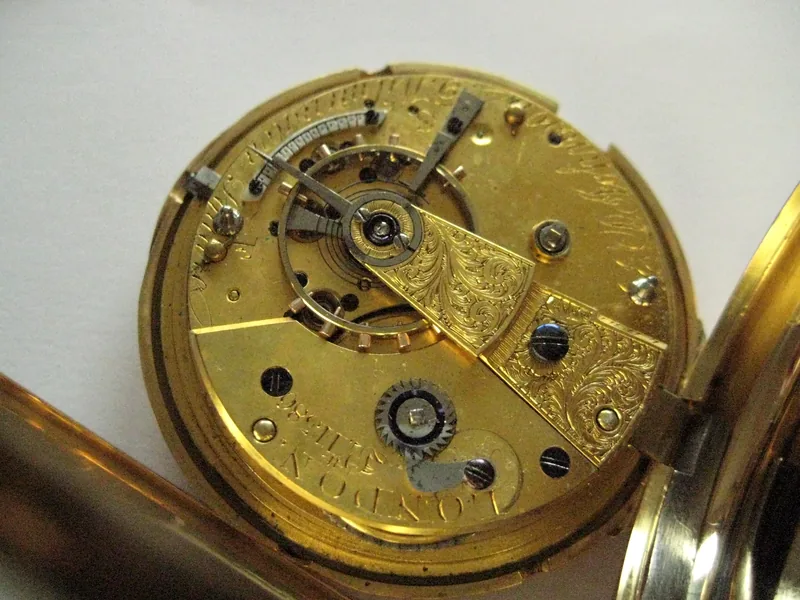
Learning how to convert lemania 12s pocket watch into wristwatch configurations represents an intersection of historical preservation, mechanical engineering, and hand craftsmanship. Rather than leaving these exceptional Swiss calibers forgotten inside damaged, scrapped, or melted precious-metal pocket cases, a properly executed conversion restores mechanical purpose to a movement crafted by master horologists nearly a century ago.
Success in this endeavor demands patience, specialized watchmaking tools, and a deep respect for historical tolerances. From selecting a high-grade lemania 12s pocket watch to wrist conversion case to micro-broaching vintage hands, turning custom stems, and ensuring stable shock resistance, every step requires an uncompromising commitment to bench standards. When finished correctly, the result is not merely a converted watch—it is a bespoke, wearable piece of horological history capable of keeping precise time for generations to come.