1. Historical Background of Lemania 13L Movements
The Lemania Watch Company, established by Alfred Lugrin in 1884 under the original name L'Orient Watch Co, holds a monumental place in Swiss horological history. Lugrin’s mastery in designing complex chronographs and high-grade ebauches quickly earned the manufacture awards at international exhibitions in Milan and Bern. By the early 20th century, Lemania had positioned itself as a premier supplier of raw movements to some of Switzerland’s most prestigious houses, including Omega and Tissot. Among their vast catalog of pocket watch movements, the 13-ligne series (commonly designated as the 13L) represented a golden era of practical, highly accurate, and durable mid-sized calibers.
During the late 19th and early 20th centuries, pocket watches were predominantly sized between 16 and 19 lignes (roughly 40mm to 43mm movement diameter). However, the demand for smaller, more portable pocket timepieces—often intended for dress vests, pendant use, or specialized military utility—led Lemania to refine its smaller, 13-ligne architecture. The Lemania 13L movement stood out for its structural rigidity and elegant bridge layout, bridging the gap between delicate ladies' pendant movements and oversized men's pocket movements.
As the world transitioned into the era of wristlets and field equipment during World War I, many small pocket watch movements were repurposed for military applications. The size profile of the 13L made it an ideal candidate during the emergence of authentic WW1 trench watches, where traditional pocket watch calibers were modified with soldered wire lugs to be strapped to an officer's wrist. Today, surviving Lemania 13L movements represent prime candidates for modern horological restoration and conversion due to their heritage, structural stability, and ideal physical dimensions.
2. Technical Specifications and Movement Architecture
To successfully perform a conversion, a watchmaker must first understand the mechanical layout and exact engineering specifications of the Lemania 13L caliber. The designation "13L" refers to its diameter measured in traditional French lignes: 13 lignes equals approximately 29.33 millimeters. The movement height generally ranges between 4.2mm and 4.6mm, depending on the specific bridge variant and hand-fitting heights utilized during its production run. Below is a breakdown of the core technical parameters typical of the 13L platform:
- Movement Diameter: 13 Lignes (29.33 mm)
- Casing Diameter: ~30.00 mm (with outer lip variance)
- Frequency: 18,000 vibrations per hour (vph) / 2.5 Hz
- Escapement: Swiss lever with jeweled pallet stones
- Jewel Count: Typically 15 to 17 jewels, depending on grade
- Power Reserve: Approximately 38 to 42 hours
- Balance Wheel: Cut bimetallic compensation balance with screws, or solid mono-metallic glucydur in later executions
- Balance Spring: Flat hairspring or Breguet overcoil (variant dependent)
Architecturally, the Lemania 13L features a classic Swiss finger-bridge or split-bridge layout. The mainspring barrel is held under a broad barrel bridge, while the train wheel bridges are partitioned to allow independent adjustment of endshake and side-shake on the center wheel, third wheel, fourth wheel, and escape wheel pivots. The click mechanism is typically robust, utilizing a steel recoil click mounted near the crown wheel to ensure smooth, tactile feedback during manual winding.
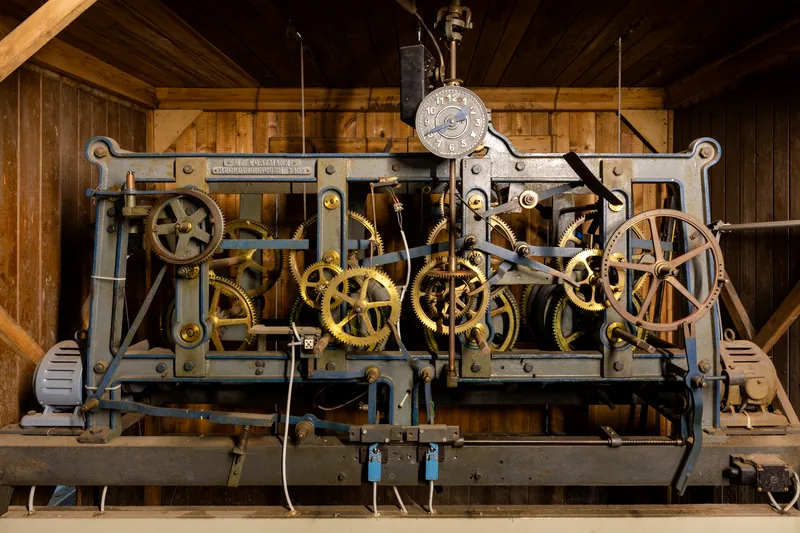
The balance assembly uses screwed chatons on higher-grade executions, providing optimal alignment for the balance staff pivots. The train layout places the fourth wheel—which rotates once per minute—directly opposite the stem winding arbor. In standard open-face pocket watch configurations, this places the running seconds sub-dial at 6 o'clock when the crown is located at 12 o'clock. Understanding this geometry is crucial when planning how to convert lemania 13L pocket watch into wristwatch specifications, as changing the crown orientation alters the sub-dial placement.
3. Challenges of Converting Lemania 13L to Wristwatch
While the prospect of housing an antique movement in a wearable case is enticing, the technical process to convert lemania 13L pocket watch movements presents several complex engineering hurdles. The primary issue stems from balance staff protection. Native pocket watch movements from this era lack shock protection systems such as Incabloc or Novodiac. When worn on the wrist, a watch is subjected to violent lateral and rotational acceleration forces that pocket watches kept in vest pockets never experienced. A single drop or sharp strike can easily snap the delicate pivots of the balance staff.
A second major challenge lies in the stem setting mechanism. Many antique Lemania 13L pocket watches utilize a "negative set" system (where the setting spring and sleeve reside in the pocket watch case pendant rather than inside the movement) or a "pin-set" (nail-regulation) system where a push-piece near the crown must be depressed to set the time. Adapting a negative-set movement to a modern wrist case requires either sourcing a custom winding sleeve or converting the keyless works mechanism inside the movement to a standard positive pull-out stem configuration.
Finally, orientation and dial symmetry pose a significant hurdle. If an open-face Lemania 13L pocket movement is placed into a wrist case with the crown positioned at 3 o'clock, the running seconds sub-dial moves from its traditional 6 o'clock position to 9 o'clock. Conversely, if a hunter-case 13L movement (which has the stem at 3 o'clock relative to 6 o'clock sub-seconds) is used, standard 3 o'clock crown alignment is retained. Watchmakers performing a lemania 13L pocket watch to wrist conversion must carefully account for dial geometry, movement ring tolerances, and shock containment before cutting metal.
4. Lug Welding and Case Selection
When executing a conversion, the choice between modifying an original pocket watch case or sourcing a modern custom-built wristwatch case dictates the entire fabrication process. If preserving an original sterling silver or gold-filled 13L pocket case, the watchmaker must solder wire lugs directly onto the case shell. This requires silver-soldering wire loops (typically 1.8mm to 2.0mm thick silver or steel wire) onto the 12 o'clock and 6 o'clock positions of the outer rim. The case must be completely stripped of the movement, crystal, and springs to prevent heat damage, and a low-temperature silver solder must be flown cleanly to ensure structural strength without distorting the thin case metal.
If modern durability, water resistance, and daily wearability are preferred, re-casing the movement into a custom-machined stainless steel wristwatch case is the superior route. Selecting the best case size for lemania 13L conversion project is critical here. Because the movement diameter is roughly 29.33mm, the ideal outer wristwatch case diameter sits between 36mm and 38mm, with a total thickness of around 10.5mm to 12mm. This ratio ensures proportional symmetry on the wrist while providing ample internal clearance for the balance wheel swing and hand stack height.
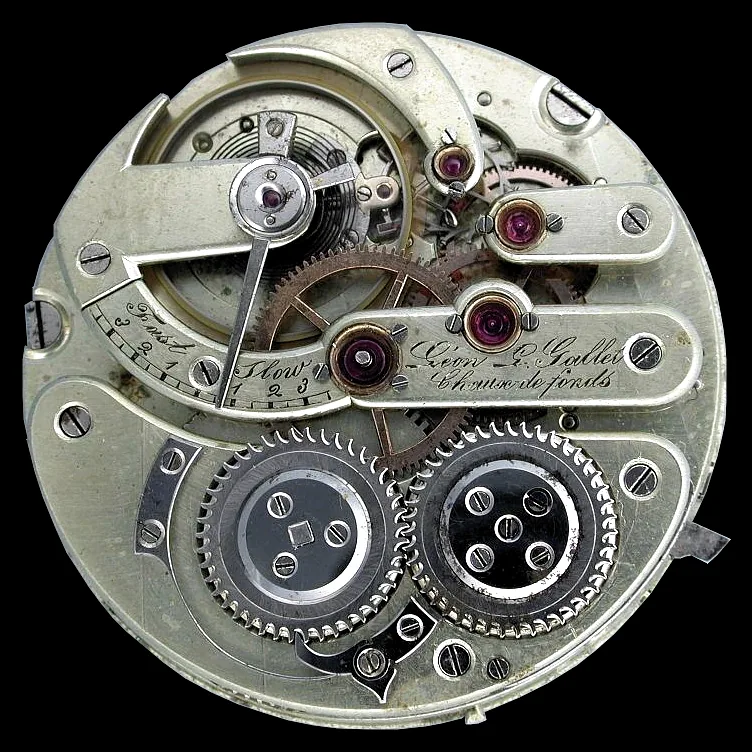
To secure a 29.33mm movement inside a 36mm–38mm case, a custom movement adapter ring (casing ring) must be turned on a lathe. The ring is usually turned from brass or 316L stainless steel and must feature exact inner step dimensions to clamp the movement's outer pillar plate lip. Securing tabs or casing screws are then threaded into the movement ring, compressing the assembly against the internal case shoulder to eliminate all lateral and vertical movement. Elastic O-rings or Teflon spacers are often integrated into the movement ring design to provide a dampening effect against external wrist shocks.
5. Crown and Stem Solutions
Stem fitting is one of the most meticulous stages of any pocket-to-wrist conversion project. Antique Lemania 13L stems were manufactured with specific thread pitches (often non-standard metric threads or legacy Swiss tap sizes) that do not readily mate with modern wristwatch crowns. A common challenge arises when thread pitch mismatch occurs between original stems (e.g., Tap 10 or custom Lemania threads) and modern water-resistant onion or pumpkin crowns (typically threaded for Tap 9 / 0.90mm or Tap 6 / 1.20mm stems).
To resolve stem alignment, the watchmaker has three technical pathways:
- Turning a New Stem on a Watchmaker's Lathe: High-grade carbon steel rod stock is turned, hardened, tempered, and threaded to match both the internal square-drive profile of the Lemania 13L sliding pinion/clutch wheel and the female thread of the new crown.
- Splicing and Stem Extension: The original stem's square section and winding arbor are retained, while the threaded end is trimmed, turned down, and joined to a stem extender using micro-threading and high-strength anaerobic threadlocker (e.g., Loctite 2701).
- Adapting Keyless Works: Modifying the setting lever and yoke spring to convert negative-set sleeves into positive-set mechanisms that operate seamlessly with standard spring-loaded pull-out wrist stems.
Crown selection must complement the overall vintage aesthetic while guaranteeing functional sealing. Oversized "onion" or "cabbage" style crowns are historically accurate for conversions derived from early trench-era aesthetics. However, modern double-O-ring gasketed crowns should be fitted inside a precisely turned case tube to protect the exposed balance and train from environmental dust and moisture entry.
6. Dial and Hand Considerations
The dial and hand stack assembly require extreme delicate handling during a conversion. Original Lemania 13L dials are often made of fired grand feu enamel on a copper plate base. Enamel dials are notoriously fragile; age-related hairsplitting or spidering can turn into catastrophic cracks if improper pressure is applied when pulling or setting hands. If restoring an enamel dial, it must be cleaned using non-acidic ultrasonic solutions and gentle warm water to avoid lifting the printed numerals.
Positioning dial feet for modern case mounting requires surgical precision. Pocket watch dial feet locations rarely align with casing ring channels in custom wrist cases. When repositioning dial feet on a copper enamel dial, solder torches cannot be used as the extreme heat will crack the glass enamel surface. Watchmakers employ low-temperature silver-bearing epoxy or micro-spot solder systems, or turn dedicated dial-foot clamps into the peripheral movement ring to firmly capture the original copper plate edge without damaging the face.
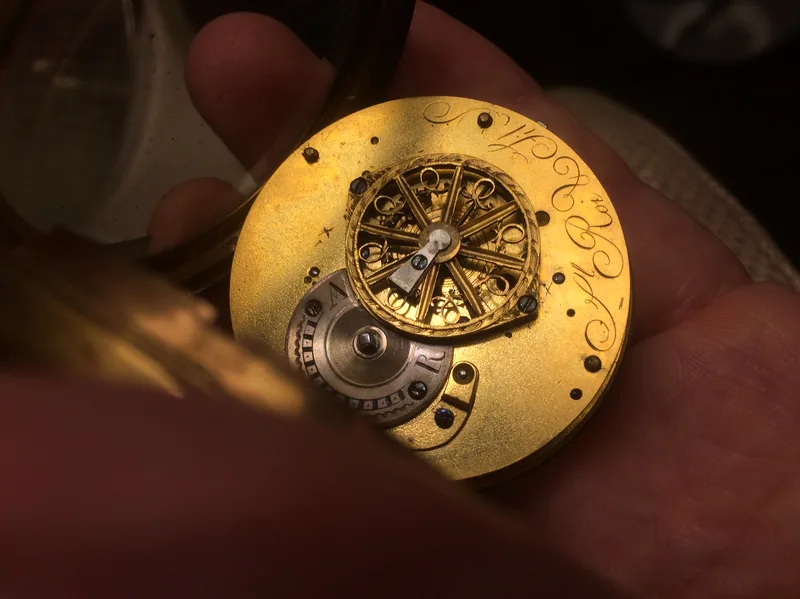
Hand fitting presents its own set of dimensional constraints. Pocket watch hand holes feature larger hole diameters than modern wrist calibers due to thicker cannon pinions, hour wheels, and fourth wheel pivot posts. Below is a reference comparison of typical post fitting tolerances:
| Component | Standard Pocket Watch Dimension | Modern Wristwatch Equivalent | Modification Required |
|---|---|---|---|
| Hour Wheel Post | 1.80 mm – 2.00 mm | 1.20 mm – 1.50 mm | Bushing or custom closing of hand socket |
| Cannon Pinion (Minute) | 1.10 mm – 1.30 mm | 0.80 mm – 0.90 mm | Reaming or custom steel socket fabrication |
| Sub-Seconds Pivot | 0.22 mm – 0.28 mm | 0.18 mm – 0.20 mm | Closing pipe with staking set or custom hand |
Original blued-steel Spade, Cathedral, or Breguet-style hands should be preserved whenever possible. If original hands are damaged beyond repair, vintage-style steel hands must be individually reamed or bushed on a staking tool to match the exact dimensions of the Lemania 13L arbors. Flame-blueing replacement steel hands via a brass-filing heating pan restores authentic visual consistency.
7. Why 13L is More Common for Conversion
When exploring the world of vintage watch modification, one quickly realizes that the Lemania 13L movement is one of the most sought-after calibers for conversion projects. The primary reason for its popularity over standard pocket watch movements lies entirely in scale geometry. Most antique pocket watches feature massive 18-ligne or 19-ligne movements (such as the ubiquitous Unitas 6497 or Omega 19'''). When an 18-ligne movement is converted, the outer case diameter must be at least 44mm to 48mm—resulting in a wrist presence that is uncomfortably large for daily wear.
In contrast, executing a lemania 13L pocket watch to wrist conversion results in a watch that measures between 36mm and 39mm in overall case diameter. This profile matches the sweet spot of modern vintage-inspired horology, yielding proportions virtually identical to historic mid-century dress pieces and early military wristwatches. The resulting timepiece sits comfortably under a shirt cuff and offers exceptional ergonomic balance on the wrist.
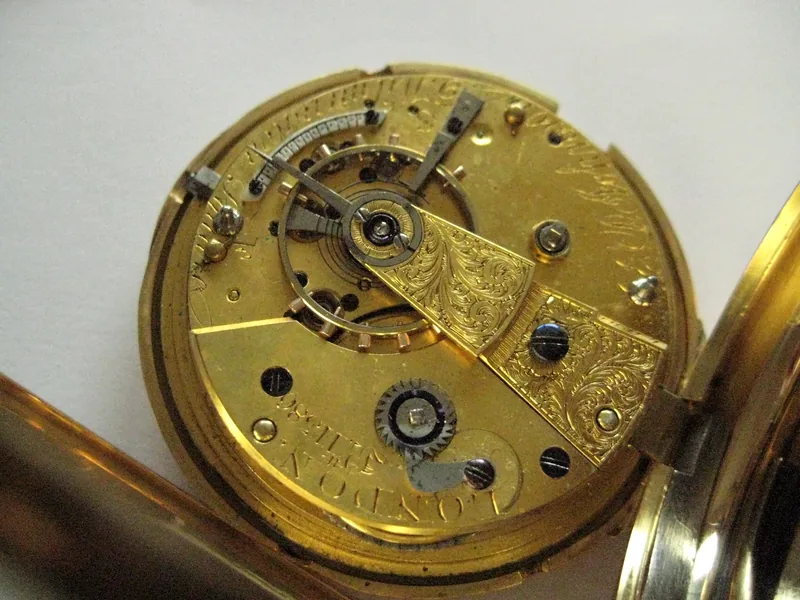
Furthermore, Lemania’s higher-grade manufacturing standards ensure that 13L movements feature exceptional mechanical resilience. The train geometry is extremely efficient, the mainspring barrels generate ample torque, and parts availability among vintage movement material jobbers remains relatively viable. For collectors fascinated by antique pocket watch conversions, the 13L represents a sweet spot between historical significance, structural robustness, and wristwear proportionality.
8. Final Thoughts on Lemania 13L Conversions
Converting an antique Lemania 13L pocket watch into a contemporary wristwatch is far more than a simple exercise in fitting a movement into a case. It is an act of high-level horological conservation that bridges two distinct eras of manufacturing. When done correctly by an experienced watchmaker using precise machining, micro-soldering, and proper movement stabilization techniques, a raw historic movement is saved from rotting away in forgotten pocket watch cases and given new life on the wrist.
The success of any Lemania 13L project rests on respecting the balance between modern functional requirements and historic authenticity. By carefully determining the best case size for lemania 13L conversion, engineering proper shock protection and sealing solutions, and painstakingly restoring enamel dials and blued hands, watchmakers can create a truly bespoke, wearable piece of mechanical art that honors Alfred Lugrin's original vision for the Lemania manufacture.