1. Historical Background of Lemania 16s Movements
To understand the intrinsic value of deciding to convert a Lemania 16s pocket watch into a wristwatch, one must first appreciate the prestigious lineage of Fabrique d'Horlogerie Lugrin, founded by Alfred Lugrin in 1884. Operating out of l'Orient in the Vallée de Joux, the manufacture eventually adopted the trade name Lemania. From its inception, the company established an unquestioned reputation for engineering high-precision chronographs, stopwatches, and robust deck watches. Lemania was not merely a movement assembler; it was an premier Ébauche manufacturer whose calibers powered high-grade timepieces across the world, supplying renowned brands and state military branches alike.
During the early to mid-20th century, the American "16-Size" standard (16s)—which corresponds closely to Swiss movements measuring approximately 19 Lignes (42.8mm in plate diameter)—became the international benchmark for rail, field, and naval timing instruments. Lemania’s 16s-equivalent movements were celebrated for their exceptional structural rigidity, thick bridges, and unwavering rate retention. Manufactured in significant quantities throughout the interwar period and second World War, these calibers served as trusted timekeepers for the British Ministry of Defence (MoD), European navies, and commercial marine operators who required uncompromising accuracy under harsh operational conditions.
As wrist-worn chronometers gradually rendered traditional pocket timepieces obsolete in professional spheres, thousands of these magnificent Lemania movements were left stored in original cases, drawer banks, or horological archives. During the early transition era, soldiers and officers frequently adapted pocket movements for wrist wear—a practice that gave birth to authentic WW1 trench watches. Today, master watchmakers and vintage enthusiasts undertake conversions to liberate these historical horological engines from dark pockets, giving them a modern second life on the wrist where their hand-finished bridges and mechanical beauty can be actively worn and admired.
2. Technical Specifications and Movement Architecture
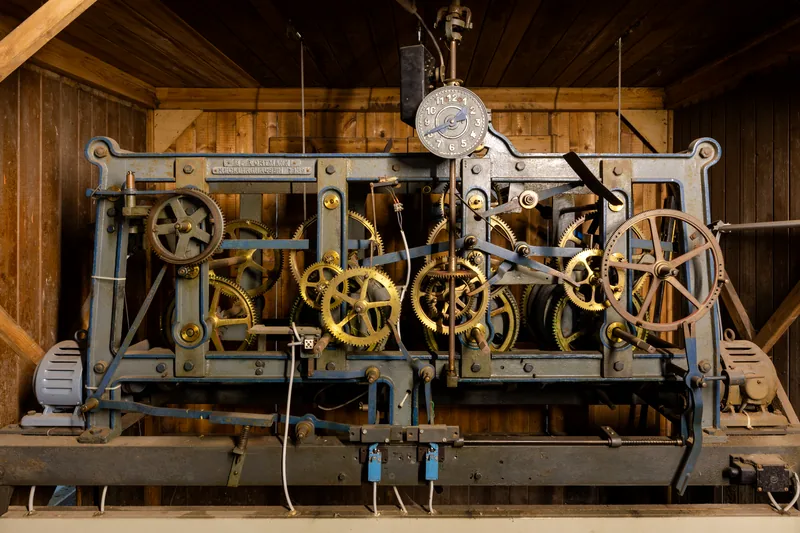
The technical architecture of a vintage Lemania 16s movement represents classic Swiss industrial watchmaking at its apex. Architecturally, a typical 16s Lemania caliber features a plate diameter hovering around 43.18mm, built upon a nickel-plated or gilded brass mainplate. The gear train is held securely by either a traditional three-quarter plate design or a series of finger bridges—often decorated with fine Côtes de Genève (Geneva stripes), perlage on the lower plate, and mirror-polished steel bevels (anglage). The mainspring barrel is driven by a robust winding click and ratchet wheel arrangement designed to provide 36 to 42 hours of steady power delivery.
At the mechanical heart of the balance assembly, Lemania integrated high-grade regulating organs. The escapement typically utilizes a cut bimetallic compensation balance wheel paired with a blued steel Breguet overcoil hairspring. This hairspring geometry ensures concentric expansion and contraction, drastically reducing positional errors across dial-up, dial-down, and vertical positions. The movement typically operates at a classic beat frequency of 18,000 vibrations per hour (vph), or 2.5 Hz, yielding that stately, leisurely sweep of the seconds hand characteristic of early 20th-century horology. Jeweling in these calibers ranges from standard 15-jewel executions up to high-grade 17 or 21-jewel variants featuring screw-set gold chatons and polished steel cap jewels for the escape wheel and pallet arbor.
Power transmission flows through a precisely calculated wheel train composed of hard-drawn brass gears mounted on polished steel arbors with burnished pivots. Unlike mid-grade mass-produced American movements of the era, Lemania applied meticulous tolerances to stem gear mesh and cannon pinion friction coupling. Understanding these architectural specifications is critical for any bench watchmaker attempting a conversion; the mechanical mass of a 16s wheel train creates substantial kinetic inertia, requiring a perfectly rigid chassis to maintain gear endshake and side shake tolerances once transposed into a new wearable framework.
3. Challenges of Converting Lemania 16s to Wristwatch
When clients ask "can you convert Lemania 16s pocket watch mechanisms into a fully modern wristwatch?", the answer is unequivocally yes—but with severe technical caveats. The primary obstacle faced during a conversion stems from modern durability expectations versus historical mechanical design. Vintage 16s pocket watch movements were engineered to sit safely inside a protective vest pocket, suspended vertically or laid flat. Consequently, virtually all original Lemania 16s movements lack shock-absorption systems (such as Incabloc or KIF shock springs) on the balance staff pivots. The balance staff pivots on a 16s movement are extremely fine—often measuring under 0.10mm in diameter—making them highly vulnerable to shearing or bending if subjected to the sudden impacts typical of wrist wear.
A second significant hurdle involves dial orientation and train alignment. Pocket watches generally fall into two structural categories: "open-face" (Lépine) and "hunter-case" (Savonnette) configurations. In a Lépine movement, the crown stem arbor is positioned aligned with the 12 o'clock marker, while the small seconds sub-dial sits directly opposite at 6 o'clock. If you place a standard 16s Lépine movement directly into a wristwatch case with the crown rotated to the standard 3 o'clock position, your dial layout will end up turned 90 degrees, positioning the sub-seconds at 9 o'clock. Conversely, a Savonnette caliber naturally positions the crown at 3 o'clock and seconds at 6 o'clock, but these calibers are considerably rarer in the secondary market.
Finally, dust and moisture resistance present constant engineering challenges. Original pocket watch cases relied on snap-fit or fine-pitch threaded bezels that were never intended to withstand water submersion or atmospheric pressure shifts. Furthermore, movement height and stem line offset vary drastically between early pocket movements and modern cases. Overcoming these discrepancies requires custom-machined movement spacer rings, tailored stem height extensions, high-grade rubber gaskets, and careful recalculations of hand-stack clearance beneath the front crystal.
4. Lug Welding and Case Selection
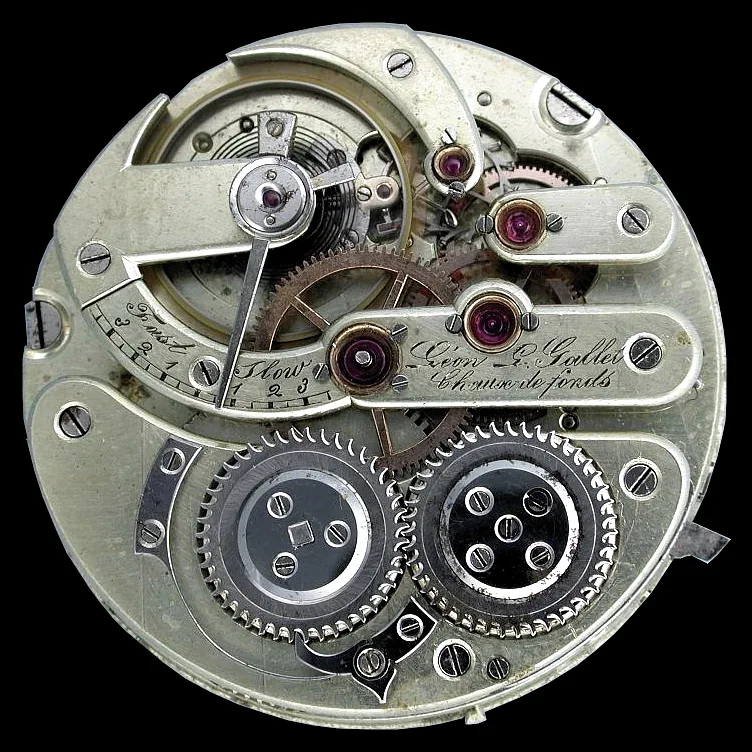
The core structural element of any successful conversion project is the selection or fabrication of a dedicated lemania 16s pocket watch to wrist conversion case. Horologists generally choose between two primary paths: modifying an original vintage silver or gold pocket watch case by attachment of fixed wire lugs, or re-casing the naked Lemania caliber into a custom-engineered modern stainless steel conversion chassis. While modifying an original case preserves historical patina, soft precious metals like 0.925 sterling silver or 14K gold make poor choices for daily wrist exposure due to structural flex, micro-gapping, and rapid wear at the spring bar contact points.
If wire lugs are to be added directly to a vintage pocket case, silver soldering or high-precision TIG (Tungsten Inert Gas) welding is mandatory. The watchmaker must strip the case bare, remove all crystal and movement elements, and heat-sink the main shell to prevent thermal distortion of the bezel threads. Wire lugs—usually fabricated from 1.5mm to 2.0mm solid stainless steel or sterling wire—are hand-shaped to conform precisely to the case flank radius. Solder flow must be strictly controlled using flux tailored for precious metals to guarantee a seamless structural bond capable of withstanding lateral strap pull forces exceeding 15–20 kilogram-force (kgf).
For superior longevity and water resistance, high-grade 316L stainless steel custom conversion cases are the preferred contemporary choice. These modern cases are explicitly CNC-machined to accommodate the large footprint of a 19 Ligne / 16s movement, featuring overall exterior diameters ranging between 44mm and 47mm. Internal casing rings—often turned on a watchmaker’s lathe from aircraft-grade aluminum or brass—are custom-fitted to hold the Lemania mainplate without zero lateral play. These modern cases typically incorporate screw-down display casebacks with scratch-resistant sapphire crystals, allowing full view of the fully restored Lemania bridges while providing modern O-ring sealing against ambient dust and humidity.
5. Crown and Stem Solutions
Adapting the winding and setting mechanics represents one of the most mechanically demanding phases when you **convert lemania 16s pocket watch into wristwatch** specifications. Pocket watches historically utilized either key-wind systems, lever-set mechanisms (where a small metal lever pulled from beneath the bezel unlocks the hand-setting train), or pendant-set systems. Most 20th-century Lemania 16s calibers employ a pendant-set mechanism driven by a sleeve friction clutch inside the pocket watch case neck. When re-casing into a modern wristwatch housing, this integrated sleeve arrangement must be replaced with a solid, positive-action winding stem system.
Because stem thread pitches, square drive sizes, and winding arbor lengths were not universally standardized across different production runs of Lemania 16s calibers, off-the-shelf stems rarely fit without precision modification. Watchmakers must often turn a custom steel stem on a precision lathe. The process requires cutting high-carbon steel rod stock, turning down the pivot diameters, milling the square flats that engage the slide pinions, and cutting a standard tap thread (typically Tap 10 or Tap 9) on the external portion of the stem to receive the new crown.
Selection of the winding crown itself requires balancing ergonomic functionality with historical authenticity. Because a 16s movement relies on a robust mainspring requiring moderate force to wind by hand, a tiny wristwatch crown is completely unpractical and uncomfortable to operate. Horologists traditionally install oversized "Onion," "Pumpkin," or deep-fluted "Diamond" crowns measuring 7.0mm to 9.0mm in diameter. These large crowns provide ample mechanical leverage during daily hand-winding routines. Inside the case pendant tube, a double-O-ring gasket system seals around the stem neck, shielding the delicate winding pinion and keyless works against moisture ingress.
6. Dial and Hand Considerations
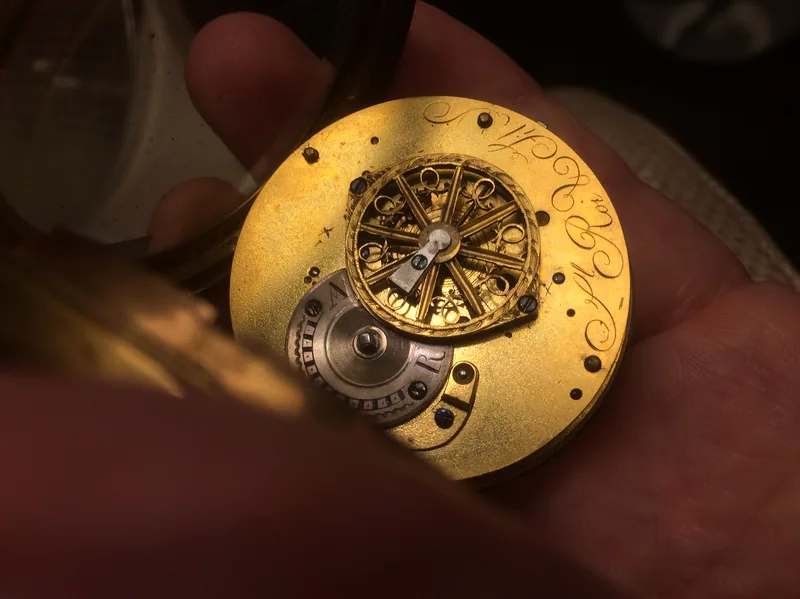
Preserving or redesigning the visual face of a Lemania 16s conversion involves a complex combination of aesthetic curation and precise mechanical fitting. Original Lemania 16s pocket watch dials were predominantly fabricated using traditional vitreous grand feu enamel fired over a copper base plate. While grand feu enamel possesses an ageless, brilliant white luster that never fades or oxidizes, it is extremely fragile. Removing an enamel dial to re-solder dial feet in new positions—necessary if changing from a 12 o'clock crown orientation to a standard 3 o'clock wristwatch layout—presents an immense risk of thermal shock cracking the enamel surface.
To safely alter dial orientation without heating the original enamel, watchmakers often employ low-profile mechanical copper dial feet clips or specialized non-outgassing epoxy bonding pads positioned precisely over structural relief cutouts on the movement mainplate. Alternatively, if custom metal dials (brass with lacquer, silver plating, or vintage hand-patination) are produced for the conversion, new dial feet are precision-soldered using a micro-spot welder to align perfectly with the original Lemania dial foot locking screws.
Hand fitting presents its own unique geometrical equations. The center wheel tube, cannon pinion, hour wheel, and seconds bit on a vintage Lemania 16s caliber have substantially larger hole dimensions than standard modern wristwatch hands. Typical post dimensions for a 19 Ligne movement can measure approximately 2.00mm for the hour hand, 1.20mm for the minute hand, and 0.30mm for the sub-seconds pivot. Original blued steel hands—such as Spade, Poire, or Breguet-style hands—should be retained whenever possible. Watchmakers meticulously polish and heat-blue these steel hands over a brass shaving bed to achieve a deep peacock blue hue. During final assembly, vertical clearance under the high-domed crystal must be checked with a loupe to prevent hand collision or dragging across the dial surface.
7. Why 16s is More Common for Conversion
Within the specialized universe of antique pocket watch conversions, the 16-size movement occupies a distinct "sweet spot" that makes it infinitely more practical for conversion than smaller or larger horological sizes. For example, massive 18-size (18s) pocket movements measure roughly 44.8mm in plate diameter alone; once installed into a modern case with adequate wall thickness and shock-absorbing spacer rings, the final wristwatch diameter expands to a massive 48mm–52mm—a size unwearable on most human wrists. Conversely, smaller sizes like 0s, 3s, or 10s often feature delicate wheel trains, fragile balance staffs, and limited power reserves, making servicing and long-term durability far more challenging.
The 16s caliber strikes a balance between wearable dimensions and mechanical robustness. A completed 16s wristwatch typically measures between 42mm and 44mm in case diameter. This profile aligns seamlessly with modern sports watch proportions popularized by contemporary luxury houses, offering substantial wrist presence without feeling unbalanced or unwieldy. Furthermore, the physical components of a 16s caliber—including the mainspring, balance wheel, and gear train teeth—are large enough to offer exceptional resistance to wear while remaining remarkably straightforward to service on a traditional watchmaker's bench.
The table below highlights how the 16s sizing standard compares to other common pocket watch dimensions historically evaluated for wristwatch conversion projects:
| Movement Size Standard | Plate Diameter (mm) | Average Converted Case Diameter | Wearability & Ergonomics | Mechanical Robustness |
|---|---|---|---|---|
| 12-Size (12s) | ~39.37 mm | 39.0 mm – 41.0 mm | Highly wearable / Dress profile | Moderate; fine balance pivots |
| 16-Size (16s / ~19 Ligne) | ~43.18 mm | 43.0 mm – 45.0 mm | Ideal contemporary wrist presence | Exceptional stability and serviceability |
| 18-Size (18s) | ~44.86 mm | 47.0 mm – 52.0 mm | Overly bulky; limited wrist appeal | Extremely rugged; heavy inertia components |
From a technical standpoint, the market availability of high-grade 16s components, paired with the structural simplicity of Lemania's bridge layouts, makes this size class the absolute gold standard for horological artisans. The dimensions leave sufficient internal headroom within modern CNC-machined cases to incorporate high-grade inner silicone tension rings, providing the delicate non-shock-protected pivots with a crucial dampening buffer against modern daily impacts.
8. Final Thoughts on Lemania 16s Conversions
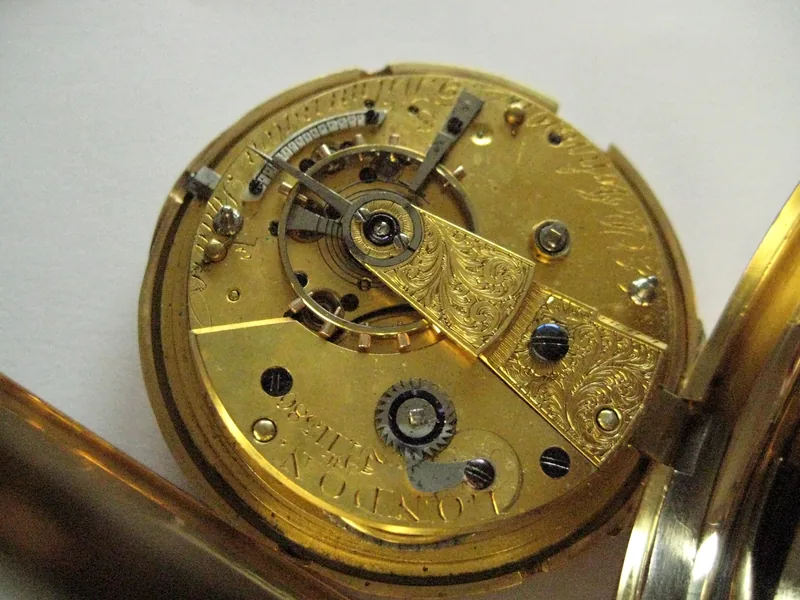
Successfully undertaking the journey to **convert lemania 16s pocket watch into wristwatch** formats requires far more than basic casing skills—it demands an intimate respect for early 20th-century Swiss micro-engineering combined with modern metallurgical techniques. When properly executed, a converted Lemania 16s is not a mere frankenwatch or novelty item; it is a wearable piece of horological history. It bridges the gap between the golden era of pocket chronometers and the functional demands of contemporary wrist wear.
For collectors and bench horologists alike, working with Lemania movements offers immense mechanical satisfaction. The historical weight of a movement that may have once navigated ships across oceans, timed aviation maneuvers, or served railway conductors is given a new purpose on the wrist. Rather than permitting these masterworks of blued steel, polished chatons, and hand-grained bridge plates to collect dust in forgotten drawers, a custom conversion case restores them to active life. While the movement’s internal bridge structure bears historical similarities to high-grade calibers found in early vintage Rolex wristwatches and pocket movements of the same era, Lemania maintains a unique industrial charm all its own.
Ultimately, a successful Lemania 16s conversion stands as a testament to the longevity of fine mechanical watchmaking. With periodic cleaning, proper lubrication, and mindful wear that respects its vintage balance staff architecture, a converted Lemania 16s wristwatch will easily run accurately for decades to come, passing down the art, precision, and soul of classic Swiss horology to the next generation of watch enthusiasts.