1. Historical Background of Lemania 18s Movements
The origins of Lemania date back to 1884, when Alfred Lugrin established A. Lugrin & Cie in L'Orient, located in the famed Vallée de Joux of Switzerland. Lugrin earned an exceptional reputation for constructing high-precision chronograph movements, repeaters, and stopwatches. As the company evolved into Lemania Watch Co. in 1932, its pocket watch movements became renowned across the globe for their robust construction, impeccable tolerances, and mechanical reliability. Among these historical calibers, the 18-size class—often referred to interchangeably as 18s in American size notation or 18 Ligne (18''') in European sizing—holds a commanding position in early 20th-century horological history.
During the golden age of pocket horology, Lemania produced these substantial movements for industrial timing, naval navigation, railroad timekeeping, and military issue. The standard 18-size format was particularly favoured by military contracts and railway inspectors because the enlarged balance wheel and broad mainspring barrel provided unmatched inertia, torque stability, and timekeeping accuracy over a 30-to-40-hour power reserve. Whether supplied as raw ebauches to elite finishing houses or cased directly under Lemania's own stamp, these movements represented the peak of industrial hand-wound watchmaking before wristwatches became the global standard.
Today, horologists and custom watchmakers look at these vintage powerhouses with renewed interest. Restoring a vintage Lemania pocket watch is rewarding on its own, but adapting such a mechanical artifact into a wearable piece of wrist jewelry presents a complex technical endeavor. To convert a Lemania 18s pocket watch into a wristwatch requires far more than dropping a movement into a modern shell; it demands a deep appreciation of historic manufacturing standards, micro-mechanical re-engineering, and tailored component fabrication.
2. Technical Specifications and Movement Architecture
To execute a successful conversion, a watchmaker must first analyze the structural footprint of the movement. A typical Lemania 18s caliber features a movement plate diameter measuring approximately 40.6 mm (if adhering to the Swiss 18 Ligne designation) up to 44.86 mm (if constructed to match the traditional American 18-size specification standard). The architecture relies on heavy brass mainplates and bridges, traditionally finished with nickel plating, Geneva stripes (Côtes de Genève), or perlage. The gear train is governed by a traditional Swiss lever escapement, operating at a slow, resonant frequency of 18,000 vibrations per hour (2.5 Hz).
The heart of these calibers is an oversized bimetallic compensation balance or a Glucydur balance wheel, paired with a blued steel Breguet overcoil hairspring. The jeweling across these calibers ranges from 15 jewels in standard field models to 21 jewels in high-grade chronometer or split-second timing variants. Furthermore, the keyless work (the mechanism driving the winding and setting action) is typically engineered as a pendant-set or pin-set layout. In pendant-set designs, the crown stem shifts between two distinct detent positions, whereas pin-set movements rely on a small side button near the bezel to engage the hand-setting train.
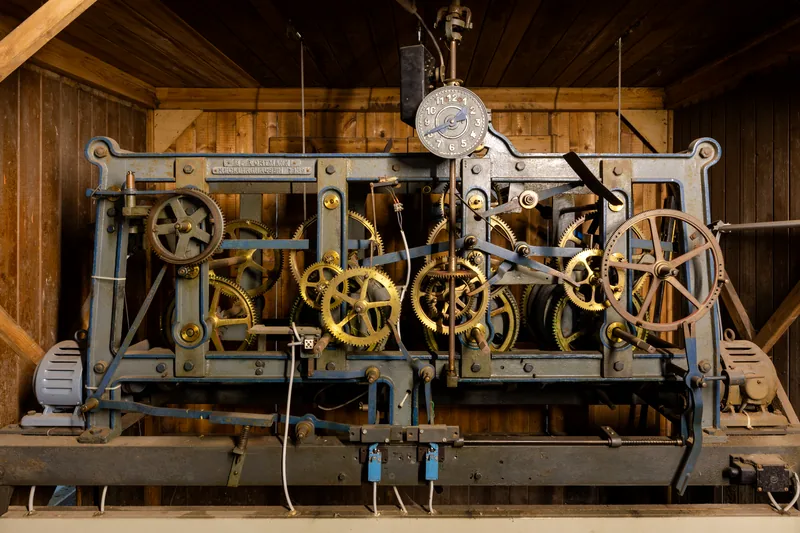
The movement layout generally adopts either a full-plate, three-quarter plate, or finger-bridge configuration. Finger-bridge layouts leave the escape wheel, third wheel, and fourth wheel individually exposed, offering stunning visual depth through a display case back. However, this open architecture leaves delicate balance pivots and bridge alignment exposed to torsional stress, requiring exact structural tolerance when mounting the movement within a modern wrist case.
3. Challenges of Converting Lemania 18s to Wristwatch
When prospective collectors ask, "can you convert lemania 18s pocket watch movements into functional wristwatches?", the short answer is yes, but the long answer involves tackling severe physical and mechanical obstacles. The primary hurdle is sheer scale. Pocket watch movements of this vintage were never designed to endure the rapid multi-axis movements, vibrations, and impact forces experienced by a human wrist. A balance pivot measuring less than 0.12 mm in diameter carries a relatively heavy balance wheel; without modern shock protection systems like Incabloc or KIF, a sudden impact can easily snap a pivot or mushroom its tip inside the jewel cap.
Another major challenge involves dial orientation and stem alignment. Pocket watch movements were manufactured in two distinct configurations: Lépine (open-face) and Savonnette (hunter-case). In a Lépine movement, the winding stem sits directly at the 12 o'clock position in line with the small seconds sub-dial at 6 o'clock. When turned 90 degrees to position the crown at 3 o'clock on a wristwatch, the small seconds register rotates to the 9 o'clock position. Conversely, a Savonnette movement has its winding stem at 3 o'clock and the sub-seconds at 6 o'clock, which aligns naturally for a wristwatch dial but requires sourcing a rare hunter-style base movement.
Finally, environmental protection poses a continuous threat to converted pocket movements. Vintage pocket watches lacked gasket seals, relying on close-tolerance metal friction fits. Consequently, these movements offer zero defense against humidity, dust, and moisture vapor. To safely convert a Lemania 18s pocket watch into a wristwatch, the watchmaker must engineer an outer case system capable of sealing the movement off from modern atmospheric hazards without putting mechanical pressure on the historic movement plates.
4. Lug Welding and Case Selection
Selecting or fabricating an appropriate case is the most critical aesthetic and structural decision in the conversion process. Searching for a off-the-shelf lemania 18s pocket watch to wrist conversion case yields limited results, as the non-standard height, stem axis height, and dial seat dimensions of vintage Lemania movements frequently require bespoke adjustments. Modern conversions rely on custom CNC-machined 316L stainless steel cases equipped with threaded exhibition back covers and synthetic rubber O-ring seals to protect the antique mechanism.
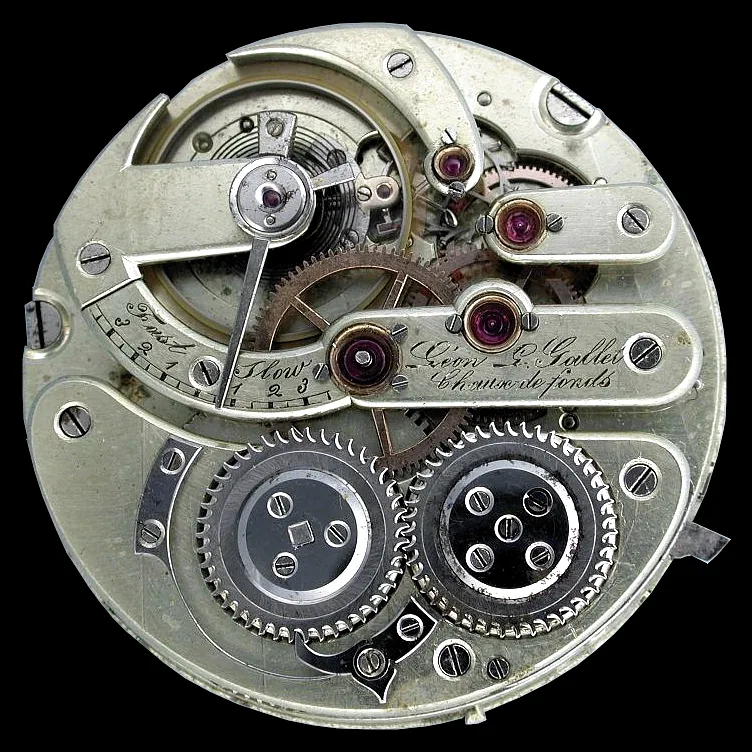
When custom-machining a case is not an option, watchmakers often resort to adapting an original pocket watch case through lug welding. This traditional technique mirrors the historic transition period when soldiers welded wire loops directly onto silver or nickel pocket watch cases to fashion authentic WW1 trench watches. The watchmaker must strip the outer case, carefully silver-solder or micro-TIG weld custom lugs (such as fixed wire lugs or solid drilled lugs) onto the 3 and 9 o'clock sides, and carefully polish away heat discoloration without distorting the internal movement mounting lip.
Inside the case, the movement must be secured using a custom brass or aluminum movement spacer ring (frequently called a *chablon* ring). Because the Lemania 18s has significant mass, the movement cannot simply rest loose inside the case shell. The spacer ring must be lathe-turned to match the exact step height of the mainplate, featuring relief cuts for the stem, dial feet, and casing clamps. Secure casing clamps screwed into the edge of the movement plate lock the assembly against the internal flange of the case, ensuring zero internal movement during wrist rotation.
5. Crown and Stem Solutions
The winding stem of an 18s pocket watch is vastly different from a standard modern wristwatch stem. Pocket watch stems feature much thicker arbors, non-standard thread pitches, and longer square-section engagement profiles that interface with the castle gear and winding pinion. Modern conversion cases require a crown stem that bridges the gap between the antique keyless work and a modern, gasketed watch crown designed to resist moisture ingress.
To overcome stem incompatibilities, the watchmaker must turn a custom stem on a precision watchmaker's lathe (such as a Schaublin 70). Starting with a blank rod of high-carbon steel, the watchmaker turns the pivot diameter, cuts the precise square profile to drive the winding pinion, and threads the outer end to accept a modern crown. Alternatively, if the original stem is preserved, an extension sleeve must be turned, threaded, and hardened to join the original stem to the new crown arrangement.
Setting stem depth and sleeve tension requires extreme precision. If the stem length is off by even 0.10 mm, the keyless work will either fail to click into the setting position or exert constant lateral pressure on the winding pinion, leading to rapid gear tooth wear. The outer crown must house an internal rubber gasket that slides over a raised tube on the case wall, creating a seal while allowing the heavy winding torque required to charge an 18-size mainspring.
6. Dial and Hand Considerations
The visual signature of a Lemania conversion depends heavily on the execution of the dial and hand assembly. Most original 18s Lemania pocket watches feature double-sunk or single-sunk vitreous enamel dials fired over copper bases. While enamel dials retain their brilliant white color indefinitely, they are extremely fragile. Machining or cutting an enamel dial to fit a modern case will cause spiderweb cracking across the glass surface. Therefore, the internal diameter of the conversion case must be engineered around the untouched perimeter of the original dial.
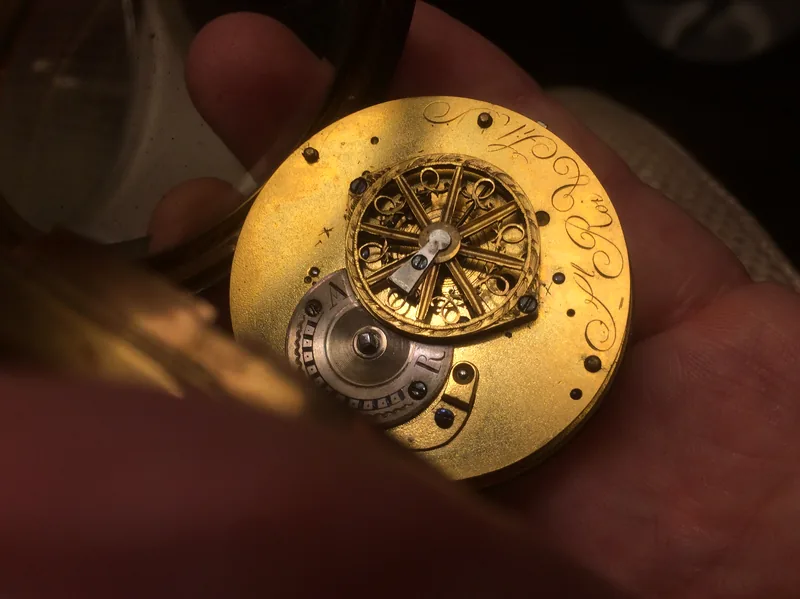
Dial feet placement presents another technical hurdle. Pocket watch dial feet are positioned to lock into the mainplate using side screws or eccentric cams. If a watchmaker must reorient a dial (for instance, rotating a Lépine dial to adjust for a 3 o'clock stem position), the original copper feet must be carefully removed. New dial feet are attached using a capacitive discharge spot welder, which welds the tiny copper legs to the back of the copper dial plate without generating enough localized heat to crack the front enamel surface.
Hand fitting requires equal delicacy. The central hour wheel pipe and cannon pinion of an 18s caliber are considerably larger than those found on modern wristwatches. Original pocket watch hands—often crafted from blued steel in spade, Poire, or Breguet styles—must be restored, re-poised, and press-fitted with exact clearance. The clearance between the minute hand and the inner curve of the front crystal is often less than 0.30 mm, requiring the use of high-domed sapphire or acrylic crystals to accommodate the tall hand arbor of these historical calibers.
7. Why 18s is Less Common for Conversion
While 10-size, 12-size, and 16-size pocket watches are frequently selected for custom wrist modifications, the decision to convert a Lemania 18s pocket watch into a wristwatch is far less common in the horological world. The primary reason is physical volume. Once an 18s movement (approx. 41 to 45 mm in diameter) is fitted into a structural conversion case with adequate wall thickness and gasket clearance, the finished wristwatch measures between 48 mm and 54 mm in diameter, excluding the crown. Lug-to-lug dimensions can easily top 60 mm, making the watch uncomfortably large for all but the largest wrists.
To understand the scale difference, one can compare these massive pieces to historic and modern wristwear standards:
| Watch Specification | Movement Diameter | Finished Case Diameter | Average Thickness |
|---|---|---|---|
| Standard Vintage Wristwatch | 23.0 - 30.0 mm | 33.0 - 36.0 mm | 9.0 - 11.0 mm |
| Vintage Rolex Wristwatches | 28.5 - 30.5 mm | 34.0 - 40.0 mm | 11.5 - 13.0 mm |
| 12s / 16s Pocket Watch Conversion | 38.0 - 43.0 mm | 42.0 - 45.0 mm | 12.0 - 14.0 mm |
| Lemania 18s Pocket Watch Conversion | 40.6 - 44.9 mm | 48.0 - 54.0 mm | 14.5 - 17.0 mm |
As shown above, the 18s conversion sits at the absolute limit of wearable proportion. Beyond pure ergonomics, the sheer mass of the moving internal components creates practical wear issues. The heavy balance wheel creates high inertia, making the movement sensitive to dynamic wrist movements. Wrist drops that would be absorbed harmlessly by a smaller caliber can easily bend balance pivots on an 18s movement.
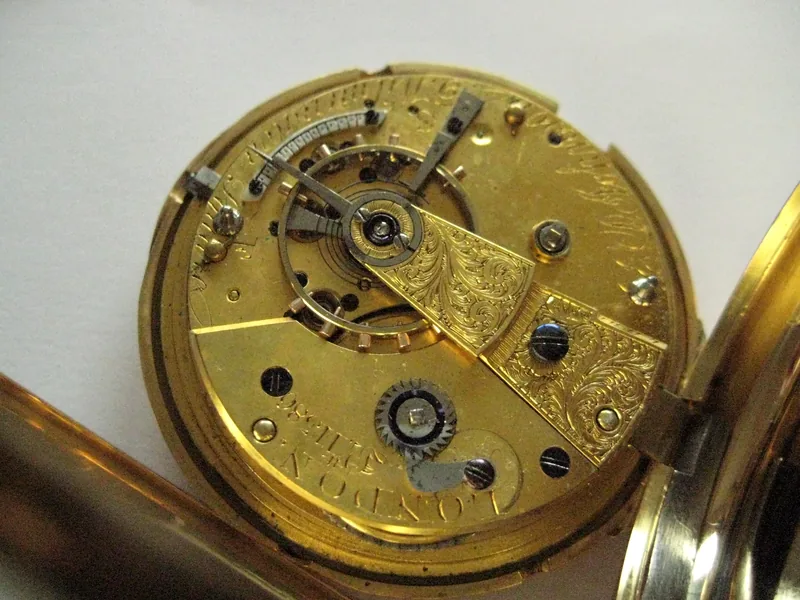
Because of these physical limitations, mainstream artisans specializing in antique pocket watch conversions generally prefer working with smaller 10s or 12s movements, or 19-Ligne wrist-chronograph ebauches. Modifying a Lemania 18s remains a niche pursuit reserved for specialized collectors who demand a bold, oversized statement piece and appreciate the raw industrial majesty of an uncompromised 19th-century pocket engine on the wrist.
8. Final Thoughts on Lemania 18s Conversions
Attempting to convert a Lemania 18s pocket watch into a wristwatch represents a fascinating intersection between historic preservation and custom mechanical engineering. When executed by a skilled master watchmaker, the result is a breathtaking, oversized timekeeper that showcases the glorious mechanics of a bygone era. The visible sweep of the large balance wheel, the deliberate 18,000 vph tick, and the deep reservoir of power from the massive mainspring barrel offer an tactile experience that no modern mass-produced wristwatch can replicate.
However, purists and watchmakers alike must weigh the historical significance of the donor pocket watch before taking a lathe or soldering torch to its components. High-grade, rare Lemania military split-second chronographs or railroad chronometers should ideally be preserved in their original pocket watch cases for future generations. On the other hand, homeless or orphan Lemania movements—whose original precious metal cases were melted down long ago—serve as perfect candidates for a second life on the wrist.
Ultimately, a successful Lemania 18s conversion requires respect for original tolerances, meticulous machining of custom stems and spacers, and a clear understanding of practical wrist ergonomics. When these elements align, an antique pocket instrument is transformed into a unique piece of wearable horological art—bringing a legendary piece of Lemania's mechanical history out of a pocket and back into daily view.