1. Historical Background of Minerva 13L Movements
The history of Fabrique Minerva—founded by the Robert brothers in Villeret, Switzerland, in 1858—is deeply intertwined with the evolution of precision timekeeping. While Minerva gained legendary status among collectors for its mid-century monopusher chronographs and stopwatches, its foundational reputation was forged in the production of high-grade, smaller-diameter pocket watch calibers during the late 19th and early 20th centuries. Chief among these architectural triumphs was the 13-ligne movement family, commonly referred to as the Minerva 13L.
Originally designed during an era when pocket watches were the primary timekeeping instruments for men and pendant watches were popular among women, the 13L bridge design reflected classical Swiss movement aesthetics. It featured finger-style bridges, high-grade balance assemblies, and meticulously hand-finished steel components. As world warfare transformed society in the 1910s, the demand for practical, hands-free timekeeping spiked dramatically. Horologists and soldiers alike began militarizing small pocket calibers, placing them into transitional cases with crude wire lugs—a technique that birthed authentic WW1 trench watches. The Minerva 13L, with its compact footprint and exceptional structural stability, became a prime candidate for this early evolutionary leap.
Throughout the interwar period, Minerva continued to refine the 13L platform. The caliber was produced in various configurations, ranging from basic 7-jewel executions to highly decorated 15- and 17-jewel versions featuring screwed chatons, Breguet overcoil hairsprings, and swan-neck regulators. Today, vintage watchmakers and restoration enthusiasts frequently seek out this movement to antique pocket watch conversions, giving a second life to a caliber that bridges the golden age of pocket horology and the modern wristwatch era.
2. Technical Specifications and Movement Architecture
Understanding the architecture of the Minerva 13L requires a deep dive into traditional Swiss dimensional measurements. The term "ligne" (indicated by the triple prime symbol ''') is a traditional French unit of measure equal to 2.2558 millimeters. A 13-ligne movement, therefore, measures approximately 29.33 mm in movement diameter, with an overall casing height typically ranging between 4.0 mm and 4.5 mm depending on the specific execution and train bridge layout. This compact footprint is precisely what makes the movement so versatile for modern wrist adaptation.
Mechanically, the Minerva 13L operates at a traditional low-frequency beat rate of 18,000 vibrations per hour (2.5 Hz). This leisurely frequency yields the characteristic slow tick of early 20th-century watchmaking while reducing mechanical wear on the pallet jewels and escape wheel teeth. The power delivery is driven by a mainspring housed in a polished barrel, yielding a typical power reserve of 36 to 40 hours. The gear train is arranged in a classic Swiss lever configuration, utilizing a bi-metallic compensation balance wheel paired with a blue steel hairspring to mitigate temperature expansion effects.
From an engineering standpoint, the keyless works (the winding and setting mechanism) on the 13L rely on a traditional positive-set action controlled by a tirette (setting lever) and yoke mechanism. The winding wheel and crown wheel are secured to the barrel bridge via flat steel screws, often decorated with snailing or mirror polishing. The layout offers exceptional access for servicing; every component, from the center wheel to the balance cock, is designed with generous tolerances that allow a master watchmaker to adjust endshake and sideshake with precision using traditional staking tools and horological calipers.
3. Challenges of Converting Minerva 13L to Wristwatch
While the prospect to convert minerva 13L pocket watch into wristwatch form is appealing, the technical execution presents significant bench challenges. The first major hurdle stems from dial orientation and movement layout. Pocket watch movements were designed in two primary forms: Lépine (open-face, where the winding stem is at 12 o'clock and seconds sub-dial is inline at 6 o'clock) and Savonnette (hunter-style, where the winding stem is at 3 o'clock and seconds are at 6 o'clock relative to the stem). Adapting a Lépine 13L movement to a wrist case means the crown will either reside at 12 o'clock or, if rotated 90 degrees to put the crown at 3 o'clock, the small seconds register shifts to the 9 o'clock position.
The second critical issue is shock vulnerability. Vintage Minerva 13L movements were engineered decades before the invention of modern shock-absorption systems like Incabloc or KIF. The delicate balance staff pivots—often measuring just 0.08 mm to 0.10 mm in diameter—run inside solid jewel settings without spring-loaded dampening. When worn on the wrist, a converted watch is subjected to dynamic g-forces, vibrations, and accidental impacts that a pocket watch safe inside a waistcoat pocket never experienced. Watchmakers must ensure perfect pivot polish and ideal endshake, advising clients that converted vintage wristwatches require mindful, non-athletic wear.
Finally, environmental sealing presents an ongoing battle. Original pocket watch cases relied on snap-fit or friction-fit bezels and casebacks, offering zero resistance to dust, sweat, or moisture. Wristwatches are constantly exposed to ambient humidity and skin oils. To successfully execute a minerva 13L pocket watch to wrist conversion, the watchmaker must source or fabricate a bespoke wrist case equipped with modern rubber gaskets at the crown stem entry, bezel joint, and caseback threads to safeguard the historic movement from atmospheric degradation.
4. Lug Welding and Case Selection
Achieving the ideal balance between wrist presence, comfort, and structural integrity requires meticulous planning during case selection. When deciding on the best case size for minerva 13L conversion, watchmakers must factor in the 29.33 mm movement diameter alongside the thickness of the internal movement holder ring. A final external case diameter of 36 mm to 38 mm is universally considered the sweet spot. This size range honors mid-century wristwatch proportions while keeping the overall profile trim enough to sit comfortably on the modern wrist.
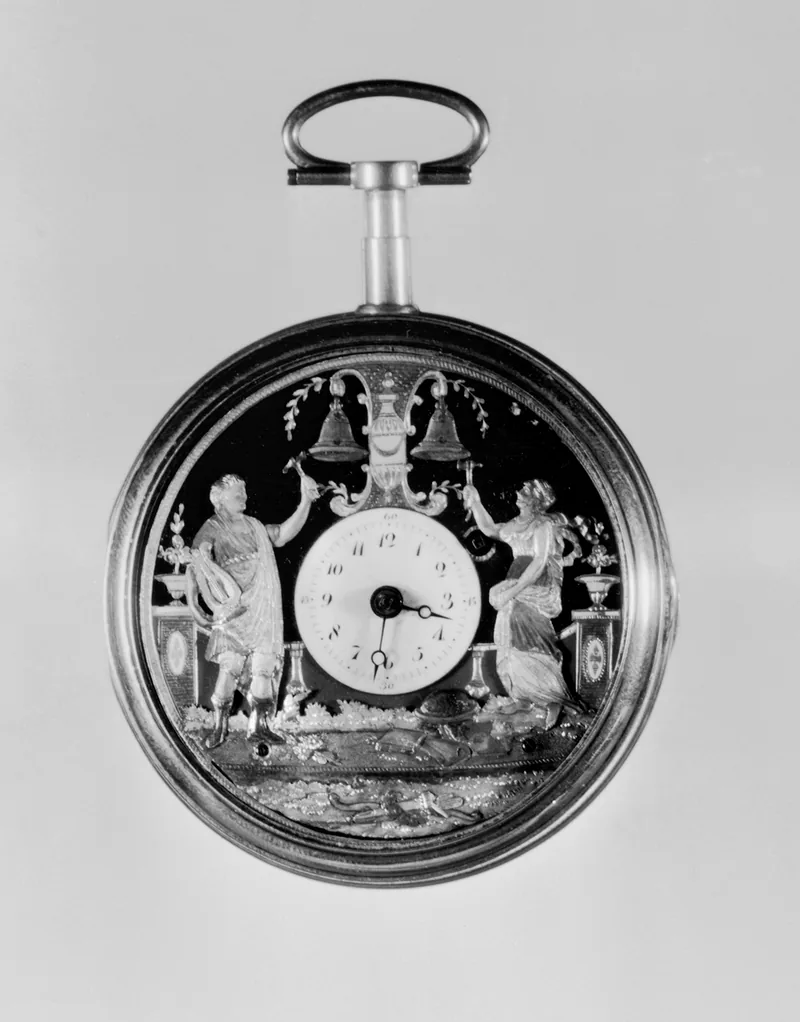
There are two primary technical pathways for casing a 13L: modifying an original vintage pocket watch case or transplanting the movement into a custom-machined modern stainless steel wrist case. If modifying an original sterling silver or nickel pocket case, the artisan must perform precision lug welding. Wire lugs (often formed from sterling silver or nickel-silver wire measuring 1.5 mm to 2.0 mm in diameter) are hand-bent, fitted to the contours of the case band at 12 and 6 o'clock, and silver-soldered using a micro-torch or laser welder. Laser welding is heavily preferred today because it concentrates heat locally, preventing annealing of the case material or distortion of the bezel threads.
Conversely, utilizing a purpose-built modern conversion case machined from 316L stainless steel provides superior durability. These cases feature pre-engineered spring bar lugs or screw-in strap bars, synthetic sapphire crystals, and threaded display casebacks that showcase the decorated Minerva architecture. To bridge the gap between the 29.33 mm caliber diameter and a 38 mm outer case wall, the watchmaker turns a custom brass or stainless steel movement adapter ring on a watchmaker's lathe. This ring features precise cutouts to clear the setting lever spring and stem entrance, held securely in place by case spring clamps or perimeter set screws.
5. Crown and Stem Solutions
The winding and setting system represents one of the most mechanically demanding phases when you convert minerva 13L pocket watch movements into wristwatch configurations. Pocket watch stems were designed to operate inside a case pendant sleeve, which housed an internal spring or friction mechanism to hold the stem in winding vs. setting positions. Modern wristwatch cases, however, rely on the movement’s internal keyless works to govern stem position, requiring a completely re-engineered winding stem cut to exact micro-tolerances.
In most conversion projects, the original pocket watch stem is either too short, damaged, or possesses an obsolete thread pitch (such as legacy Swiss metric threads) that will not accept a modern waterproof crown. The watchmaker must select a suitable stem blank or turn a new stem from high-carbon steel on a lathe. The main stem body must match the precise journal diameters of the original Minerva 13L plate and crown wheel bore, while the outer threaded post is typically machined to standard Tap 9 (0.90 mm) or Tap 10 (1.00 mm) threads to allow compatibility with contemporary wrist crowns.
Proper stem alignment and height are non-negotiable. If the stem bore of the new case sits even 0.10 mm higher or lower than the center height of the movement’s winding pinion, the stem will bind during winding or apply excessive lateral pressure to the keyless works detent spring. This offset causes premature wear, sloppy setting action, or complete stem snapping. Watchmakers utilize dial calipers and depth micrometers to calculate the exact stem-to-dial height, adjusting the movement seating shoulder inside the case or altering the custom movement holder ring until the stem enters the movement in perfect concentric alignment.
6. Dial and Hand Considerations
The visual identity of a converted Minerva 13L rests entirely on its dial and hands, yet adapting vintage dial components presents complex geometry. Original pocket watch dials were made of enamel over a copper base plate or stamped brass with silver plating. Enamel dials are notoriously fragile; drilling new holes or trimming their outer diameter risks catastrophic cracking across the vitreous surface. Therefore, the choice of case must accommodate the exact original dial diameter, or a custom replacement dial must be engineered from scratch.
Securing the dial to the movement requires precise dial foot placement. Pocket watch dial feet are positioned to align with the screw holes on the mainplate of the specific movement execution. If the original dial is replaced or if the movement orientation is rotated to adjust crown placement, the old dial feet must be milled off, and new copper feet must be hard-soldered or attached using micro-spot resistance welding at the precise coordinates required by the 13L mainplate. Furthermore, the cannon pinion, hour wheel, and seconds bit arbor heights must be verified to ensure sufficient hand clearance beneath the inner surface of the front crystal.
Hand fitting on a Minerva 13L demands traditional horological tools and careful hole truing. Vintage hands are often blued steel—a thermal treatment that yields a rust-resistant, brilliant cobalt finish. If the original hands are missing or damaged, replacement hands must be selected with precise socket hole dimensions:
- Hour Hand Tube: Typically ~1.30 mm to 1.50 mm depending on caliber sub-variant
- Minute Hand Socket: Typically ~0.70 mm to 0.80 mm friction fit on the cannon pinion
- Small Seconds Pipe: Typically ~0.18 mm to 0.22 mm fit on the extended fourth wheel pivot
Using a staking set, the watchmaker closes or broaches the hand hubs to match these exact arbor dimensions, ensuring the hands remain perfectly parallel to the dial face without dragging or contacting the index markers.
7. Why 13L is more common for conversion
Within the world of horological upcycling, certain calibers stand out as ideal candidates for transformation. While giant 18-ligne and 19-ligne pocket watch movements from brands like Waltham, Elgin, or Omega are frequently recased, they produce massive wristwatches measuring 44 mm to 48 mm across—dimensions that prove uncomfortably heavy and impractically large for daily wear. The Minerva 13L occupies an ideal middle ground, making it significantly more desirable for master craftsmen who regularly convert minerva 13L pocket watch into wristwatch creations.
At 29.33 mm in movement diameter, the 13L yields finished wristwatch dimensions that mirror mid-century icons. Similar in scale to vintage military and civilian wristwatches—including early mid-sized offerings like vintage Rolex wristwatches that utilized modified small-caliber Hunter movements—the 13L provides an authentic retro aesthetic on the wrist without looking like a pocket instrument strapped to an arm. The proportions between the dial opening, bezel thickness, and lug dimensions maintain classical horological harmony.
Furthermore, the physical availability and architectural robustness of the Minerva 13L contribute to its popularity. Minerva produced these calibers in stable quantities, and their open bridge layout simplifies clean-up, re-pivoting, and adjustment. The steel train wheels, high-grade balance spring geometry, and thick brass plates tolerate the disassembly and custom machining process far better than ultra-thin or overly complex complications, providing watchmakers with a highly dependable mechanical canvas.
8. Final Thoughts on Minerva 13L Conversions
Converting a historical pocket watch caliber into a functional wristwatch is equal parts historical preservation, mechanical engineering, and artistic restoration. A successful minerva 13L pocket watch to wrist conversion transforms an isolated pocket relic—often sitting forgotten in a drawer due to broken case hinges or a lack of pocket-wear utility—into a dynamic, wearable piece of horological art. It honors the original Swiss artisans of Villeret while granting their craftsmanship another century of operational life.
However, successful conversion demands uncompromising respect for mechanical principles. From calculating the stem height relative to keyless works tolerances, to turning custom brass movement rings, to selecting the best case size for minerva 13L conversion projects, every step requires specialized watchmaking machinery and deep technical expertise. Cutting corners with adhesive-backed dial feet, ill-fitting generic cases, or forced stems will inevitably result in mechanical failure and ruin a historic piece of Swiss history.
For collectors and bench watchmakers alike, the converted Minerva 13L offers an incomparable experience on the wrist. Observing the slow, deliberate 18,000 VPH sweep of a blued steel hand across a pristine vintage dial—backed by a hand-decorated movement visible through a sapphire caseback—serves as a daily reminder of horology’s mechanical soul. Executed with technical precision, the Minerva 13L wristwatch stands as a masterclass bridge between traditional 19th-century pocket horology and functional modern wrist wear.