1. Historical Background of Minerva 6s Movements
The story of Minerva begins in 1858 in Villeret, Switzerland, when the Robert brothers—Charles-Yvan and Hyppolite—established a watchmaking workshop that would eventually become one of the most respected names in precision timing. By the late 19th and early 20th centuries, the manufacturer had established a formidable reputation for producing high-grade pocket watch movements characterized by exquisite hand-finishing, robust architecture, and exceptional timekeeping stability. Among their most celebrated pocket watch architectures were the 19-ligne family calibers, frequently categorized under size standards such as the 6s (6-size) standard class in international markets.
During the early decades of the 20th century, pocket watches were the primary timekeeping tool for naval navigators, railway engineers, and military personnel. Minerva stood out by manufacturing complete movements in-house, crafting everything from the raw plates and bridges to the delicate balance assemblies. As warfare and aviation evolved, the necessity for hands-free timekeeping became paramount. This historical transition mirrored the development of authentic WW1 trench watches, where traditional pocket watch movements were adapted for wrist wear by military officers requiring instant readability under extreme field conditions.
Today, vintage Minerva pocket movements—particularly the 6s platform—are held in high regard by horological purists. Their historical significance lies not only in their robust construction, but also in the bridges that connect traditional hand-worked Swiss horology with modern wearable design. Preserving these historic movements by translating them into functional wristwatches allows a new generation of collectors to appreciate the mechanical genius of early Villeret watchmaking on their wrists.
2. Technical Specifications and Movement Architecture
The Minerva 6s caliber represents a masterclass in classic Swiss bridge design and traditional gear train geometry. Measuring approximately 38mm to 39mm in movement diameter (fitting into 19-ligne size specifications), the 6s architecture provides an ideal balance between mechanical scale and wrist-worn wearability. The movement typically features a traditional Swiss lever escapement, running at a resonant beat rate of 18,000 vibrations per hour (2.5 Hz). This leisurely frequency yields the characteristic slow, rhythmic tick of antique horology, minimizing mechanical wear across the train wheels over decades of operation.
Architecturally, the movement is built around a heavy brass mainplate, usually electro-gilded with nickel or gold plating. Depending on the specific execution grade, the Minerva 6s utilizes either a three-quarter plate configuration or a series of gracefully curved finger bridges housing the train pivots. The regulation assembly is a visual and mechanical highlight: a large, cut bimetallic compensation balance wheel equipped with solid gold timing screws, paired with a blued steel Breguet overcoil balance spring. Higher-grade executions feature 15 to 17 ruby jewels set in raised chatons, secured with polished steel screws that allow micro-adjustment of endshake tolerances.
Power delivery is governed by a robust mainspring barrel driving a center wheel, third wheel, fourth wheel (driving the sub-seconds pinion), and escape wheel. The keyless works mechanism employs a traditional castle wheel and sliding pinion system for winding and hand-setting. Because these movements were built long before the age of standardized mass production, individual components were hand-adjusted and paired at the bench, requiring modern watchmakers to approach each restoration with bespoke precision lathe techniques.
3. Challenges of Converting Minerva 6s to Wristwatch
When clients ask, "can you convert minerva 6s pocket watch mechanisms into reliable wristwatches?", the horological answer is yes—but the process is fraught with technical hurdles that require advanced micro-engineering. The primary challenge stems from the movement's complete lack of modern shock protection systems. Unlike contemporary wristwatches equipped with Incabloc or Novodiac spring-loaded balance jewels, the Minerva 6s utilizes solid, fixed jewel settings. A sudden wrist impact or accidental drop transfers kinetic force directly through the balance staff pivots, which are often no thicker than a human hair, creating a high risk of bent or sheared pivots.
A second major obstacle is dial orientation and movement layout. Pocket watches were designed either as open-face (Lépine) movements or hunting-case (Savonnette) movements. In an open-face Minerva 6s movement, the winding stem is positioned at 12 o'clock, placing the running seconds sub-dial at 6 o'clock. When turned 90 degrees to position the crown at 3 o'clock for a wristwatch, the running seconds sub-dial moves to the 9 o'clock position. Conversely, hunting-case layouts allow for a 3 o'clock crown with a 6 o'clock sub-seconds, but finding intact Savonnette Minerva 6s movements is significantly rarer in today's vintage market.
Furthermore, mainspring torque and environmental sealing present significant operational risks. Pocket watch movements were designed to operate inside thick, dust-protected pocket environments without significant exposure to atmospheric humidity or moisture. Translating the Minerva 6s to the wrist demands creating an airtight micro-climate to prevent sweat, airborne oils, and humidity from corroding the untreated steel balance spring and delicate train pivots.
4. Lug Welding and Case Selection
Achieving a successful conversion depends heavily on selecting or fabricating a proper minerva 6s pocket watch to wrist conversion case. There are two primary pathways open to the artisan watchmaker: modifying an original vintage pocket watch case through specialized soldering, or machining a completely modern 316L stainless steel custom conversion case engineered specifically for the 6s movement dimensions.
If preserving the original pocket case is desired, wire lugs must be micro-welded or silver-soldered directly onto the perimeter of the coin-silver or nickel case body. This process requires stripping the movement entirely, cleaning the silver substrate, and utilizing high-precision TIG welding or silver soldering torches to fuse hand-bent 316L steel or silver wire loops at 12 and 6 o'clock. Great care must be taken to maintain perfectly parallel lug geometry, ensuring that the finished watch sits flush against the wrist without putting torsional stress on the strap spring bars.
Alternatively, crafting or sourcing a purpose-built CNC conversion case provides far superior environmental protection and structural rigidity. These custom cases feature custom inner movement rings machined from brass or stainless steel, securing the Minerva 6s movement with movement clamps and dampening spacers. Equipped with double-domed scratch-resistant sapphire crystals and gasket-sealed exhibition casebacks, a modern bespoke case highlights the intricate finishing of the Minerva bridges while offering water-resistance ratings suitable for light daily wear.
5. Crown and Stem Solutions
The keyless works of an antique Minerva 6s movement are fundamentally different from modern mechanical wristwatches. Pocket watch stems were engineered to interface with heavy, hand-wound pocket watch crowns, relying on specific sleeve-and-stem tension systems inside the case neck. To adapt this setup to a wrist-worn format, a watchmaker must turn a custom winding stem on a precision watchmaker's lathe (such as a Levin or Schaublin lathe) to bridge the precise gap between the movement's winding pinion and the external crown gasket.
Matching the stem threads (typically Tap 9 or Tap 10) requires cutting hardened steel stock to exact millimeter tolerances, followed by precise heat treatment and tempering. If the stem is turned even a fraction of a millimeter too long, it will exert axial pressure on the winding pinion and click spring, leading to premature gear wear or slippage during winding. Conversely, a stem cut too short will fail to fully engage the setting mechanism, leaving the watch trapped in set-mode or unable to fully tension the mainspring.
The crown choice must balance historical authenticity with ergonomic usability. Large onion crowns or vintage-style pumpkin crowns are preferred because they provide adequate tactile leverage when winding the stiff mainspring of a 19-ligne movement. Modern conversions integrate internal rubber O-rings inside the crown tube assembly, forming an active dust barrier around the winding stem without increasing friction against the case tube shaft during daily hand winding.
6. Dial and Hand Considerations
The dial and hand assembly is the visual soul of any vintage conversion, but working with original early 20th-century Minerva components demands extreme delicacy. Most original Minerva 6s pocket watches feature grand feu vitreous enamel dials fired over copper plates. While enamel is immune to fading and UV degradation, it is extraordinarily brittle. Drilling new dial foot locations or exerting excessive pressure during hand removal can cause microscopic hairline fractures that permanently ruin the dial face.
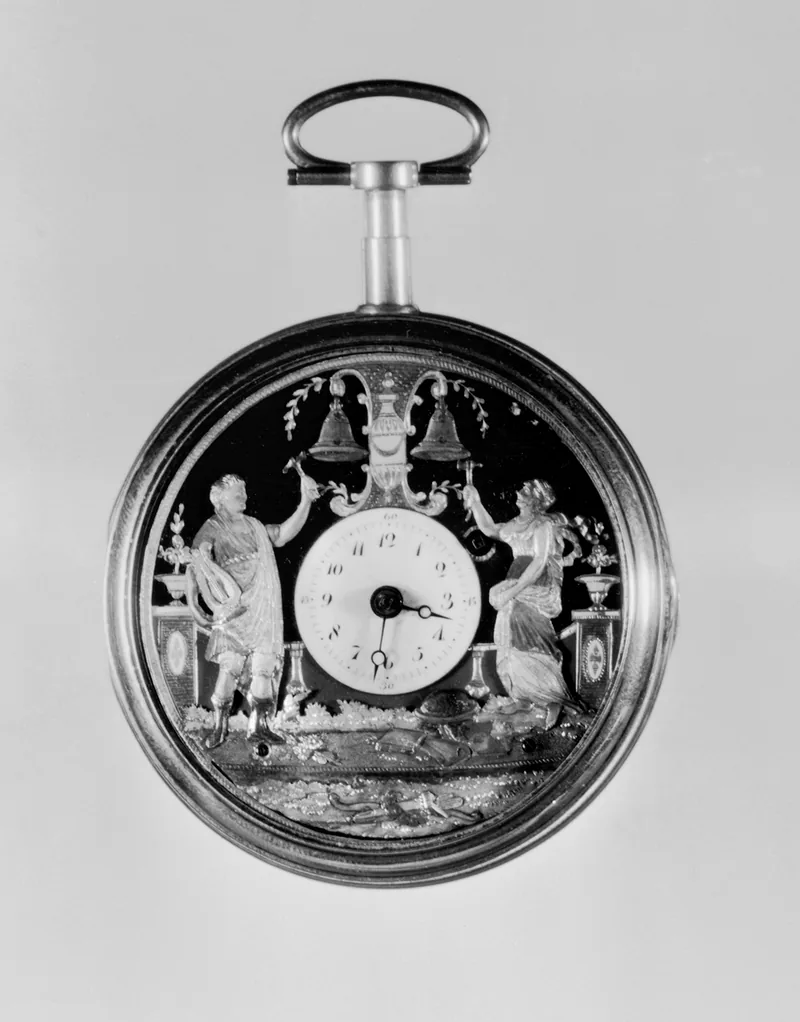
When aligning the dial for a wrist conversion, the dial feet must be repositioned if the crown layout is converted from 12 o'clock to 3 o'clock. Master watchmakers remove the original copper feet using precision micro-milling tools and micro-solder new brass dial feet in locations matching the mainplate receiver holes. Alternatively, custom spacer rings with dial clamps can secure the dial without applying heat near the delicate enamel layer.
Hand fitting presents its own mechanical nuances. The original steel hands on a Minerva 6s are hand-finished and blued in thermal brass filings. Because wrist-worn movements encounter multidirectional centrifugal forces during arm motion, the hands must be fitted onto the hour wheel shaft, cannon pinion, and fourth-wheel pivot with absolute concentricity and tight friction tolerances. If the hands are loose, inertia from normal walking motions will cause the sub-seconds hand or minute hand to slide, throwing off timekeeping readouts.
7. Why 6s is More Common for Conversion
Among horological craftsmen, the decision to convert minerva 6s pocket watch into wristwatch configurations is driven by ideal physical proportions. Larger pocket watch calibers—such as 16-size or 18-size American movements—measure anywhere from 44mm to 48mm in raw movement diameter alone. Once encased in modern wristwatch housing with structural wall tolerances, those larger movements yield finished watch diameters exceeding 50mm to 55mm, rendering them uncomfortably large and impractical for daily wrist wear.
By contrast, the 6s dimensional footprint yields a finished wristwatch case diameter of roughly 41mm to 43mm. This represents the golden ratio for modern statement watches, offering bold wrist presence while maintaining comfortable weight distribution over the wrist bones. Furthermore, Minerva manufactured the 6s platform in sufficient quantities during the early 20th century, making donor movements relatively accessible for high-grade antique pocket watch conversions without sacrificing irreplaceable, museum-grade rarities.
Additionally, the structural robustness of the 6s plates provides exceptional rigidity. The thick bridge construction resists physical flexing, ensuring that gear train depths remain perfectly set even when mounted in lightweight wrist cases. This architectural stability, combined with the balance wheel's sweeping visual beauty visible through sapphire exhibition backs, makes the Minerva 6s the premier canvas for horological re-casing projects.
8. Final Thoughts on Minerva 6s Conversions
Transforming an antique Minerva 6s pocket watch into a high-performance wristwatch is far more than a simple re-casing project; it is a meticulous preservation of horological art. When executed by an experienced artisan watchmaker, this process breathes active, daily life back into a magnificent mechanical engine that might otherwise sit forgotten inside a display cabinet or safe drawer. The resulting timepiece bridges over a century of Swiss horological heritage with contemporary design functionalism.
However, owning a converted Minerva 6s requires a mindful approach to ownership. Because these movements lack modern synthetic shock absorbers and silicone hairsprings, wearers must treat them with the respect due to vintage mechanical art—avoiding high-impact sports, swimming, or exposure to heavy magnetic fields. Regular servicing every three to five years, using high-grade modern synthetic oils on high-friction pivots while preserving vintage endshake tolerances, ensures that the movement continues running smoothly.
Ultimately, a expertly crafted Minerva 6s conversion is a testament to the timeless engineering of Villeret's master craftsmen. Each wrist movement of the slow-beating balance wheel serves as a direct, mechanical link to the golden age of Swiss pocket horology, offering a tactile and visual experience that modern mass-produced wristwatches simply cannot replicate.