1. Historical Background of New York Standard 0s Movements
The New York Standard Watch Company, operating out of Jersey City, New Jersey from 1885 until its ultimate dissolution in the late 1920s, holds a unique and distinct place in American horological history. Unlike giants such as Waltham, Elgin, or Hamilton, which focused heavily on precision railroad chronometers and high-jeweled movements, New York Standard carved a lucrative niche in mass-producing affordable, innovative, and accessible timepieces for the general public. Among their vast output, the 0-size (0s) movements represent a fascinating technological bridge between the heavy pocket watches of the late 19th century and the emerging wearable wristlet trends of the early 20th century.
The 0s movement was designed during an era when pocket watches were beginning to shrink to accommodate women’s lapel styles, chatelaines, and gentleman’s formal dress attire. New York Standard engineered these compact movements using simplified train layouts and proprietary winding mechanisms, such as their famous worm-gear and crown-wheel arrangements. When modern watchmakers look to convert new york standard 0s pocket watch into wristwatch configurations, they are handling a tangible artifact of American industrial ingenuity—one that captured the transition from handcrafted horology to modern automated manufacturing.
Preserving these historic calibers today through custom recasing gives a second life to movements that would otherwise remain forgotten in drawers or melted down for silver and gold scrap. While Waltham and Elgin 0s movements are frequently discussed, the New York Standard 0s offers a distinctive plate architecture and technical character that makes it a highly rewarding subject for modern custom horology and specialized restoration projects.
2. Technical Specifications and Movement Architecture
Understanding the physical and mechanical dimensions of the New York Standard 0s caliber is essential before attempting any physical modification or recasing work. Under the traditional American Lancashire gauge system, a 0-size movement features a pillar plate diameter of precisely 1 1/6 inches, which translates to roughly 29.62 millimeters. This diameter makes the 0s exceptionally suited for contemporary wristwatch dimensions, yielding finished watch cases in the ideal 36mm to 38mm range—a stark contrast to the massive 44mm+ sizes resulting from 16s or 18s pocket watch conversions.
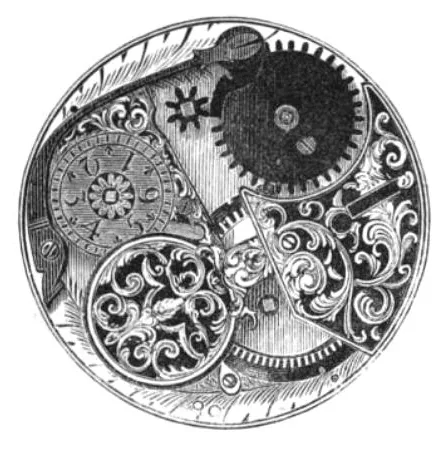
Mechanically, New York Standard 0s movements were produced in variations ranging from humble 7-jewel configurations up to higher-grade 15-jewel models. Most featured a open-face or hunting layout with a standard side-lever or pin-pallet escapement, though higher-tier models utilized traditional Swiss-style lever escapements with cut bimetallic compensation balance wheels and flat hairsprings. The train bridge configuration often features full-plate or three-quarter plate designs with distinctive bridge cutouts unique to the Jersey City factory. Power transmission is driven by a mainspring barrel housed within a compact mainplate cutout, delivering energy through a standard center wheel, third wheel, fourth wheel, and escape wheel assembly operating at a standard frequency of 18,000 vibrations per hour (2.5 Hz).
Another defining characteristic of the New York Standard 0s architecture is its setting mechanism. Many of these movements utilized a stem-wind, pendant-set system dependent on a friction sleeve contained inside the pocket watch case neck, rather than a modern movement-integrated keyless works. This architectural nuance poses immediate engineering considerations for the watchmaker during casing, as traditional modern pull-out stems cannot directly interact with the movement's setting gears without custom modification or specialized adapter sleeves.
3. Challenges of Converting New York Standard 0s to Wristwatch
When clients approach a workshop asking, "can you convert new york standard 0s pocket watch into a daily-wear piece?" the master watchmaker must explain the significant mechanical hurdles involved. The foremost technical challenge is total lack of shock protection. Unlike mid-20th-century wristwatches equipped with Incabloc or KIF spring systems, a vintage 0s movement has rigid, non-shock-absorbed jewel settings holding microscopic balance staff pivots. A minor drop or wrist impact can instantly snap a balance staff pivot, requiring manual lathe reproduction of the staff on a watchmaker’s lathe.
A secondary challenge involves environmental resilience and wear tolerance. Pocket watches spent their functional lives cushioned inside coat pockets; they were never built to withstand the torsional forces, moisture exposure, and kinetic accelerations experienced by modern wristwatches. Moisture ingress is a severe threat; vintage movements lack rubber gaskets around the crystal, case back, or winding stem. Furthermore, many lower-grade 0s movements utilized unjeweled brass bushings for lower train pivots. Over a century of operation, friction degrades these brass pivot holes into oval shapes, requiring the watchmaker to re-ream the bridge and press in modern synthetic sapphire bushings before the movement can reliably run in multiple wrist positions.
Finally, parts availability presents a constant obstacle when dealing with antique pocket watch conversions. Unlike Elgin or Waltham, where modern stock (NOS) parts remain relatively plentiful, New York Standard components are scarce. Every component—from the balance staff and winding arbor to the click spring—often must be custom-machined or retrofitted from donor calibers. This renders the conversion of a New York Standard 0s an exercise in true bespoke micro-engineering rather than a simple assembly operation.
4. Lug Welding and Case Selection
Finding an appropriate **new york standard 0s pocket watch to wrist conversion case** requires careful mechanical planning. Because off-the-shelf modern movement cases are rarely engineered for 19th-century American dimensions, watchmakers generally choose between two primary paths: building a modern custom casing ring inside a dedicated modern stainless steel case, or modifying an original period silver or gold-filled pocket watch case through specialized micro-welding techniques.
If the decision is made to adapt an original vintage case, wire lugs must be attached to convert the pocket watch into a wristwatch reminiscent of early 20th-century military equipment. This process demands expert heat control. Using laser welding or high-grade silver soldering, the artisan attaches solid wire or scroll lugs to the 12 o'clock and 6 o'clock positions of the original case perimeter. Extreme care must be taken to remove all movement components, crystals, and delicate spring latches before applying heat, avoiding localized annealing that would soften the metal case shell. The aesthetic result closely mimics early authentic WW1 trench watches, blending historical accuracy with functional ergonomics.
Alternatively, constructing a custom modern wristwatch housing involves machining a brass or stainless steel adapter ring on a precision watchmaker's lathe. The inner diameter of the ring is bored to precisely match the 29.62mm movement edge and secure the movement tabs, while the outer diameter fits a modern 38mm water-resistant wristwatch case. This dual-ring approach shields the fragile antique movement from external shock and environmental moisture while providing modern sapphire glass crystal protection and standardized strap fitment across traditional 18mm or 20mm lug widths.
5. Crown and Stem Solutions
Managing the winding and setting stem on a New York Standard 0s conversion is arguably the most mathematically demanding aspect of the conversion process. Traditional American pocket watch cases housed the setting sleeve inside the pendant (the neck of the case), meaning the stem was part of the case rather than an integrated component of the movement's keyless works. When transferring the movement to a new wristwatch housing, this system must be re-engineered from the ground up.
The watchmaker must determine whether the specific NYS 0s movement is lever-set, pendant-set, or square-arbor crown set. For pendant-set movements, a custom winding stem must be turned on a lathe. The inner end of the stem must be square-milled to interface with the square winding arbor hole in the movement's winding pinion. The outer section must be threaded (typically to modern Tap 10 or Tap 9 specifications) to receive a custom oversized onion or pumpkin crown that matches the historic aesthetic of the timepiece.
To ensure smooth operation, a custom setting sleeve made of beryllium copper or hardened steel is machined to sit within the new case tube. This sleeve applies precise friction to hold the stem in either the winding or hand-setting detent position without placing excessive lateral stress on the movement’s mainplate. O-ring seals inside the modern crown tube are integrated to provide dust resistance, preserving the delicate winding wheels from grit and abrasive debris.
6. Dial and Hand Considerations
The visual signature of a converted New York Standard 0s watch relies heavily on its dial and hands. Original dials from this era were typically manufactured using fire-enameled copper plates, featuring hand-painted sunken sub-dials and delicate Roman or Gothic numerals. Porcelain enamel dials are astonishingly durable against UV fading, but they are extremely brittle. Over a century of heat expansion and mechanical stress often leaves microscopic hairline cracks ("crazing") across the enamel surface.
When installing an original enamel dial into a wristwatch case, dial feet alignment must be checked meticulously. Antique New York Standard movement plates utilize unique dial foot locations locked in place with side-screws. If a dial foot is broken during dismounting, soldering a new brass foot using traditional torch heat will ruin the enamel face by scorching the glaze. Instead, watchmakers must utilize specialized low-temperature cold-soldering methods, conductive epoxy compounds, or custom copper mounting feet secured to the outer plate rim without exposing the dial face to high thermal stress.
Hand fitment presents its own geometric challenges. Hand post diameters on 19th-century movements do not adhere to modern Swiss sizing standards. The hour wheel pipe, cannon pinion, and fourth wheel pivot heights and diameters must be measured using a digital micrometer to tenths of a millimeter. Original blued-steel hands (spade, whip, or Breguet styles) must be carefully re-bushed or broached to fit precisely. Re-bluing the hands over a heated brass pan restores their deep indigo shimmer, enhancing legibility against the stark white porcelain background.
7. Why 0s is Less Common for Conversion
While size 16s railroad watches and size 12s dress watches dominate the market for pocket watch recasing, projects that convert new york standard 0s pocket watch into wristwatch configurations are noticeably rarer. The primary reason is size and physical complexity. At ~30mm movement diameter, working on a 0-size movement requires miniature tools, fine tweezers, steady hands, and microscopic magnification comparable to servicing high-grade Swiss wristwatches, without the benefit of readily available spare parts enjoyed by standard movement calibers.
Furthermore, early American 0s movements were frequently treated as consumable luxury items during their production run. Many lower-jeweled variants suffered severe wear over decades of use, leaving modern watchmakers with worn pivot holes, damaged gear teeth, and fatigued mainsprings. Finding a high-grade donor movement with intact balance pivots, immaculate enamel work, and clean bridge plating requires patience and thorough inspection of multiple antique movement lots.
Finally, the economics of horological restoration favor larger, high-jewel railroad movements that command immediate brand recognition. However, for serious collectors and lovers of distinct horological engineering, the 0-size conversion represents an ideal wearing proportion. Unlike massive 44mm converts that feel oversized on the average wrist, a 0s movement yields a perfectly balanced, historically rich wristwatch that fits comfortably under a shirt cuff while boasting a unique American lineage.
8. Final Thoughts on New York Standard 0s Conversions
Transforming a New York Standard 0s pocket watch into a functional, elegant wristwatch is an ambitious horological exercise that bridges classic American industrial history with contemporary custom watchmaking. The process demands a complete synthesis of traditional skills—lathe turning, micro-welding, precision hand broaching, and custom case fitting—to successfully overcome the technical hurdles posed by 19th-century movement design.
While the conversion requires significant effort and technical expertise compared to larger standard calibers, the final result is a truly bespoke wearable instrument. Wearing a converted New York Standard 0s places a functional piece of American manufacturing heritage directly on your wrist, preserving the legacy of Jersey City’s master mechanics for another century of timekeeping.