Historical Background of New York Standard 10s Movements
The New York Standard Watch Company, established in Jersey City, New Jersey, in 1885, occupies a distinct and fascinating place in the annals of American industrial horology. Operating during the golden era of American pocket watch manufacturing, New York Standard carved out a unique market niche by producing accessible, reliable, and innovatively engineered timepieces. While industrial giants like Waltham and Elgin dominated high-grade railroad chronometers, New York Standard focused on democratic watchmaking, pioneering mechanized production techniques and proprietary escapement designs, such as their famous worm-gear national models and unique sleeve-setting arrangements. Their operations continued until roughly 1929, marking over four decades of prolific movement manufacturing that placed millions of mechanical watches into the hands of working-class Americans.
Among their varied output, the 10-size (10s) pocket watch movement represented a strategic evolution in American casing trends. Emerging predominantly in the late 1890s and early 1900s, the 10s caliber was designed as a bridge between the massive, utilitarian 18s open-face movements popular in industrial settings and the smaller, delicate ladies' sizes. The 10s form factor was marketed toward men seeking a sleek, dress-style pocket watch that would sit comfortably in a vest pocket without creating an unsightly bulge. These movements combined the robust mechanical principles of American full-plate and three-quarter plate architecture with refined dimensions, making them a marvel of late-Victorian industrial design.
Today, as vest pockets have largely vanished from contemporary fashion, these historical calibers face a second life on the wrist. Horologists and custom watchmakers frequently target the New York Standard 10s for historic restoration and modification. Because New York Standard manufactured high volumes of these reliable 10s movements, they serve as ideal candidates for transformation, allowing master bench watchmakers to preserve historical American engineering while reframing it for a modern era.
Technical Specifications and Movement Architecture
To successfully execute a conversion, a watchmaker must first thoroughly understand the architectural dimensions and mechanical layout of the New York Standard 10s movement. In the American horological sizing system, a 10s movement features a base plate diameter of approximately 1.4 inches (35.56 mm), though exact plate lip measurements often vary slightly between 36.0mm and 37.5mm depending on the specific model variation and production run. This physical foot-print is housed within a classical three-quarter plate or broken-bridge layout, executed predominantly in nickel-plated or gilded brass plates decorated with damaskeening patterns ranging from simple concentric circles to intricate geometric stripes.
Mechanically, New York Standard 10s movements operate at a traditional slow-beat frequency of 18,000 vibrations per hour (2.5 Hz). The escapement architecture usually relies on a standard Swiss-style lever escapement with a cut bimetallic compensation balance wheel or a solid unadjusted balance paired with a flat blue steel hairspring. Jewel counts on these movements range from standard 7-jewel configurations up to refined 15-jewel and 17-jewel grades equipped with screwed gold jewels settings and polished cap jewels on the balance staff. The mainspring barrel is typically a going barrel system, providing a power reserve of approximately 30 to 36 hours when fully wound with a high-grade modern mainspring.
A critical technical distinction of New York Standard engineering lies in its winding and setting mechanisms. Many 10s calibers utilize a negative-setting (sleeve-set) system incorporated directly into the movement frame or matched to a spring sleeve inside the original case stem. Understanding whether a target movement is sleeve-set or positive stem-set dictates the precise lathe work and stem customization required when adapting the movement to house within a custom modern case enclosure.
Challenges of Converting New York Standard 10s to Wristwatch
When clients consult our bench, the primary question they ask is: can you convert new york standard 10s pocket watch movements into functional, modern wristwatches? The answer is unequivocally yes, but the process presents distinct mechanical and structural hurdles that demand high-level watchmaking expertise. The primary engineering challenge stems from shock resistance—or the complete lack thereof. Pocket watches were designed to rest vertically in a vest pocket; their balance staff pivots are extremely thin, often measuring between 0.08mm and 0.11mm in diameter. Because historic New York Standard calibers lack modern shock-absorption systems like Incabloc or KIF, a sudden lateral impact or drop will snap the delicate balance pivots instantly, requiring custom lathe turning to cut a new balance staff from raw steel wire.
Another major structural obstacle involves movement orientation and dial layout. Pocket watches were produced in two standard configurations: hunter cases (hinged metal covers over the dial) and open-face cases. In a hunter configuration, the winding stem is positioned at 3 o'clock, and the small sub-seconds register is located at 6 o'clock. When re-cased as a wristwatch, this aligns naturally with standard wrist reading. However, most open-face 10s pocket watch movements feature the winding stem at 12 o'clock and seconds at 6 o'clock. Rotating an open-face movement to bring the crown to 3 o'clock shifts the sub-seconds register to 9 o'clock. While aesthetically striking, this non-traditional sub-seconds placement requires precise visual alignment and custom case consideration to ensure balanced proportions on the wrist.
Furthermore, vintage metal temper and environmental vulnerability pose continuous threats. Antique mainsprings, original balance springs, and unsealed steel components are highly susceptible to moisture ingress, dust, and magnetic interference. Converting these movements requires retrofitting modern materials where possible—such as replacing brittle carbon steel mainsprings with unbreakable modern alloy springs—and ensuring the replacement wristwatch enclosure provides adequate sealing against ambient humidity and debris.
Lug Welding and Case Selection
Achieving a successful project requires selecting or constructing a proper new york standard 10s pocket watch to wrist conversion case. Historically, early conversions dating back to the First World War involved taking original pocket watch cases and silver-soldering wire loops directly to the outer rim to accept leather straps, akin to authentic WW1 trench watches. While this technique preserves the original pocket watch body, original pocket watch cases are rarely water-resistant, dust-tight, or structurally rigid enough to endure modern daily wear on the wrist.
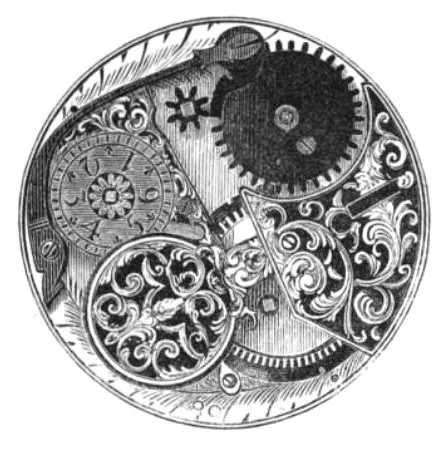
Modern horological conversion favors custom-machined 316L stainless steel conversion cases engineered specifically to accept American 10s movement dimensions. These modern conversion cases feature display casebacks with scratch-resistant sapphire crystals, enabling the wearer to admire the high-grade damaskeened plates and ticking balance assembly. To secure the New York Standard movement within a modern case, the watchmaker turns a custom spacer ring on a bench lathe. This movement holder ring bridges the dimensional gap between the outer lip of the 10s mainplate and the inner diameter of the case, holding the movement in absolute concentric alignment while insulating it against lateral kinetic vibration.
If a restorer elects to weld original-style wire lugs onto an antique case frame, metallurgical control is paramount. Silver soldering or micro-TIG welding wire lugs onto nickel, sterling silver, or gold-filled cases requires complete movement disassembly. Thermal conductivity during welding can instantly ruin enamel dials, warp case bezels, or alter the grain structure of the metal. Precision heatsinks and low-temperature silver brazing alloys must be deployed to preserve the structural integrity and finish of the vintage housing.
Crown and Stem Solutions
The winding and setting stem represents one of the most mechanically complex aspects when you choose to convert new york standard 10s pocket watch into wristwatch builds. Unlike modern wristwatches where the setting mechanism (clutch wheel, setting lever, and yoke) is fully self-contained inside the movement plate, many New York Standard 10s movements rely on negative setting sleeves. In a negative-setting system, the setting mechanism defaults to the setting position; the stem sleeve inside the case neck must push the winding arbor inward to keep the movement engaged in the winding mode. Adapting this mechanism into a modern conversion case requires custom lathe work and precise spring-tension adjustment.
To fabricate a functioning stem, a watchmaker often takes the original male stem square from the New York Standard caliber and machines a custom adapter or joins it to a modern thread-pitch stem using a hardened steel stem extender. The junction must be perfectly concentric; any radial runout (wobble) in the winding stem will place uneven wear on the castle wheel, winding pinion, and center bridge, ultimately leading to mechanical binding or gear tooth failure during winding.
The external crown must balance historical accuracy with ergonomic utility. Large "onion" or "cabochon" styled crowns are traditionally favored for 10s conversions because they echo early 20th-century aviation aesthetics while offering ample surface area to comfortably wind the heavy mainspring of a 10s movement. The crown must also incorporate internal O-ring rubber gaskets that compress tightly against the inner wall of the case tube, establishing a robust defense against environmental dust and moisture entry.
Dial and Hand Considerations
The dial of a New York Standard 10s movement is often a work of art in its own right, typically featuring double-sunk or single-sunk fired vitreous enamel over a copper base plate, complete with crisp Gothic or Arabic numerals. Preserving these porcelain enamel dials demands extreme delicacy. Over a century of environmental exposure leaves vitreous enamel prone to hairline cracking (spiderwebbing). When removing or installing the dial, a watchmaker must avoid applying uneven pressure to the dial perimeter, as flexing the copper baseplate will instantly cause the enamel surface to fracture and flake away.
Securing the dial within a conversion setup requires working carefully with original dial feet. Modern conversion cases may slightly pinch the perimeter of the dial if dimensional tolerances are off by even a tenth of a millimeter. If original dial feet are broken or sheared off—a common occurrence in vintage movements—a master watchmaker will avoid using destructive adhesives or double-sided pads. Instead, broken feet should be re-attached using a specialized spot-welder designed for dial repair, or mechanical dial clamps must be fabricated to grip the rim of the copper baseplate securely without visible distortion.
Hand fitting presents its own set of mechanical tolerances. The hand posts on a New York Standard 10s caliber (hour wheel pipe, cannon pinion shaft, and fourth wheel pivot) do not conform to modern Swiss horological standards. Original blued-steel spade or pear hands must be meticulously polished, anti-corrosion treated, and resized. If new hands are fitted, their mounting holes must be carefully opened using fine watchmaking broaches on a staking set until they friction-fit perfectly onto the vintage posts without rubbing against the crystal overhead or scraping the raised enamel surfaces below.
Why 10s is More Common for Conversion
When exploring antique pocket watch conversions, enthusiasts quickly discover that the 10-size movement occupies a sweet spot in practical ergonomics. Larger pocket watch sizes, such as the prominent 18s (44.8mm movement diameter) and 16s (43.2mm movement diameter), yield finished wristwatches with case diameters reaching 48mm to 52mm. While visually impressive as museum display pieces or desk clocks, these oversized conversions are unwieldy, heavy, and impractical for daily wear under a shirt cuff.
Conversely, the 10-size movement—measuring approximately 35.56mm across the mainplate—allows a custom watchmaker to craft a final wristwatch case diameter between 41mm and 43mm. This aligns perfectly with modern contemporary sports and pilot watch proportions. The resulting watch possesses substantial wrist presence without feeling top-heavy or prone to hitting doorframes, making it the premier choice for enthusiasts seeking a wearable antique artifact.
Furthermore, the physical thickness of a 10s movement is significantly less than that of its 18s predecessors. This slenderness allows for sleek case profiles that sit close to the wrist's center of gravity. For collectors who specifically seek to convert new york standard 10s pocket watch into wristwatch configurations, the 10s scale delivers an unrivaled synthesis of vintage pocket watch visual complexity and modern wrist-wearing comfort.
Final Thoughts on New York Standard 10s Conversions
Converting a historic New York Standard 10s pocket watch into a bespoke wristwatch is far more than a simple casing swap; it is an act of high-grade horological preservation. By marrying 19th-century American industrial craftsmanship with 21st-century micro-engineering, watchmakers liberate these brilliant mechanical artifacts from dark drawers and safe deposit boxes, placing them back where timepieces belong: alive, ticking, and telling time on the human wrist.
Owners of converted New York Standard wristwatches must remember that they are wearing a century-old mechanical organism. Because these movements lack modern shock absorbing jewels, they should be treated with the respect due to fine vintage machinery—kept clear of magnetic fields, protected from water exposure, and removed before engaging in heavy physical activities or high-impact sports. Periodic servicing every 3 to 5 years by a qualified watchmaker using modern synthetic lubricants (such as Moebius oils) ensures the gearing and balance staff remain preserved for generations to come.
Ultimately, a successfully executed conversion stands as a wearable monument to American watchmaking history. The rhythmic 18,000 vph beat of a restored New York Standard 10s caliber, viewed through a sapphire caseback, serves as a daily tangible connection to the ingenious mechanics of a bygone era.