1. Historical Background of New York Standard 12L Movements
The New York Standard Watch Company, established in Jersey City, New Jersey, in 1885, occupies a distinct and historically significant chapter in American industrial horology. Founded by Arthur O. Jennings after the assets of the defunct Fredonia Watch Company were acquired, New York Standard set out to democratize precision timekeeping. By pioneering automated production methods and simplified movement architectures, the company produced millions of reliable pocket watches through the late 19th and early 20th centuries until its eventual liquidation in the late 1920s. Among their vast output, the 12-size (often designated as 12L or 12-ligne equivalent in conversion nomenclature) open-face and hunting movement lines represented the pinnacle of their daily-wear offerings during the golden era of American railroad and civilian timekeeping.
During the early 1900s, the 12-size movement emerged as the ideal compromise between the massive, heavy 18-size railroad grade pocket watches and the tiny, fragile lady's pendant movements. Measuring approximately 39.75mm to 39.88mm in mainplate diameter, the New York Standard 12-size caliber was designed specifically for sleek, modern dress pocket watches. These movements featured clean bridge layouts, decent jewel counts—ranging from utilitarian 7-jewel configurations up to refined 15-jewel and 17-jewel train assemblies—and robust balance assemblies. In contemporary horology, enthusiasts seeking authentic historic American craftsmanship frequently turn to these movements to antique pocket watch conversions, breathing new life into historical movements that would otherwise remain forgotten in desk drawers or scrapped for their gold and silver cases.
Understanding the provenance of a New York Standard 12L movement requires recognizing its place in the transition from pocket to wrist carriage. While high-grade manufacturers like Waltham, Elgin, and Hamilton often dominated elite horological markets, New York Standard specialized in practical, accessible watchmaking that utilized ingenious stem-wind and stem-set mechanisms. Their 12-size movements were crafted with precise geometry and standardized dimensions, making them exceptionally prime candidates today for modern recasing projects. When you undertake a project to convert new york standard 12L pocket watch into wristwatch configurations, you are not merely re-housing a mechanical engine; you are preserving an authentic piece of turn-of-the-century American manufacturing engineering.
2. Technical Specifications and Movement Architecture
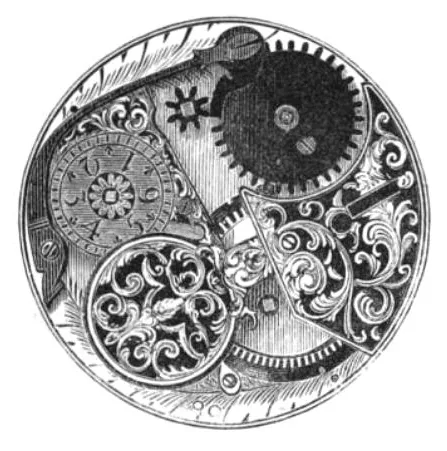
To successfully convert new york standard 12L pocket watch movements, a bench watchmaker must first master the technical layout and mechanical dimensional profile of the mainplate and train bridge architecture. Standard American 12-size movements boast a nominal mainplate diameter of 1.566 inches (39.78mm), though minor variations exist depending on whether the movement utilizes a full plate, three-quarter plate, or bridge-style construction. The movement thickness generally ranges between 4.5mm and 5.2mm from the lower balance jewel setting to the highest point of the upper winding arbor. The escapement is a traditional spring-detent or straight-line Swiss lever variant, beating at a classic frequency of 18,000 vibrations per hour (2.5 Hz), which yields the sweeping motion and distinct acoustic signature beloved by vintage horology collectors.
The key movement architecture specs for the New York Standard 12-size series include:
- Mainplate Diameter: 39.78 mm (1.566 inches)
- Movement Thickness: ~4.80 mm
- Escapement Type: Standard American straight-line lever
- Beat Rate: 18,000 vph (2.5 Hz)
- Winding/Setting Style: Negative setting system (sleeve-actuated) or positive setting (pendant/stem set) depending on production run
- Balance Wheel: Bimetallic expansion balance or mono-metallic balance with timing screws
- Train Jewels: 7 to 17 jewels (friction-set or screwed chatons on higher grades)
The winding and setting architecture of the New York Standard 12L presents a fascinating study in American watch engineering. Unlike European wristwatches of the same era that relied almost exclusively on positive setting systems—where the pull/push setting lever mechanism is housed entirely within the movement—American pocket watches overwhelmingly favored negative setting systems. In a negative set system, a split steel sleeve located inside the pocket watch case neck holds the stem in setting position until pushed inward by the case crown assembly. The mainplate houses a setting clutch and spring lever that defaults to the setting position when tension from the sleeve stem is removed. Recognizing this specific architectural nuance is paramount when planning a new york standard 12L pocket watch to wrist conversion, as it dictates how the custom stem, movement ring, and winding crown must interact.
3. Challenges of Converting New York Standard 12L to Wristwatch
While the prospect of wearing a 100-year-old American mechanical engine on the wrist is captivating, the engineering hurdles involved in converting a vintage pocket watch movement are substantial. Chief among these challenges is shock protection—or the complete lack thereof. Pocket watch balance staffs were turned on precision lathes with microscopic pivots designed to rest in hard synthetic rubies or sapphire jewel holes. Because pocket watches were carried in vest pockets, they were rarely subjected to the rapid acceleration, impacts, and directional torque that a wristwatch encounters during daily activities like typing, walking, or closing doors. A single inadvertent blow to a converted wristwatch without incabloc or KIF shock absorption can instantly shear a balance pivot, requiring micro-lathe repivoting or sourcing an elusive new-old-stock (NOS) balance staff.
A second major challenge involves spatial geometry and movement orientation. Standard open-face pocket watches feature the winding stem at 12 o'clock and the running small seconds sub-dial at 6 o'clock. When this movement is rotated 90 degrees inside a modern wristwatch case so that the winding crown sits in the standard 3 o'clock position, the small seconds register shifts to the 9 o'clock position. While this asymmetrical Lépine layout is visually stunning and historically recognized, it requires custom dial considerations if a standard 6 o'clock seconds alignment is desired (which necessitates finding a rare hunting-movement configuration). Furthermore, securing a round mainplate safely within a modern wristwatch case requires zero-tolerance machining to prevent movement shift under hand-setting torque.
Finally, environmental sealing represents an ongoing technical dilemma. Original pocket watch cases relied on snap-fit or screw-down bezels and backs designed for dust resistance rather than moisture protection. When housed in a modern wristwatch enclosure, the movement must be safeguarded against ambient humidity, sweat, and atmospheric pressure changes. Because vintage movements use carbon steel mainsprings, hairsprings, and balance staffs, exposure to moisture causes rapid oxidation and rust formation. A master watchmaker must ensure that the recasing project incorporates dual O-ring stem gaskets, sealed casebacks, and custom-machined movement mounting tabs that insulate the sensitive historical steel components from physical movement and environmental degradation.
4. Lug Welding and Case Selection
Selecting or fabricating the correct external enclosure is the foundation of a successful conversion project. When evaluating the best case size for new york standard 12L conversion work, watchmakers must balance structural clearance with wearable ergonomics. Because the movement mainplate measures roughly 39.8mm in diameter, the minimum external diameter of a custom conversion case typically falls between 42mm and 44mm, with a case height of 11.5mm to 13mm to accommodate the high clearance of the central hand pinion and vintage elevated balance bridge. Choosing an undersized case risks striking the movement bridges or pinching the balance wheel rim, while an oversized case leads to an unwearable visual presence on the wrist.
Historically, early custom recasing involved taking the original pocket watch case and physically welding or silver-soldering wire lugs directly to the case flanks—a technique heavily modeled after early twentieth-century field modifications seen on authentic WW1 trench watches. While wire-lug soldering preserves the original pocket watch body, it often results in poor ergonomic fit, fragile lug attachment points, and zero water resistance. Modern master watchmakers prefer custom-machined 316L stainless steel, titanium, or solid bronze conversion cases built specifically to house American 12-size calibers. These cases feature precision internal movement seats, dual sapphire crystals (front and display back), and robust screwed or spring-bar spring lugs engineered to handle heavy modern leather straps.
Proper case selection requires meticulous measurement of three critical dimensions using precision digital calipers or micrometers:
- Internal Seating Flange Diameter: Must match the mainplate turn (typically 39.80mm to 39.85mm) to prevent radial movement.
- Stem-to-Dial Height (SDH): The exact distance from the center of the stem winding hole to the top surface of the dial. If this measurement is off by even 0.10mm, the stem will bind inside the mainplate stem hole or split the winding sleeve.
- Total Hand Clearance Depth: The vertical spatial envelope between the top of the hour wheel/cannon pinion assembly and the inner surface of the front sapphire glass.
5. Crown and Stem Solutions
Perhaps no single aspect of the project demands more technical horological precision than adapting the stem and crown mechanism. As established, American pocket watches frequently utilized a negative setting system, whereas modern wristwatch cases are universally engineered for positive setting stems (where pulling the stem outward moves the sliding gear inside the movement to engage the hand-setting train). When converting a New York Standard 12L caliber, the watchmaker faces two primary paths: converting the movement's setting work to operate in a positive regime, or installing a specialized adapter stem and sleeve assembly within the new case neck.
If retaining the negative setting mechanism, the watchmaker must fit a custom micro-machined stem sleeve inside the modern case tube. This sleeve features an split internal spring collar that holds the stem in a sprung setting position until the crown is screwed down or pressed home. Sourcing or turning this stem on a micro-lathe (such as a Bergeon or Schaublin horological lathe) requires extreme exactness. The square shoulder of the stem must cleanly engage the winding clutch wheel inside the movement, while the threaded outer tap (typically Tap 10 or Tap 9) must mate seamlessly with an period-appropriate onion, pumpkin, or diamond-shaped vintage crown.
Alternatively, watchmakers can perform a mechanical conversion on the movement's setting setting spring and yoke. By carefully modifying the setting tension lever inside the mainplate, the movement can be modified to behave as a positive-set system. In this setup, a custom single-piece stem turned from hardened gauge steel is inserted directly through the case tube into the mainplate. The stem features a custom keyway groove that interacts with a modified setting lever screw, allowing the wearer to pull the crown outward to set the hands and push it inward to wind the mainspring, exactly like a contemporary mechanical timepiece. This modification significantly improves setting reliability and eliminates stem slippage over decades of operation.
6. Dial and Hand Considerations
The visual identity of a converted New York Standard timepiece rests heavily upon its dial and hands. Original New York Standard 12-size pocket watches feature exquisite double-sunk or single-sunk grand feu enamel dials, or stamped metal art-deco dials from the 1910s and 1920s. Preserving these historic enamel dials during conversion presents immense delicate challenges. Vitreous enamel sits on a copper base plate and is extremely brittle; any uneven stress applied during dial removal or recasing will cause microscopic hairline fractures ("crazing") or catastrophic chipping, ruining a century of historical art.
Securing the dial within a modern wrist case requires addressing the original dial feet positions. Pocket watch dial feet were designed to slide into specific holes in the mainplate and lock via side-set screws. In a recasing project, if an aftermarket custom dial is chosen, new copper dial feet must be precision silver-soldered or attached using micro-spot welding at the exact angular positions corresponding to the New York Standard mainplate geometry. If preserving the original enamel dial, the original feet must be carefully checked for straightness. Under no circumstances should adhesive tape or glue be used to secure a dial in a professional conversion; movement vibrations will eventually cause the dial to shift, jamming the balance wheel or catching the second hand.
Hand fitting is the final precision alignment phase. Pocket watch hand holes feature larger hole diameters than modern wristwatches due to the heavy center wheel arbor and cannon pinion dimensions of American pocket movements. High-grade blued steel hands—often in spade, cathedral, or Breguet styles—must be meticulously restored, re-blued using thermal heat treatments, and fitted to the arbors:
- Hour Hand Hole Diameter: Standard ~2.10mm to 2.20mm (requires custom broaching or staking)
- Minute Hand Hole Diameter: Standard ~1.15mm to 1.25mm
- Small Seconds Hand Hole Diameter: Standard ~0.28mm to 0.32mm
The hand clearance heights must be checked under a stereo microscope to ensure that the sweeping minute hand clears the elevated outer perimeter of the sub-seconds dial and does not scrape against the underside of the main sapphire crystal.
7. Why 12L is more common for conversion
Among vintage watchmakers and custom horology artisans, the American 12-size (12L) caliber is widely acknowledged as the absolute sweet spot for wristwatch conversions. To understand why, one must look at the physical limitations of alternative pocket watch sizes. The iconic 18-size pocket watches (44.8mm movement diameter) and 16-size pocket watches (43.2mm movement diameter)—while mechanically legendary due to their railroad-grade accuracy—result in finished wristwatch case sizes of 47mm to 52mm. On modern wrists, a 50mm conversion watch is excessively bulky, top-heavy, and highly prone to catching on sleeves and suffering impact damage.
Conversely, smaller ladies' pendant pocket movements (such as 0-size, 3/0, or 6/0 size) feature exceedingly delicate balance pivots, thin gear teeth, and minute hairsprings that are exceptionally difficult to service and preserve. The 12-size movement strikes the perfect technical balance. With its ~39.8mm mainplate diameter, it fits comfortably into a sleek 42mm or 43mm wristwatch case—a sizing standard widely embraced in modern horology (comparable to iconic oversized wristwatches like the Panerai Luminor or IWC Big Pilot, or vintage oversized calibers inspired by historic vintage Rolex wristwatches and pocket conversions of the mid-20th century).
Furthermore, the availability and component robustness of the New York Standard 12L movement make it economically and technically ideal. The gear train components in a 12-size movement are large enough to be easily serviced, hand-cleaned, and adjusted by a competent watchmaker using standard tweezers and loupes, while remaining compact enough to look elegant on the wrist. The substantial plate thickness provides incredible structural rigidity, ensuring that the gear train alignment remains true even when worn during modern daily routines. The result is a wearable piece of American industrial history that blends dramatic wrist presence with real-world practicality.
8. Final Thoughts on New York Standard 12L Conversions
Transforming a classic New York Standard 12L pocket watch into a high-grade wristwatch is a remarkable bridge between 19th-century American manufacturing ingenuity and contemporary bespoke horology. When undertaken with precision micro-machining, proper movement ring fitting, stem adaptations, and shock-conscious handling, the process rescues an extraordinary mechanical movement from obscurity and transforms it into a daily-wearable heirloom piece. Each tick of its 18,000 vph balance wheel pays tribute to the engineers and craftsmen who built Jersey City’s horological legacy over a century ago.
For horologists, collectors, and bench watchmakers alike, mastering the process to convert new york standard 12L pocket watch movements into dedicated wristwatches offers deep technical satisfaction. It requires a harmonious blend of traditional watchmaking techniques—such as hand-broaching hands, truing balance wheels, and adjusting lever escapements—with modern CNC machining and custom case architecture. When completed successfully, a New York Standard 12L conversion stands as a testament to structural durability, mechanical beauty, and timeless design, taking timekeeping off the pocket chain and wearing it proudly on the modern wrist.