Historical Background of New York Standard 12s Movements
The New York Standard Watch Company, operating out of Jersey City, New Jersey, from 1885 until the late 1920s, occupies a unique position in American horological history. Known primarily for pioneering industrial mass-production techniques and innovative machinery designed by key figures like Arthur O. Jennings, the manufacturer specialized in providing reliable, accessible timepieces to the American working public. While larger competitors like Waltham and Elgin dominated the high-jeweled railroad grade market, New York Standard carved out a substantial niche by manufacturing millions of entry-to-mid-grade movements. Among their most prolific offerings was the 12-size (12s) movement, introduced during the golden era of gentleman’s pocket watches at the turn of the twentieth century.
The 12s caliber marked a shift away from the heavy, cumbersome 18-size pocket watches popular in the 19th century toward sleeker, more refined pocket timepieces that comfortably fitted into a gentleman's vest pocket. New York Standard produced these movements in various configurations, ranging from basic 7-jewel unadjusted models to finely finished 15-jewel and 17-jewel variants featuring damaskeened plates and micro-metric regulators. During the transition period leading into the First World War, as soldiers began strapping pocket movements to their wrists for quick tactical reference, early experimental conversions paved the way for authentic WW1 trench watches. Today, these historic American calibers are prime candidates for conversion, offering watchmakers a historical bridge between turn-of-the-century pocket horology and modern wrist wearability.
Understanding the provenance of a New York Standard 12s movement is vital for any restorer or watchmaker undertaking a transformation project. Many of these movements feature unique escapement layouts, proprietary click springs, and distinct plate geometry that distinguish them from standard Illinois or Hamilton calibers. Their robust, relatively thick mainplates and straightforward wheel train layout make them ideal candidates for preservation, allowing horologists to breathe new life into movements that might otherwise remain dormant inside damaged or scrapped pocket watch cases.
Technical Specifications and Movement Architecture
From a mechanical perspective, the American 12-size standard dictates a movement pillar plate diameter of approximately 1.566 inches (39.78 mm). The New York Standard 12s calibers generally adhere to this sizing baseline, though minor variation exists across different production runs and plate configurations. Most 12s movements from this maker utilize a three-quarter plate or full-plate architecture secured by nickel-plated or brass bridges decorated with traditional wave or damaskeening patterns. The train wheel layout relies on a traditional lateral lever escapement, operating at a standard beat frequency of 18,000 vibrations per hour (vph), or 2.5 Hz, yielding a classic, resonant ticking rhythm.
A critical architectural detail of New York Standard movements lies in their balance and power delivery assemblies. The movement features a cut bimetallic compensation balance wheel or a solid steel/brass balance paired with a flat or Breguet-overcoil hairspring, depending on the jewel count and original grade. The mainspring barrel is typically a going barrel system, housed under a sturdy bridge. Power delivery is calibrated to drive a center wheel, third wheel, fourth wheel (which carries the sub-seconds pivot at 6 o'clock relative to the movement orientation), and escape wheel. Because these movements were designed without modern incabloc or KIF shock absorbers, the balance staff features fine conical pivots riding in jewel settings cap-mounted directly to the mainplate and balance cock.
When evaluating these movements for conversion, watchmakers must closely examine the stem winding and setting architecture. The vast majority of New York Standard 12s movements utilize a "negative set" mechanism (also known as a friction or sleeve setting system), which was standard for American pocket watches of the era. In this design, the detent and setting mechanism are housed inside the neck of the original pocket watch case rather than integrated fully within the movement plate itself. Converting a negative-set system to operate securely in a modern wristwatch enclosure presents one of the most intriguing technical puzzles in custom watchmaking.
Challenges of Converting New York Standard 12s to Wristwatch
When collectors and clients ask, "can you convert new york standard 12s pocket watch into a functional wristwatch?", the answer is a resounding yes—provided the horologist accounts for significant mechanical hurdles. The primary challenge stems from the fundamental difference between open-face and hunting case movement layouts relative to wrist ergonomics. In an open-face 12s movement, the crown is positioned at 12 o'clock, with the small sub-seconds dial placed opposite at 6 o'clock. If mounted directly into a standard wristwatch case without modification, the crown remains at 12 o'clock (a top-wind driver style layout), or rotating the dial puts the sub-seconds display at 9 o'clock or 3 o'clock. Conversely, a hunting-case movement places the crown at 3 o'clock with sub-seconds at 6 o'clock, which perfectly aligns with modern wristwatch architecture.
The second major hurdle involves shock protection. Pocket watch balance pivots are extremely delicate, measured in hundredths of a millimeter. Wristwatches are exposed to constant angular acceleration, accidental impacts, and vibration that vest pocket timepieces rarely encountered. Converting a New York Standard 12s to a wrist-worn casing requires meticulously truing the balance staff, ensuring proper endshake and sideshake, and advising the end user about the non-shock-protected nature of vintage staff pivots. The absence of a modern shock-absorbing jewel chaton means the watch cannot survive hard drops or sports wear.
Finally, dust and moisture resistance present ongoing mechanical concerns. Original pocket watch cases relied on snap-on or screw-off bezels and case backs with non-gasketed stem tubes. Modern custom conversion cases incorporate synthetic O-rings, threaded case backs, and sealed crowns to shield the century-old steel components from humidity and ambient airborne debris. However, fitting a raw New York Standard 12s plate into a modern case ring without binding the train wheels or misaligning the winding pinion requires precise milling, custom spacing rings, and hand-fitted movement tabs.
Lug Welding and Case Selection
When planning to convert new york standard 12s pocket watch into wristwatch configurations, two primary paths emerge for casing: modifying an original vintage pocket watch case by adding lugs, or installing the movement into a modern, purpose-built modern wristwatch conversion case. Each path requires distinct technical considerations regarding metal properties, structural integrity, and final wrist ergonomics.
For purists seeking an authentic period look, modifying an original silver, nickel, or gold-filled 12s pocket watch case requires micro-TIG welding or high-temperature silver soldering. The watchmaker must completely strip the movement, crystal, and bezel from the case shell before applying heat. Wire lugs—typically formed from 1.5mm to 2.0mm sterling silver, nickel alloy, or stainless steel rod—are hand-bent to match the curvature of the case body. Using a precision alignment jig, the lugs are fused to the 3 o'clock and 9 o'clock sides (or 12 and 6 o'clock depending on orientation) of the case band. Care must be taken not to anneal or distort the delicate threads of a screw-off case back or soften silver solder joints already present in multi-piece pocket watch cases.
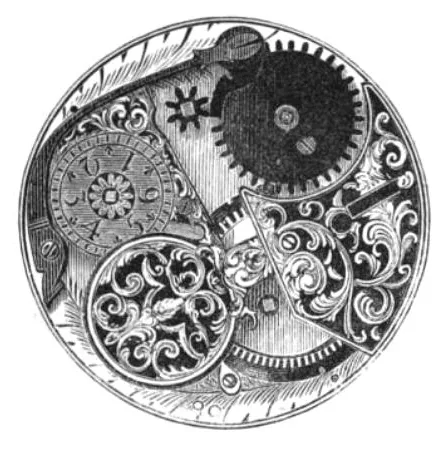
Alternatively, utilizing a dedicated new york standard 12s pocket watch to wrist conversion case yields superior protection and structural rigidity. Modern 316L stainless steel conversion cases are precision CNC-machined to house 39.7mm to 40.0mm movement diameters. These cases feature integrated sapphire crystals, display case backs to exhibit the damaskeened New York Standard movement, and fitted movement mounting rings. The conversion case transforms the roughly 39.8mm movement into a contemporary wrist profile measuring approximately 43mm to 45mm in case diameter, with a lug-to-lug span of 50mm to 52mm. The choice of a high-grade replacement case protects the movement while delivering modern wearability and structural longevity.
Crown and Stem Solutions
The crown and stem interface represents the most complex mechanical fabrication step when you convert new york standard 12s pocket watch assemblies. Because New York Standard movements utilize negative-set winding systems, the movement relies on an external sleeve located in the case neck to catch the squared tip of the stem and switch between the winding position and the setting position. Modern conversion wrist cases, however, do not feature built-in American-style setting sleeves in their pendant tubes; they rely on standard positive-set stem arrangements.
To overcome this, the watchmaker must fabricate a custom stem assembly or adapt a convertible sleeve mechanism into the new case tube. The process involves turning a steel stem on a precision watchmaker's lathe (such as a Lorch or Levin lathe). The stem's square section must fit the winding pinion's internal square bore precisely without excess play, while the cylindrical shoulder must index accurately against the mainplate winding bridge. The stem extension is threaded to accept a standard tap size crown—typically Tap 8 (0.90mm) or Tap 10 (1.00mm)—allowing the watchmaker to fit an appropriately styled oversize onion, pumpkin, or flat diamond crown.
If converting a negative-set movement into a positive-set environment, the watchmaker can either install a custom internal setting adapter spring or modify the movement's setting clutch. This ensures that pulling the crown outward shifts the winding pinion into engagement with the setting wheels, and pushing the crown inward re-engages the winding wheel and ratchet wheel. Achieving smooth, tactile detent clicks without placing excessive lateral torque on the stem stem-tube bushing requires exacting tolerances within fraction-of-a-millimeter margins.
Dial and Hand Considerations
Preserving or restoring the visual identity of a New York Standard 12s timepiece centers on dial integration and hand fitting. Original New York Standard 12s dials are predominantly single-sunk or double-sunk vitreous enamel baked over a copper base plate, though metal dials with printed numerals exist from their later production eras. Vitreous enamel dials are prone to hairline fracturing if stressed during recasing. When transferring an original dial into a wristwatch case ring, the dial feet—small copper posts soldered to the reverse side of the dial—must align perfectly with the receiving holes and eccentric dial screws on the movement mainplate.
If the original dial feet are damaged or if the dial needs to be rotated 90 degrees to align a hunting-movement crown at 3 o'clock, the watchmaker must remove the old feet, clear the copper substrate, and solder new feet using a specialized capacitive-discharge dial-foot soldering machine. This prevents thermal shock from blistering the delicate enamel surface on the front of the dial. For projects involving custom dials, precision brass dial blanks are turned to fit the 12s movement lip, painted or patinated, and fitted with custom-spaced mounting feet. For broader context on vintage horological restorations, explore our collection of antique pocket watch conversions.
Hand fitting presents another set of precise measurements. American 12s hand hole dimensions differ across movement grades and manufacturing runs. Typical stem and wheel post dimensions for a 12s caliber require an hour hand hole diameter around 1.80mm to 2.10mm, a minute hand hole around 1.00mm to 1.15mm, and a sub-seconds hand pivot diameter between 0.20mm and 0.26mm. High-grade blued-steel hands—such as Spade, Cathedral, or Breguet Moon style—must be re-bushed or reamed on a staking set to achieve friction-tight fitment over the center pipe, cannon pinion, and fourth wheel pivot without binding against the interior crystal surface.
Why 12s is More Common for Conversion
In the domain of vintage American pocket watch conversions, the 12-size movement reigns supreme over larger sizes like 18s or 16s. The primary reason comes down to basic wrist ergonomics and physical dimensions. An 18-size movement features a plate diameter of 44.86mm; when housed inside a protective wristwatch conversion case with adequate wall thickness and bezel clearance, the finished watch measures 50mm to 55mm in diameter. Such oversized dimensions prove uncomfortably heavy and impractically broad for the vast majority of wrists.
A 16-size movement, measuring 43.18mm across its plate, yields a finished wristwatch of approximately 47mm to 48mm. While wearable for larger wrists, it remains quite bulky. By contrast, the 12-size plate diameter of 39.78mm hits the "sweet spot" of contemporary watch sizing. When cased into a slim custom conversion housing, a 12s movement yields a finished wristwatch diameter of 42mm to 44mm—a standard profile in modern horology similar to popular pilot and marine watches powered by calibers like the Unitas 6497/6498.
Furthermore, the proportional height (thickness) of a 12s movement is significantly less than its 16s and 18s predecessors. This slenderness allows the fitted wristwatch to sit closer to the wrist's center of gravity, reducing wrist fatigue and preventing the top-heavy tilting common with larger pocket watch conversions. The relative abundance of 12s New York Standard movements, combined with their ideal physical dimensions, makes them prime candidates for modern horological repurposing.
Final Thoughts on New York Standard 12s Conversions
Successfully attempting to convert new york standard 12s pocket watch into wristwatch builds bridges the gap between early 20th-century industrial manufacturing and modern wearable craftsmanship. These timepieces embody a unique period in American horological history, showcasing mechanical ingenuity and distinct aesthetics that cannot be replicated by modern mass-produced wristwatches. By carefully addressing negative-set stem mechanics, case mounting geometry, balance protection, and dial alignment, a master watchmaker transforms a dormant pocket watch into a striking functional mechanical artwork.
When undertaking or purchasing a 12s conversion, always prioritize mechanical integrity over superficial polish. Ensure the movement has undergone a complete teardown service—including ultrasonic cleaning, pivot polishing, fresh synthetic lubrication (such as Moebius 9010 and HP-1300), and mainspring replacement. With proper care and awareness of its lack of shock protection, a converted New York Standard 12s wristwatch offers decades of reliable service, serving as an exceptional conversation piece and a wearable testament to early American watchmaking legacy.