1. Historical Background of New York Standard 13L Movements
The New York Standard Watch Company, established in Jersey City, New Jersey, in 1885, occupies a distinct and fascinating place in American horological history. Operating during the golden age of American watchmaking alongside giants like Waltham, Elgin, and Hamilton, New York Standard carved out a specialized niche. Rather than competing solely in the high-jewel, ultra-luxurious tier, the company focused on innovative mass-production techniques, pioneering stamped plate designs, and making reliable mechanical timepieces accessible to the working public. Over its four decades of operation until closing in 1929, New York Standard produced millions of movements, introducing mechanical innovations that simplified manufacturing while maintaining remarkable durability.
Among their vast catalog, the 13 Ligne movement—commonly designated as the 13L—stands out due to its sizing convention. While most American watch manufacturers measured movement size using the traditional American size system (such as 0s, 3s, 6s, 12s, 16s, and 18s), New York Standard frequently adopted European metrics, specifically the French "ligne" measurement system (where 1 ligne equals approximately 2.2558mm). A 13 Ligne movement measures roughly 29.33mm in diameter. This precise sizing bridged the gap between compact ladies' pocket watches and smaller gentlemen's dress watches of the late Victorian and Edwardian eras, positioning the 13L as a highly versatile caliber exported globally and cased in a wide variety of pocket and pendant styles.
During the early 20th century, as mobile warfare and industrial expansion demanded hands-free timekeeping, timepieces of this exact sizing were often modified for field use. The 13L movement saw service in early wristlet adaptors and custom cases, laying the groundwork for what collectors now cherish as authentic WW1 trench watches. Today, the historical significance of the New York Standard 13L movement makes it a prime candidate for sympathetic restoration and modification, allowing modern horology enthusiasts to wear a genuine piece of early American industrial history on their wrist.
2. Technical Specifications and Movement Architecture
To successfully service or re-case a New York Standard 13L movement, a watchmaker must understand its unique architecture. The 13L features an exterior plate diameter of 29.33mm, with an overall movement height (thickness) ranging between 4.2mm and 4.8mm, depending on the specific bridge configuration and center wheel arrangement. The movement typically utilizes a traditional lever escapement operating at a standard beat frequency of 18,000 vibrations per hour (vph), or 2.5 Hz. This classic beat rate produces the deliberate, resonant ticking characteristic of early 20th-century American mechanics.
In terms of jewel count, New York Standard produced the 13L in several grades, ranging from simple 7-jewel unadjusted workhorses to refined 15-jewel movements equipped with chatons and polished steel balance screws. The gear train architecture follows a standard center-wheel drive layout, featuring a brass third wheel, fourth wheel (which carries the sub-second hand at 6 o'clock or 9 o'clock depending on dial orientation), and a steel escape wheel driving a classic double-roller pallet fork. The balance assembly incorporates a hardened steel hairspring with a Breguet overcoil on higher-tier models, or a flat hairspring on basic models, paired with a cut bimetallic compensation balance wheel designed to offset temperature variances.
One defining mechanical trait of the New York Standard 13L is its setting and winding construction. Unlike standard modern wristwatch calibers that use a positive setting system integrated into the movement keyless works, many 13L movements rely on a sleeve-set or pendant-set mechanism built into the original pocket watch case tube. Understanding this architecture is crucial when preparing to **convert new york standard 13L pocket watch** movements into modern wrist-worn configurations, as the interaction between the winding pinion, clutch, and setting sleeve dictates how the stem must be fitted in a modern wristwatch case.
3. Challenges of Converting New York Standard 13L to Wristwatch
Attempting to **convert new york standard 13L pocket watch into wristwatch** hardware presents a series of unique engineering challenges that require traditional watchmaking skills, lathe work, and careful spatial planning. The first major hurdle lies in shock protection—or the complete lack thereof. Built long before the invention of modern spring-loaded shock systems like Incabloc or Novodiac, the fine balance pivots of a 13L movement rest directly within solid jewel settings. Wearers must understand that a converted 13L cannot be treated like a modern sports watch; a sudden impact can easily bend or snap the balance staff pivots.
The second technical challenge involves movement mounting and housing alignment. Pocket watch cases secured movements using dedicated casing screws that anchored into the perimeter of the mainplate, or relied on a screw-in bezel ring holding the movement edge against a lip. Modern wristwatch cases, however, rely on standardized spacer rings, tabs, or internal compression springs. Because the 13L mainplate lacks modern casing grooves, watchmakers must custom-turn an aluminum or brass adapter ring on a micro-lathe to seat the 29.33mm movement perfectly centered inside the modern case, ensuring that the winding stem aligns horizontally with the case crown tube to within hundredths of a millimeter.
Finally, dust and moisture sealing must be thoroughly addressed. Original pocket watch cases relied on snap-back or threaded metal covers with loose tolerances, providing minimal defense against humidity or sweat. When undertaking a **new york standard 13L pocket watch to wrist conversion**, the watchmaker must ensure the new case features modern synthetic gaskets at the caseback, crystal, and stem tube. Additionally, internal clearance must be carefully verified; modern flat sapphire crystals can sometimes contact the elevated center wheel height or high hand arbor posts of a vintage 13L, requiring high-domed acrylic or custom stepped bezels to ensure free hand rotation.
4. Lug Welding and Case Selection
When executing a conversion project, selecting or fabricating the proper case structure determines both the aesthetic success and the daily ergonomics of the final timepiece. Determining the **best case size for new york standard 13L conversion** requires balancing movement dimensions with modern wrist proportions. Given that the 13L movement measures roughly 29.33mm, the ideal overall wristwatch case diameter sits between 36mm and 39mm. A 36mm to 38mm case provides an optimal outer profile, leaving sufficient wall thickness (1.5mm to 2mm) for structural integrity while housing the internal spacer ring without appearing overly bulky on the wrist.
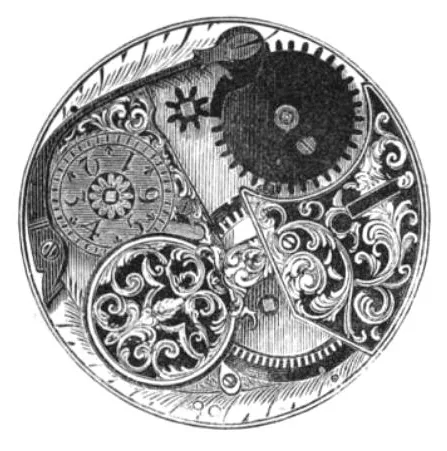
There are two primary pathways for casing a 13L movement: modifying an period-correct pocket watch case by welding external wire lugs, or retrofitting the movement into a modern custom-milled wristwatch case. For those seeking a period-accurate "trench watch" appearance, solid sterling silver or nickel-silver pocket watch cases are selected. The artisan silver-solders or laser-welds 1.5mm to 2.0mm sterling wire loops onto the 12 o'clock and 6 o'clock positions of the case band. Laser welding is heavily preferred today because it concentrates heat precisely on the lug attachment points without risking thermal deformation to the case threads, hinge joints, or crystal seat.
Alternatively, using custom CNC-machined stainless steel cases designed specifically for antique pocket watch conversions provides superior everyday durability. These cases feature pre-machined threaded casebacks, standard spring-bar lug holes (typically 18mm or 20mm lug spacing), and integrated double-O-ring crown tubes. Regardless of whether you modify an original pocket case or adopt a modern stainless housing, the overall lug-to-lug distance should ideally be kept under 48mm to maintain comfortable ergonomics on average wrist sizes.
5. Crown and Stem Solutions
Navigating the winding and setting mechanics of the New York Standard 13L movement requires specialized attention to the keyless works. As noted previously, many late 19th and early 20th-century New York Standard pocket watches utilized a negative-set mechanism (often called sleeve-setting). In this arrangement, a split steel sleeve located inside the original pocket watch pendant holds the stem in either the winding or setting position. The movement itself defaults to the setting state when removed from the case, requiring external tension from the sleeve to push the winding pinion into gear engagement.
To adapt a negative-set 13L movement to a standard wristwatch case, the watchmaker must either replicate the sleeve-set tension within the new crown tube or modify the movement keyless works to operate as a positive-set system. Modifying the assembly typically involves custom-machining a dual-diameter winding stem on a lathe. The inner square shank must match the square hole of the 13L winding pinion (typically around 0.90mm to 1.10mm square), while the outer threaded section must transition to a standard watchmaking thread tap—such as Tap 9 (0.90mm) or Tap 10 (0.90mm/1.00mm)—to accommodate modern crowns.
Crown selection is equally important for both functional grip and period aesthetics. Oversized "onion" crowns or "pumpkin" crowns made from solid brass, sterling silver, or stainless steel are traditional choices. The crown must feature a deep internal recess fitted with an internal rubber gasket that fits snugly over the case crown tube. This ensures smooth hand-winding—vital for a manual-wind movement that will be wound daily—while offering protection against moisture entering the stem orifice during wear.
6. Dial and Hand Considerations
The visual identity of a converted wristwatch hinges heavily on dial preservation and precise hand fitment. Original New York Standard 13L movements were paired with either fired vitreous enamel (porcelain) dials or stamped metal dials. Vitreous enamel dials are immune to fading and chemical aging, but they are exceptionally fragile. When disassembling or re-fitting an enamel dial, extreme care must be exercised to avoid flexing the copper dial plate, which causes immediate micro-cracking (hairlines) or chipping around the dial foot attachments and center arbor hole.
Dial feet orientation presents another critical consideration. In open-face pocket watches, the winding stem is located at 12 o'clock, with the running sub-second dial positioned at 6 o'clock. In hunter-case pocket watches, the stem is located at 3 o'clock, and the sub-second dial sits at 9 o'clock. If an open-face 13L movement is housed in a standard wristwatch case with the stem at 3 o'clock, the main sub-second dial will rotate to the 9 o'clock position unless a specialized custom dial is fabricated. Watchmakers often embrace the 9 o'clock sub-second placement as an authentic quirk of vintage hunter conversions, or maintain the crown at 12 o'clock for a driver-style or bullhead trench configuration.
Hand fitting requires precise measurement of the 13L arbor dimensions using a digital micrometer or dial gauge. The hour wheel pipe, cannon pinion, and fourth wheel pivot diameters on vintage NY Standard calibers do not conform to modern standardized Swiss hand sizes. The cannon pinion typically requires hour and minute hands with hole diameters around 1.30mm–1.50mm for the hour hand and 0.80mm–0.90mm for the minute hand. Thermally blued steel spade hands or poire-style hands are ideal matchings; if original vintage hands are reused, their mounting sockets must be carefully resized or closed using a hand-staking set to guarantee a secure friction fit on the vintage arbors.
7. Why 13L is More Common for Conversion
Within the world of horological restoration, the New York Standard 13L movement has emerged as one of the most practical and popular choices for wrist conversion. The primary reason for this popularity is its physical size relative to ergonomics. Standard American pocket watch movements, such as the widely available 16-size (approx. 43.18mm movement diameter) and 18-size (approx. 44.86mm movement diameter) calibers, result in massive wristwatches with finished case diameters exceeding 45mm to 48mm. These oversized conversions are often top-heavy and uncomfortable for daily wear.
By contrast, the 13 Ligne footprint (29.33mm) sits squarely in the ideal sizing range for mid-sized vintage wristwatches. When cased, a 13L movement produces a overall watch diameter of 36mm to 38mm—matching the classic proportions of 20th-century dress and military watches. This makes the finished conversion far more wearable, balanced, and aesthetically proportionate on modern wrists. Furthermore, the internal gear train components of the 13L are large enough to be easily serviced by watchmakers using standard tools, avoiding the microscopic delicate tolerances required by tiny 6 Ligne ladies' cocktail watch movements.
Another factor driving the prevalence of 13L conversions is movement availability and structural resilience. Because New York Standard manufactured these movements in high volume, donor movements, spare parts, balance staffs, and mainsprings remain accessible and relatively affordable on the collector market compared to rare Swiss calibers. The robust construction of NY Standard plates and heavy brass gear teeth provides a reliable mechanical baseline that withstands the restoration process, giving bench watchmakers a rewarding platform for functional horological preservation.
8. Final Thoughts on New York Standard 13L Conversions
Successfully undertaking a **new york standard 13L pocket watch to wrist conversion** is a rewarding intersection of historical preservation and micro-engineering. Rather than allowing damaged or un-cased vintage pocket watch movements to languish in drawers or be scrapped for metal value, conversion breathes vibrant new life into American industrial artifacts. When executed with precision, a converted 13L transforms an obscure late-19th or early-20th-century movement into a unique, wearable masterpiece that sparks conversation and stands out in any horological collection.
To achieve professional results, watchmakers must strictly adhere to best practice protocols: thoroughly cleaning and re-oiling the gear train with modern synthetic lubricants (such as Moebius 9010 for high-speed pivots and Moebius HP-1300 for heavy train wheels), custom machining precise spacer rings, and ensuring proper stem alignment. Careful attention must be given to selecting the correct case proportions and crown sealing solutions to guard the delicate balance staff and un-shock-protected pivots against daily environmental exposure.
Ultimately, learning how to **convert new york standard 13L pocket watch** mechanics into a functional wristwatch honors the legacy of the craftspeople who manufactured these movements in Jersey City over a century ago. By preserving the original enamel dials, hand-finished steel hands, and mechanical architecture, custom conversion watchmakers ensure that the ticking rhythm of America's early industrial age continues to measure time on the modern wrist.