1. Historical Background of New York Standard 14s Movements
The New York Standard Watch Company, operating out of Jersey City, New Jersey, from 1885 until its closure in the late 1920s, holds a unique place in the annals of American horological history. Operating during the golden age of American industrial watchmaking, New York Standard carved out a distinct niche by producing affordable, reliable pocket watches for the mass market. While behemoths like Waltham, Elgin, and Hamilton dominated the high-jeweled railroad grade sector, New York Standard pioneered innovative manufacturing processes, mass-market lever escapements, and unique movement architectures that brought mechanical timekeeping to working-class Americans.
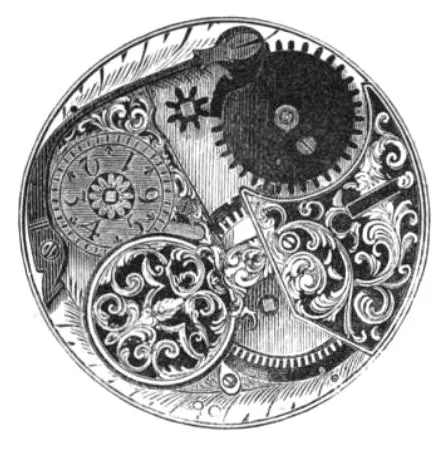
Among their various offerings, the 14-size (14s) movements held a particularly prominent position. Introduced as an intermediate sizing standard between the smaller ladies' dress watches and the massive 18-size railroad timepieces, the 14s caliber offered a refined balance of durability and proportion. The New York Standard 14s calibers featured distinct plate layouts, including full-plate, three-quarter plate, and bridge-style configurations, often decorated with damaskeening patterns that punched far above their modest price point. Today, these movements represent a fascinating era of American industrial design, combining historic mechanical charm with robust engineering.
As collectors and horologists look for ways to wear these historical artifacts, the practice of transforming pocket timepieces into wrist-wearable instruments has grown exponentially. Early historical precedents for this modification date back over a century, when soldiers modified pocket timepieces by fitting them with crude wire lugs to create authentic WW1 trench watches. Today, applying modern master watchmaking techniques to perform a high-grade transformation allows us to salvage orphaned American movements and preserve their mechanical heritage on the modern wrist.
2. Technical Specifications and Movement Architecture
To successfully undertake a project to convert new york standard 14s pocket watch into wristwatch configurations, a bench watchmaker must first thoroughly analyze the movement's dimensional geometry and mechanical architecture. Under the American Lancashire watch gauge system, a 14-size movement measures approximately 1.6 inches (40.64 mm) across the main plate, though total movement diameter with dial plate shoulders can reach 41.5 mm to 43.0 mm depending on the exact production run and serial batch. The pillar plate thickness and bridge stack height generally hover between 5.5 mm and 6.8 mm, requiring substantial case depth.
Technically, New York Standard 14s movements were produced in a variety of configurations ranging from modest 7-jewel unadjusted workhorses to 15-jewel and 17-jewel variants featuring chatons, compensated balance wheels, and Breguet overcoil hairsprings. The gear train layout typically uses a traditional right-angle lever escapement, though some early models utilized New York Standard's proprietary crown-wheel or "worm-gear" escapement designs. Understanding these internal train ratios is vital: the beat rate for these vintage calibers typically operates at an antique cadence of 18,000 vibrations per hour (vph) or 2.5 Hz, yielding a sweeping seconds hand motion across the dial.
Another crucial technical variable is the balance wheel architecture. Standard 14s balance staffs are constructed with extremely fine pivots—frequently measuring between 0.09 mm and 0.12 mm in diameter—running directly in friction-set or bezel-set ruby balance jewels without modern shock absorption spring systems. Modern watchmakers must meticulously check balance pivot straightness, endshake, and sideshake before proceeding with casing operations, as the mechanical architecture is inherently sensitive to kinetic impacts encountered during everyday wrist wear.
3. Challenges of Converting New York Standard 14s to Wristwatch
Many horology enthusiasts frequently ask: can you convert new york standard 14s pocket watch movements into wearable wristwatches without destroying their historical integrity? The answer is an emphatic yes, but it presents several distinct horological and metallurgical challenges that demand specialized tools, a watchmaker's lathe, and advanced technique. Unlike modern Swiss wristwatches that utilize standardized ETA or Sellita casing dimensions, an antique 14s caliber was never originally intended to encounter the multi-directional forces, shock loads, moisture risks, and spatial constraints of wrist wear.
The primary technical hurdle revolves around movement orientation and seconds hand placement. American pocket watches were manufactured in two primary styles: open-face (Lépine) and hunting case (Savonnette). In an open-face movement, the crown stem sits at 12 o'clock, and the sub-seconds register sits opposite at 6 o'clock. If cased into a wristwatch with the crown turned to the standard 3 o'clock position, the sub-seconds register shifts to 9 o'clock. Conversely, a hunting-case movement features the crown stem at 3 o'clock with the sub-seconds register at 6 o'clock—making hunting-case 14s calibers exceptionally prized for wrist transformations, as they align seamlessly with traditional wristwatch dial geometry.
Additionally, shock protection and environmental sealing present continuous difficulties. Pocket watch cases relied on snap-back friction or fine-pitch screw threads to keep out dust, but lacked elastomer O-rings or crown gaskets. When worn on the wrist, a watch is subjected to perspiration, atmospheric humidity changes, and aggressive wrist movements. A master watchmaker executing a transformation must introduce modern rubber seals, custom movement rings, and anti-shock mounting points to insulate the delicate, non-shock-protected balance pivots from catastrophic fractures caused by accidental bumps.
4. Lug Welding and Case Selection
Selecting or manufacturing the ideal case is the single most critical structural step in the project. Finding a high-precision new york standard 14s pocket watch to wrist conversion case ensures that the historic caliber is securely anchored, properly sealed, and comfortable on the wrist. Modern conversion cases are typically CNC-machined from 316L surgical-grade stainless steel or cast in solid bronze or sterling silver, engineered specifically to accommodate the substantial 41mm+ movement diameter and thick 3/4 plate profiles of American pocket timepieces.
When custom-building or converting an authentic antique pocket watch case, watchmakers employ advanced lug welding techniques. Silver soldering or micro-TIG (Tungsten Inert Gas) welding is used to attach wire lugs or solid horn lugs directly to the perimeter of the vintage silver, gold-filled, or nickel pocket case. Modern precision micro-welding prevents heat from transferring into delicate bezel threads or annealing the case material. The lug geometry must be engineered with an ergonomic downward curvature (drop angle) of at least 15 to 20 degrees, ensuring that a 44mm to 46mm outer diameter case sits flat against the human wrist without uncomfortable overhang.
To anchor the movement inside a modern custom conversion case, a bespoke brass or stainless steel spacer movement ring must be turned on a lathe. The inner diameter of this ring must precisely mirror the shoulder stepped lip of the New York Standard 14s mainplate down to hundredths of a millimeter. Retaining screws—often known as casing clamps—thread directly into the original movement perimeter holes, locking the mainplate tightly against the internal case lip to prevent any micro-movement that could bend the winding stem during physical activity.
5. Crown and Stem Solutions
Perhaps no component requires more delicate machining during a pocket watch transformation than the winding stem and setting sleeve mechanism. Antique New York Standard 14s pocket watches frequently utilized a sleeve-set (or pendant-set) mechanism built into the neck of the original pocket watch case, rather than a modern mechanical setting lever built entirely into the movement keyless works. In these traditional sleeve-set designs, a split steel sleeve housed inside the case stem tube grips the square section of the stem, holding it in either the winding or hand-setting position.
When migrating the movement to a modern conversion case, the watchmaker must determine whether to retain the historic sleeve-set arrangement or engineer a custom stem extension that interface cleanly with modern crown assemblies. Because original New York Standard stem threads utilize obsolete, non-standard thread pitches (often proprietary American threads distinct from modern Swiss Tap 10 or Tap 9 standards), off-the-shelf crowns will not thread onto vintage stems. The watchmaker must either turn a stem adapter on a micro-lathe or micro-thread custom stem extensions using metric dies matched precisely to modern, double-gasket water-resistant crowns.
Furthermore, stem length must be calculated with absolute precision. If the winding stem is trimmed even 0.1 mm too short, the clutch wheel will fail to fully engage the winding pinion, leading to gear slippage, damaged teeth, or an inability to set the time. If the stem is left slightly too long, the crown will fail to sit flush against the exterior of the case tube, exposing the stem to bending forces and moisture ingress. A proper conversion incorporates a custom-lathed stem made from hardened steel, combined with a spring-loaded or screw-down crown that guarantees smooth action between winding mode and hand-setting mode.
6. Dial and Hand Considerations
The visual identity of any converted wristwatch hinges on the preservation and treatment of its dial and hands. New York Standard 14s watches were supplied with either vitreous enamel (fired porcelain) dials or painted metal dials. Vitreous enamel dials feature astonishing longevity—resisting UV degradation and oxidation over centuries—but they are exceptionally brittle. Removing an antique enamel dial from a 14s movement requires extreme caution; applying uneven pressure near the dial feet can instantly introduce micro-fractures, hairlines, or severe chipping around the sub-seconds counter and center arbor.
Hand fitting presents its own unique horological challenges. The hour wheel pipe, cannon pinion, and second bit arbors on antique American 14s movements feature dimensions completely incompatible with modern hands. Watchmakers preserving the original blued-steel spade, cathedral, or Louis XV style hands must carefully inspect the hand sockets for distortion. If original hands are damaged or missing, modern replacement hands must have their mounting collars custom-bored using handheld staking sets and precision broaches to match the exact taper of the vintage arbors:
- Cannon Pinion (Minute Hand Arbor): Requires precision hand broaching to achieve an exact friction fit without binding the center wheel shaft.
- Hour Wheel Pipe (Hour Hand): Must be adjusted to clear the dial surface flatly while maintaining vertical clearance from the sweeping minute hand above.
- Seconds Bit Pivot (Sub-Seconds Hand): Extremely delicate arbor requiring micro-calibration so the small hand clears the sunken sub-seconds track without rubbing against the dial aperture edge.
When selecting hands for a high-grade transformation project, balance and proportion are critical. Because pocket watch dials are larger than standard wristwatch dials, the hands must possess sufficient visual weight and historical authenticity to complement the double-sunk or single-sunk porcelain dial architecture without compromising mechanical torque balance.
7. Why 14s is More Common for Conversion
In the world of custom watchmaking, horologists evaluate various movement sizes—ranging from small 0-size and 6-size ladies' movements up to massive 18-size pocket watches. However, the 14-size standard stands out as the ultimate "sweet spot" when master watchmakers plan high-grade antique pocket watch conversions. To understand why 14s movements are so universally favored over other sizes, consider the comparative dimensions outlined in the table below:
| American Size | Movement Diameter (mm) | Average Converted Case Diameter (mm) | Wearability & Ergonomics |
|---|---|---|---|
| 18s (18-Size) | 44.86 mm | 48.0 mm - 52.0 mm | Extremely large; heavy wrist overhang; prone to damage |
| 16s (16-Size) | 43.18 mm | 45.0 mm - 48.0 mm | Popular pilot style; bold modern presence; slightly bulky |
| 14s (14-Size) | 40.64 mm - 41.50 mm | 42.0 mm - 44.0 mm | Ideal modern proportion; exceptional wrist comfort |
| 10s / 12s | 37.46 mm - 39.37 mm | 39.0 mm - 41.0 mm | Dress watch proportions; extremely thin, delicate parts |
While 18-size movements produce gargantuan wristwatches exceeding 50 mm in overall case diameter, a converted 14s movement lands squarely inside the modern 42 mm to 44 mm sport and pilot watch envelope. This sizing profile makes the converted timepiece exceptionally comfortable for daily wear while maintaining a commanding, historically significant wrist presence. The movement is large enough to allow easy mechanical servicing, clear viewing of intricate bridge damaskeening through exhibition display casebacks, and sturdy gear train components, yet small enough to avoid wrist fatigue.
Furthermore, New York Standard 14s movements are widely accessible on the secondary collector market. Because hundreds of thousands of these reliable 14s calibers were manufactured between 1890 and 1925, watchmakers can source clean donor movements and spare components without destroying irreplaceable, museum-grade rarities. This availability makes the 14s caliber the premier candidate for custom conversion projects that breathe new mechanical life into historic American artifacts.
8. Final Thoughts on New York Standard 14s Conversions
Successfully undertaking a project to convert new york standard 14s pocket watch into wristwatch configurations represents a bridge across time. It unites 19th-century American industrial art with 21st-century micro-engineering and luxury watchmaking techniques. Rather than allowing these remarkable mechanical movements to languish forgotten in wooden drawers or fall victim to scrap-metal silver melting, a meticulous conversion returns an authentic piece of horological history to active daily service.
When executed by a skilled artisan who respects the mechanical integrity of the caliber—employing properly turned movement rings, custom-machined stems, anti-shock gaskets, and beautifully curved conversion cases—the end result is a totally unique timepiece. It boasts a mechanical soul and aesthetic elegance that no modern mass-produced quartz or computer-milled movement can match. A converted New York Standard 14s wristwatch stands as a wearing testament to the brilliant watchmakers of New Jersey’s past, ready to tick reliably for another century upon the modern wrist.