Historical Background of Omega 19 Ligne Movements
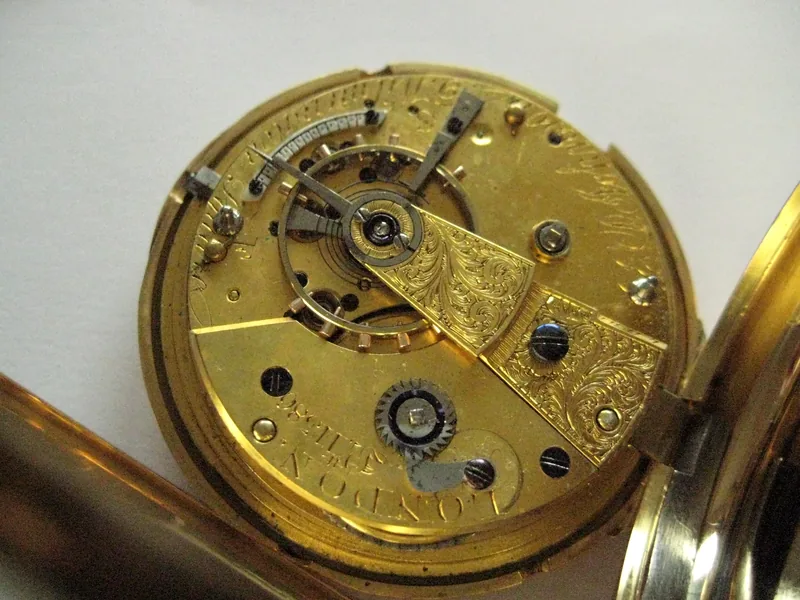
The story of the Omega 19-ligne movement is fundamentally the story of modern industrial watchmaking. In 1894, the Swiss watchmaker Louis Brandt & Frère introduced a revolutionary 19-ligne pocket watch caliber that changed horological history. Named "Omega" to symbolize the ultimate achievement in mechanical engineering and manufacturing, this caliber was designed from its inception around the concept of total component interchangeability. Prior to its arrival, watchmaking relied heavily on artisan bench work, where individual components were hand-filed and custom-fitted to a specific movement. The 19-ligne movement shattered this paradigm by utilizing ultra-precise, standardized manufacturing techniques developed by Louis-Paul and César Brandt.
The success of the 19-ligne movement was so profound that in 1903, Louis Brandt & Frère officially renamed their entire enterprise the Omega Watch Company. Produced in vast numbers across various grades—ranging from simple, reliable daily timekeepers to high-grade chronometers—the 19-ligne engine became the backbone of international railway timing, military issue timepieces, and civilian horology across continents. As the world transitioned away from pocket watches in the early decades of the 20th century, particularly influenced by officers modifying timepieces during the First World War into authentic WW1 trench watches, these massive pocket movements were gradually retired to wooden drawers and safekeeping boxes, waiting for a second life.
Today, the art of the marriage watch—where an antique pocket watch movement is reimagined inside a wearable wrist enclosure—has sparked renewed interest in these magnificent industrial marvels. When horologists undertake an omega 19 ligne conversion, they are not merely modifying an old clockwork mechanism; they are honoring a monumental piece of mechanical history. The high production standards of the original 19-ligne movement mean that despite being well over a century old, these engines retain remarkable structural integrity, making them ideal subjects for high-end conversion projects in a specialized antique omega conversion atelier.
Technical Specifications and Movement Architecture
To understand why horologists revere the 19-ligne caliber, one must analyze its fundamental mechanical blueprint. In horological measurement, one French ligne equals precisely 2.2558 millimeters; thus, a 19-ligne movement features a plate diameter of approximately 42.7 millimeters. This generous footprint provided Omega’s master watchmakers ample space to incorporate robust, high-performance components. The movement layout typically utilizes a traditional split-bridge architecture or a classic three-quarter plate configuration, crafted from nickel-silver (German silver) or gilt brass finished with exquisite damaskeening, frosted gilding, or fine circular graining (perlage).
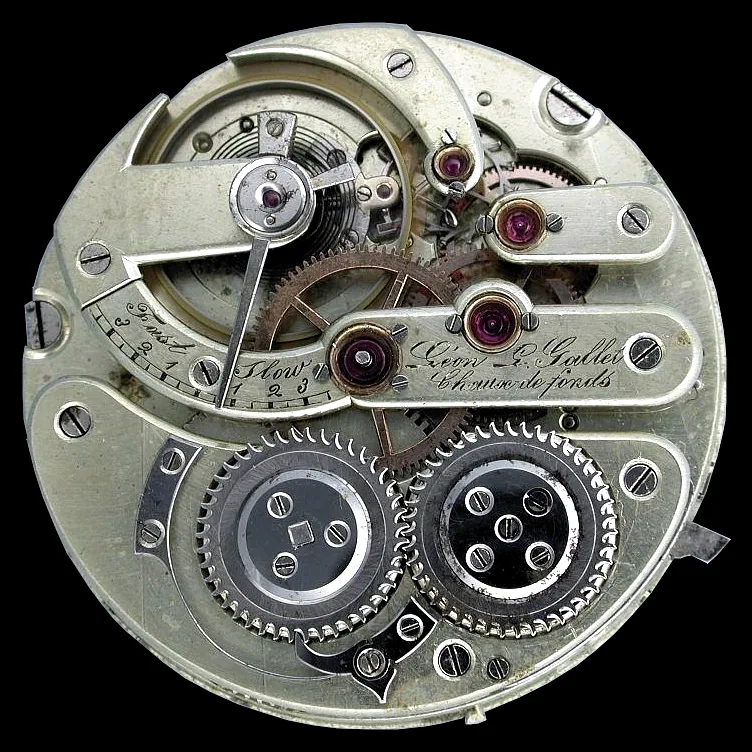
At the mechanical core of the 19-ligne engine lies a hand-wound, spring-driven gear train terminating in a traditional Swiss lever escapement. Higher-grade executions of the movement feature cut bimetallic compensation balance wheels fitted with gold screw weights, designed to offset thermal expansion and contraction. Coupled with a blue steel Breguet overcoil hairspring, these movements were capable of achieving chronometer-grade timing precision. Power delivery is managed via a large mainspring housed within a standard barrel, typically providing a power reserve between 36 and 42 hours on a full wind. The jewel count varies based on the movement grade, generally ranging from 15 jewels in standard production models up to 21 or 23 jewels in top-tier Observatory-grade chronometers, complete with screwed gold chatons and polished counterpivots.
Another crucial technical element is the winding and setting architecture. The 19-ligne introduced an early version of the modern stem-winding and stem-setting mechanism. Depending on the exact iteration and production year, setting is achieved either via a classic pull-out stem system or a negative-set mechanism built into the pocket watch case neck. Understanding these subtle mechanical variations is critical for any watchmaker preparing to convert omega 19 pocket watch into wristwatch configurations, as the interface between stem, setting lever, and sliding pinion dictates how the watch will operate in a modern wrist housing.
Challenges of Converting Omega 19 Ligne to Wristwatch
While the prospect of wearing a piece of 1890s horological art on the wrist is captivating, the engineering hurdles involved in converting a large pocket watch caliber are formidable. The first major obstacle is scale. With a movement plate diameter of 42.7mm, the resulting wristwatch case must measure between 45mm and 48mm in overall diameter, with a lug-to-lug distance often exceeding 52mm. Designing a modern wristwatch case that comfortably balances these dimensions on a human wrist without appearing cartoonish requires meticulous spatial management, careful lug geometry, and optimized strap attachment angles.
The second technical hurdle involves movement orientation and dial geometry, specifically determined by whether the donor movement is a Lépine (open-face) or Savonnette (hunter) caliber. In a Lépine caliber, the winding stem is positioned at 12 o'clock, directly aligned with the small running seconds sub-dial at 6 o'clock. If you simply rotate this movement inside a wristwatch case so that the crown rests at the conventional 3 o'clock position, the small sub-seconds indicator shifts to the 9 o'clock position. Conversely, a Savonnette movement features the winding stem at 3 o'clock and the sub-seconds at 6 o'clock in its original configuration, making it the preferred orientation for modern wrist layouts. Securing a clean, unblemished Savonnette 19-ligne movement can be difficult, forcing watchmakers to devise custom dial layouts when utilizing Lépine movements.
Finally, shock protection presents an ongoing vulnerability. Late 19th-century pocket watch movements were designed to rest vertically in a gentleman's vest pocket, subjected to minimal lateral impact. They lack modern shock-absorption systems such as Incabloc or KIF on the balance pivots. The delicate, hardened-steel pivots of the balance staff measure mere fractions of a millimeter in diameter and are highly susceptible to snapping if dropped or subjected to sudden force. A modern conversion specialist must either educate the end owner on wearing limitations or undertake delicate balance staff modifications to mitigate shock risks.
Lug Welding and Case Selection
When executing an omega pocket watch into wristwatch conversion, the choice of case architecture defines both the structural longevity and aesthetic appeal of the timepiece. Historically, early conversions during the First World War relied on soldering simple wire loops directly onto existing solid silver or gold pocket watch cases. Today, an elite antique omega conversion atelier chooses between two primary techniques: modifying an original vintage case or machining a bespoke modern wrist enclosure from raw metal billets.
Modifying an original pocket watch case requires specialized jeweler-grade silver or gold brazing skills. The original pocket watch bow and pendant stem tube are carefully machined down, and silver or gold wire lugs are TIG-welded or micro-brazed directly onto the circumference of the middle case band. This technique retains the original precious metal casing and historical patina, preserving the pocket watch's native hallmarks. However, original cases often lack modern dust seals, water resistance, and structurally rigid lug integration, making them delicate weekend pieces rather than durable daily wear timepieces.
The alternative approach—and the standard for modern high-grade conversions—is machining a custom 316L stainless steel, titanium, or bronze case specifically engineered to house the 19-ligne movement. Using precision CNC milling and lathe turning, the inner movement ring is toleranced to within hundredths of a millimeter to ensure a friction fit or secure casing-clamp attachment. Modern custom cases integrate double O-ring crown gaskets, threaded display case backs with sapphire crystals to expose the finished movement, and ergonomically downward-curved lugs designed to wrap comfortably around the wrist. This approach bridges antique horology with modern structural durability, creating a truly wearable piece of functional art.
Crown and Stem Solutions
Interfacing a 19th-century keyless work mechanism with a modern watch crown requires bespoke mechanical fabrication. The original winding stems of the 19-ligne movement were cut to length for deep pocket watch pendants, often relying on internal sleeve-set mechanisms located inside the original pocket watch case neck rather than within the movement itself. When translating this mechanical linkage to a wristwatch case, a watchmaker must craft a custom, dual-section winding stem or turn a hardened steel adapter on a watchmaker's lathe.
The first step requires precise measurement of the winding square and thread pitch on the movement's winding arbor. Standard modern crowns use metric threading (typically Tap 0.9mm or Tap 1.0mm), whereas antique Omega stems often utilize obsolete Swiss thread standards or non-standard metric pitches. The watchmaker must turn a custom stem out of high-carbon drill rod steel, cut the exact square profile to engage the sliding pinion, and thread the outer end to accept a modern crown. The stem must then be properly heat-treated, quenched, and tempered to achieve optimal toughness without becoming brittle.
Crown selection is equally critical to both function and visual balance. Because winding a large 19-ligne mainspring requires considerable torque compared to a modern wrist movement, a small or flush crown makes winding painful and difficult. Conversion specialists generally favor oversized, diamond-shaped, onion-style, or pumpkin-style crowns. These designs pay homage to early 20th-century aviator and military watches while providing the necessary grip and mechanical leverage required to turn the heavy mainspring click ratchet wheel efficiently.
Dial and Hand Considerations
The visual identity of a converted timepiece centers upon its dial and hand configuration. Original Omega 19-ligne pocket watches frequently featured grand feu enamel dials—vitreous enamel fired onto copper plates at temperatures exceeding 800 degrees Celsius. These dials are virtually immune to UV fading or chemical degradation, but they are exceptionally brittle. Removing dial feet, cleaning century-old oxidation, or fitting an enamel dial into a modern wristwatch case requires extreme delicacy, as a single micro-fracture can ruin the entire surface.
In many conversion projects, original enamel dials are preserved by trimming or relocating the copper dial feet beneath the dial plate to align with the new movement clamping points. If the original dial is damaged, cracked, or improperly oriented for a wristwatch conversion (as with certain Lépine layouts where the numbers would sit rotated 90 degrees), watchmakers may fabricate a custom brass dial plate, applying hand-painted numerals, guilloché engraving, or cold enamel finishes. When designing custom dials, respect for historical Omega typography and minute-track geometry is essential to maintaining horological authenticity.
Hand fitting presents its own set of technical challenges. Pocket watch hands are significantly thicker and heavier than standard wristwatch hands. The hour wheel pipe and cannon pinion of the 19-ligne movement feature friction-fit diameters that do not match modern off-the-shelf hands. Watchmakers must either broach and re-fit original blued-steel spade or Breguet hands, or turn custom hand centers on a lathe to fit the movement arbors. Furthermore, clearance between the underside of the top sapphire crystal and the tip of the center pinion must be calculated precisely to prevent the hands from dragging against each other or friction-locking against the crystal surface.
Why Omega 19 Ligne is More Common for Conversion
In the expansive world of antique pocket watch conversions, the Omega 19-ligne caliber remains one of the most widely selected candidates among master horologists. The primary reason for its dominance in the custom conversion space lies in its historical manufacturing volume and exceptional engineering standardization. Because Louis Brandt & Frère produced hundreds of thousands of these calibers across multiple decades, high-quality donor movements remain relatively accessible to collectors and ateliers, ensuring a steady supply of donor components for restoration.
Furthermore, the physical resilience of the 19-ligne movement is legendary. The plates are thick, the gear train teeth are generously proportioned, and the steel arbors are robustly dimensioned. Unlike delicate dress pocket watch movements from ultra-thin Swiss makers, the Omega 19-ligne was engineered to survive rough railway conditions and military field use. This inherently rugged design makes it far more forgiving when subjected to the dynamic forces, wrist motion, and accidental bumps typical of modern daily wear.
Finally, the movement offers immense aesthetic versatility. From clean, unadorned industrial nickel plates to fully decorated, high-jeweled chronometer calibers with polished steel screws and hand-engraved balance bridges, the 19-ligne provides a stunning visual spectacle through a sapphire display case back. Its large, slow-beating balance wheel—operating at a mesmerizing 18,000 vibrations per hour (2.5 Hz)—delivers an auditory and visual rhythm that modern high-frequency wristwatches simply cannot replicate.
Final Thoughts on Omega 19 Ligne Conversions
Undertaking a project to convert omega 19 pocket watch into wristwatch status represents a harmonious fusion of historic preservation and contemporary bespoke watchmaking. Far from destroying historical artifacts, a properly executed conversion breathes dynamic new life into forgotten industrial masterpieces that would otherwise sit unseen in drawers or be melted down for their precious metal gold or silver cases. By housing these historic engines in custom, high-precision wrist cases, watchmakers ensure that the mechanical artistry of Louis Brandt and his visionaries continues to be worn, appreciated, and admired on the human wrist.
For collectors seeking to add an omega 19 ligne conversion to their personal horological rotation, working with an experienced antique omega conversion atelier is critical. Precision stem fabrication, movement servicing, shock management, and dial preservation require specialized equipment and a deep understanding of late 19th-century Swiss watchmaking. When executed with skill and respect for historical integrity, a converted 19-ligne Omega stands as a grand, wearable monument to the dawn of modern precision timekeeping—a mechanical bridge connecting the 19th century to the modern wrist.