In the discipline of horological restoration, few artifacts bridge the divide between industrial history and personal craftsmanship as dramatically as modern and period pocket watch conversions. Whether adapting a late 19th-century open-face movement into a modern wrist-wearable housing or preserving early 20th-century field adaptations, mastering how to wind and care for pocket watch conversion timepieces requires a deep understanding of mechanical sympathy, metallurgic preservation, and historic hallmarking. These timepieces house un-shock-protected balances, hand-cut gear trains, and delicate keyless works that demand rigorous operational protocols quite distinct from modern automatic wristwatches.
Preserving these hybrid masterworks goes beyond simple mechanical winding; it demands a meticulous approach to evaluating case integrity, understanding structural metallurgy, and deciphering historical hallmarks stamped into the metal. When caring for these delicate instruments, an archivist must treat the case and caliber as an integrated system, where historical marks tell you how the metal will age, react to skin acidity, and withstand daily environmental stressors.
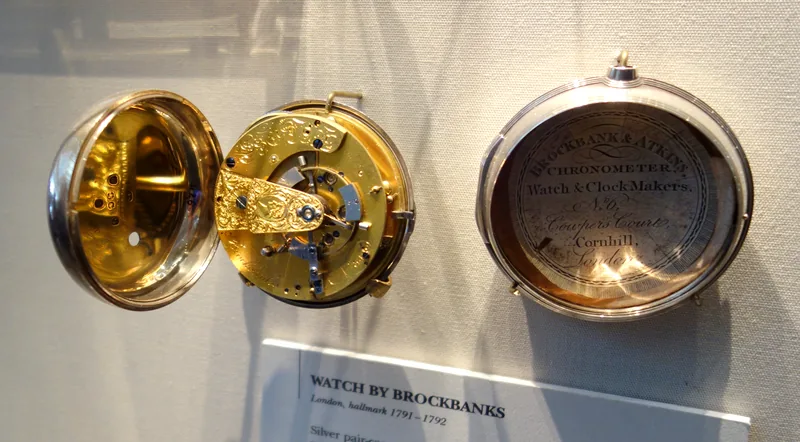
What is the Hallmark?
A hallmark is an official mark or series of marks impressed upon precious metal objects—primarily gold, silver, platinum, and palladium—to certify their purity and legal standard. In the realm of vintage pocket watch cases and early wrist conversions, the hallmark serves as a forensic fingerprint. Unlike modern laser-engraved branding or electroplated decorative stamps, traditional hallmarks were struck with steel dies into the raw precious metal by an independent regional testing body known as an Assay Office.
When examining a conversion timepiece, distinguishing between original pocket watch cases (which often retain their full suite of historical hallmarks) and aftermarket modern recasings is the foundational step in horological appraisal. Original pocket watch cases converted for wrist wear—a design ethos pioneered in early military adaptations like original WW1 trench watches—bear official hallmarks stamped inside the outer case back, on the inner cuvette (dust cover), and occasionally along the inner case band or wire lug joints.
From a maintenance and care perspective, identifying these hallmarks dictates how you must physically clean and handle the watch exterior. Precious metal cases (such as 9K, 14K, or 18K gold, as well as .925 Sterling or .935 Swiss silver) react dynamically to atmospheric conditions and human perspiration. A clear understanding of the hallmark prevents catastrophic restoration errors, such as over-polishing with harsh abrasive compounds that risk erasing crucial assay marks or degrading hand-soldered conversion lugs.
Historical Origins and Assay Office
The system of hallmarking watch cases originated in medieval Europe to prevent fraud by goldsmiths and silversmiths. In Great Britain, statutory hallmarking dates back to 1300 under King Edward I, establishing the world's most rigorous precious metal regulation system. By the 19th and early 20th centuries, during the golden age of pocket watch manufacturing, major horological centers relied on dedicated Assay Offices to test and stamp every pocket watch case prior to retail assembly.
The primary historic assay offices encountered on vintage pocket watch conversions include:
- London (Goldsmiths' Hall): Identified by the iconic Leopard's Head town mark.
- Birmingham: Identified by the Anchor mark, responsible for casing a vast majority of English market pocket watches, including cases produced by the renowned Dennison Watch Case Co.
- Chester: Identified by the Shield bearing a Sword and Three Garbs (wheat sheaves), active until its closure in 1962 and highly prized by collectors.
- Edinburgh & Glasgow: Scottish offices represented by the Castle and the Tree, Fish, Ring, and Bell respectively.
- Swiss Assay Offices (Bureau de Contrôle): Marked by regional symbols such as the Grouse (for .800 silver), Bear (for .925 sterling silver), Squirrel (for 14K gold), and Helvetia head (for 18K gold).
Understanding these origins provides critical operational context for the watch collector. For instance, Swiss import marks struck in Great Britain (often featuring an Oval with Purity figures and specific Town Identifiers) confirm that high-grade Swiss movements—such as early Aegler or Rebberg calibers found in our vintage Rolex wristwatch collection—were officially imported, cased, and hallmarked according to British legal purity standards. Knowing the structural age of the case via its assay origin helps you gauge its moisture vulnerability, as historical press-fit and snap-back cases lack modern rubber gaskets and O-rings entirely.
Metal Purity and Standards
The metallurgical composition of an antique pocket watch case directly impacts its structural durability, corrosion resistance, and thermal expansion properties—all of which influence movement stabilization inside a wrist conversion case. Assay offices enforced strict minimum purity levels across different historical eras:
Silver Purity Standards
Historic conversions primarily utilize either Sterling Silver (.925 purity) or Continental Silver (.800 to .835 purity). Swiss manufacturers frequently used .935 silver for export cases, offering higher tarnish resistance. Silver cases develop a deep, natural black/purple silver sulfide patina over time. To maintain silver conversions, never use liquid dip cleaners, as these chemicals seep into case joints, penetrate the stem tube, and instantly strip essential synthetic lubricants from the keyless winding works.
Gold Purity Standards
Gold cases vary widely by regional preference and era: 9K (.375), 10K (North American standard), 14K (.585), and 18K (.750). Higher karat cases (18K) are significantly softer and more susceptible to deformation at the lug attachment points when converted to wrist wear. Lower karat cases (9K and 10K) contain higher ratios of copper and zinc, making them harder but prone to surface oxidation if exposed to acidic sweat without routine wipe-downs using an untreated microfiber cloth.
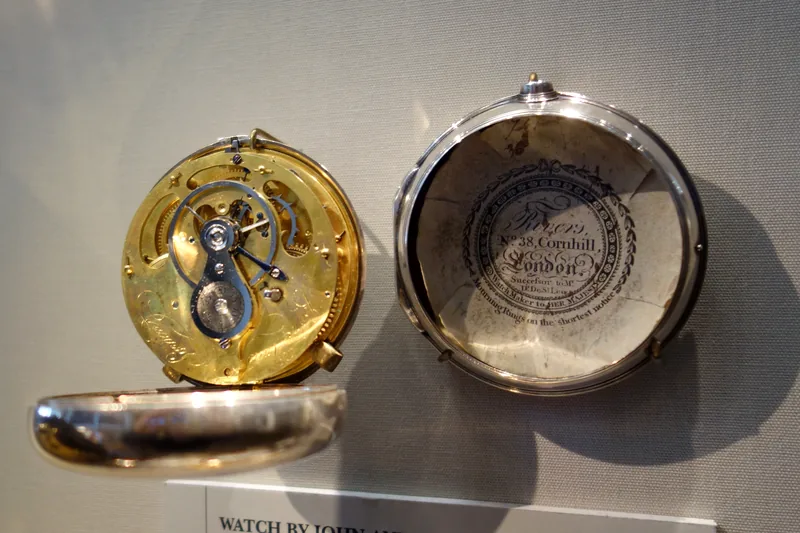
How to Identify on Vintage Watch Cases
To properly identify case hallmarks on a converted timepiece, an archivist requires a 10x achromatic loupe, soft lighting, and a fundamental understanding of mark layout hierarchy. On an authentic antique pocket watch case or period wrist conversion, hallmarks appear in a standardized sequence across the case metal:
- The Sponsor's / Maker's Mark: Initials enclosed in a geometric shield (e.g., "ALD" for Aaron Lufkin Dennison, "W&D" for Wilsdorf & Davis).
- The Standard / Purity Mark: Denotes precious metal fineness (e.g., a Lion Passant for British .925 Sterling Silver, a Crown with "18" for 18-karat gold).
- The Assay Office Town Mark: Identifies the physical testing location (e.g., Anchor for Birmingham, Leopard's Head for London).
- The Date Letter: A specific alphabetical character set inside a distinct shield shape, corresponding to a precise calendar year.
The technical specifications table below outlines the archival criteria used by horologists to analyze, verify, and maintain hallmarked conversion cases:
| Feature / Specification | Historical Archival Standard | Collector Verification Note |
|---|---|---|
| British Sterling Silver Mark | Lion Passant (Walking Lion with raised right forepaw) | Struck on internal case back; indicates guaranteed .925 silver purity. |
| Swiss Export Gold Hallmark | Helvetia Head (18K) / Squirrel (14K) | Found inside Swiss-fabricated cuvettes; confirms Swiss federal assay. |
| Date Letter Typography | Unique font family and shield shape per 20/26-year cycle | Must cross-reference exact font style against Assay Office tables. |
| Lug Soldering Interface | Silver solder or high-grade gold brazing at case band | Inspect under 10x magnification for heat stress near adjacent hallmarks. |
| Winding Stem Alignment | Pendant-to-sleeve clearance within 0.05 mm tolerance | Crucial for smooth winding without binding the steel crown wheel. |
Dating and Authentication Value
Cross-referencing hallmark date letters with caliber serial numbers provides undeniable authentication value for high-grade pocket watch conversions. Because watch movements and watch cases were often manufactured separately and unified at point-of-sale, discovering matching period hallmarks ensures that the movement has not been retrofitted into an mismatched historical shell.
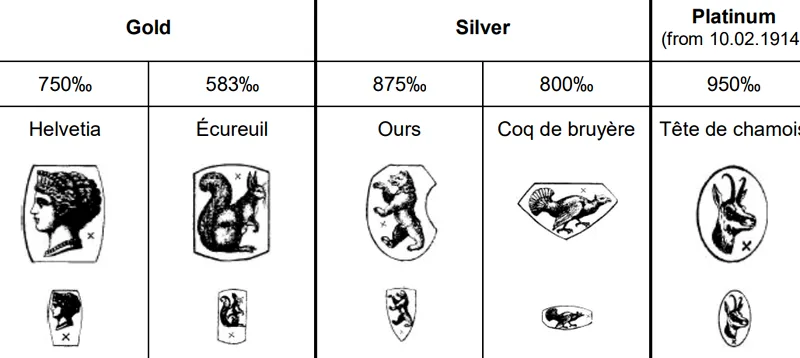
When authenticating restored vintage timepieces and conversions, the collector must verify whether the conversion preserved the original hallmarked case back or transposed the movement into a modern stainless steel "marriage watch" custom case. If the original hallmarked case was retained and converted (e.g., adding fixed wrist lugs), the hallmark preserves the entire historical provenance of the watch, directly elevating its investment potential.
To accurately date your conversion using hallmarks:
- Isolate the Date Letter inside the case back under loupe magnification.
- Note the exact shape of the border shield (e.g., pointed base, rounded top, notched corners).
- Identify whether the letter is uppercase or lowercase, and note its typeface (e.g., Gothic, Roman, Italic).
- Consult the official Assay Office date chart corresponding to the specific Town Mark (e.g., Birmingham Date Letter "a" in a shield with rounded corners denotes 1900, whereas a different shield denotes 1925).
Collector Significance
The intersection of hallmarking and daily mechanical operation defines the true value of antique pocket watch conversions. A conversion watch represents a living piece of mechanical history, but operating a 100-year-old movement on the modern wrist requires strict behavioral discipline and technical knowledge regarding how to wind and care for pocket watch conversion calibers.
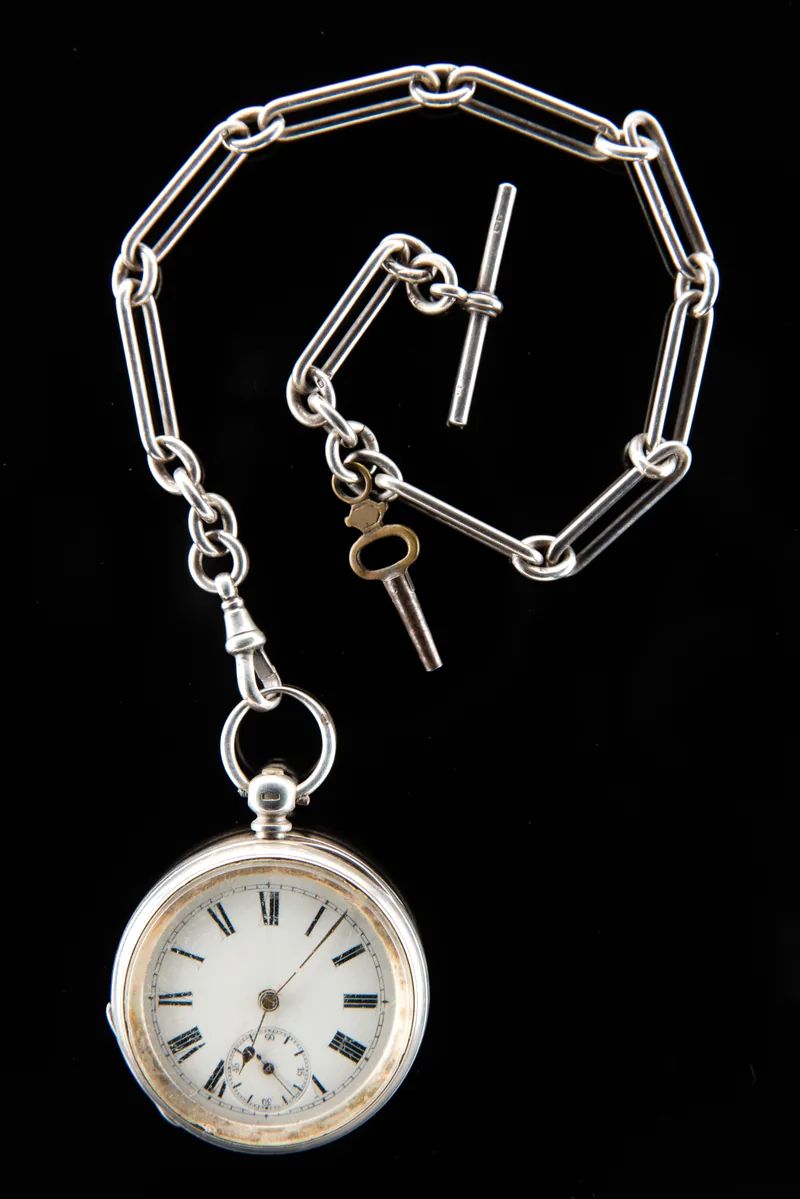
1. Winding Protocol for Conversion Timepieces
Unlike modern wristwatches with built-in slipping mainsprings or modern heavy-duty keyless works, pocket watch movements feature delicate winding mechanisms:
- Wind Daily at a Fixed Time: Turn the crown smoothly clockwise between thumb and forefinger. Never use rapid back-and-forth "sawing" motions, which place unnecessary wear on the steel winding pinion and sliding gear teeth.
- Feel for the Mainspring Resistance: As you approach full power reserve (typically 28 to 36 hours), mainspring tension will dramatically increase. Stop immediately at the first sign of firm resistance to avoid snapping the mainspring or shearing the arbor hook.
- Pin-Set vs. Lever-Set vs. Stem-Set: Identify your setting mechanism before forcing the crown outwards. Lever-set pocket watch movements require opening the bezel and pulling a small mechanical lever at 2 or 4 o'clock before turning the crown to adjust the time. Forcing a lever-set movement crown outward will snap the setting stem. Pin-set (nail-taille) movements require depressing a small case button adjacent to the crown while rotating the crown to set time.
2. Operational Care and Environmental Protection
Because antique pocket watches were engineered for waistcoat pockets rather than exposed wrists, conversions lack modern environmental shielding:
- Zero Water Resistance: Vintage conversion cases have no rubber gaskets, threaded case backs, or stem seals. Avoid high humidity, rain, hand washing, and thermal shock entirely.
- Absence of Shock Protection: Antique balance staffs terminate in ultra-fine, glass-hard steel pivots riding on jewel jewels without shock springs (like Incabloc). A drop of just a few inches onto a hard surface can instantly snap a balance staff pivot. Never wear a conversion watch during sports, riding bicycles, or operating power equipment.
- Magnetic Field Protection: Historic balance springs (hairsprings) are constructed of non-treated carbon steel or early nickel alloys highly susceptible to magnetic fields from smartphones, laptops, and magnetic straps. Keep conversions at least 12 inches away from modern electronics.
- Lubrication and Servicing Intervals: Antique organic oils dry into abrasive pastes. Ensure your conversion timepiece undergoes a complete horological service—involving total ultrasonic teardown, pivot polishing, and fresh synthetic lubrication (e.g., Moebius 9010 and HP1300)—every 3 to 5 years.
Frequently Asked Questions
How do I safely wind my pocket watch conversion without damaging the mechanism?
Wind your timepiece once daily by rotating the crown strictly clockwise in smooth, controlled half-turns between your thumb and index finger. Stop immediately as soon as you feel firm mechanical resistance from the mainspring arbor, and never use a rapid back-and-forth motion that causes friction wear on the steel keyless works.
Why are British and Swiss hallmarks critical when authenticating a vintage watch conversion?
Hallmarks struck by official Assay Offices provide independent legal certification of precious metal purity (such as .925 sterling silver or 18K gold) while verifying the precise geographic origin and exact manufacture year of the case. Cross-referencing these hallmarks against movement serial numbers proves case-to-movement originality and safeguards historical valuation.
How should I clean and maintain the case of an antique converted timepiece?
Clean the case exclusively using a dry, high-density microfiber cloth, applying gentle pressure to preserve historical hallmarks and natural patina. Avoid liquid chemical dips, ultrasonic baths, or abrasive metal polishes, which strip delicate assay stamps, degrade silver solder on converted wire lugs, and seep into the case tube to destroy movement lubricants.